

Executive Overview
The modern media landscape is undergoing a profound structural and personnel transformation. Driven by shifting audience behaviors, legal confrontations over constitutional protections, and the convergence of digital and linear storytelling, media organizations are rapidly realigning their leadership and strategic priorities.
From high-profile anchor marriages and executive appointments at top-tier networks to legal showdowns in federal court regarding presidential press access, the industry is navigating a critical juncture. Traditional broadcasting giants, emerging creator-economy platforms, and digital streaming outlets are locked in a high-stakes competition to capture audience trust, secure revenue streams, and redefine journalistic accountability.
This comprehensive report examines the seismic shifts rippling through television, digital media, and executive suites. It highlights the strategic acquisitions of talent, institutional legal battles, and the overarching philosophical debates redefining the boundaries of public trust and journalistic integrity.
Detailed Chronology
Early-to-Mid October 2026: Executive Appointments and Structural Realignments
The autumn of 2026 has brought a wave of high-profile talent movements across major news networks. The executive shuffle began in earnest when MS NOW officially announced the hiring of Paula Reid as its new chief White House reporter. Reid, who transitions immediately from CNN where she served as chief legal affairs correspondent, is positioned to spearhead the network’s coverage of the administration.
In a concurrent executive move, NBC News appointed Kevin Delaney to the newly created role of head of digital content and subscription. In a memo distributed to staffers by Executive Vice President of Editorial and Content Catherine Kim and Chief Business Officer Sat Brainch, Delaney was tasked with developing content strategies to bolster audience expansion and subscription revenues. Delaney brings an impressive pedigree from prominent journalistic institutions, including The New York Times, The Wall Street Journal, and The Information.
Meanwhile, the creator economy and digital journalism startup ecosystem experienced significant leadership injections. Former CNN executive and former Atlanta Journal-Constitution CEO Andrew Morse partnered with Brian Whitman to launch Phareo. Billed as a direct challenger to YouTube and legacy video distribution networks, Phareo aims to connect digital creators with targeted audiences. Simultaneously, former 60 Minutes executive producer Bill Owens announced his transition to the video journalism startup Newspress as an executive producer, where he will oversee the development and rollout of flagship original programming.
Mid-to-Late October 2026: Legal Showdowns, Industry Conferences, and High-Profile Nuptials
As executive suites adjusted to new leadership, legal and cultural fronts drew intense scrutiny from media observers.
- The White House Access Fight: Major news organizations—including CNN, MS NOW, and Politico—intensified their legal battle concerning executive branch transparency. The media outlets formally amended an ongoing lawsuit, petitioning U.S. District Judge Timothy Kelly to make existing temporary press access orders permanent. The lawsuit seeks to permanently bar the White House from restricting news organizations from performing their rotational press pool duties within the Oval Office and from traveling aboard Air Force One.
- The WTF Summit and the Crisis of Trust: Speaking publicly for the first time since assuming her role as CBS News editor-in-chief, Bari Weiss addressed media leaders at Jessica Lessin’s The Information 2026 WTF Summit. Challenging conventional wisdom regarding the media landscape, Weiss argued that the current climate does not stem from a "crisis in trust," but rather a "crisis in trustworthiness" among institutional publishers. Addressing legacy programming, she asserted that 60 Minutes continues to perform exceptionally well, noting that her editorial strategy remains detached from the cyclical anxieties of weekly ratings.
- Celebrity Nuptials at Palm Beach: On the cultural front, Fox News personalities captured national attention when primetime host Sean Hannity married Fox & Friends co-host Ainsley Earhardt on October 24. Hosted at the historic Church of Bethesda-by-the-Sea in Palm Beach, Florida, the ceremony drew an elite gathering of media executives and conservative commentators, including Fox News Media CEO Suzanne Scott, along with on-air personalities Steve Doocy, Lawrence Jones, Brian Kilmeade, Laura Ingraham, and Bret Baier.
Late October 2026: Platform Redesigns, Historical Documentaries, and Industry Honors
The final week of October saw technical updates across streaming networks and the recognition of foundational journalistic achievements.
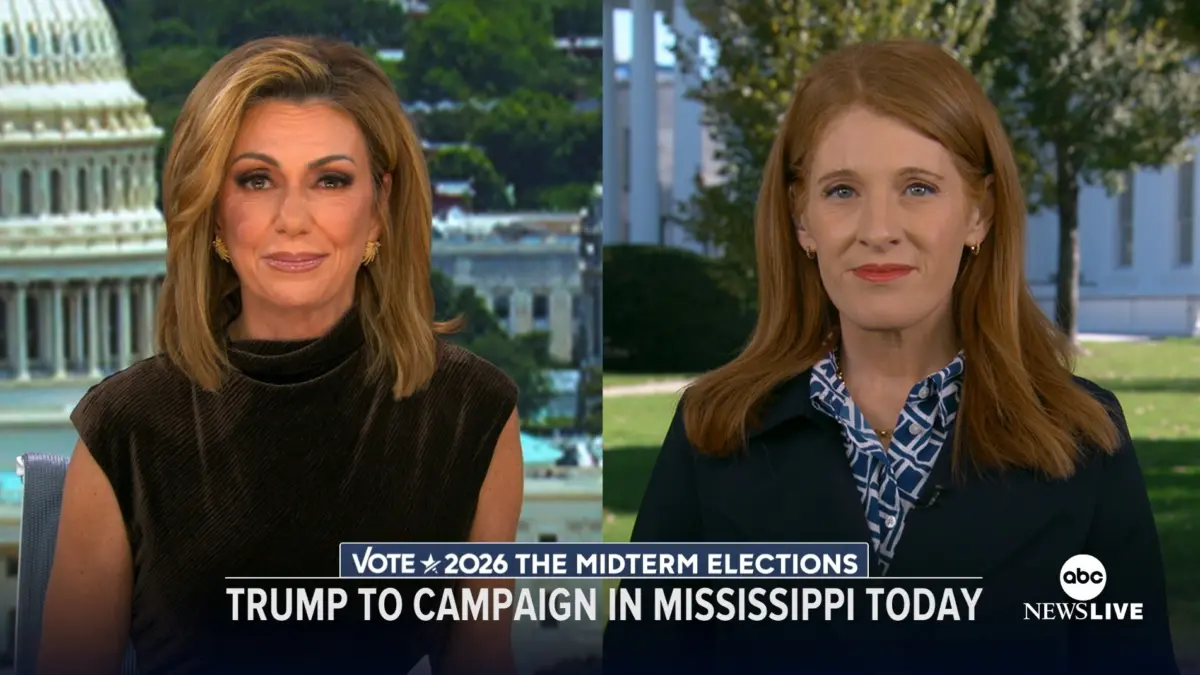
- ABC News Live Design Overhaul: Regular viewers of ABC’s flagship streaming platform, ABC News Live, witnessed the rollout of a comprehensive on-air graphics package. Designed to optimize cross-platform viewing, the aesthetic refresh employs cleaner typography and sharper rendering. Its center-justified lower-third layout—engineered without a background plate—seamlessly adapts to both traditional 16:9 widescreen formats and 9:16 vertical video configurations without requiring manual reformatting.
- Historical Docudrama Partnership: Fox Nation announced a high-profile programming addition with Billy Bob Thornton Presents: The Mayflower. Premiering November 23, the three-part historical docudrama features acclaimed actor Billy Bob Thornton (Landman) and traces the grueling Atlantic crossing of the Pilgrims aboard the Mayflower.
- Internal Promotions and Industry Honors: Within legacy broadcast television, Jon Carras was promoted to senior producer of CBS Sunday Morning alongside Jane Pauley, celebrating a milestone 20-year tenure that includes producing over 400 feature segments for the program. Concurrently, the journalism community honored CNN chief medical correspondent Dr. Sanjay Gupta, who was officially inducted into the Atlanta Press Club Hall of Fame. Presented by CNN executive Amy Entelis, the accolade celebrated Gupta’s quarter-century career and enduring impact on public health journalism.
Supporting Context & Metrics
The convergence of digital subscription models, cross-platform video engineering, and traditional television production highlights the financial and operational realities facing modern media houses.
| Executive / Personality | Previous Role / Affiliation | New Role / Milestone | Organization |
|---|---|---|---|
| Paula Reid | Chief Legal Affairs Correspondent | Chief White House Reporter | MS NOW |
| Kevin Delaney | The Information / WSJ | Head of Digital Content & Subscription | NBC News |
| Andrew Morse | CEO, Atlanta Journal-Constitution | Co-Founder & CEO (Phareo) | Phareo |
| Bill Owens | Executive Producer, 60 Minutes | Executive Producer | Newspress |
| Bari Weiss | Founder, The Free Press | Editor-in-Chief | CBS News |
| Dr. Sanjay Gupta | Chief Medical Correspondent | Hall of Fame Inductee | Atlanta Press Club |
The Economics of Trust and Digital Pivots
The industry-wide pivot toward subscription-based digital frameworks—typified by NBC News carving out dedicated executive lanes for Kevin Delaney—reflects declining ad revenues in linear television and the rapid fragmentation of audiences. As algorithmic content aggregation platforms continue to siphon younger demographics, legacy networks are doubling down on exclusive subscriptions, vertical video integration (as seen in ABC News Live’s graphics overhaul), and creator-economy partnerships (such as Andrew Morse’s Phareo).

Simultaneously, the legal battle over White House press access underscores the commercial necessity of physical proximity for elite reporting. Editorial institutions rely on pool access not merely for prestige, but as an operational cornerstone to verify executive actions independently and maintain the constitutional checks and balances inherent to a free press.
Official Statements
The motivations behind these leadership changes and structural pivots are best captured through the official memorandums and public statements issued by key industry executives.
On Paula Reid’s Appointment at MS NOW:
"Paula will bring her deep experience to covering the administration, serve as a key reporting voice across MS NOW’s Washington Bureau, and help drive our newsroom’s investigative and enterprise journalism."
— Sudeep Reddy, MS NOW Washington Bureau Chief
On Kevin Delaney’s Digital Strategy at NBC News:
NBC News executives Catherine Kim (Executive Vice President of Editorial and Content) and Sat Brainch (Chief Business Officer) outlined in an internal memo that Delaney’s newly established division will:
"Work to develop content to support new opportunities that drive audience and revenue growth."
On the State of Journalistic Trust:
"There isn’t a crisis in trust, but a crisis in trustworthiness."
— Bari Weiss, CBS News Editor-in-Chief, speaking at The Information 2026 WTF Summit.
Future Outlook
As the media industry moves toward the close of the decade, several critical trajectories will determine the survival and profitability of news organizations:
- The Outcome of Executive Branch Access Litigation: A favorable ruling from Judge Timothy Kelly for CNN, MS NOW, and Politico would cement constitutional precedents ensuring that changing administrations cannot weaponize press credentials to silence critical or unfavorable reporting. Conversely, a setback for the plaintiffs could fundamentally alter the dynamics of investigative reporting within the West Wing.
- The Battle for Gen Z and Vertical Audiences: Innovations like ABC News Live’s 9:16-compatible lower-thirds signal an industry-wide recognition that linear broadcasts must natively coexist with social-first video environments. Networks that successfully bridge traditional investigative depth with frictionless vertical distribution will capture the next generation of consumers.
- The Creator Economy Versus Legacy Gatekeepers: Ventures like Andrew Morse’s Phareo and Bill Owens’ transition to Newspress demonstrate that traditional media talent is increasingly migrating toward decentralized, creator-centric ecosystems. As these platforms mature, they will pose a significant competitive threat to traditional broadcast models by offering individualized creator-fan dynamics that legacy networks struggle to replicate organically.
- Restoring Institutional Trust: Under leaders like Bari Weiss at CBS News, the mandate for newsrooms moving forward is a rigorous inward look at editorial standards. Rebuilding the public trust will require institutional transparency, ideological diversity in reporting, and a steadfast commitment to foundational investigative journalism over reactive, ratings-driven cycles.