

Executive Overview
As the global appetite for data processing reaches unprecedented levels, traditional silicon-based computing is hurtling toward a physical and economic precipice. Modern data centers consume staggering amounts of electricity—rivaling the power grids of entire nation-states—while conventional transistors approach the quantum limits of miniaturization. In response to this impending crisis, a coalition of international researchers has unlocked a transformative pathway forward. Published in the prestigious journal Nature Nanotechnology, a landmark study has revealed groundbreaking insights into microscopic magnetic structures known as skyrmions.
Led primarily by the Institute of Physics at Johannes Gutenberg University in Mainz, Germany, alongside vital contributions from the Norwegian University of Science and Technology (NTNU), this research marks a watershed moment in condensed matter physics. For the first time in scientific history, researchers have successfully filmed the real-time "melting" of a magnetic skyrmion lattice while simultaneously manipulating the shape, size, and trajectory of individual vortices on the fly.
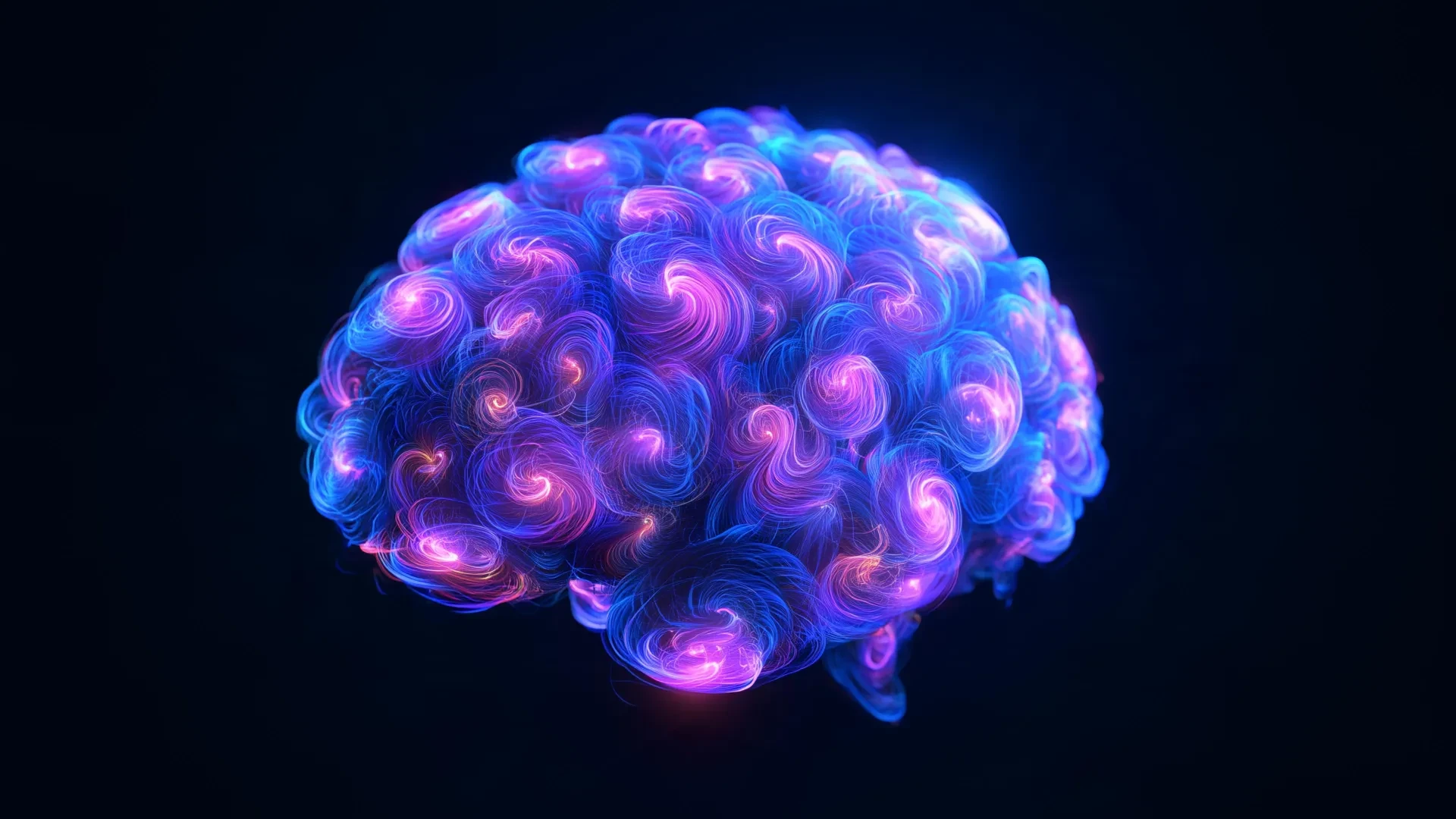
These minuscule, particle-like magnetic swirls offer an entirely novel paradigm for data storage and processing. Unlike binary transistors that rely on the continuous flow of electrical currents, skyrmions exploit topological quantum mechanics and spintronics—the intrinsic spin of electrons. The implications of this research stretch far beyond incremental hardware upgrades. By harnessing skyrmions, engineers could soon pioneer neuromorphic computing architectures that mimic the energy-efficient, parallel-processing capabilities of the human biological brain. While hurdles remain before commercial integration, this breakthrough brings humanity one step closer to post-silicon microprocessors that operate on a fraction of current energy budgets.
Detailed Chronology: Unlocking the Mechanics of the Skyrmion Lattice
To appreciate the gravity of the recent Nature Nanotechnology publication, one must trace the trajectory of skyrmion research from an abstract mathematical curiosity to a tangible engineering frontier.
From Theoretical Physics to Physical Reality
Skyrmions were originally conceptualized in the 1960s by British physicist Tony Skyrme as a mathematical model to describe subatomic particles like nucleons. Decades later, condensed matter physicists realized that the underlying mathematics of skyrmions could manifest as stable, particle-like magnetic vortices in certain solid-state materials—specifically thin films and non-centrosymmetric crystals where chiral interactions prevent the magnetic moments from aligning uniformly.
For years, observing and controlling these microscopic vortices proved exceptionally difficult. They are exceptionally small, often measuring only a few nanometers across, and their existence depends on delicate balances of magnetic exchange, Dzyaloshinskii-Moriya interactions (DMI), and external magnetic fields.
The Breakthrough at Johannes Gutenberg University
The recent collaborative effort centered at Johannes Gutenberg University in Mainz, with key theoretical frameworks provided by Professor Asle Sudbø and his team at NTNU’s Centre for Quantum Spintronics (QuSpin), shifted the field from static observation to dynamic control.
Under specific thermodynamic and magnetic conditions, skyrmions do not merely exist in isolation; they self-organize into dense, highly ordered arrays known as skyrmion lattices. These lattices bear a structural resemblance to the atomic arrangements in solid crystals. However, until this study, observing the phase transition of these lattices—specifically how they "melt" from an orderly crystalline state into a disordered, liquid-like gas of skyrmions—remained theoretical.
Using advanced high-resolution imaging and precise microscopic manipulation techniques, the research team achieved the impossible: they recorded the real-time dissolution of a skyrmion lattice. Simultaneously, operators were able to exert deterministic control over individual skyrmions within the lattice as the phase transition unfolded. By altering local magnetic parameters and applying localized electrical or thermal stimuli, researchers dynamically reshaped the geometric boundaries, dimensions, and spatial coordinates of individual vortices mid-experiment.
Supporting Context & Metrics: The Paradigm Shift in Power and Density
To understand why the physics community is celebrating this discovery, one must evaluate the mathematical and energetic limitations of contemporary computing paradigms.
The Silicon Wall and the Power Crisis
For over half a century, the semiconductor industry relied on Moore’s Law—the empirical observation that the number of transistors on a microchip doubles roughly every two years. This scaling allowed computers to become exponentially faster and cheaper. However, as transistors have shrunk to atomic scales of just a few nanometers, engineers have encountered fundamental quantum mechanical barriers:
- Quantum Tunneling: Electrons leak through microscopic transistor gates, causing massive energy dissipation and thermal runaway.
- Static Power Dissipation: Current-driven logic gates generate ambient heat that requires intensive, energy-hungry data center cooling systems.
- The Von Neumann Bottleneck: Traditional architectures separate processing and memory, creating severe data transfer bottlenecks that waste immense amounts of clock cycles and electrical power.
Skyrmions: The Topological Advantage
Skyrmions offer a radical departure from traditional charge-based electronics. Because skyrmions are topological solitons—meaning their swirling magnetic configuration is protected by a topological invariant—they cannot be easily disrupted or destroyed by local material defects or thermal fluctuations.
- Topological Protection: This robustness translates to extreme data stability. A skyrmion can be pushed across a magnetic racetrack using ultra-low current densities—up to 100,000 times smaller than those required to move conventional magnetic domain walls.
- Spatial Footprint: Because skyrmions can be scaled down to dimensions of less than 10 nanometers, data storage densities could theoretically exceed anything currently achievable with standard flash memory or hard disk drives by orders of magnitude.
- Neuromorphic Potential: The collective behavior of skyrmion lattices mirrors the stochastic, interconnected synaptic weight changes found in biological neural networks. This makes them ideal candidates for neuromorphic hardware designed to execute pattern recognition, machine learning, and cognitive tasks natively.
Official Statements and Expert Analysis
The implications of the Nature Nanotechnology study have resonated deeply across the international physics and engineering communities. At the heart of these developments is Professor Asle Sudbø, head of the Centre for Quantum Spintronics (QuSpin) at the Norwegian University of Science and Technology (NTNU).
"Skyrmions are small, magnetic vortices that can store information in a completely new way," explained Professor Sudbø during an analysis of the findings.
Addressing the macro-level sustainability crisis facing modern computing infrastructure, Sudbø emphasized the urgent need for structural innovation over mere micro-optimization:
"Instead of the current technology, where we constantly need more space and energy to process data, skyrmions could make it possible to build much smaller and more energy-efficient data storage systems."
The transition from static storage elements to dynamic, brain-like processing units represents the ultimate horizon of this research. Sudbø highlighted how these nanoscale dynamics unlock cognitive computing architectures:
"These nanoscale vortices could help develop computers that resemble biological brains… This could revolutionize the way we think about computers."
Crucially, the ability to film lattice melting while manipulating individual vortices bridges the gap between theoretical models and manufacturable hardware. As Sudbø noted:
"For the first time, researchers have managed to film how a magnetic skyrmion lattice melts in real time, while simultaneously being able to manipulate each individual skyrmion directly as they film it. For example, both their shape and size can be changed ‘on the fly’… The findings give us new insight into how these types of particles behave. This could therefore become important for the development of more energy-efficient computer technology in the future."
Future Outlook: The Road Ahead for Skyrmion Technology
While the real-time imaging and manipulation of skyrmion lattices mark a monumental scientific triumph, translating these laboratory breakthroughs into commercial, consumer-grade hardware will require a sustained, multi-disciplinary engineering effort over the coming decade.
Key Technological Hurdles
- Material Optimization at Room Temperature: Many early skyrmion systems required cryogenic temperatures or large, bulky magnetic fields to stabilize the vortices. Recent advancements, including the Mainz and NTNU studies, focus on engineered magnetic multilayers that stabilize skyrmions at and well above room temperature, but achieving commercial thermal stability remains challenging.
- Deterministic Creation and Deletion: To function as a reliable memory or logic device, computers must be able to create, read, move, and annihilate skyrmions deterministically on demand, with near-zero error rates.
- System Integration: Bridging spintronic skyrmion devices with existing complementary metal-oxide-semiconductor (CMOS) manufacturing pipelines requires novel fabrication techniques and interface engineering.
The Horizon of Quantum and Neuromorphic Convergence
Despite these hurdles, the long-term outlook is exceptionally bright. As quantum spintronics matures, skyrmions are positioned to act as foundational building blocks for hybrid computing systems. By merging the non-volatile memory density of magnetic storage with the ultra-low-power, massively parallel processing paradigms of neuromorphic brains, future technology may bypass the physical limits of traditional silicon entirely.
The pioneering work filmed in laboratories across Mainz and Trondheim has transformed skyrmions from an esoteric subfield of theoretical condensed matter physics into a tangible blueprint for the future of computing. As researchers continue to master the delicate art of controlling these microscopic magnetic vortices, the vision of ultra-efficient, brain-like machines moves steadily from science fiction into scientific reality.