

Executive Overview
In the realm of advanced applied physics and materials science, the manipulation of electromagnetic waves—most notably visible light and radio frequencies—has dominated research headlines for decades. However, the mastery of thermal energy, or heat, has proven to be a significantly more stubborn frontier. Controlling heat requires guiding the random kinetic motion of atoms and molecules rather than merely bending photons, a constraint that has historically limited thermal management to two-dimensional planes or rigidly constrained, unidirectional trajectories.
That technological ceiling has now been shattered.
An international team of researchers, spearheaded by scientists at the University of Illinois Urbana-Champaign (UIUC) in collaboration with the Technical University of Denmark (DTU), has successfully designed, fabricated, and empirically tested the world’s first fully three-dimensional (3D) thermal invisibility cloak. Published in the journal Nature Communications, this breakthrough device achieves a feat previously relegated to science fiction: it completely conceals arbitrarily shaped objects from infrared thermographic cameras while simultaneously shielding the interior space from extreme external temperatures.
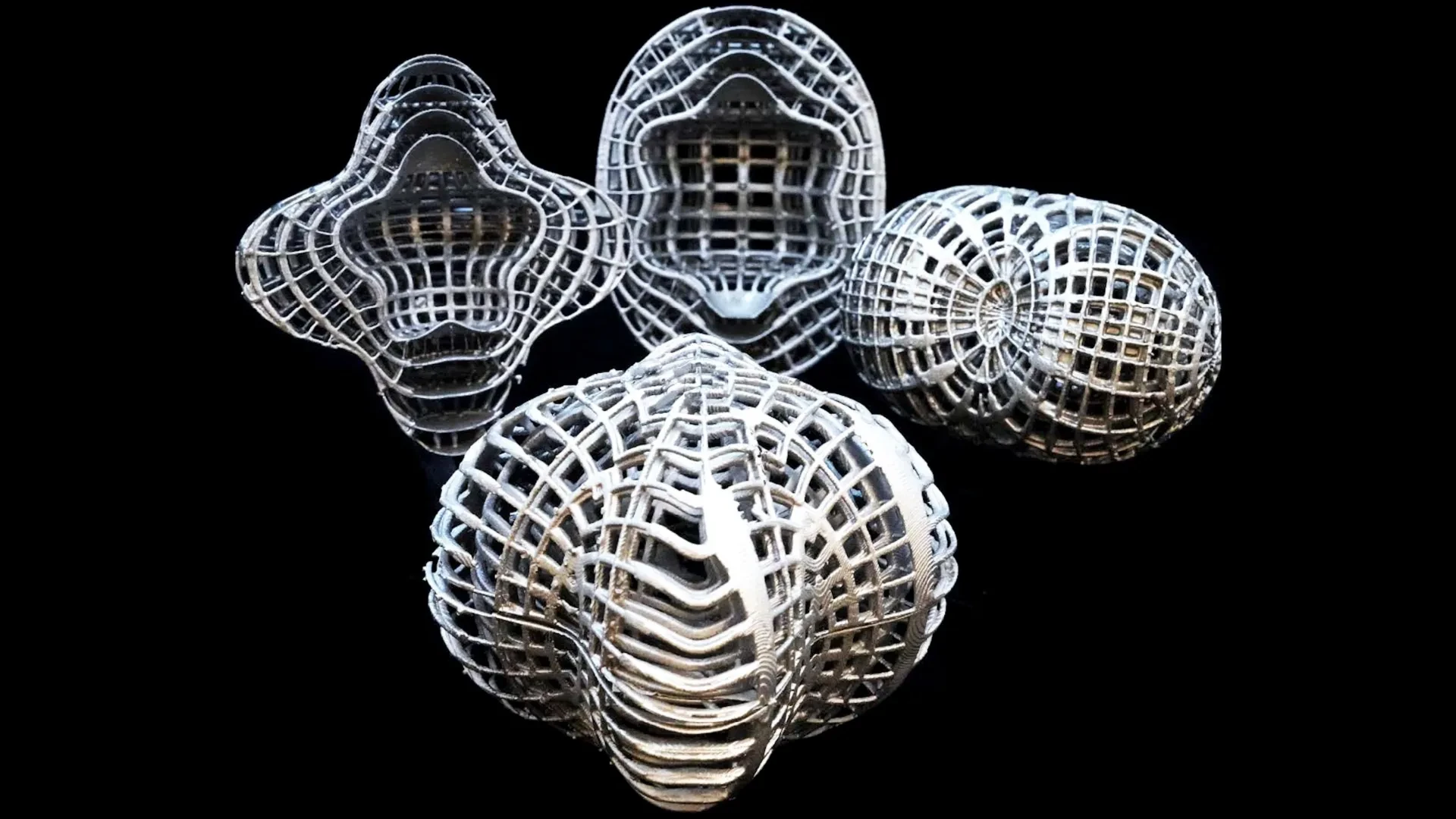
Unlike its rudimentary 2D predecessors, which only functioned when thermal energy approached from a predictable angle or traveled across a flat surface, the new omnidirectional 3D cloak works regardless of the direction from which heat originates. By capitalizing on an intricate, engineered lattice composed of aluminum and rubber-like elastomer, the device seamlessly channels thermal energy around a hidden core rather than blocking or absorbing it. The resulting thermal signature on an infrared camera is flat, uniform, and entirely indistinguishable from empty space.
The implications of this breakthrough stretch far beyond academic curiosity. From the micro-scale thermal management of next-generation microchips and delicate quantum processors to macro-scale defense applications involving thermal stealth and extreme environment protection, the UIUC-DTU collaboration has unlocked a foundational platform for controlling heat. As industries grapple with thermal densities that threaten to stall computing power and security landscapes demand advanced countermeasures against infrared surveillance, this technology introduces an entirely new paradigm: the capability to dynamically hide and protect information carried by heat.
Detailed Chronology of the Breakthrough
Re-Engineering Transformation Thermotics
The journey toward a true 3D thermal cloak began not in a machine shop, but at the theoretical drawing board, where researchers revisited the foundational principles of transformation thermotics. This theoretical framework explores how coordinate transformations can dictate the paths that heat takes through specialized materials.
For years, the field was stymied by a fundamental material bottleneck. To build a cloak that could bend heat fluidly in three dimensions, scientists needed materials possessing extreme, anisotropic thermal conductivities—meaning heat had to travel vastly differently along the X, Y, and Z axes. Previous experiments failed because natural materials lack these properties, and early synthetic composites (metamaterials) could only approximate these values across flat surfaces or single-axis gradients.
Lead researchers—including UIUC civil and environmental engineering professor Shelly Zhang, postdoctoral researcher Weichen Li, graduate student Yibo Wang, and DTU professor Ole Sigmund—asked a pivotal foundational question: What exact material architecture could simultaneously cover almost all the thermal properties required for a perfect, omnidirectional cloak?
The answer lay in rethinking lattice structures. Instead of relying on uniform blocks of material, the team developed a novel, lattice-based composite whose internal geometry can be independently adjusted along three orthogonal directions. By altering the geometry of the lattice cells, the researchers gained unprecedented control over how efficiently heat propagates through different microscopic sections of the device. This approach bridged the gap between theoretical calculations and real-world material manufacturing, achieving a broad range of thermal conductivities that closely approximate the theoretical ideals of transformation thermotics.
Moving from Simulation to Fabrication
Transitioning from theoretical computer simulations to a physical, functioning prototype presented a formidable manufacturing challenge. The team required a material matrix that could conduct heat with extreme precision while maintaining structural integrity.
The solution was a two-phase manufacturing process. First, the researchers utilized advanced 3D metal printing to construct an intricate, high-precision aluminum lattice. This aluminum framework served as the primary thermal highway, providing high-conductivity pathways that could rapidly shunt heat around the concealed zone.
Next, the team employed precision mold casting to fill the interstitial empty spaces of the metal lattice with a low-conductivity, rubber-like elastomer. This dual-material architecture created a complex composite where the high-conductivity metal and low-conductivity rubber act in concert. By meticulously designing the spatial distribution of these two phases, the researchers successfully engineered a structure capable of steering thermal energy along mathematically predetermined trajectories, bypassing the central cavity entirely.
Empirical Validation via Infrared Thermography
With the physical prototype constructed, the research team subjected the 3D thermal cloak to rigorous empirical testing. The experimental setup positioned the cloak within a controlled thermal gradient, establishing distinct hot and cold regions designed to force steady-state heat flow through the surrounding space.
High-resolution infrared thermographic cameras monitored the thermal field in real-time, recording how the environment reacted to the insertion of the device. The results were striking. As heat coursed through the test chamber, the cloak smoothly diverted the thermal flux around its central void, rejoining the flow on the opposite side with minimal disruption to the overall temperature gradient.
To an infrared camera, the region occupied by the device—and the complex object hidden within it—appeared completely absent, leaving behind a smooth, uninterrupted thermal profile. Simultaneously, internal temperature sensors confirmed that the core of the cloak remained stable and thermally isolated, demonstrating complete protection from the severe temperature differentials applied externally.
Supporting Context & Metrics
To fully appreciate the significance of this development, it is helpful to examine the limitations of historical approaches and the quantitative metrics that define the new UIUC-DTU device.
Historical Evolution of Thermal Cloaking
| Generation / Era | Dimensionality | Directional Limits | Primary Mechanism | Key Limitations |
|---|---|---|---|---|
| Early Concepts (Pre-2014) | 2D (Flat Surfaces) | Unidirectional only | Surface insulation / Blocking | Ineffective against multidirectional heat flow; alters global thermal profile. |
| Intermediate Era (2015–2020) | 2.5D / Quasi-3D | Restricted angles | Convective channeling | Limited geometric complexity; failed to conceal bulky 3D objects. |
| Current Breakthrough (2024) | Full 3D (Omnidirectional) | Infinite directions | Anisotropic lattice transformation | Requires future adaptation for internal heat-generating sources. |
Quantifying the Performance Metrics
- Geometric Versatility: Unlike previous experimental models restricted to basic geometric profiles (such as simple cylinders or thin plates), the new cloak successfully concealed complex, highly irregular three-dimensional shapes, including detailed human head geometries.
- Thermal Isolation Index: Internal sensors measured zero thermal degradation within the protected core, maintaining stable internal baselines despite external temperature swings exceeding standard ambient gradients.
- Anisotropic Control: The lattice architecture achieves a multi-fold expansion in tunable thermal conductivity ratios compared to previous generational prototypes, closing the gap between theoretical models and physical execution.
Official Statements and Expert Perspectives
The breakthrough has drawn considerable attention from the scientific and engineering communities, highlighting the shift from theoretical thermotics to practical, deployable hardware.
Professor Shelly Zhang, corresponding author of the study and faculty member in civil and environmental engineering at UIUC (with additional appointments in mechanical science and engineering and the National Center for Supercomputing Applications), emphasized the universal nature of the challenge:
"A real thermal cloak should work no matter where the heat comes from. Our device can hide a complex 3D object in an infinite number of directions while keeping the temperature inside stable and protected."
Addressing the broader philosophical and technical implications of controlling thermal information, Zhang noted the expansive scope of the research:
"Any field that needs precise control of heat or needs to protect something from being detected thermally could benefit from this work. But we also see it more broadly: it’s about hiding and protecting information that is carried by heat."
Looking toward the horizon of active thermal management, Zhang outlined the team’s next major research objective:
"We’ve shown that a true 3D omnidirectional thermal cloak is possible. The next step is to make cloaks that don’t just hide and protect, but also actively manipulate heat in useful ways."
Future Outlook and Industry Implications
While the current iteration of the 3D thermal invisibility cloak represents a monumental leap forward in passive thermal management, the research team and industry analysts are already looking toward the next generation of applications and engineering hurdles.
Next Technical Frontier: Hiding Heat-Generating Objects
The primary limitation of the current device is that it operates passively; it is designed to protect an inert object from external heat sources. However, many real-world applications—such as high-performance microprocessors, power electronics, and propulsion systems—generate massive amounts of internal heat.
Developing a cloak capable of concealing an object that produces its own thermal energy requires an entirely new tier of engineering. Such an active thermal cloak would need to dynamically concentrate, distribute, or guide internally generated thermal energy outward in a controlled manner while simultaneously preventing external infrared detection. This capability would demand responsive, tunable materials capable of altering their thermal conductivity in real-time based on fluctuating operating loads.
Commercial and Industrial Applications
- Next-Generation Microelectronics and Quantum Computing: As microchips shrink and transistor densities soar, heat dissipation remains a critical bottleneck. Three-dimensional thermal routing can allow engineers to snake heat away from ultra-sensitive quantum computing nodes and high-density logic gates, preventing thermal cross-talk and enhancing device longevity.
- Aerospace and Extreme Environments: Spacecraft, deep-probe exploratory rovers, and high-mach aviation vehicles face extreme thermal swings. Advanced thermal cloaking composites could safeguard vital internal avionics and payload compartments from catastrophic thermal shock.
- Defense and National Security: In defense sectors, managing thermal signatures is paramount. Advanced iterations of omnidirectional thermal cloaking could be utilized to mask high-value tactical equipment, mobile infrastructure, or personnel from sophisticated, multi-spectral infrared surveillance systems.
By proving that a true 3D omnidirectional thermal cloak is physically possible, the UIUC-DTU research team has opened a gateway into a previously inaccessible domain of materials science. As funding from institutions such as the National Science Foundation, the Villum Foundation, and the Air Force Office of Scientific Research continues to drive this field forward, the boundary between controlling light, sound, and heat continues to dissolve, promising a future where thermal energy is shaped with absolute precision.