

Executive Overview
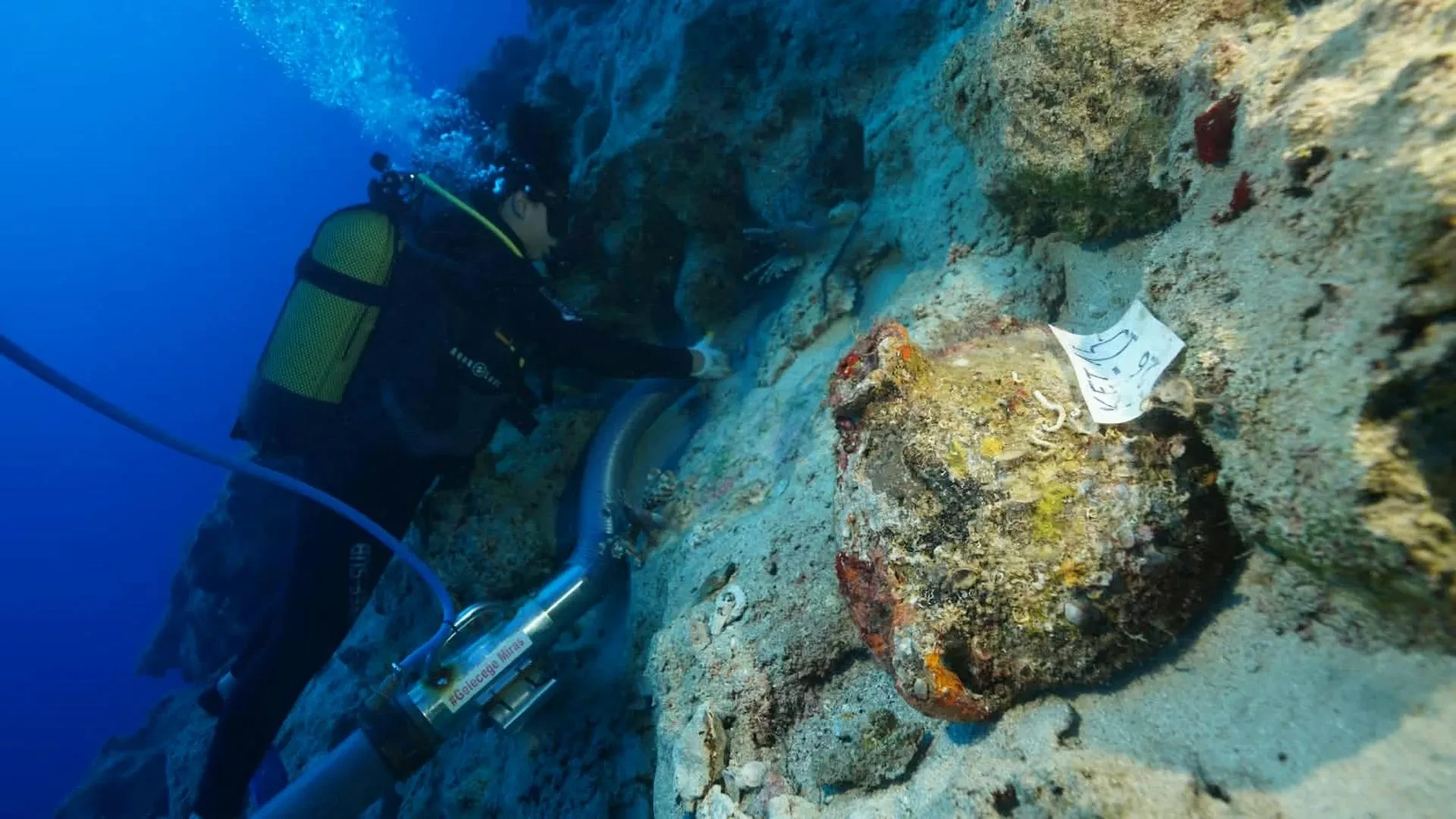
In the azure, sun-dappled shallows off the rugged southern coast of Turkey, an international team of maritime archaeologists believes it has made a discovery that will fundamentally rewrite the history of early human seafaring and global trade. Sited quietly on a rocky underwater slope near the picturesque town of Kekova, west of Antalya, lies what researchers have tentatively identified as the oldest known shipwreck in human history.
While the wooden hull of the vessel has long since succumbed to the relentless biological and mechanical forces of the Mediterranean, its exceptionally preserved cargo—consisting of distinctive ceramic storage jars, or amphorae—survives as an astonishing subterranean time capsule. Based on exhaustive typological analysis of these vessels, the research team has provisionally dated the site to the Early Bronze Age, roughly between 2700 and 2400 BCE. This places the wreck approximately 4,500 years into the past, eclipsing the previous record-holder: the famed Bronze Age shipwreck off the coast of Dokos in Greece, which is dated to roughly 4,200 years ago.
The discovery arrives at a pivotal juncture for maritime archaeology. Set against the backdrop of the third millennium BCE—an era contemporaneous with the construction of the Great Pyramids of Giza and the zenith of Egypt’s Old Kingdom—the Kekova vessel serves as a vital, missing structural link in our understanding of early Mediterranean commerce. It illuminates the foundational roots of expansive international trade networks, revealing a surprisingly sophisticated web of seafaring exchange long before the rise of classical Mediterranean empires.
Although the findings are still undergoing rigorous peer review and academic vetting, the implications of this submerged archaeological site stretch far beyond the regional coastlines of modern-day Turkey. They promise to reshape our historical models of how ancient cultures interacted, navigated, and bartered across perilous open waters millennia ago.
Detailed Chronology
Discovery, Excavation, and the Path to Kekova
The trail leading to this historic discovery spans decades of meticulous coastal exploration. Associate Professor Hakan Öniz of Akdeniz University’s Faculty of Art in Antalya—a leading figure in Mediterranean underwater cultural heritage—has spent much of his professional life charting the sunken antiquities of Turkey’s southern shores.
The breakthrough occurred in 2024, when local seafarers and fishermen in the Kekova region reported anomalous formations and pottery fragments resting on a submerged rocky shelf. Acting on these local testimonies, Professor Öniz organized a preliminary reconnaissance dive in shallow waters. What his team encountered beneath the waves was not merely a random scatter of ancient debris, but the coherent debris field of an ancient marine disaster.
Recognizing the immense chronological and historical weight of the finds, Öniz reached out to specialized collaborators earlier this year to assist in dating and analyzing the fragile ceramic artifacts recovered from the site. Integrating terrestrial desert specialists with wet-lab conservation experts, the multidisciplinary team embarked on a grueling four-month recovery campaign. Divers battled barnacle encrustations, shifting currents, and deep-water conservation hurdles to meticulously extract the delicate artifacts from the rocky sea slopes.
The Anatomy of a Maritime Disaster
Reconstructing the final moments of a ship that sailed four and a half millennia ago requires a delicate synthesis of archaeology, oceanography, and sheer imagination. Although not a single plank or timber of the ship’s hull remains intact today—having vanished due to centuries of biological degradation and heavy wave action—the spatial distribution of the cargo tells a vivid story.
The vessel was evidently navigating a coastal trade route along the southern shores of the Anatolian peninsula. Caught unawares by a sudden Mediterranean squall, the crew likely sought desperate refuge in the lee waters situated between two sheltering offshore islands. One can easily conjure the terror of the ancient sailors—potentially maritime merchants originating from the Levant—as gale-force winds drove their heavily laden craft inexorably against the jagged, unforgiving rocks.
The ship struck the submerged slope with catastrophic force. While the wooden hull was battered to pieces and swept away by the currents, its heavy cargo of ceramic vessels was trapped, wedged tightly into the crevices of the rocky seabed. There, protected by marine life and centuries of silt, the cargo lay undisturbed until modern divers disturbed the silence of the deep.
Supporting Context & Metrics
Anatomy of an Amphora: The Diagnostic Power of Pottery
In maritime archaeology, broken ceramics play a role analogous to modern plastics: they are virtually indestructible, resisting biological decay and persisting through the millennia as indestructible markers of human activity. For the Kekova research team, humble clay storage vessels became the master key to unlocking the ship’s chronology and provenance.
The recovered cargo predominantly consists of large, ovoid, flat-based storage jars equipped with two sturdy vertical handles. Most distinctively, these amphorae feature a raised, horizontal clay "belt" encircling the widest part of the jar’s body. These belted vessels are archaeological goldmines, offering critical diagnostic metrics:
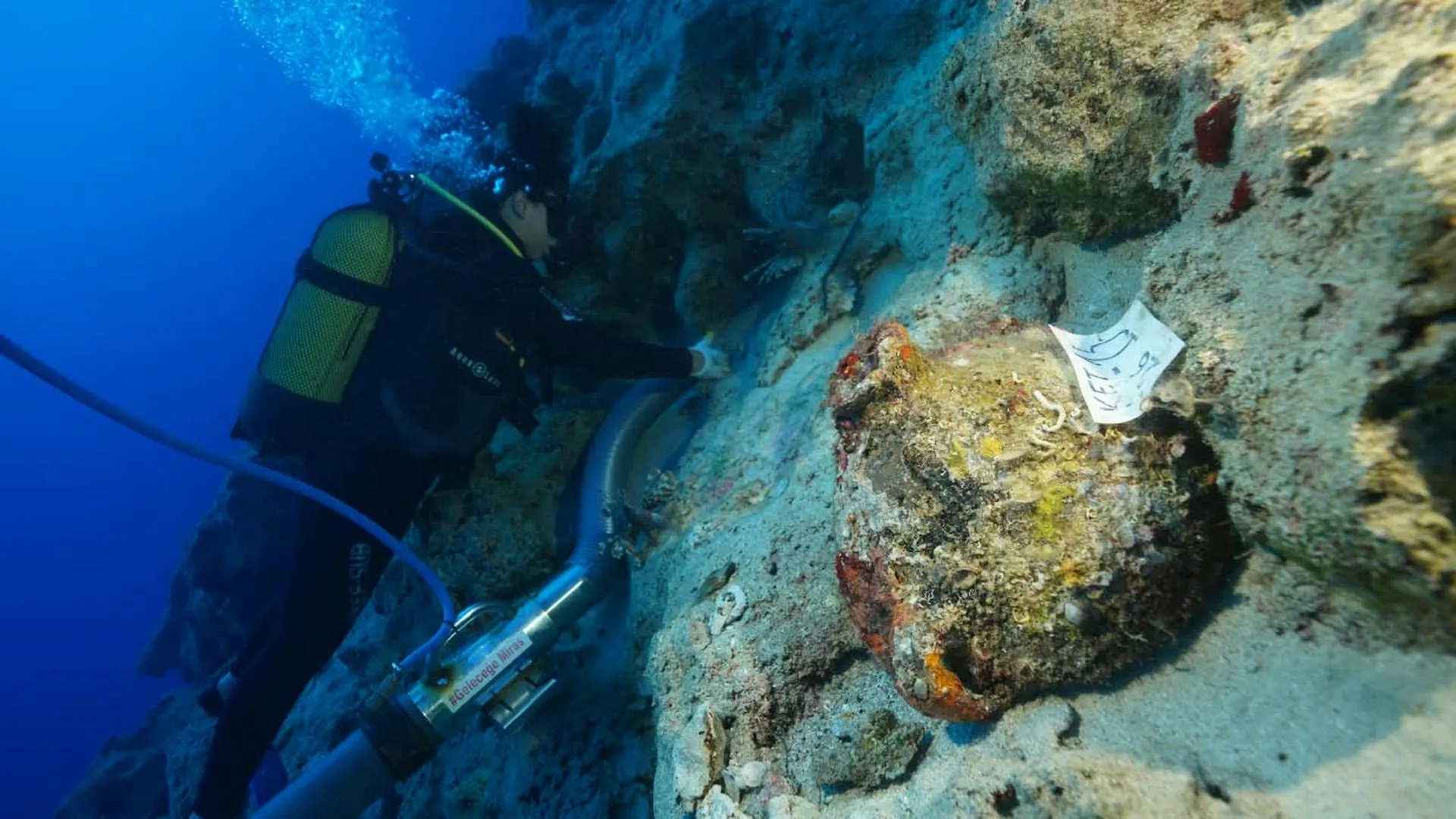
- Morphology and Manufacturing Techniques: The specific curvature of the ovoid body, the temper of the clay, and the application of the horizontal relief belt indicate specific regional manufacturing traditions.
- Trace Origin Analysis: Preliminary assessments suggest that some of these belted jars, or the distinct clays used to fashion them, originated as far away as the Central Jordan Valley, illustrating the immense geographical span of the ship’s potential itinerary.
- Residue Preservation: Remarkably, macroscopic examination of the interior jar walls revealed visible organic residues. While biochemical and chromatographic analyses are still pending, these residues potentially preserve ancient organic commodities such as high-grade olive oil, vintage wine, or aromatic tree resins.
The Third Millennium BCE: A Poorly Understood Maritime World
To fully appreciate the significance of the Kekova wreck, one must contextualize the geopolitical and economic landscape of the third millennium BCE (3000–2000 BCE). Compared to the later Bronze Age—the era immortalized by the Late Bronze Age shipwreck at Uluburun with its staggering wealth of copper, tin, and glass—the early third millennium remains shrouded in comparative obscurity.
Until now, our knowledge of maritime voyages during this foundational era has relied almost exclusively on indirect evidence: fragmented Egyptian administrative texts, raw materials unearthed in elite royal tombs, and isolated imported pottery sherds found far from their production centers.
During the exact window in which the Kekova ship met its doom, the pharaohs of Egypt’s Old Kingdom were actively engaging in sophisticated maritime trade across the eastern Mediterranean. Egyptian state archives and coastal records confirm regular commercial exchanges operating through vital ports such as Byblos in modern-day Lebanon. The Egyptian state hungered for foreign commodities that the Nile Valley inherently lacked:
- Lebanese Cedar: Essential for monumental temple construction, royal shipyards, and elite funerary barques.
- Metals (Tin, Lead, and Silver): Recent scientific analyses of silver artifacts recovered from early Egyptian contexts reveal that the state was sourcing precious metals from as far away as the Lavrion mines, located east of modern-day Athens, as early as 2600 BCE.
- Resins and Oils: Valued organic compounds essential for mummification, religious rites, and elite cosmetics.
- Lapis Lazuli: Exotic blue stones transported across vast overland and maritime networks from Central Asia.
While it is statistically unlikely that monumental Egyptian state vessels undertook these perilous northern Anatolian coastal routes independently, smaller merchant vessels—such as the ill-fated Kekova trader—formed the vital circulatory system of an expanding international maritime network. These coastal traders acted as the middlemen, stitching together regional economies and feeding the voracious appetite for luxury and utility goods demanded by early Mediterranean superpowers.
Official Statements
The research team, spearheaded by Associate Professor Hakan Öniz of Akdeniz University’s Division of Mediterranean Underwater Cultural Heritage Research, emphasizes both the monumental potential and the cautious methodology required for a discovery of this magnitude.
"This shipwreck represents a crucial missing piece in the complex puzzle of early Bronze Age trade networks, commodity exchange, and human connectivity across the wider eastern Mediterranean," stated members of the research collective in preliminary project notes. "While the lack of surviving hull timber presents unique analytical challenges, the integrity of the ceramic cargo provides an unprecedented window into a foundational era of maritime history."
Independent archaeological experts not directly affiliated with the excavation have similarly hailed the preliminary findings. Commenting on the transition from terrestrial desert archaeology to the rigorous methodologies of deep-water excavation, members of the multi-institutional team noted the steep learning curve required to master water-logged conservation techniques.
"Navigating this discovery has required pushing the boundaries of modern underwater archaeology," noted an excavation specialist. "We are dealing with a fragile time capsule that demands extreme precision. Every shard of pottery recovered brings us one step closer to mapping the commercial pathways of a world that existed four and a half millennia ago."
Future Outlook
The Road to Peer Review and Further Exploration
Despite the immense excitement generated by the Kekova discovery, the project remains very much a work in progress. The research team has deliberately exercised scientific caution, noting that a comprehensive, formally peer-reviewed paper outlining the absolute chronology, artifact typologies, and scientific analyses is currently being prepared for publication in an international academic journal.
Several critical phases lie ahead for the Akdeniz University research team and their international collaborators:
- Residue and Isotopic Analysis: Advanced laboratory testing—including organic residue analysis and petrographic thin-sectioning of the amphora clays—will soon confirm the precise geographical origin of the ceramic vessels and definitively identify the biological contents sealed within the jars.
- Refining the Chronology: While the current estimated window of 2700–2400 BCE is firmly grounded in comparative typological data, ongoing radiocarbon and luminescence testing of associated organic materials may yield an even tighter absolute date, potentially shifting the timeline slightly earlier or later.
- Expanded Underwater Surveys: The southern coast of Turkey has long been recognized as an underwater archaeological treasure trove, littered with the wrecks of antiquity due to its treacherous headlands and historically bustling trade lanes. Armed with new predictive models derived from the Kekova find, marine archaeologists plan to scan adjacent territorial waters for contemporary sites.
As marine technology advances and interdisciplinary collaboration deepens, the Kekova shipwreck stands as a testament to the enduring tenacity of human exploration. It reminds us that long before the invention of the compass, the commissioning of imperial navies, or the formalization of written maritime law, intrepid mariners were braving treacherous seas to forge the economic and cultural foundations of the modern world. The waters off Antalya have whispered their ancient secrets; the task of the modern scientific community is now to listen closely and interpret the story they tell.