

Executive Overview
In late 2023, the automotive landscape was introduced to one of the most polarizing and aggressive designs in modern industrial history: the Tesla Cybertruck. By late 2026, the vehicle’s brief, chaotic run came to an official close. Tesla CEO Elon Musk announced that production would wind down to pivot toward a new autonomous taxi venture, the Cybercab.
What began as an eccentric novelty on the streets of Brooklyn—often wrapped in matte black with crypto-inspired "To the Moon" decals—ultimately culminated in a commercial underperformance. Tesla manufactured and sold roughly 70,000 units over a three-year span, falling desperately short of Musk’s initial, grandiose projection of 250,000 vehicles per year.
More than just a poorly realized truck, the Cybertruck stands as a physical manifestation of a tumultuous socio-political era characterized by get-rich-quick schemes, political polarization, algorithmic distraction, and a pervasive, market-driven paranoia. It combined the existential anxiety of climate change with the hyper-militarized aesthetics of comic books and the extremist gun culture gripping contemporary America. Ultimately, the vehicle evolved from a tech-bro status symbol into a rolling political signifier, forcing owners to navigate a hostile public sphere where driving one meant choosing a side in an increasingly fractured cultural war.
Detailed Chronology: From Concept to Collapse
The Pre-Launch Illusion and Tech-Optimism (Pre-2023)
A decade prior to the Cybertruck’s release, the tech media apparatus fostered a culture of unbridled techno-optimism. Elon Musk was frequently marketed not as a corporate titan, but as a whimsical, benevolent pioneer—even making cameo appearances in cinematic universes like Iron Man II while embedding quirky software features like "Ludicrous Speed" modes and internet meme Easter eggs into his fleet.
Behind the facade of internet humor lay a recurring pattern of hollow promises. In 2017, Musk asserted that Tesla’s "Fully Self-Driving" architecture would enable hands-free, cross-country road trips by the end of that calendar year. The promised autonomous cross-country journeys never materialized. This playbook—leveraging futuristic promises, viral marketing stunts, and aggressive hype to artificially inflate stock valuations—laid the ideological groundwork for the unveiling of the Cybertruck.
The Launch and Early Novelty (Late 2023 – 2024)
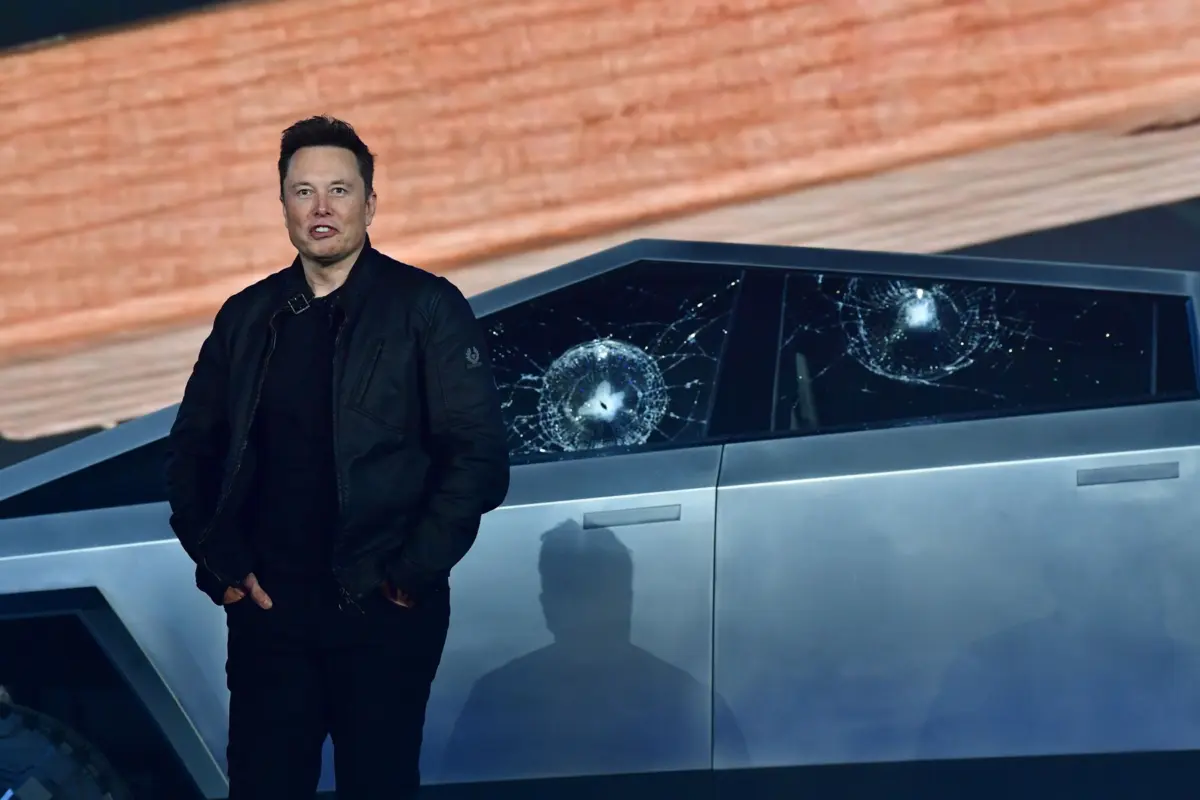
When the Cybertruck officially rolled off production lines in November 2023 at the Texas-based Gigafactory, it defied traditional automotive design. Shaped like a wedge of futuristic military hardware with bullet-resistant stainless steel exterior panels, it captured the imaginations of the internet subcultures raised on dystopian sci-fi video games and blockbuster franchises.
Initially, early adopters treated the vehicle as a novelty. In urban centers like New York’s Williamsburg, Greenpoint, and Bedford-Stuyvesant, spotting the first matte-black editions was a spectacle. However, the initial wave of enthusiasm quickly crashed against the reality of abysmal manufacturing standards and practical design failures.
The Breakdown and Recall Crisis (2025)
As the vehicle made its way into driveways, its structural and software deficiencies became impossible to ignore. The complex electrical systems were plagued by software bugs, with numerous user reports documenting complete vehicle shutdowns simply upon exposure to rain. The geometric, wedge-based design made traditional hauling, loading, and towing practically impossible.
In March 2025, Tesla was forced to recall 46,000 Cybertrucks after discovering that exterior side panels were prone to detaching in cold weather. Independent automotive journalists and professional mechanics routinely published teardown videos highlighting misaligned body panels, shoddy finishing, and structural vulnerabilities. While the doors did offer genuine resistance to low-caliber ballistics, the vehicle’s high price tag and poor utility reduced its appeal to a dwindling demographic of die-hard loyalists.
Political Entanglement and the DOGE Era (2025–2026)
Simultaneously, Elon Musk’s public profile underwent a radical political shift. He poured nearly $300 million into a dark-money super PAC supporting Donald Trump’s 2024 presidential campaign while using social media platforms to amplify right-wing rhetoric targeting transgender individuals, immigration policy, and diversity, equity, and inclusion (DEI) initiatives. This public pivot occurred even as his own corporate entities faced mounting scrutiny and lawsuits regarding workplace discrimination and harassment.
Following the 2025 presidential inauguration, Musk accepted a high-profile role leading the newly formed Department of Government Efficiency (DOGE)—a name lifted directly from a 2010s internet meme that inspired cryptocurrency "shitcoins." Under Musk’s direction, DOGE initiatives resulted in the immediate termination of thousands of federal workers, paralyzed regulatory agencies, and slashed funding for programs like USAID. Public health experts subsequently linked the dismantling of foreign aid to tens of thousands of preventable deaths from disease and famine in resource-starved developing regions.
The Pivot to the Cybercab and the End of the Line (Late 2026)
By November 2026, the cumulative weight of engineering recalls, cultural backlash, and shifting corporate priorities forced Tesla’s hand. Musk announced the wind-down of Cybertruck production to clear manufacturing space for the Cybercab, a dedicated self-driving taxi intended to compete with Alphabet’s Waymo.
Supporting Context & Metrics
To understand the Cybertruck phenomenon, one must evaluate the financial, demographic, and industrial data points that defined its lifecycle:
- Production vs. Expectations: Musk’s initial forecast promised 250,000 units annually. Actual production totaled approximately 70,000 units across its entire three-year run.
- The Recall Impact: In March 2025, a massive recall affected 46,000 vehicles due to structural failure risks in cold weather environments.
- Political Capital and Financing: Musk’s direct injection of nearly $300 million into political action committees and digital campaigns deeply intertwined the Tesla brand with partisan political alignments.
- Workplace and Legal Scrutiny: Multiple federal and civil lawsuits filed by former employees at Tesla and SpaceX cited rampant sexual harassment and systemic racial discrimination, standing in stark contrast to the administration’s stated corporate goals.
- Global Humanitarian Toll: Independent analyses connected the sudden defunding of USAID and international development programs under the DOGE mandate to severe disruptions in medical supply chains across the Global South.
Official Statements & Reactions
The cultural polarization surrounding the vehicle manifested in bizarre social adaptations. Owners caught in the crosshairs of Musk’s increasingly divisive public persona resorted to defensive measures. Across major metropolitan areas, bumper stickers reading "I bought this before Elon went crazy" began appearing on six-figure trucks in a desperate bid to stave off vandalism. Conversely, right-wing crypto enthusiasts and political loyalists doubled down, wrapping their vehicles in patriotic motifs, national flags, and overt political declarations.
Industry analysts noted that the vehicle had ceased to be an automobile in the traditional sense. It had transformed into a litmus test for cultural allegiance.
Critics from urban planning, automotive engineering, and human rights sectors offered scathing autopsies of the vehicle’s legacy. Environmental watchdogs raised alarms regarding the long-term environmental degradation posed by discarded lithium-ion batteries and stainless-steel chassis left to corrode in industrial salvage yards.
Future Outlook
The closure of the Cybertruck production line marks the end of a particularly surreal chapter in American industrial history. As Tesla reallocates its resources toward the Cybercab and other autonomous ventures, the legacy of the angular stainless-steel truck will likely fade into automotive obscurity.
In the decades to come, surviving Cybertrucks will likely sit immobile on blocks in rural yards, serving as rust-bound relics of the mid-2020s crypto and tech boom. Their massive lithium-ion battery packs risk leaching heavy metals into local groundwater tables, leaving industrial-adjacent communities to deal with the ecological cleanup. Meanwhile, the architects of these ventures remain insulated by vast portfolios, government subsidies, and circular stock mechanisms.
Ultimately, the Cybertruck will be remembered not as a visionary leap into the future, but as a cautionary monument—a rolling embodiment of a hollow, paranoid, and fleeting era where hyper-financialized hype masqueraded as innovation.
