

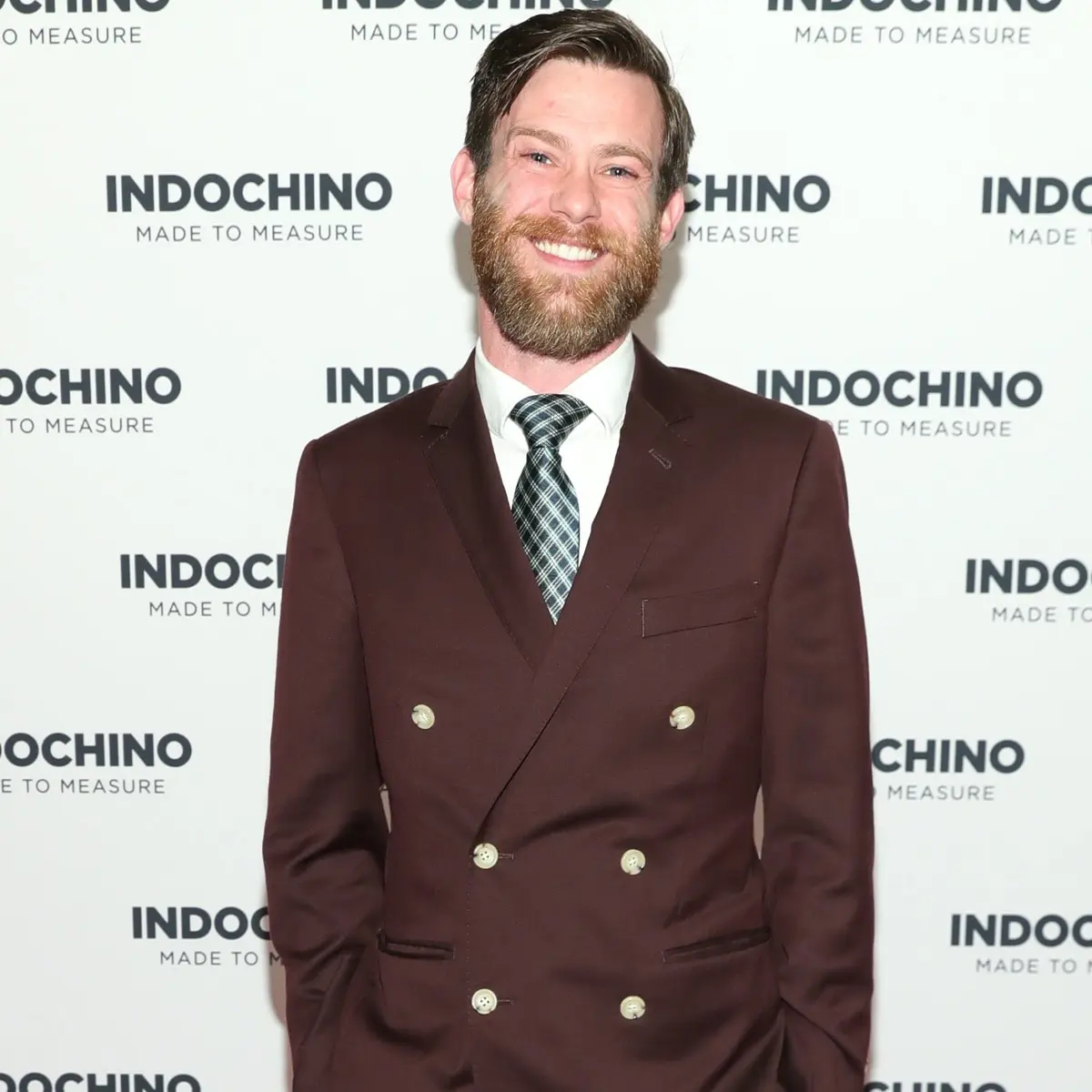
The intersection of early childhood stardom and radical lifestyle pivots has long captured the public imagination, yet few transitions match the stark departure undertaken by Brandon “Bug” Hall. Best remembered by global audiences as the lovable, cowlick-sporting Alfalfa in the 1994 cinematic adaptation of The Little Rascals, Hall has traded the glitz of Hollywood for an austere, off-the-grid existence in rural Arkansas. Now 41 years old, the former child star is navigating an unexpected crisis, turning to public crowdfunding via a GoFundMe campaign as he and his wife, Jill, prepare to welcome their sixth child.
Nearly a decade after stepping away from the entertainment industry—a retreat accelerated by personal controversies and a deliberate ideological shift—Hall’s current reality stands in stark contrast to his days on major studio lots. Living in a camper van in Mountain View, Arkansas, and raising a growing family under a self-proclaimed "radical Catholic extremist" framework, Hall’s narrative highlights a growing sub-trend among former celebrities: the complete rejection of modern consumer culture in favor of isolated, values-driven self-sufficiency. However, this philosophical "vow of poverty" has collided with the harsh realities of physical infrastructure, leaving a family on the precipice of expansion in critical need of financial and material aid.
Detailed Chronology
The Hollywood Roots and Early Success
Brandon Hall entered the American consciousness during the mid-1990s boom of family comedies. His portrayal of Alfalfa in Universal Pictures’ The Little Rascals (1994) cemented his status as a recognizable child actor, leading to subsequent roles in projects such as the Disney Channel original movie Get a Clue (2002). For years, Hall worked within the studio system, earning the financial cushions typical of working actors in television and film.
The Turning Point and "Self-Cancellation"
The trajectory of Hall’s life shifted dramatically in July 2020, when he was arrested in Weatherford, Texas, after allegedly inhaling air duster cans—an incident that sparked widespread media attention. Although Hall later noted to media outlets that he faced no formal charges resulting from the arrest, the event marked a profound psychological and professional inflection point. Hall has frequently referred to the subsequent period as his "self-cancellation," voluntarily stepping away from the Hollywood apparatus, liquidating or abandoning standard career streams, and rejecting the traditional income models of the entertainment industry.
The Off-the-Grid Transition
By late 2024 and early 2025, Hall’s lifestyle transformation became public through various digital platforms, including YouTube broadcasts and print interviews with outlets like the Daily Mail. Hall detailed his family’s adoption of a strict religious lifestyle—describing it as radical traditionalist Catholicism—and announced that he had taken a personal "vow of poverty."
The family relocated multiple times before settling on raw land in Mountain View, Arkansas. There, alongside his wife Jill and their five children, Hall began constructing a homestead centered around a camper van. The ambition was absolute self-reliance: avoiding the need for a steady income, relying instead on occasional odd jobs only when specific, unavoidable financial obligations materialized.
The GoFundMe Appeal
On November 5, the ideological framework of self-reliance met the logistical limitations of rural homesteading. With his sixth child less than a month away, Hall launched his first-ever public crowdfunding campaign. On the GoFundMe page, Hall addressed his followers with characteristic candor:
"It’s now six years since I self-cancelled, and I have avoided doing one of these in all that time… I always said this was my choice, and so I didn’t want to offload the glorious burden of it unless there was no other choice. Well here we are."
Hall explained that while the family successfully reached their new land, they fell short on critical infrastructural components, citing unpaid utility connections, depleted propane reserves for their camper van, and overdue personal communication bills. He stated his immediate objective: to finalize the basic mechanics of their homestead over a two-week window, allowing him to take on temporary labor before the impending birth of Baby No. 6.
Supporting Context & Metrics: The Great Hollywood Exodus
Bug Hall’s withdrawal from the industry is far from an isolated incident. Over the past decade, a significant cohort of high-profile actors, musicians, and public figures have actively turned their backs on Los Angeles, seeking refuge in foreign countries, rural expanses, or alternative lifestyles.
Global Relocations and Lifestyle Resets
- Ellen DeGeneres & Portia de Rossi: Following the 2022 conclusion of her long-running talk show and subsequent public scrutiny, DeGeneres announced her permanent retirement from the entertainment industry. She and her wife relocated to the Cotswolds in the United Kingdom, citing a desire for a slower, more polite, and community-oriented rhythm of life.
- Eva Longoria: The Desperate Housewives star relocated her family out of Los Angeles, splitting her time between Spain and Mexico. Longoria cited shifts in the socio-economic and cultural landscape of Southern California following the COVID-19 pandemic as the primary catalysts for her departure.
- Richard Gere & Alejandra Silva: Moving away from the American studio hubs, Gere embraced life in Madrid, Spain, noting that the bilingual environment and cultural pace offered a thriving space for his young children.
- Christina Milian: Relocating her household from the United States to Paris, France, Milian transitioned her children into the French educational system while balancing her career across international time zones.
Philosophical and Vocational Shifts
Other artists have abandoned Hollywood not merely for geographic relocation, but for radical ideological or professional reorientations:
- Jennette McCurdy: The former Nickelodeon star permanently exited acting following the conclusion of her television run, expressing deep public remorse and personal embarrassment over her early roles. Her bestselling 2022 memoir, I’m Glad My Mom Died, catalyzed a complete pivot toward writing, directing, and podcasting.
- Ian Somerhalder: Moving away from television acting after the conclusion of V-Wars, The Vampire Diaries alum transitioned into full-time regenerative agriculture, documenting his efforts through environmental documentaries like Kiss the Ground and establishing sustainable wellness enterprises.
- Jack Gleeson: After portraying King Joffrey in HBO’s Game of Thrones, Gleeson stepped away from professional acting at age 21, noting that monetizing a lifelong hobby fundamentally altered his relationship with the craft. Though he has selectively returned to independent stage and screen projects, his departure established a precedent for young actors prioritizing autonomy over commercial scale.
Official Statements and Public Appeals
Hall’s public appeals reflect a nuanced blend of accountability, theological conviction, and vulnerability. Rather than projecting an image of entitlement, his communications emphasize humility and spiritual solidarity.
In his November GoFundMe launch, Hall explicitly framed his request not as a demand for charity based on status, but as an appeal to communal goodwill:
"Times are hard for everyone, and I’m no more deserving than anyone else, but I ask in your charity that you help where you can, whether monetarily, by sharing this, or by prayer and sacrifice for the Hall-Barnetts of the Holy Cross."
This sentiment echoes his earlier statements regarding his labor philosophy, where he outlined to print interviewers that his long-term ambition was to remain entirely outside the traditional corporate workforce:
"My goal is to maintain a life as free of any need for an income as possible. If there’s a financial need that comes up, I’ll go take some work or do an odd job, for cash to fulfill that need."
Future Outlook
The immediate future for Brandon Hall and his family hinges on a delicate logistical convergence: completing the foundational infrastructure of their Arkansas homestead before the arrival of their sixth child, all while managing the public scrutiny inherent to a former child star living an unconventional lifestyle.
As the crowdfunding campaign progresses, the broader implications of Hall’s narrative raise fundamental questions about the modern viability of total off-the-grid living. While philosophical minimalism and radical self-reliance appeal to individuals seeking refuge from the hyper-accelerated pace of digital-age entertainment, physical realities—such as electrical utilities, propane heating, and maternal healthcare—inevitably require integration with broader economic systems.
For Hall, the upcoming weeks will determine whether his family can bridge the gap between their ideological aspirations and their immediate material needs. Whether this fundraising milestone serves as a temporary bridge or prompts a deeper reevaluation of his family’s operational model, the journey of the former Alfalfa remains one of the most unique and uncompromising life transformations in contemporary pop culture history.
