

Executive Overview
Two decades after the unimaginable tragedy of September 11, 2001, Lower Manhattan has completed one of the most remarkable urban transformations in modern history. Once characterized by a profound, seemingly insurmountable void—a 16-acre scar spanning the downtown skyline—the Financial District has evolved from a mourning ground into a vibrant, multi-dimensional epicenter of commerce, media, culture, and residential life.
This deep-dive retrospective examines the painstaking multi-decade revitalization of Lower Manhattan, tracing the trajectory from despair to dynamic growth. Driven by visionary municipal leadership, bold corporate investment—anchored early on by giants like WPP and Condé Nast—and an organic cultural renaissance, downtown New York has defied initial predictions of economic obsolescence.
Today, the neighborhood’s population has doubled, its streets buzz with culinary and retail innovation, and it stands as a testament to the unyielding spirit of a city that refuses to stand still. This article explores the chronological milestones, key stakeholder decisions, economic metrics, and profound human stories that define the rebirth of the World Trade Center district and Lower Manhattan at large.
Detailed Chronology: From the Ashes to the Skyline
The Void and the Early Years of Doubt (2001–2005)
On the morning of September 11, 2001, the collective psyche of New York City, and the nation at large, was altered forever. For those standing on nearby streets like Hudson or watching from across the East River, the collapse of the Twin Towers created an immediate, visceral trauma. In the days and months that followed, the prevailing sentiment regarding the future of Lower Manhattan’s Financial District was remarkably bleak. Conventional wisdom dictated that companies would flee the area en masse, terrified of future security threats and burdened by the psychological weight of the tragedy.
The site itself became an open wound. Spanned by temporary pedestrian bridges, the 16-acre site colloquially known as "the pit" served as a daily, painful reminder of loss. For a long time, urban planners and real estate developers wrestled with a daunting paradox: how to honor the dead through solemn memorialization while simultaneously breathing new economic life into a cratered landscape.
During this initial phase, progress was painfully slow. Bureaucratic hurdles, insurance disputes, and fierce debates over master architectural plans threatened to stall development indefinitely. Yet, beneath the surface friction, the foundational framework for rebuilding was being forged through sheer grit and the determination of local leaders, developers like Larry Silverstein, and resilient residents who refused to abandon their neighborhoods.
The Steel Rises: Breaking Ground on a New Era (2006–2012)
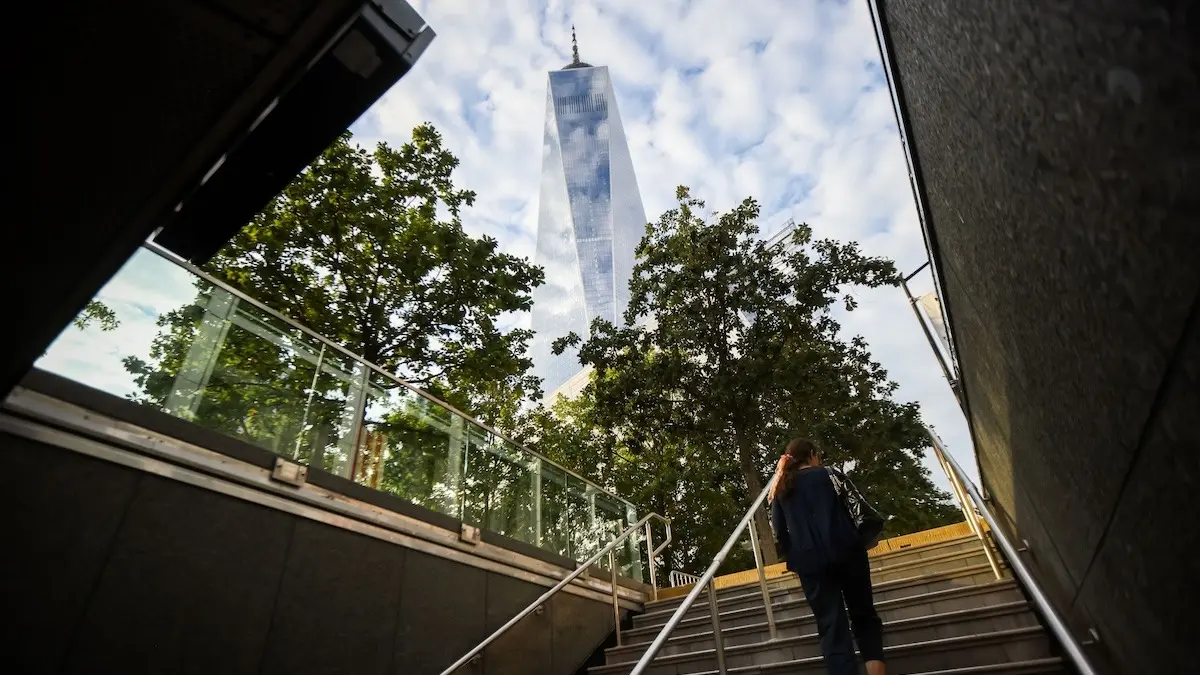
The inflection point came when the physical landscape began to shift upward. As steel beams finally climbed out of the excavation pit, One World Trade Center broke street level and steadily inched its way toward reclaiming a dominant position in the New York City skyline.
This era was defined by structural engineering feats and an unyielding commitment to urban renewal. Master planner Daniel Libeskind’s vision, combined with the architectural genius of structures like the Santiago Calatrava-designed Oculus, began to take physical shape. However, steel and concrete alone do not make a neighborhood viable; tenants were required to validate the multi-billion-dollar bet on downtown’s future.
The Corporate Anchors Take a Chance (2013–2019)
The turning point for commercial viability arrived in 2013, when WPP took a decisive, high-stakes gamble on the district. Its global media collective, GroupM (now operating as WPP Media), signed one of the earliest and largest long-term leases at 3 World Trade Center. This commitment represented a watershed moment. It was an unmistakable vote of confidence in a vision championed by developer Larry Silverstein and then-Mayor Michael Bloomberg—a vision that declared Lower Manhattan was not a relic of the past, but the frontier of the future.
Following WPP’s lead, a diverse wave of corporate giants planted their flags downtown. Condé Nast made the monumental move to 1 World Trade Center, signaling to the media and publishing industries that downtown was the place to be. They were soon joined by tech and culture powerhouses like Spotify and Fast Company. The Financial District was no longer strictly a bastion for banking and finance; it was rapidly transforming into a dynamic nexus where media, technology, and advertising converged.
Supporting Context & Metrics: The Numbers Behind the Rebirth
The physical transformation of Lower Manhattan is backed by staggering quantitative shifts. Urban revitalization is rarely successful when forced purely through top-down mandates; it requires an organic gravitational pull that attracts residents, small businesses, and cultural institutions.
According to data compiled by the New York State Comptroller and regional real estate platforms, the demographic and commercial shifts in Lower Manhattan over the past two decades reveal a dramatic narrative of growth:
- Population Surge: Lower Manhattan’s residential population has more than doubled since 2000, shifting the neighborhood from a strictly 9-to-5 commercial hub to a 24/7 residential community.
- Housing Demand: In 2025, the Financial District recorded the highest surge in apartment searches of any neighborhood across all five boroughs on StreetEasy, underscoring an insatiable demand for downtown living.
- Retail and Hospitality Expansion: Alongside residential growth came an influx of world-class dining establishments, specialty grocers, fitness centers, and cultural attractions, creating a self-sustaining ecosystem that appeals to young professionals and families alike.
This economic momentum proved resilient even through macroeconomic shocks, including the COVID-19 pandemic, which hit New York City’s commercial real estate sector harder than most. While Midtown office spaces faced prolonged vacancies, Lower Manhattan’s diverse mix of residential density, modern amenity-rich towers, and cultural gravity helped cushion the blow and accelerate recovery.
Official Statements and Industry Perspectives
The renaissance of Lower Manhattan has been extensively analyzed by urban economists, civic leaders, and the corporate executives who work within its towers every day.
Reflecting on the psychological and professional significance of working at the World Trade Center today, executives often point to the unique juxtaposition of profound remembrance and relentless forward motion. Walking past the memorial pools each morning—where families from across the globe gather in quiet reflection—serves as a humbling daily reminder of the stakes involved in modern commerce and urban life.
Industry leaders frequently emphasize that the rebuilding of Lower Manhattan was, at its core, an exercise in creative optimism. Architects, urban planners, and civic officials had to balance the solemn duty of memorialization with the urgent need to foster an environment where future generations could thrive.
"Creativity is the ultimate act of optimism. Imagination, collaboration, and design are gestures toward tomorrow," notes a senior media executive whose agency anchors a downtown tower. "When you look out at the Oculus—standing inside the ribs of something ancient and alive—you are reminded that this place is a living, breathing tribute. It is a place forever anchored by remembrance, yet entirely surrounded by hope."
Real estate visionaries like Larry Silverstein have similarly maintained that the success of the World Trade Center site proves the unmatched resilience of New York City. By betting on modern, sustainable, and technologically advanced infrastructure, the development team created spaces that naturally drew the world’s most innovative companies.
Future Outlook: Lower Manhattan’s Next Chapter
As Lower Manhattan looks toward the future, its trajectory points toward continued diversification and urban innovation. The challenge for the next decade will not be attracting initial tenants, but sustaining livability, improving transit infrastructure, and adapting to the evolving demands of the modern workforce.
With hybrid work models reshaping commercial real estate globally, downtown properties are increasingly pivoting toward experience-driven office spaces. Buildings are integrating wellness-focused amenities, state-of-the-art sustainability standards, and flexible public gathering areas that blend seamlessly with the surrounding neighborhood.
Furthermore, the continuous influx of young residents ensures that Lower Manhattan will remain a cultural incubator. The integration of public art installations, waterfront esplanades along the Hudson and East Rivers, and community-focused programming guarantees that the district is not merely a monument to resilience, but a dynamic, forward-looking neighborhood.
Ultimately, the story of Lower Manhattan’s rebirth is far from finished. It stands as a global masterclass in urban recovery—proving that when met with imagination, collaboration, and an unyielding refusal to succumb to despair, a city can rise from the ashes to build a brighter, more connected tomorrow.