In the hyper-competitive landscape of modern digital commerce, the discipline of copywriting has undergone a profound structural shift. Once viewed primarily as a creative pursuit focused on eloquent prose and brand aesthetics, copywriting has transitioned into a highly quantitative revenue science. Today, the world’s most successful digital brands do not measure the quality of their copy by its literary elegance; instead, they evaluate it by its direct contribution to the bottom line—specifically, its return on investment (ROI) and customer acquisition cost (CAC).
This investigative report examines the core methodologies behind high-conversion copywriting, drawing on the operational frameworks of Tim Stoddart, partner at the multi-million-dollar digital marketing platform Copyblogger and founder of a highly successful digital marketing agency. Stoddart’s career, which has generated seven-figure revenues almost exclusively through written channels—including search engine optimized (SEO) blogs, social media platforms, and targeted email newsletters—serves as an empirical blueprint for modern practitioners.
This analysis details the shift from speculative writing to data-driven persuasion, outlining how top-tier copywriters leverage customer psychology, competitive intelligence, artificial intelligence (AI), and robust attribution metrics to transform written words into predictable growth assets.
Detailed Chronology: The Systematic Evolution of High-ROI Copywriting
The development of a high-converting copywriting campaign is not a spontaneous creative act. Rather, it is a chronological, highly structured process that moves systematically from market research to strategic drafting, and finally to iterative optimization.
Phase I: Deep-Dive Demographic Intelligence (Talking to Customers)
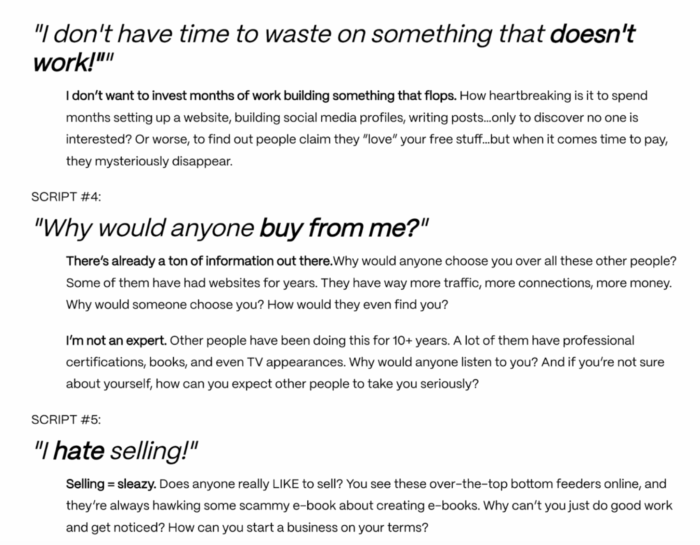
The foundation of any high-performing copy campaign is the rigorous collection of qualitative customer data. To convert a reader into a purchaser, a copywriter must first map the target demographic’s exact psychological state. This involves identifying four critical vectors:
The prospect’s immediate pain points.
The prospect’s deeply held objections and systemic skepticism.
The precise vocabulary and vernacular the prospect uses to describe their problems.
The emotional triggers that drive their purchasing decisions.
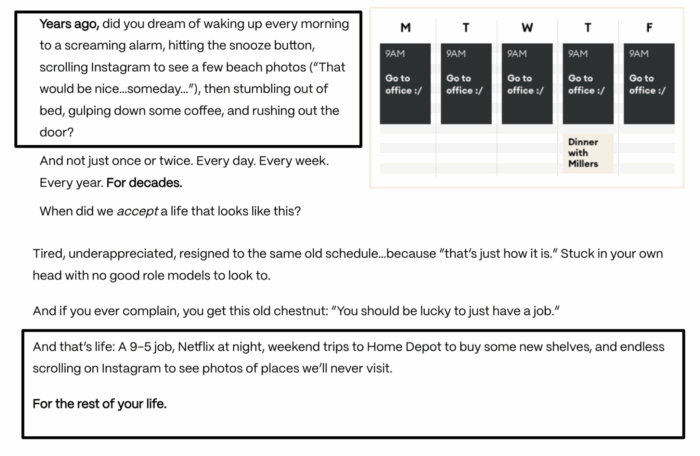
A prime example of this methodology is seen in the landing page architecture for Ramit Sethi’s flagship course, Earnable. Rather than relying on generic, aspirational slogans like "Unlock Your Earning Potential," the copy mirrors the precise daily frustrations of its target demographic. It explicitly references the "9-to-5 grind," "unwinding with Netflix at night," "routine weekend trips to Home Depot," and "mindless scrolling on Instagram." By reflecting the prospect’s exact reality back to them, the copy bypasses cognitive defense mechanisms, establishes immediate empathy, and positions the product as a highly customized solution.
Tactical Methods for Customer Research
In fast-paced agency settings where direct client interviews may be logistically impractical, copywriters must deploy alternative investigative tactics:
Internal Stakeholder Interviews: Interviewing frontline sales representatives to catalog the most frequent objections, questions, and points of friction raised during sales calls.
AI-Assisted Call Transcript Analysis: Downloading sales call recordings, converting them to text, and processing them through advanced large language models (LLMs) to identify recurring semantic patterns and customer frustrations.
Digital Ethnography: Scraping specialized online forums, such as Reddit communities and Facebook groups, to observe organic conversations. For example, a copywriter tasked with promoting a weight-loss program would analyze fitness subreddits to dissect the specific language users use to describe past failures, dietary struggles, and emotional barriers.
Phase II: Competitive Reverse-Engineering
High-performing copywriters rarely design campaigns in a vacuum. Instead, they actively monitor and reverse-engineer the marketing assets of their primary competitors. Because major industry players invest heavily in testing their copy, analyzing their long-running campaigns provides valuable clues about what works in the market.
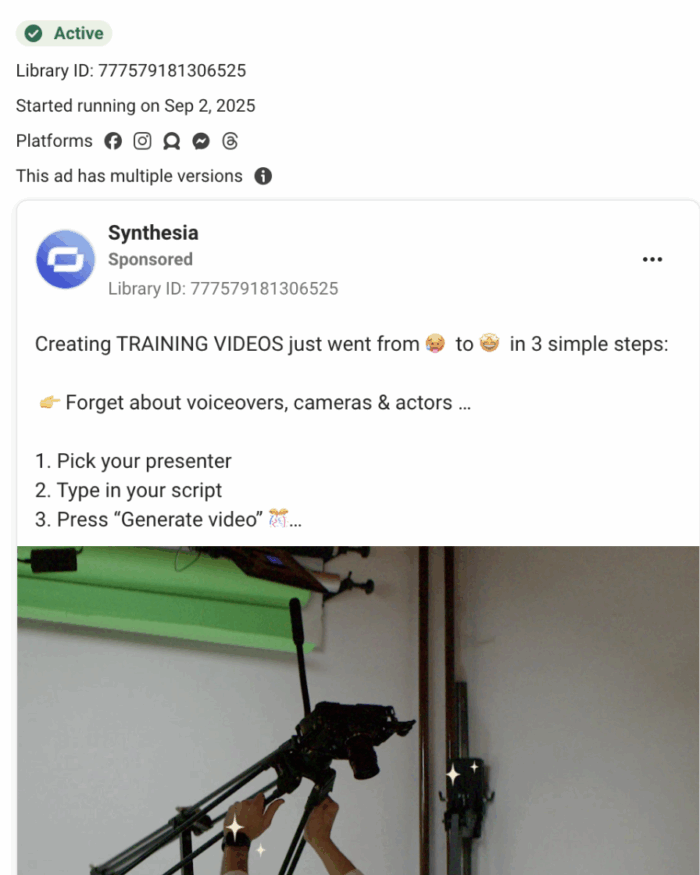
To execute this, researchers rely on public advertising registries, specifically the Meta Ad Library and the LinkedIn Ad Directory. By filtering for campaigns that have run continuously for over 30 days, copywriters can identify which hooks and pain points are driving conversions. For instance, an analysis of B2B software advertisements (such as campaigns run by Synthesia or HubSpot) reveals a consistent focus on highly specific operational bottlenecks—such as the high cost of video production or the frustration of managing messy CRM data—rather than broad, abstract feature lists.
Phase III: The Curation of Persuasion Assets (The Swipe File)
To maintain high output without sacrificing quality, professional copywriters rely on a "swipe file"—a highly organized archive of historically successful headlines, landing pages, email sequences, and advertising creatives.
Rather than copying these assets directly, writers use them to study the underlying psychological frameworks. Resources like SwipeFile.com, curated by veteran copywriter Neville Medhora, offer valuable reference points. By analyzing why certain hooks succeeded in different industries, copywriters can adapt those same frameworks to their current campaigns.
Phase IV: Standardizing the Production Pipeline
To eliminate writer’s block and ensure consistent quality, elite copywriters treat writing as a structured assembly line. The following process is widely used for long-form content and blog copy:
Define Intent and Angle: Before writing a single sentence, the copywriter must identify the reader’s primary search intent and establish a unique, compelling angle that differentiates the piece from existing market alternatives.
Construct the Header Skeleton: The writer builds a logical structural framework using well-defined H2 and H3 subheadings. This ensures the piece is easy to scan and directly addresses the reader’s core questions.
Draft High-Intent Copy: With the structural blueprint in place, the writer drafts the body copy, focusing on clarity, momentum, and clear calls-to-action (CTAs) that guide the reader toward conversion.
Supporting Context & Metrics: Quantifying the ROI of Written Words
A major challenge in professional copywriting is moving away from subjective editorial feedback and toward objective performance metrics. The value of a piece of copy is not determined by grammatical perfection, but by its performance against key business metrics.
Copywriting Channel
Primary Performance Metric
Key Conversion Signals
Optimization Strategy
Social Media Ghostwriting (LinkedIn / X)
Qualitative Engagement & Lead Quality
Comments from target decision-makers; Demo sign-ups
Refine hooks to target specific executive pain points.
Pivot keywords from high-volume informational search to high-intent buyer searches.
Sales Landing Pages
Conversion Rate (CVR)
Direct purchases; Trial starts; Form submissions
Implement A/B testing on headlines, value propositions, and CTA placement.
Redefining Engagement Metrics on Social Platforms
On social networks like LinkedIn and X, copywriters often fall into the trap of tracking "vanity metrics" such as likes, shares, and raw impressions. However, high engagement does not always translate into business revenue.
For example, if a company selling enterprise-grade B2B sales software publishes a post that goes viral among entry-level professionals, that reach is functionally useless. A more valuable metric is the professional profile of those engaging with the content. High-conversion copy is designed to attract comments and inquiries from specific decision-makers, such as Sales Directors and Chief Technology Officers, rather than a broad, non-buying audience.
The Danger of Untargeted Traffic: A Case Study in Purchase Intent
The difference between raw traffic and high-intent visitors is well illustrated by an anecdote from a prominent direct-response copywriter. Operating an affiliate store specializing in high-end cuckoo clocks, she published a series of articles detailing how to repair these complex timepieces.
While the articles generated significant organic search traffic, the incoming audience consisted entirely of individuals looking for free, DIY repair advice, rather than prospective buyers looking to purchase a new clock. This experience highlights a fundamental law of copywriting: Content must be optimized for purchase intent, not raw visibility.
The Modern Copywriting Workflow: AI as a Cognitive Partner
The rise of generative artificial intelligence has fundamentally changed the copywriting workflow. While using AI to draft entire articles often results in generic, low-value content, top-tier writers use LLMs like ChatGPT as strategic partners to improve their research and speed up production.
AI Research Input ➔ Human Editorial Review ➔ Contextual Copy Output
1. Pain Point Synthesis Prompts
Copywriters use LLMs to analyze customer reviews, forum posts, and feedback transcripts. By asking the AI to identify recurring frustrations, they can quickly map out a target audience’s core challenges.
Example Prompt:
"Analyze the following customer reviews for a SaaS project management tool. Identify the top three emotional frustrations, the most common operational bottlenecks, and the exact phrases customers use to describe their annoyance with their current software."
2. Syntactic Refinement Prompts
When a writer is struggling to phrase a complex concept clearly, AI can help simplify the copy, making it more concise and readable.
Example Prompt:
"Rewrite the following paragraph to improve clarity and impact. Remove all corporate jargon, shorten the sentences, and write in a direct, conversational tone that appeals to busy executives."
3. Uncovering Authoritative Context and Social Proof
AI can also assist in researching real-world case studies, industry statistics, and relevant quotes from social platforms like LinkedIn. This allows writers to back up their claims with solid social proof, making their copy far more persuasive.
Official Statements: Insights from Industry Pioneers
To truly understand how copywriting drives business growth, we can look to the core philosophies of some of the industry’s most successful practitioners and strategic minds.
"Becoming a better copywriter doesn’t mean you write more eloquently. In fact, the opposite is often true. Great copywriters are clear, concise, and ultimately convert readers into customers. Focus on how to generate more revenue from your words."
— Tim Stoddart, Partner at Copyblogger
This perspective challenges the traditional view of writing as pure art. Instead, it frames copy as a functional business asset designed to generate a clear return on investment.
"Be impatient with action, but patient with results."
— Naval Ravikant, Famed Investor and Philosopher
This quote highlights a key challenge for copywriters and content marketers: consistency. While writers should focus on producing and testing new copy every day, building a high-converting channel is a long-term process that requires patience before seeing major commercial results.
"The most valuable element of modern professional development is real-time feedback from practitioners who have actually built seven-figure businesses. Without expert peer review, writers risk repeating the same high-cost mistakes in isolation."
— Charles Miller, Personal Branding Expert and Partner at Copyblogger Academy
Miller emphasizes that high-level copywriting cannot be mastered in a vacuum. To truly hone their skills, writers need access to structured mentorship and feedback from experienced professionals who understand the business side of the craft.
Future Outlook: The Convergence of Community, AI, and Intent-Driven Marketing
As we look toward the future of digital marketing, the copywriting landscape is set to undergo several major transformations. These changes will redefine how brands communicate with their audiences and how copywriters build successful careers.
The widespread availability of generative AI tools means that basic, informational copy has become highly commoditized. Brands can now generate standard blog posts, simple social media updates, and basic product descriptions at virtually zero cost.
As a result, the market value of writers who only produce generic content will continue to decline. In contrast, the demand for elite copywriters who specialize in deep research, unique positioning, and emotional storytelling will grow. The future belongs to writers who can infuse copy with genuine human insight, unique perspectives, and proven social proof that AI cannot replicate.
The Shift to Platform-Specific Mastery
As search engines and social media algorithms continue to evolve, copywriters must develop a deep understanding of specific platforms. Success in modern copywriting requires more than just knowing how to write; it requires a strong grasp of how different channels operate:
For SEO Writers: This means understanding Google’s search algorithms, user search intent, and how to structure content to rank highly.
For Social Media Writers: This requires a deep understanding of platform-specific algorithms (such as LinkedIn or X), knowing how to write attention-grabbing hooks, and understanding how to build genuine engagement with a target audience.
By combining writing talent with technical platform expertise, copywriters can deliver far better results for their clients, allowing them to command premium rates.
The Rise of Collaborative Learning and Mentorship
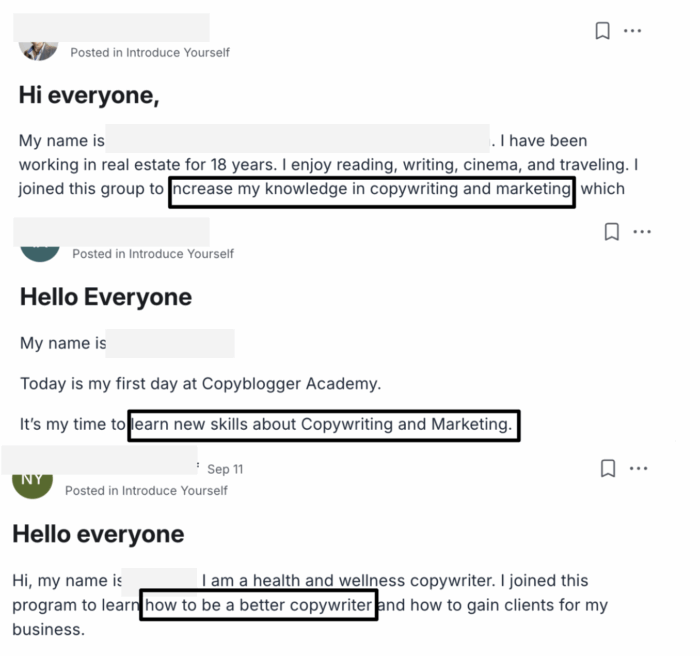
As the industry becomes more competitive, up-and-coming copywriters are increasingly turning to collaborative learning environments and professional communities for support. Platforms like the Copyblogger Academy have pioneered this approach, offering structured coursework alongside active peer communities and direct feedback from seasoned industry experts.
By participating in these communities, writers can share job opportunities, exchange valuable feedback, and learn from other people’s successes and failures. This collaborative approach helps copywriters accelerate their professional growth, navigate the challenges of freelance or agency life, and build sustainable, high-paying careers in the modern digital economy.