In an era dominated by rapid-fire video content and algorithmic volatility, the written word remains the single most potent engine for online customer acquisition. While many digital creators chase vanity metrics such as social media impressions, likes, and shares, elite digital marketers are quietly engineering seven-figure empires using a highly calculated approach to direct-response copywriting.
This investigative report dissects the operational frameworks used by leading digital marketers, including the partnership behind Copyblogger—a multi-million dollar digital education and community ecosystem. Through an analysis of modern buyer psychology, competitor intelligence platforms, and high-ROI tracking models, we uncover why the traditional definition of "good writing" is obsolete. In its place stands a data-driven, conversion-centric methodology that prioritizes customer empathy, psychological mirroring, and rigorous performance metrics over literary elegance.
Detailed Chronology: The Evolution of Modern Direct-Response Copywriting
To understand the current state of digital copywriting, one must trace its evolution from the physical mailboxes of the mid-20th century to the algorithmic feeds of contemporary social networks.
[Traditional Print Era] ───► [SEO & Content Boom] ───► [Platform-Specific Era] ───► [AI-Augmented Era]
- Static Sales Letters       - High-Volume Keyword Blog Posts - Ghostwriting (LinkedIn/X)  - Strategic Prompting
- Long Lead Times            - Search Engine Domination      - High-Velocity Feedback      - Sentiment & Pain Point Analysis
- Delayed Feedback           - Organic Traffic Focus         - Algorithm-Specific Formats  - Deep Attribution Tracking
The Era of the Static Sales Letter (Pre-2000s)
Copywriting was historically the domain of print advertising, catalogs, and direct mail. Pioneers like Eugene Schwartz and Gary Halbert relied on slow-feedback loops, mailing physical letters to targeted lists. Success was measured in weeks or months based on returned coupons or phone orders.
The Organic Search and Blog Boom (2000s–2010s)
The rise of search engines shifted the paradigm. Early digital agencies recognized that blog posts, email newsletters, and educational content could attract high-intent organic traffic at a fraction of the cost of print. This era saw the birth of platforms like Copyblogger, which proved that teaching-based selling could build massive, loyal audiences.
The Platform-Specific & Algorithmic Shift (2010s–2020s)
As social media networks matured, copywriters had to adapt to platform-specific constraints. The rise of "thought leadership" on LinkedIn and micro-blogging on X (formerly Twitter) demanded highly optimized hooks, short-form narrative structures, and immediate feedback loops. Copywriting split into specialized sub-disciplines, from SEO-driven long-form articles to high-velocity social ghostwriting.
The AI-Augmented Era (2020s and Beyond)
Today, the barrier to entry for generating basic text has dropped to zero due to Large Language Models (LLMs). Consequently, the value of generic, low-effort copy has collapsed. Modern copywriters are shifting from pure execution to strategic curation—using artificial intelligence to conduct deep audience research, optimize sentence structures, and analyze competitor datasets, while maintaining human oversight of brand voice and customer empathy.
Supporting Context & Metrics: The 10 Commandments of High-Conversion Copywriting
Becoming an elite copywriter does not require flowery prose or creative eccentricity. Rather, it demands a deep understanding of human psychology and market dynamics. Below are the ten foundational strategies utilized by top-tier professionals to turn words into financial assets.
1. Mirroring Customer Pain Points
A copywriter’s primary objective is to capture attention, build trust, address objections, and guide a prospect toward a solution. To achieve this, a writer must deeply understand the customer’s day-to-day reality.
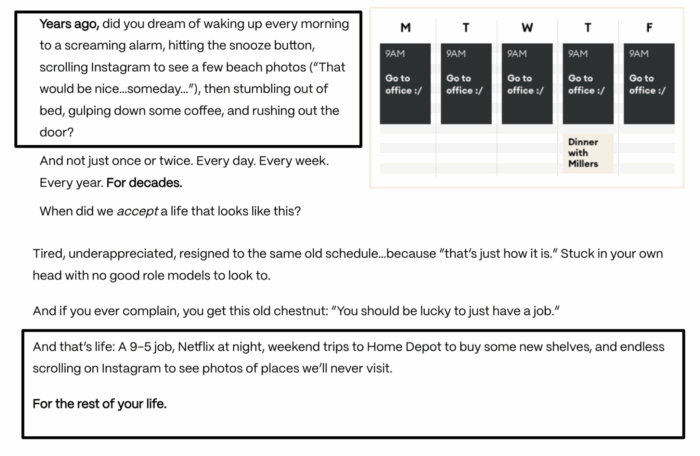
Great copy does not merely announce a product’s features; it mirrors the exact frustrations of the target demographic. For example, in the sales page for his business program Earnable, personal finance expert Ramit Sethi avoids generic taglines like "Earn more money." Instead, he paints a vivid picture of the standard 9-to-5 grind: endless scrolling on Instagram, spending weekends on mundane home improvement chores, and watching Netflix to escape work anxiety. By reflecting these precise scenarios, the copy signals to readers that the program was built specifically for their unique struggles.
To extract this level of detail, writers must conduct systematic audience discovery:
Internal Stakeholder Interviews: Consulting with active sales representatives to document recurring customer objections.
Transcript Analysis: Uploading raw sales call recordings into AI models to extract frequent customer phrases and pain points.
Digital Ethnography: Scouring niche forums, Reddit threads, and Facebook groups to analyze the unvarnished vocabulary used by consumers.
2. Deconstructing Competitor Ad Libraries
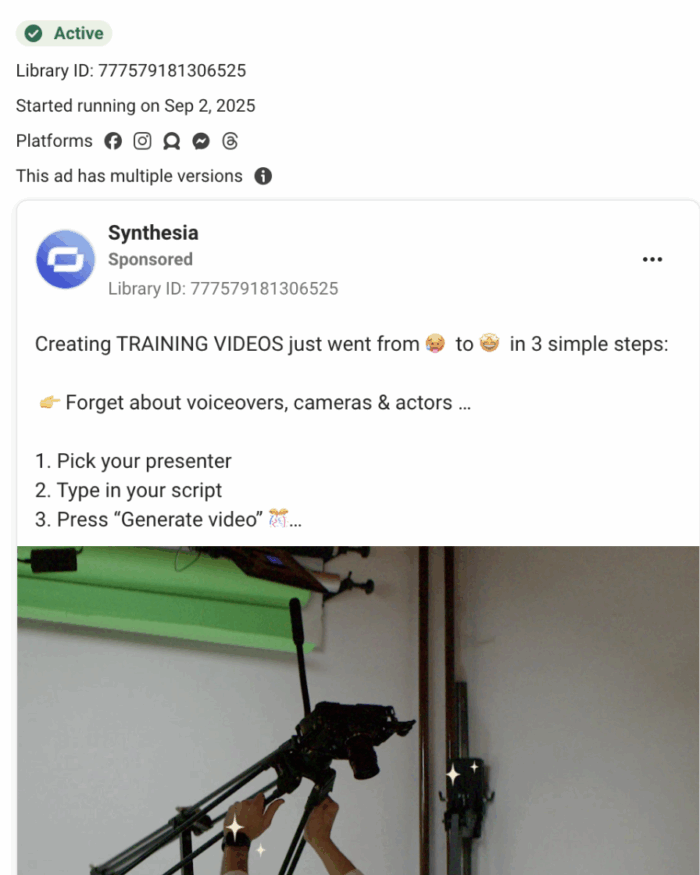
Top companies invest millions of dollars testing headlines, hooks, and calls-to-action. Rather than starting from scratch, successful copywriters utilize public ad registries—such as the Meta Ad Library and LinkedIn Ads Directory—to run competitor intelligence.
By analyzing which advertisements have been active the longest, writers can identify winning formulas. For instance, if an AI video platform like Synthesia has run a specific ad targeting the logistical hassles of organizing corporate video shoots for several consecutive months, it indicates that "production hassle" is a highly lucrative pain point to address in new marketing campaigns.
3. Maintaining a Curated Swipe File
A swipe file is a structured repository of exceptional marketing copy, landing pages, and email sequences. It serves as an ongoing source of inspiration and structural frameworks.
While building a personal swipe file is essential, modern copywriters also leverage curated public databases. Resources such as Neville Medhora’s SwipeFile.com allow writers to observe what direct-response veterans value, helping them hone their analytical eye for effective hooks and layout designs.
4. Establishing a Repeatable Content Architecture
Staring at a blank screen is a major bottleneck for creative productivity. Elite writers eliminate writer’s block by implementing strict, step-by-step content production workflows.
A standard long-form content production pipeline follows a structured three-phase model:
Phase
Core Activity
Objective
Phase 1: Outlining
Structure the narrative skeleton; insert primary H2/H3 headings.
Establish logical flow and prevent structural drift.
Phase 2: Writing
Draft the copy without stopping to edit or format.
Ensure high readability and clear path to conversion.
5. Cultivating Real-World Feedback Loops
Theoretical knowledge cannot substitute for real-world market feedback. Aspiring writers must practice by building their own digital assets and launching personal projects.
               ┌────────────────────────┐
               │   Launch Side Project  │
               │ (Dropshipping/Affiliate)│
               └───────────┬────────────┘
                           │
                           ▼
               ┌────────────────────────┐
               │  Write Target Content  │
               └───────────┬────────────┘
                           │
                           ▼
               ┌────────────────────────┐
               │ Analyze Audience Data  │
               │ (Traffic vs. Purchase) │
               └───────────┬────────────┘
                           │
                           ▼
               ┌────────────────────────┐
               │ Optimize for Intent    │
               │ (Iterate Copy for ROI) │
               └────────────────────────┘
Consider the case of a direct-response writer who began her career by launching a dropshipping store selling traditional cuckoo clocks. Initially, she wrote high-traffic blog posts detailing "how to repair cuckoo clocks." However, this traffic only generated service calls from DIY hobbyists rather than product sales. This hands-on lesson taught her a fundamental truth of search engine copywriting: write for high commercial purchase intent, not raw traffic volume.
6. Utilizing AI for Cognitive Heavy Lifting
While AI tools should not be trusted to write entire articles autonomously, they are highly effective research and editing partners.
Pain Point Discovery Prompt
Copywriters can use target audience prompts to map out psychological obstacles:
"Act as an expert copywriter. Analyze the following forum posts from [Target Demographic] and identify the top three emotional pain points, the primary objections to buying a solution, and the specific phrases they use to describe their frustrations."
Editing and Clarity Refinement
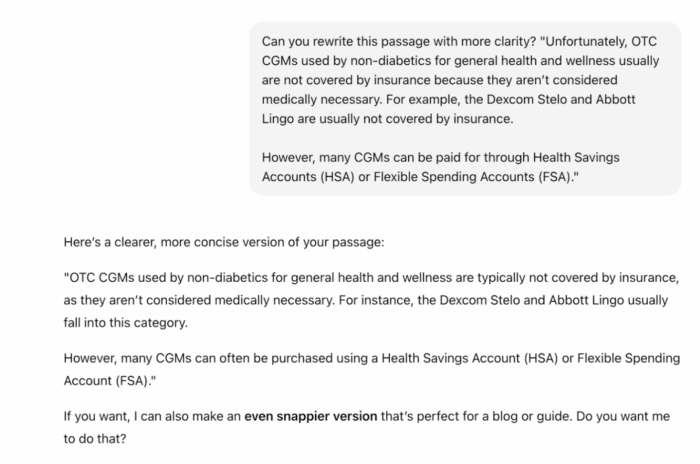
Writers can also paste complex sentences into LLMs with instructions to simplify the language:
"Rewrite this paragraph for maximum clarity and punchiness. Keep the tone professional but conversational. Eliminate all unnecessary passive voice and corporate jargon."
7. Mastering Platform-Specific Nuances
Every digital platform operates under its own distinct set of psychological and algorithmic rules. A long-form, highly detailed educational guide that thrives on an SEO blog will fall flat on social networks like LinkedIn, where content requires strong opening hooks, short sentences, and personal narrative arcs. Copywriters who master these platform-specific formats can drive much higher organic engagement, giving them the leverage to charge premium rates for their services.
8. Shifting Metrics from Vanity to Financial Return
The ultimate differentiator between a low-earning writer and a high-paid direct-response copywriter is the ability to connect creative output to actual financial performance.
                           [Marketing Metrics Hierarchy]

        High ROI ───►  [ Sales Revenue / Demo Signups ]  ◄── Tracked via GA4 & CRM
                       [ Lead Conversion Rate (CVR)  ]
                       [ Click-Through Rate (CTR)    ]
        Vanity   ───►  [ Raw Pageviews / Impressions  ]  ◄── Often misaligned with sales
Social Media Copywriting: Instead of measuring success by likes or impressions, elite ghostwriters track conversion indicators, such as the job titles of commenters and direct feedback from lead-generation forms.
Search Engine Optimization (SEO): Rather than reporting raw organic traffic, top-tier SEO copywriters set up conversion tracking in platforms like Google Analytics (GA4) to prove exactly how many sign-ups or purchases originated from specific articles.
Email & Landing Pages: Writers must monitor key direct-response metrics, including click-through rates (CTR), conversion rates (CVR), and direct revenue generated per email broadcast.
9. Leveraging Peer and Mentor Networks
Writing in isolation can limit professional growth. By joining curated professional networks, copywriters can dramatically accelerate their learning curve through peer critiques, shared industry insights, and client referrals.
However, writers must evaluate the source of their feedback. While constructive criticism from fellow beginners is helpful, guidance from proven, high-earning professionals who understand the nuances of direct-response marketing carries far more weight.
10. Executing with High Velocity and Long-Term Patience
Famed investor Naval Ravikant once advised professionals to be "impatient with action, but patient with results." This philosophy is highly applicable to copywriting. Successful writers push themselves to produce, test, and iterate on copy daily, yet they understand that building a strong professional reputation, mastering the craft, and seeing compounding organic traffic can take months or even years of steady work.
Official Statements & Expert Perspectives
To understand the core principles of high-converting copy, we can look to some of the industry’s most respected direct-response practitioners and direct-marketing platforms.
On the Real Purpose of Copywriting
The Copyblogger editorial leadership team has long argued that eloquent writing is often the enemy of effective sales copy:
"Becoming a better copywriter doesn’t mean you write more eloquently. In fact, the opposite is often true. Great copywriters are clear, concise, and ultimately focus on converting readers into customers. Do not focus on improving the artistic craft of writing; focus on how to generate more revenue from your words."
On Audience Empathy and Psychological Mirroring
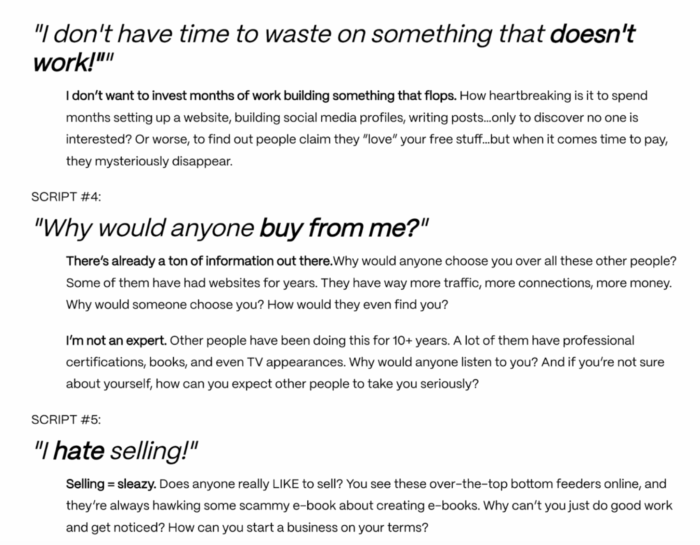
In his public landing pages for Earnable, Ramit Sethi highlights the importance of using "customer scripts" to directly address buyer hesitation:
"I don’t guess what my audience wants. I use their exact words, their exact worries, and their exact scripts. When you mirror your reader’s inner monologue, they don’t just feel understood—they realize your product is the logical solution to their problem."
On the Power of Curated Swipe Files
Neville Medhora, founder of SwipeFile.com, emphasizes that studying proven, high-performing marketing campaigns is essential for developing a strong natural sense for effective copy:
"A great copywriter is a collector of human behavior. By studying swipe files, you aren’t just copying headlines; you are studying the timeless psychological triggers that cause people to take action."
Future Outlook: Copywriting in the Age of Algorithmic Curation and AI
As digital marketing continues to evolve, several key trends are set to reshape the copywriting landscape over the next decade.
[Traditional Copywriting] ──────────────────► [Future Direct-Response Copywriting]
- High-volume, generic text generation.      - Strategic prompt engineering.
- Focus on raw organic traffic metrics.      - Deep customer empathy and psychological mapping.
- Isolation from financial attribution.      - Advanced integration with AI research tools.
                                             - Full alignment with revenue and conversion metrics.
The Polarization of Content Quality
The market will continue to split into two distinct tiers. Low-cost, generic content will be entirely automated by AI engines, rendering entry-level writing jobs obsolete. Conversely, high-strategy direct-response copywriters who understand how to structure complex sales funnels, conduct deep qualitative research, and write with genuine empathy will see their demand and pricing power increase.
The Domination of Conversion-First SEO
As search engines integrate generative AI answers directly into search results, informational search queries will yield less referral traffic for websites. Consequently, copywriters must pivot toward creating highly unique, narrative-driven content optimized for commercial intent. Success will no longer be measured by search engine rankings alone, but by the copy’s ability to turn readers into leads.
The Rise of the "Vibe Coder" and Solo Operator
With no-code software development platforms like Lovable and advanced AI assistants, copywriters are no longer restricted to writing for other businesses. A single copywriter can now easily build, market, and sell niche digital tools and products entirely on their own. By combining direct-response marketing skills with AI-assisted product creation, solo operators can build highly profitable software and content businesses without the need for large teams or outside venture capital.
Advanced Attribution and ROI Integration
The era of vague marketing metrics is drawing to a close. Clients will increasingly demand transparent, end-to-end conversion tracking. The most successful copywriters of tomorrow will not just deliver text files; they will provide comprehensive marketing assets integrated with conversion tracking systems, proving their direct impact on the client’s bottom line.