The global content marketing industry, currently valued in the tens of billions of dollars, is facing an unprecedented structural crisis. The dual forces of generative artificial intelligence and rapid search engine algorithm updates have disrupted traditional marketing models. Techniques that successfully drove organic traffic and customer acquisition just three years ago are increasingly obsolete in a landscape defined by zero-click searches, AI-generated content, and a shift toward personal branding.
Consequently, the professional education sector designed to train the next generation of content marketers is under intense pressure. While the market is flooded with online courses promising to teach the fundamentals of copywriting, search engine optimization (SEO), and content distribution, a deep-dive evaluation reveals a stark divide in educational efficacy.
On one side of this divide are legacy, static video curricula. Often offered for free by major software-as-a-service (SaaS) enterprises, these programs serve as excellent introductions to historical best practices but struggle to keep pace with rapid technological shifts. On the other side are dynamic, practitioner-led communities and hybrid academies. These premium programs integrate real-time feedback, peer-to-peer networking, and continuous strategic updates to address the realities of modern digital marketing.
This investigative report evaluates eight of the industry’s most prominent content marketing courses: Copyblogger Academy, HubSpot Content Marketing Certification, Grow and Convert’s Customers from Content, Superpath, Ahrefs’ Blogging for Business, Semrush Academy, CXL Content Marketing Research Course, and Udemy’s Content Marketing Masterclass. By assessing these programs against a rigorous, five-factor analytical framework—comprising instructor credibility, format breadth, advice recency, individual support, and community engagement—this analysis provides a definitive guide for professionals looking to future-proof their digital marketing skills.
Detailed Chronology of Program Evolution & Analytical Deep Dive
To understand the current state of content marketing education, we must examine how these programs developed and how they adapt to industry changes. The evolution of digital marketing education has transitioned from basic blogging tutorials to highly specialized, multi-channel strategic frameworks.
1. Legacy Foundations: The Free SaaS Academies (2020–2022)
The early foundation of modern content marketing education was largely built by major search engine optimization and inbound marketing software providers. These companies realized that educating the market was the most effective way to sell their software.
Ahrefs’ Blogging for Business (Recorded in 2020): Led by Ahrefs’ Chief Marketing Officer, Tim Soulo, this five-hour, 40-lesson course was designed to show brands how to scale organic blog traffic to over 100,000 monthly visitors. Featuring interviews with growth experts like Noah Kagan and Bryan Harris, the course focuses on keyword research, search intent, and link acquisition. However, because it was recorded in 2020, it represents a pre-generative AI era. While the fundamental principles of search psychology remain sound, the technical execution lacks strategies for navigating modern AI-driven search engine results pages (SERPs).
Semrush Academy: Advanced Content Marketing & Content-Led SEO (Recorded in 2022): Developed by Brian Dean, the founder of Backlinko (which Semrush acquired), these courses offer highly structured, tactical advice. Across roughly ten combined hours of video, Dean details his signature link-building and content promotion frameworks. Like Ahrefs, these courses are free and self-paced. However, recorded just before the launch of ChatGPT, they lack strategies for utilizing AI in content production, managing AI-driven search changes, or scaling content across non-traditional channels.
HubSpot Content Marketing Certification Course: Taught primarily by Justin Champion, HubSpot’s Global Head of Surround Sound Growth, alongside industry leaders like Andy Crestodina, this 8.5-hour program covers core inbound marketing principles, content creation frameworks, and video promotion. While HubSpot regularly updates its certification pathways, the program remains focused on traditional, mid-market B2B inbound playbooks. It largely excludes personal branding, direct-response email marketing, and advanced AI workflows.
2. The Rise of Specialized Strategy & Direct-Response Models (2023–2024)
As organic search traffic became more competitive and less reliable, specialized agencies and senior practitioners began offering courses focused on conversion rates, revenue, and distribution.
Grow and Convert’s Customers from Content: Founded by agency owners Benji Hyam and Devesh Khanal, this program was designed to address a common flaw in content marketing: generating traffic that fails to convert into revenue. The curriculum focuses on bottom-of-funnel keyword research, writing high-intent content, and tracking direct return on investment (ROI). Hyam and Khanal continuously update their materials based on active client campaigns, making it a highly practical option for B2B and B2C brands that prioritize revenue over vanity metrics.
CXL Content Marketing Research Course (Published in 2024): Taught by Derek Gleason, the SEO and Content Lead at Shopify, this concise, one-hour course focuses on the research and distribution stages of content strategy. Drawing on Gleason’s experience managing Shopify’s extensive resource library, the program teaches marketers how to build content models that can compete in crowded industries. While it does not cover the mechanics of writing, its strategic focus makes it a valuable resource for senior marketing managers.
Udemy’s Content Marketing Masterclass: Created by Brad Merrill, CEO of Merrill Media, this broad-spectrum course covers storytelling, email marketing, and basic SEO. Last updated in July 2023, the program offers a solid introduction to digital marketing fundamentals. However, its broad scope prevents it from diving deeply into advanced, platform-specific strategies.
3. The Shift to Cohorts, Communities, and Live Ecosystems (2024–Present)
The latest evolution in content marketing education moves away from static, pre-recorded video libraries in favor of interactive learning environments. These programs combine educational materials with active peer networks and direct access to instructors.
Superpath: Founded by Jimmy Daly, former content lead at Animalz, Superpath is a community-first platform designed for career advancement in B2B and SaaS content marketing. Rather than a linear, one-size-fits-all curriculum, Superpath offers structured mini-courses, content teardowns, templates, and workshops. It serves as an ongoing professional network where members can troubleshoot strategies, find talent, and share real-time insights on what is working in the industry.
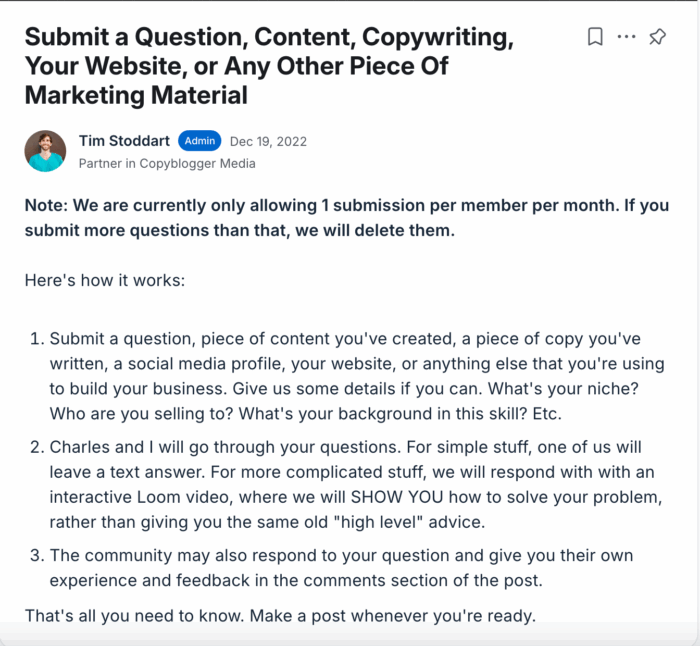
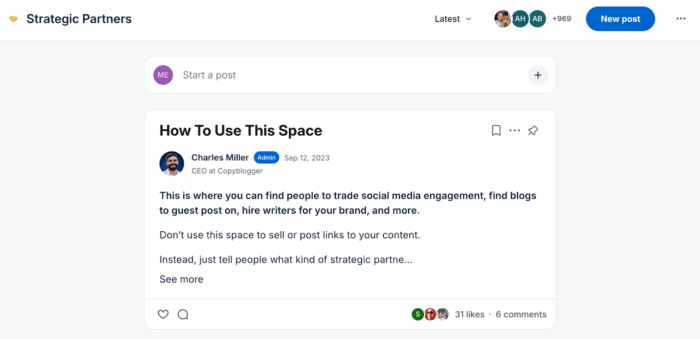
Copyblogger Academy: Co-operated by seven-figure digital entrepreneurs Tim Stoddart and Charles Miller, Copyblogger Academy combines structured training with an active community. The program features six specialized courses covering copywriting, SEO, email marketing, and personal branding on platforms like LinkedIn and X. Stoddart and Miller design the academy to serve as a live learning ecosystem. Members can submit their work for direct feedback from the founders, helping them adapt their strategies to current market conditions and AI developments.
Supporting Context & Metrics
To provide a clear comparison of these educational options, we have evaluated each program against five core criteria. This systematic breakdown highlights the trade-offs between cost, format, currency of advice, and the level of individual support provided.
Comprehensive Program Comparison Matrix
Program Name
Key Instructors & Credibility
Primary Content Formats
Advice Recency & AI Integration
Feedback & Individual Support
Community & Networking
Pricing Model
Copyblogger Academy
Tim Stoddart (CEO, Copyblogger) & Charles Miller (Personal Branding Expert)
SEO, Copywriting, Email, LinkedIn, X, Client Acquisition
Current (2025); continuously updated to address AI changes and algorithm shifts
High; direct feedback on student work from both founders
Active; private community for networking, collaboration, and peer review
B2B/B2C Conversion SEO, Keyword Research, Conversion Tracking
Very High; updated regularly with active agency campaign data
Moderate-High; instructor Q&A in forum and monthly group calls
Active; private forum for practitioners and agency clients
$699 one-time fee or $135/month for six months
Superpath
Jimmy Daly (Ex-Animalz) & industry guest experts
SaaS & B2B Content Strategy, Career Growth, Team Management
Very High; real-time updates through peer discussions and live workshops
Moderate-High; 1-on-1 career calls, AMAs, and peer feedback loops
Outstanding; 400+ active SaaS and B2B marketing professionals
Free tier available; Pro tier starts at $50/month ($500/year)
HubSpot Academy
Justin Champion & industry guest experts (e.g., Andy Crestodina)
Inbound Marketing, Blogging, Video, Guest Posting
Moderate; structured around foundational inbound marketing principles
None; self-paced, automated grading
None; no built-in student community
Free (includes digital certification)
CXL Institute
Derek Gleason (SEO & Content Lead at Shopify)
High-level Content Strategy, Competitor Research, Distribution
High (2024); strategic frameworks from Shopify’s active playbook
None; self-paced, pre-recorded video format
None; no dedicated community for this course
$299 one-time purchase or via CXL subscription ($289+/month)
Semrush Academy
Brian Dean (Founder, Backlinko & Exploding Topics)
Advanced SEO, Link Building, Content Promotion, Conversions
Outdated (2022); recorded prior to major generative AI shifts
None; self-paced, pre-recorded video format
None; no built-in peer network
Free
Ahrefs Blogging
Tim Soulo (CMO, Ahrefs) & guest creators (e.g., Noah Kagan)
Traditional SEO, Keyword Research, Link Acquisition
Outdated (2020); does not cover AI or recent search engine changes
None; self-paced, pre-recorded video format
None; interaction is limited to public YouTube comments
Free
Udemy Masterclass
Brad Merrill (CEO, Merrill Media)
Broad Digital Marketing, Storytelling, Email, SEO Basics
Moderate (2023); general marketing principles
Low; limited Q&A support via the Udemy platform
Low; standard course discussion board
$109.99 (frequently discounted via Udemy promotions)
Industry Perspectives & Pedagogical Philosophies
The divide in content marketing education reflects a deeper debate over how digital marketing should be taught. Industry leaders hold differing views on the role of software companies, the importance of active practitioners, and the value of peer networks.
                  ┌──────────────────────────────┐
                  │ Educational Philosophies     │
                  └──────────────┬───────────────┘
                                 │
         ┌───────────────────────┴───────────────────────┐
         ▼                                               ▼
┌─────────────────────────────────┐             ┌─────────────────────────────────┐
│ Software-Led Training           │             │ Practitioner-Led Cohorts        │
├─────────────────────────────────┤             ├─────────────────────────────────┤
│ • Focus: Tool adoption          │             │ • Focus: Real-world business ROI│
│ • Scaled, automated curricula   │             │ • Continuous, adaptive updates  │
│ • Best for foundational theory  │             │ • Direct feedback & community   │
└─────────────────────────────────┘             └─────────────────────────────────┘
The Software-Led vs. Practitioner-Led Model
A common critique of free courses from software providers (like Ahrefs and Semrush) is their focus on tool adoption. While these courses offer valuable technical training, their primary goal is often to show students how to use the company’s software.
In contrast, practitioner-led programs like Grow and Convert and Copyblogger Academy focus on business outcomes, such as client acquisition, conversion optimization, and revenue generation. Tim Stoddart emphasizes this distinction:
"In content marketing, theoretical knowledge has a very short shelf life. If your instructor isn’t actively running a business, managing campaigns, or navigating the daily changes of search algorithms and AI tools, they are teaching you history, not strategy."
The Importance of Feedback and Community
Many educators argue that static video lessons are no longer sufficient for professional development. Jimmy Daly of Superpath advocates for community-based learning, noting that peer-to-peer exchange is often where the most valuable insights are shared:
"The challenge for content marketers today isn’t a lack of information; it’s a lack of context. A static course can show you how to write a blog post, but it can’t tell you how to adjust your strategy when a competitor outbids you, or how to restructure your marketing team for a post-AI landscape. That context comes from real-time discussions with other professionals facing the same challenges."
This focus on interactive learning is a key differentiator for premium programs. By offering direct access to instructors and active peer networks, these academies help students apply theoretical frameworks to their specific business needs.
Future Outlook: Content Marketing Education in the Post-AI Era
As search engines continue to integrate generative AI and social media platforms prioritize native, creator-driven content, the skills required of content marketers will continue to evolve. This shift will likely change how content marketing is taught and practiced in several key areas.
┌─────────────────────────────────────────────────────────────────┐
│              Future Trends in Content Education                 │
├─────────────────────────────────────────────────────────────────┤
│ 1. AI-Assisted Production (Leveraging AI for research & scale)  │
│ 2. Diversified Distribution (Moving beyond traditional SEO)     │
│ 3. Personal Branding (Building authority on LinkedIn, X, etc.)  │
└─────────────────────────────────────────────────────────────────┘
1. From Search Volume to Information Gain
Traditional SEO education focused heavily on keyword search volume and keyword density. In a post-AI search environment, however, search engines are increasingly prioritizing "information gain"—content that provides unique insights, first-party data, or original analysis that cannot be easily replicated by AI models. Future educational programs must move away from basic keyword research and teach marketers how to conduct original research, perform interviews, and produce primary-source content.
2. Multi-Channel Distribution and "Surround Sound" Marketing
Relying solely on organic search traffic has become a risky strategy for many brands. Modern content marketing requires a multi-channel approach that includes email newsletters, social media platforms (such as LinkedIn and X), podcasts, and online communities.
Programs like Copyblogger Academy and Superpath are already adapting to this trend by teaching holistic distribution strategies. Rather than focusing on a single channel, they show students how to repurpose core assets across different platforms to build brand authority.
3. The Integration of AI-Assisted Workflows
The debate is no longer about whether to use AI in content marketing, but how to use it effectively. Legacy courses that ignore AI are becoming less relevant to modern professionals.
The next generation of content marketing education must teach students how to integrate AI into their workflows—using it for brainstorming, structuring outlines, analyzing data, and scaling distribution—while maintaining a high standard of editorial quality, brand voice, and original insight.
Final Verdict: Choosing the Right Educational Path
There is no single "best" content marketing course; the right choice depends on your professional goals, experience level, and budget:
For Beginners and Budget-Conscious Marketers: The free courses from HubSpot, Ahrefs, and Semrush offer excellent introductions to foundational marketing principles, technical SEO, and inbound strategy at no cost.
For SaaS and B2B Career Climbers:Superpath provides a highly specialized network, templates, and peer support tailored specifically to the SaaS ecosystem.
For Revenue-Focused Marketers and Agency Owners:Grow and Convert offers a detailed, conversion-focused playbook for turning search traffic into customers.
For Entrepreneurs, Freelancers, and Multi-Channel Marketers:Copyblogger Academy provides a comprehensive, community-driven education in copywriting, SEO, email marketing, and personal branding, with direct feedback from active, experienced entrepreneurs.