

Executive Overview
In an era marked by shifting cultural consumption and evolving religious demographics, academic publisher InterVarsity Press (IVP) is launching a groundbreaking publishing initiative designed to fundamentally alter how faith communities engage with mass media. Titled Discovering God in Pop Culture, the new book series debuts in September and seeks to bridge the traditional chasm between rigorous Christian theology and contemporary secular entertainment.
Conceived by Zachary Gordon, associate academic editor at IVP, the series abandons traditional Christian approaches to media criticism—which historically fluctuated between moral panic, defensive isolation, or simplistic "theme-spotting." Instead, Discovering God in Pop Culture posits that secular art, including genres routinely scrutinized or rejected by religious institutions, can actively inform, deepen, and refine Christian faith and practice.
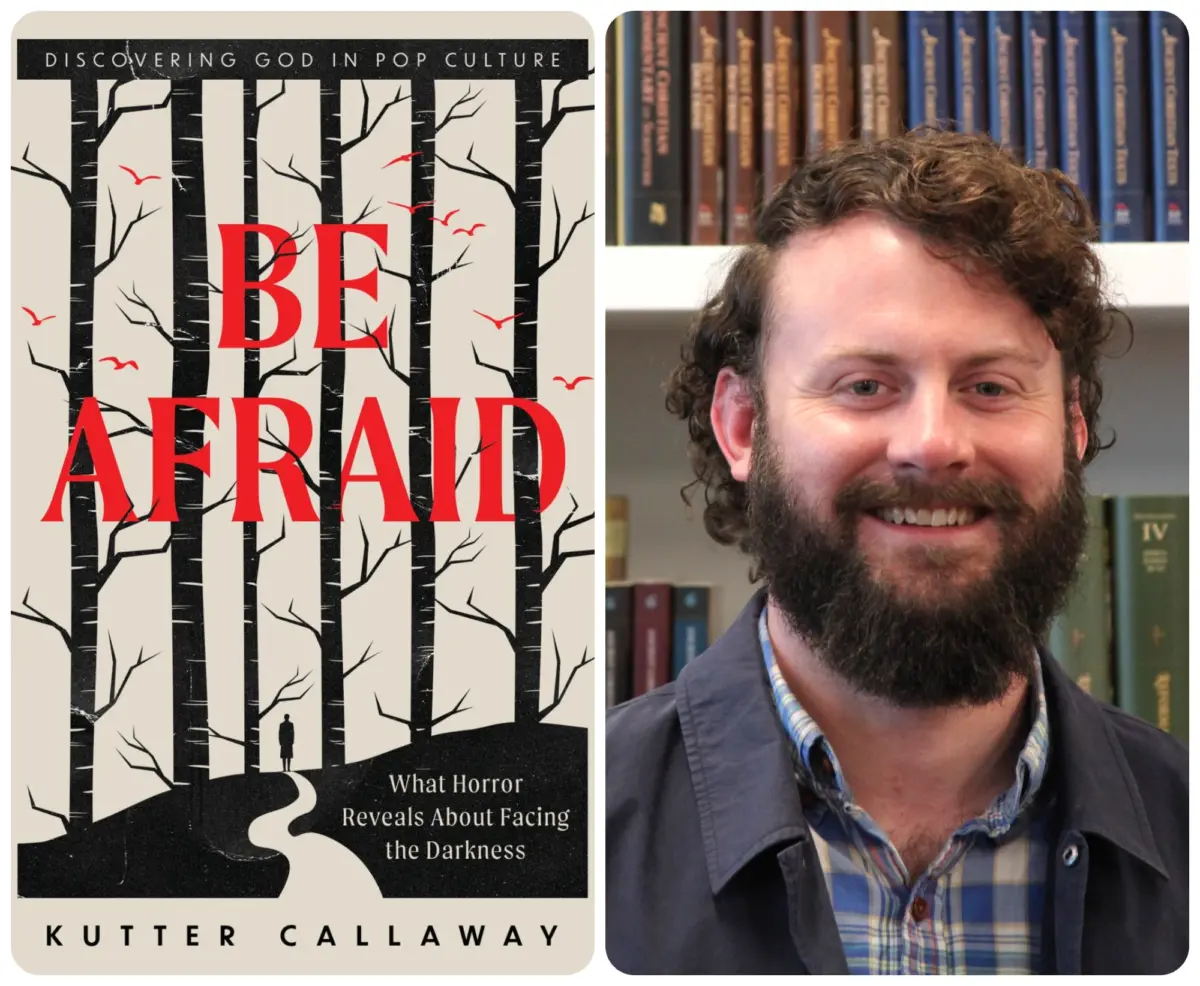
Co-edited by Dr. Kutter Callaway, Associate Professor of Theology and Culture at Fuller Theological Seminary, and Dr. Matthew William Brake, Associate Professor of Philosophy and Religion at Northern Virginia Community College, the multi-year project will encompass critical examinations of film, music, literature, and digital media. The debut volume, authored by Callaway and scheduled for release in September, tackles an unlikely theological partner: horror cinema. Titled Be Afraid: What Horror Reveals About Facing the Darkness, the book establishes the overarching thesis of the series—that engaging with the dark, complex, and unsettling dimensions of popular culture offers a necessary framework for processing real-world trauma, existential dread, and human suffering.
With additional titles under contract stretching into 2028—including cross-generational cinematic critiques and theological examinations of Japanese animation—IVP’s initiative signals a major strategic pivot in Christian academic publishing, targeting both scholarly audiences and general readers seeking intellectual and spiritual depth in everyday media.
Detailed Chronology
The Evolution of Religious Engagement with Popular Culture
To understand the strategic significance of IVP’s new series, it is necessary to examine the historical trajectory of Christian media critique over the past half-century.
+-----------------------------------------------------------------------------------+
| HISTORICAL TRAJECTORY OF CHRISTIAN MEDIA CRITIQUE                                |
+-----------------------------------------------------------------------------------+
| 1970s–1980s: ERA OF SEPARATION & BOYCOTT                                          |
| - Dominant Framework: Moral panic, institutional censorship, cultural isolation.  |
| - Perspective: Secular media viewed primarily as a spiritual hazard.              |
+-----------------------------------------------------------------------------------+
| 1990s–2000s: ERA OF DEFENSIVE Theme-SPOTTING                                      |
| - Dominant Framework: "The Gospel According to..." literature.                    |
| - Perspective: Seeking Christian allegories in secular media to validate faith.   |
+-----------------------------------------------------------------------------------+
| 2010s–PRESENT: DIALOGICAL & INTEGRATIVE THEOLOGY                                  |
| - Dominant Framework: Mutual dialogue, hermeneutical engagement.                  |
| - Perspective: Pop culture as a legitimate site for spiritual formation & critique|
+-----------------------------------------------------------------------------------+
| SEPTEMBER: LAUNCH OF "DISCOVERING GOD IN POP CULTURE"                             |
| - Debut  "Be Afraid: What Horror Reveals About Facing the Darkness"         |
|   by Dr. Kutter Callaway.                                                         |
+-----------------------------------------------------------------------------------+
| SPRING 2027: INTERGENERATIONAL CINEMATIC ANALYSIS                                 |
| - Authors: Dr. Soong-Chan Rah & Elijah Rah.                                       |
| - Focus: Multi-generational critique of contemporary film and avant-garde art.   |
+-----------------------------------------------------------------------------------+
| FALL 2028: ETHICAL FORMATION THROUGH ANIME                                        |
| - Author: Dr. Andrea Robinson.                                                    |
| - Focus: Existential purpose, earthly responsibility, and character development.  |
+-----------------------------------------------------------------------------------+
Phase I: Separation and Censorship (1970s–1980s)
During the late 20th century, conservative American Christian publishing and pastoral rhetoric were largely characterized by a posture of defense. Popular culture—ranging from rock music to fantasy literature and Hollywood cinema—was frequently framed as a corrupting influence. Theological engagement was largely corrective, focusing on content warnings, boycotts, and advocating for parallel Christian subcultures (e.g., alternative music labels and faith-based publishing houses).
Phase II: Theme-Spotting and Apologetics (1990s–2000s)
At the turn of the 21st century, the strategy shifted toward cultural engagement. A wave of popular books exemplified by the "Gospel According to…" format sought to identify Christian allegories within mainstream properties such as The Matrix, Star Wars, and Harry Potter. While more open to secular media, this phase remained largely unidirectional: secular art was treated merely as an illustration tool for pre-existing evangelical doctrines, rather than a conversation partner capable of challenging or expanding theological thought.
Phase III: The Dialogical Paradigm and IVP’s Launch (September Onward)
The launch of Discovering God in Pop Culture marks a formal transition into a dialogical model. Conceived by Zachary Gordon, the series moves past the question of permission—asking not whether Christians may watch or listen to secular media, but how those media properties act as mirrors reflecting deep human truths that Christian theology must address.
Supporting Context & Metrics
Shifts in Readership and Cultural Demographics
The announcement of the IVP series comes at a critical juncture for both religious institutions and the publishing industry. Academic and trade publishers facing shifting market dynamics are increasingly responding to a demographic that values nuance, authenticity, and existential honesty over rigid dogma.
Recent sociological data highlights several key trends driving this publishing strategy:
- Changing Religious Affiliation: According to broader demographic research by organizations like the Pew Research Center, rising numbers of younger adults identify as religiously unaffiliated ("nones") or practice a highly individualized faith. This demographic frequently consumes content that deals directly with existential uncertainty, mental health, and systemic trauma.
- The Horror Renaissance: Over the past decade, horror has emerged as one of the most commercially successful and critically acclaimed genres in cinema. Films such as Get Out, Hereditary, and The Witch—often categorized as "elevated horror"—explore grief, systemic injustice, ancestral guilt, and the supernatural. The genre’s ability to tackle deep psychological and spiritual anxieties directly aligns with the theological questions addressed in IVP’s debut title.
- Global Media Consumption: The global surge in consumption of non-Western media, particularly Japanese anime, has altered cultural literacy among younger generations. Anime routinely grapples with existential ethics, community responsibility, and suffering—providing a rich landscape for contemporary theological inquiry.
                   THEOLOGICAL CRITIQUE MODELS

       Traditional Model                  IVP Series Model
  +--------------------------+       +--------------------------+
  |    Christian Faith       |       |    Christian Faith       |
  +--------------------------+       +--------------------------+
               |                                  ^
     (Evaluates/Filters)                      (Dialogs With/
               v                              Responds To)
  +--------------------------+                    v
  |    Secular Pop Culture   |       +--------------------------+
  +--------------------------+       |    Secular Pop Culture   |
                                     +--------------------------+
Institutional Partnerships
The editorial team behind the series reflects an intentional blend of academic rigor and cultural fluency:
- InterVarsity Press (IVP): Historically known for publishing premier evangelical scholarship, IVP is leveraging its academic line to re-frame public theology.
- Fuller Theological Seminary: Represented by Dr. Kutter Callaway and Dr. Soong-Chan Rah, Fuller has long been an epicenter for the study of theology, culture, and urban ministry.
- Northern Virginia Community College & Huntsville Bible College: Represented by Dr. Matthew William Brake and Dr. Andrea Robinson, ensuring the series incorporates diverse philosophical, pedagogical, and cultural perspectives.
Official Statements and Theological Hermeneutics
To understand the conceptual framework behind Discovering God in Pop Culture, it is necessary to examine the primary statements provided by the editors and authors driving the project.
The Shift from Apologetics to Spiritual Formation
Zachary Gordon, acquiring editor for the series at IVP, articulated the core philosophical departure from traditional evangelical media commentary:
"Instead of getting bogged down in questions of whether or not it is okay for Christians to engage with pop culture, or simply identifying religious themes therein, we wanted to focus on how Christian faith can be made better or deepened by engagement with pop culture."
Gordon’s perspective addresses a long-standing criticism of Christian media critique: that it remains stuck in a posture of gatekeeping. By asserting that faith itself can be "made better" through secular artistic dialogue, IVP is embracing a hermeneutic that views truth and beauty as accessible outside traditional ecclesiastical walls.
Reclaiming Darkness: Horror as a Theological Category
Dr. Kutter Callaway, co-editor of the series and author of its debut volume, Be Afraid: What Horror Reveals About Facing the Darkness, offers a provocative defense of horror cinema as a vital medium for spiritual health.
According to Gordon, Callaway’s work illustrates that:
"Informed engagement with horror can be redemptive because—surprisingly to some—the Bible, in many places, belongs squarely in the horror genre."
Callaway elaborates on the psychological and liturgical necessity of facing dark narratives, arguing that modern religious practices often create an artificial boundary around human suffering:
"Our liturgies, our sermons, our whole formation tends to rush us from Good Friday to Easter without actually letting us stay in the tomb. And the result is that when people encounter real darkness—grief, fear, trauma, moral complexity—they feel like something has gone wrong with their faith. When actually, the Christian faith was always meant to be a resource for navigating exactly that kind of dark, chaotic, foreboding, and trauma-filled world."
                 THEOLOGICAL TIMELINE OF PASSION WEEK

  [ GOOD FRIDAY ] ----------> [ SATURDAY IN THE TOMB ] ----------> [ EASTER SUNDAY ]
   The Reality of               Unanswered Suffering,              Resurrection &
   Trauma & Suffering           Grief, & Silence                   Hope
        |                                |                           |
        |                                v                           |
        +--------------------> Modern Liturgies Often                +
                               Skip or Rush Through This
                               Phase. Horror Cinema
                               Forces Engagement Here.
Callaway’s critique highlights a gap in contemporary Christian spiritual formation. By rushing toward themes of triumph and resolution (Easter), religious institutions can inadvertently leave believers ill-equipped to handle prolonged suffering, grief, or systemic terror (Saturday in the tomb). Horror cinema, Callaway argues, forces viewers to sit within chaotic and unresolved environments, offering a secular parallel to the biblical traditions of lament found in Job, Ecclesiastes, the Psalms, and Apocalyptic literature.
Future Outlook and Series Pipeline
With three titles already slated, IVP is establishing a long-term publishing footprint that spans diverse media types, artistic disciplines, and generational perspectives.
+--------------------------------------------------------------------------------------------------+
| IVP "DISCOVERING GOD IN POP CULTURE" SERIES PIPELINE                                             |
+-------------------+-----------------------------------+------------------------------------------+
| Release Date      | Authors                           | Core Focus / Theological Theme           |
+-------------------+-----------------------------------+------------------------------------------+
| September         | Dr. Kutter Callaway               | Horror Cinema, Trauma, Suffering,        |
|                   | (Fuller Theological Seminary)     | Theodicy, and Biblical Lament            |
+-------------------+-----------------------------------+------------------------------------------+
| Spring 2027       | Dr. Soong-Chan Rah &              | Cross-Generational Cinematic Critique,   |
|                   | Elijah Rah                         | Avant-Garde Art, and Urban Culture       |
+-------------------+-----------------------------------+------------------------------------------+
| Fall 2028         | Dr. Andrea Robinson               | Japanese Anime, Present-Day Ethics,      |
|                   | (Huntsville Bible College)        | Character Formation, and Purpose         |
+-------------------+-----------------------------------+------------------------------------------+
Spring 2027: Intergenerational Film Analysis
The second confirmed installment in the series introduces a multi-generational and cross-disciplinary dialogical approach. Co-authored by Dr. Soong-Chan Rah, Professor of Evangelism at Fuller Theological Seminary, and his son Elijah Rah, an avant-garde recording artist, the Spring 2027 volume will explore contemporary cinema through dual lenses.
By pairing an established scholar of urban theology and historic injustice with a young contemporary artist working in experimental music, the volume aims to explore how modern film speaks to shifting generational perspectives on race, culture, artistry, and faith.
Fall 2028: Ethics and Existential Meaning in Anime
Scheduled for Fall 2028, the third contracted volume focuses on Japanese animation (anime), authored by Dr. Andrea Robinson, a professor at Huntsville Bible College.
This installment will address a growing trend among younger media consumers who find deep moral and philosophical resonance in serialized anime narratives. As Gordon notes, Robinson’s work will explore:
"…how anime can help us discover purpose and meaning in this life and about how it can help challenge us to pursue character development and personal ethics in the present time, rather than viewing the Christian hope simply as a ‘get out of jail free’ card for the afterlife."
Robinson’s contribution directly critiques hyper-escapist eschatology—the idea that religious faith exists primarily to secure post-mortem salvation—by demonstrating how anime narratives emphasize endurance, moral accountability, personal growth, and communal responsibility within present reality.
Industry Implications
The launch of Discovering God in Pop Culture reflects a broader maturation within religious academic publishing. By moving away from defensive stances and surface-level cultural commentary, InterVarsity Press is establishing a new paradigm. The series positions popular culture not as a threat to be managed, nor merely as a tool for outreach, but as an essential space where the critical questions of contemporary human existence are laid bare—demanding an equally rigorous, vulnerable, and sophisticated theological response.