

Executive Overview
Two decades and a half after the events of September 11, 2001, the collective memory of that Tuesday morning remains anchored to the billowing smoke of lower Manhattan, the sheared limestone of the Pentagon, and the scorched field in Shanksville, Pennsylvania. Yet, the architectural blueprint of that tragedy was drawn hundreds of miles to the north, along the windy, grey coastline of Massachusetts. It was from the tarmac of Boston’s Logan International Airport that American Airlines Flight 11 and United Airlines Flight 175 departed into the crisp autumn morning, carrying hijackers who would weaponize commercial aviation against the American landscape.
For the residents of Greater Boston, and particularly for those living in the immediate flight paths radiating outward over Broad Sound, the realization that local planes had become instruments of mass murder cast an immediate, surreal pall over the region. This is an investigative and retrospective examination of that day through the lens of a local resident who watched the flights ascend, tracked the unfolding horror from a newly purchased coastal home in Nahant, and made an unprompted, solitary pilgrimage into the ghost-town corridors of Logan Airport hours after the attacks. It explores the psychological dislocation of a city caught at ground zero of the conspiracy, the institutional paralysis that gripped New England’s primary aviation hub, and the enduring ripple effects that permanently altered the geography of American travel and urban consciousness.
Detailed Chronology: The Anatomy of a Tuesday in Greater Boston
7:59 AM – 9:03 AM: The Ascents and the Realization
On the morning of September 11, 2001, the coastal village of Nahant, Massachusetts—situated roughly six miles north of Logan International Airport—was wrapped in the quiet monotony common to early autumn. For a newly married couple living in a neighborhood where the primary landmarks were local garages and seaside pizzerias, the acoustic backdrop of life was defined by the relentless departure of commercial aircraft. Every few minutes, heavy passenger jets climbing out of Broad Sound would appear as vibrating specks of heat and motion, banking westward and displaying their silver underbellies directly over the peninsula before clearing the horizon.
Unbeknownst to those watching from below, that exact corridor was navigated at 7:59 a.m. by American Airlines Flight 11, a Boeing 767 bound for Los Angeles carrying 92 people. Less than twenty minutes later, United Airlines Flight 175, also a Boeing 767 bound for Los Angeles with 65 people aboard, followed a similar departure trajectory from Logan at 8:14 a.m.
Inside a quiet Nahant bedroom, the morning routine was interrupted by the murmur of National Public Radio. A little more than 45 minutes after the first plane’s departure, news reports began trickling in with cryptic bulletins concerning an aircraft striking the North Tower of the World Trade Center. The transition from abstract curiosity to localized dread occurred downstairs in front of a television screen at roughly 9:03 a.m., just as United Flight 175 crashed directly into the South Tower. The subsequent hour devolved into a sequence of incomprehensible milestones: the South Tower’s collapse at 9:59 a.m., followed by the North Tower’s catastrophic fall at 10:28 a.m.
The Immediate Aftermath in Massachusetts
As television networks confirmed that both hijacked flights had originated from Logan Airport, the psychological reality for Bostonians shifted instantly. For the author’s household, the immediate aftermath was defined by fractured communication and stunned immobility. Friends in New York failed to answer their phones; family members called from afar, weeping with relief upon learning the author—a frequent business traveler out of Logan—was still on the ground.
While the author’s wife departed for her journalistic duties at The Boston Globe—embarking on a grueling series of shifts that would soon take her to international conflict zones—the home front dissolved into a vacuum. Stepping barefoot into the backyard, under an unnervingly clear, blue New England sky, the impulse to perform normal tasks, such as cutting the grass, collided with a profound, mute paralysis.
11:30 AM: The Pilgrimage to Logan Airport
Driven by an inexplicable psychological need to verify the reality of the disaster—akin to physical touch confirming a wound—the author journeyed southward toward Logan Airport, retracing a familiar transit route. The trip underscored the sudden, jarring isolation of the city:
- The Transit Link: Driving seven miles to Wonderland, the terminal station of Boston’s Blue Line, followed by a ten-minute train ride to Airport station.
- The Shuttle: Boarding an airport shuttle bus that carried only the driver and a single passenger—two silent figures moving through an abandoned transit corridor.
- The Terminals: Arriving at the United Airlines terminal, a space historically congested with families, business travelers, and baggage handlers, now rendered entirely sterile.
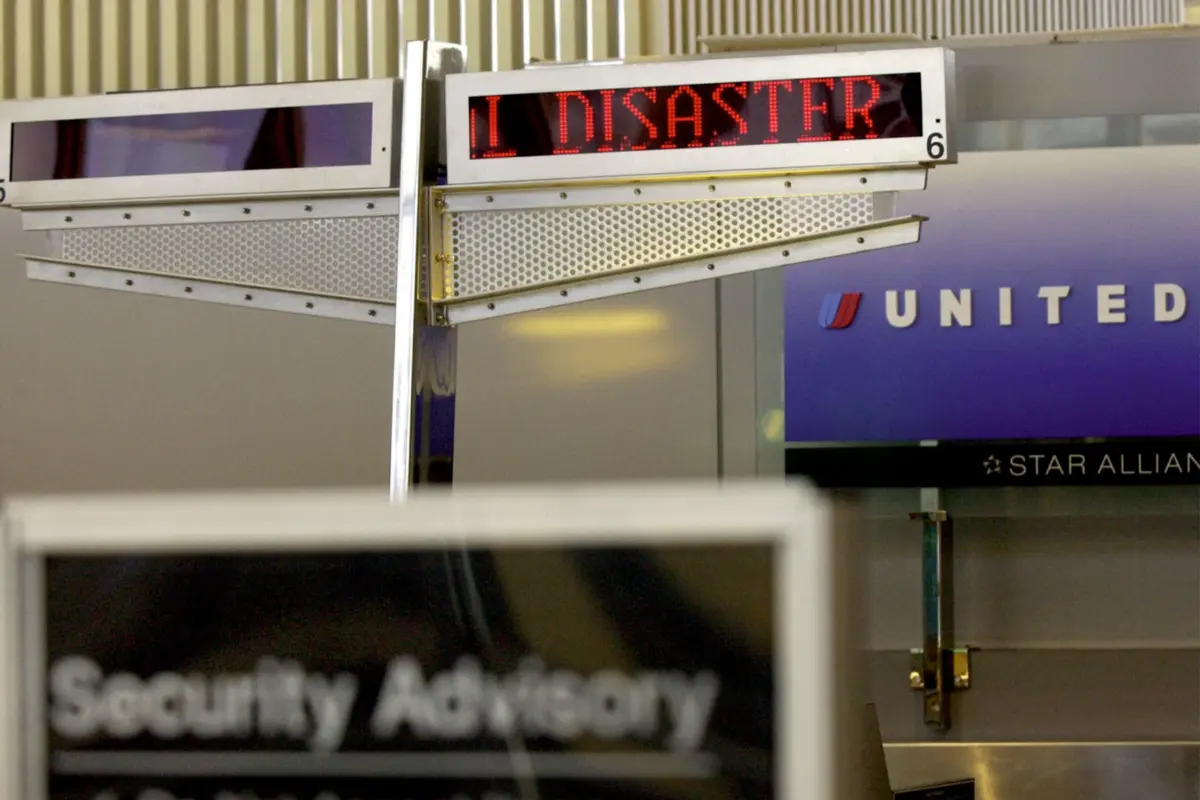
The terminal structures remained completely intact, yet devoid of humanity. Escalators hummed, departure boards flickered, and security queues stood open, but the passengers, ticket agents, and vendors had vanished. A lone maintenance worker pushed a broom near an operational Dunkin’ Donuts, a surreal juxtaposition against the backdrop of national grounding. Unbeknownst to the civilian visitor, federal authorities and airport management had already evacuated stranded travelers and staff, while grief counselors established operations at the adjacent Hilton hotel to assist the families of the victims.
Afternoon: The Ghost City
Leaving the terminal after roughly an hour, the author traveled into downtown Boston. The city’s public spaces—the Boston Common and the Public Garden, typically vibrant with students, tourists, and vendors—were entirely empty. A brief attempt to seek distraction at a screening of a film festival movie inside a local theater ended prematurely due to sudden claustrophobia. Wandering the deserted upscale boutiques of Newbury Street, the author returned home to an empty house, confronting a city trying to process an event whose full historical weight would take months and years to calculate.

Supporting Context & Metrics: Logan Airport and the Regional Impact
To understand why Boston bore such a heavy psychological and logistical burden on 9/11, one must examine the operational scale of Logan International Airport at the turn of the millennium.
- Passenger Volume: In 2001, Logan handled over 27 million passengers annually, serving as New England’s primary international and domestic gateway.
- Security Protocols of 2001: Pre-9/11 airport security was managed by private contractors hired by individual airlines. Screening checkpoints focused primarily on weapons detection via basic metal detectors and X-ray machines for carry-on baggage. Passenger identification checks were minimal, and non-ticketed visitors were frequently permitted to walk through security checkpoints to gate areas to greet arriving passengers.
- The Hijackings: The selection of Logan Airport by the operatives of al-Qaeda was calculated based on its heavy volume of transcontinental flights carrying large fuel loads, as well as vulnerabilities in the decentralized security apparatus of the era. Flight 11 and Flight 175 were both heavily fueled for cross-country journeys to the West Coast, maximizing the kinetic and thermal energy released upon impact.
| Metric / Feature | Pre-9/11 Operations (Logan Airport) | Post-9/11 Transformation |
|---|---|---|
| Security Management | Private airline-contracted security firms | Federalized under the Transportation Security Administration (TSA) |
| Checkpoint Access | Open to ticketed passengers; non-passengers often allowed at gates | Restricted strictly to ticketed passengers with valid boarding passes |
| Screening Technology | Basic magnetometers and analog X-ray systems | Advanced Imaging Technology (AIT), explosive trace detection, 3D computed tomography |
| Aircraft Cockpit Security | Standard interior doors with minimal reinforcement | Hardened, ballistic-resistant cockpit doors locked throughout flight |
Official Statements and Institutional Response
In the immediate aftermath of the attacks, federal and local authorities enacted sweeping emergency measures to secure the national airspace and investigate the security failures that permitted the hijackings at Logan.
The Federal Aviation Administration (FAA), under Administrator Jane Garvey, took the unprecedented step of ordering the complete grounding of all civil aircraft across the United States—an action known as SCATANA (Security Control of Air Traffic and Air Navigation Aids). Within hours, more than 4,500 aircraft were safely landed at alternative airports across North America.
"The events of this morning require an immediate, total mobilization of federal security and intelligence assets. Our primary focus is the security of the traveling public and the thorough investigation of how these security perimeters were breached at points of origin, including Boston’s Logan International Airport."
— Exerpt from Federal Aviation Administration Emergency Briefing, September 11, 2001.
The Massachusetts Port Authority (Massport), which operates Logan Airport, faced immediate scrutiny regarding security protocols at its terminals. In the days following the attacks, Massport leadership cooperated extensively with the Federal Bureau of Investigation (FBI) and the newly formed Department of Transportation oversight committees to reconstruct the movements of the hijackers who cleared security checkpoints at Terminals A and C on the morning of September 11.
Future Outlook: The Permanent Transformation of Aviation and Urban Life
The ripple effects of September 11 reshaped not only the physical architecture of airports like Logan but also the urban psychology of American cities.
The Evolution of Aviation Security
The vulnerabilities exposed at Logan Airport catalyzed the Aviation and Transportation Security Act of 2001, signed into law in November of that year. This legislation created the Transportation Security Administration (TSA), shifting airport security from a fragmented commercial responsibility to a centralized federal mandate. For travelers passing through Logan today, the legacy of 9/11 is visible in every facet of the journey: reinforced cockpit doors, randomized secondary screenings, biometric identification systems, and multi-layered perimeter security designed to prevent unauthorized access long before a passenger reaches the terminal doors.
The Urban Metamorphosis
For the author, the physical and emotional residue of September 11 necessitated a geographic relocation. Months after the attacks, the quiet claustrophobia of Nahant and the lingering trauma of the empty Boston coastline prompted a move to New York City—a metropolis actively engaged in the painful, defiant process of recovery.
Yet, the legacy of that Tuesday morning remains embedded in the sensory memory of anyone who lived beneath the flight paths of Greater Boston. The realization that local departure corridors had been co-opted into weapons of war permanently altered the relationship between citizens and the skies above them. Decades later, while commercial aviation has resumed its relentless, globalized rhythm, the horizon carries a different weight—a quiet reminder of the morning when the familiar roar of jet engines overhead suddenly stopped, and the world changed forever.