

Executive Overview
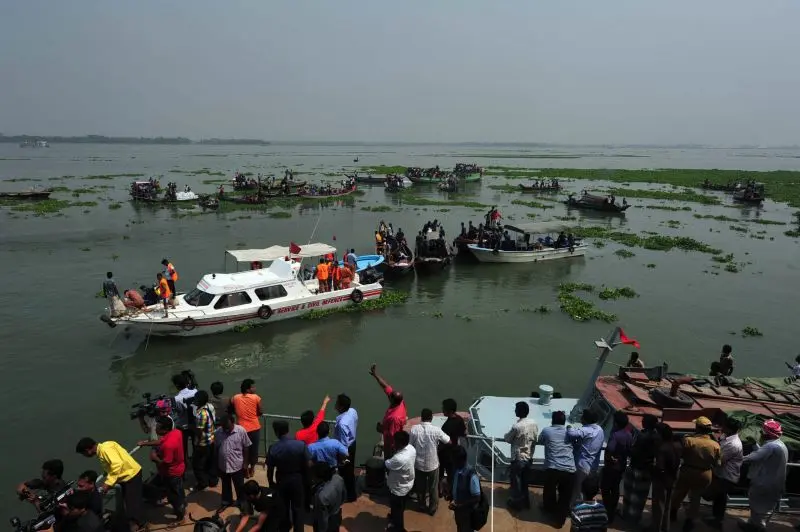
DHAKA, Bangladesh — In the murky, fast-flowing waters of the lower Meghna River, a relentless search-and-rescue operation continues following one of the deadliest maritime disasters to hit the region in recent years. The passenger ferry MV Shariatpur-1, carrying at least 250 passengers, collided with a cargo vessel in the dead of night, plunging hundreds of sleeping travelers into the dark, turbulent waters.
As of Tuesday evening, local authorities and disaster response teams have recovered at least 32 bodies. However, with more than 60 individuals remaining unaccounted for, fears are mounting that the final death toll will climb significantly higher. Families of the victims have flooded local command posts with frantic inquiries, while elite diving teams from the Bangladesh Navy, Fire Service, and Civil Defence battle treacherous underwater currents to reach the submerged wreckage.
The disaster lays bare, once again, the systemic safety crises plaguing Bangladesh’s vast inland waterway network. Despite government promises of reform, maritime accidents driven by overcrowding, lax regulatory enforcement, and a disregard for basic navigational safety continue to exact a devastating toll on human life.
Detailed Chronology of the Disaster
The catastrophe unfolded in the early hours of Tuesday morning, transforming a routine overnight journey into a nightmare of survival and loss.
The Journey and the Collision
The MV Shariatpur-1 departed from the Shariatpur district in southern Bangladesh, charting a course northward toward the capital city of Dhaka. Most passengers had boarded the vessel seeking a comfortable overnight transit, retiring to their cabins or finding resting spots on the crowded decks.
At approximately 2:30 a.m., as the ferry navigated the Meghna River in the Munshiganj district—roughly 40 kilometers (25 miles) south of Dhaka—it crossed paths with a larger cargo ferry. Visibility was poor, and according to initial reports, the two vessels collided violently. The impact tore a catastrophic breach in the hull of the MV Shariatpur-1, causing the passenger ferry to take on water rapidly and capsize within minutes.
A Survivor’s Account
For Mohammad Dulal Dewan, a 55-year-old passenger traveling with members of his extended family, the disaster struck with terrifying speed.
"We were seven in a cabin in the ferry, and six of my family members are still missing," Dewan recounted in an interview with CNN. "Everything happened before I could understand anything."
Dewan and his family had embarked on the voyage to Dhaka to see off his brother-in-law, Shamim Fakir, who was scheduled to board a flight to the United States early Wednesday morning. Instead of a joyful farewell at the airport, the family was thrust into a desperate search for survival.
"I jumped into the river and was rescued by people in another passing ferry," Dewan said, his voice heavy with grief. As of Tuesday evening, Shamim Fakir and five other members of Dewan’s family remained missing, swallowed by the river alongside dozens of other victims.
The Immediate Aftermath and Rescue Efforts
Initial reports indicate that approximately 30 people managed to swim to safety or were pulled from the water by local fishermen and crew members of nearby vessels who rushed to the scene.
As day broke, the scale of the disaster became painfully clear. Law enforcement agencies, local administration officials, and specialized maritime rescue units mobilized a massive search operation. According to Shahabuddin Khan, the police chief of Munshiganj district, naval divers and specialized civil defense teams were deployed to scour the riverbanks and probe the murky depths.
By midday, officials using side-scan sonar equipment successfully located the sunken hull of the MV Shariatpur-1 resting more than 20 meters (70 feet) below the surface.
"We believe many bodies are still trapped inside the sunken ferry, and the rescue operation is still on," Chief Khan told reporters at the scene.
Supporting Context & Metrics: Bangladesh’s Waterway Crisis
Bangladesh is a delta nation crisscrossed by hundreds of rivers and waterways, making river transport a vital economic lifeline for millions of citizens. However, this heavy reliance on water travel is shadowed by an abysmal safety record.
The Scale of Maritime Peril
- Annual Casualties: Hundreds of people lose their lives in Bangladeshi ferry accidents every year. According to historical maritime data, an estimated 4,000 individuals have died in vessel collisions, capsizings, and sinkings since 1977.
- Overcrowding and Regulation: Despite laws mandating passenger manifests and safety equipment, operators routinely overload vessels—particularly during major holidays and peak travel seasons—to maximize profits. Life jackets are frequently locked away or entirely absent, and many passenger ferries lack basic radar or modern communication systems required for safe night navigation.
- The Cargo Hazard: Collisions between passenger ferries and heavy cargo vessels are a recurring theme in major disasters. Commercial cargo boats often operate with minimal lighting and inadequate lookout protocols, creating lethal hazards on winding, high-traffic river corridors like the Meghna, Padma, and Jamuna.
Local Impact in Munshiganj
Mohammad Azizul Alam, the administrative chief of Munshiganj district, noted that the grief of families is compounded by administrative challenges in verifying passenger lists. Because ticket sales on many domestic routes are informal and unregulated, compiling an accurate roster of those on board remains a formidable obstacle for authorities.
"We have received a list of 61 missing people from families searching for their loved ones," Alam stated, adding that the provisional death toll of 32 is almost certain to rise once divers manage to enter the main passenger compartments of the submerged wreck.
Official Statements and Responses
The tragedy has sparked immediate outcry from the public and renewed scrutiny from government officials regarding maritime safety enforcement.
- Bangladesh Inland Water Transport Authority (BIWTA): Khandker Shamsuddoha Khandaker, chairman of the water authority, confirmed the precise location of the wreck to reporters, noting that salvage vessels equipped with heavy lifting cranes were being dispatched to the site to hoist the MV Shariatpur-1 to the surface.
- Law Enforcement and Rescue Command: Police and naval commanders have pledged a thorough investigation into the circumstances surrounding the collision. Authorities are examining whether the cargo ferry involved in the crash fled the scene or stopped to render assistance, with criminal negligence charges anticipated against the operators of both vessels.
- Local Administration: Munshiganj district officials have established temporary relief and information desks near the riverbank to assist grieving families, coordinate DNA identification procedures for recovered bodies, and distribute emergency financial assistance for funeral expenses.
Future Outlook: Can Reform Prevent Future Tragedies?
As recovery efforts stretch into their second day, the national conversation in Bangladesh has inevitably shifted from rescue to systemic reform.
For decades, maritime experts and safety advocates have called for sweeping overhauls of the country’s inland water transport sector. Key recommendations that have languished in bureaucratic delay include:
- Mandatory Vessel Tracking Systems (VTS): Equipping all commercial and passenger vessels with GPS tracking and radar to prevent collisions in low-visibility conditions.
- Strict Enforcement of Passenger Limits: Implementing digital ticketing systems and checkpoint inspections at terminals to eliminate dangerous overcrowding.
- Designated Shipping Lanes: Establishing strictly enforced, separated corridors for heavy cargo barges and passenger ferries to minimize crossing hazards on major waterways.
- Accountability and Prosecution: Enforcing severe legal penalties, including permanent revocation of operating licenses and criminal prosecution for owners and operators found violating safety regulations.
Without these structural changes, analysts warn that disasters like the sinking of the MV Shariatpur-1 will remain an agonizingly predictable feature of life in Bangladesh. For now, however, the immediate focus remains on the dark waters of the Meghna River, where families continue to wait, desperately hoping for news of their missing loved ones.