

Executive Overview
The journey of personal transformation is rarely a straight line defined by monumental willpower; rather, it is forged in the crucible of micro-habits, environmental tweaks, and psychological reframing. In the realm of behavioral science, few modern works have resonated as deeply as James Clear’s bestselling book, Atomic Habits. While theoretical frameworks provide a solid foundation for understanding human psychology, the ultimate test of any self-improvement paradigm lies in its real-world application.
This report examines a curated collection of thirty concise case studies submitted directly by readers of Atomic Habits. These accounts offer an unfiltered, empirical look at how everyday individuals implement structural, psychological, and environmental modifications to construct positive routines and dismantle destructive ones. Far from abstract academic theories, these narratives highlight the tangible power of identity-based thinking, environmental architecture, habit stacking, and strategic friction. By dissecting these real-world examples, this article provides a comprehensive blueprint for sustainable behavioral change, illustrating how minor adjustments can accumulate into profound, life-altering results.
Detailed Chronology: The Evolution of Habit Implementation
The process of behavioral transformation unfolds through distinct phases of psychological adaptation and physical execution. Tracing how individuals transition from conceptual understanding to permanent lifestyle shifts reveals a clear chronological progression.
Phase 1: Mindset Shift and Identity Adoption
The initial phase of sustainable habit formation begins long before a single action is taken; it occurs within the architecture of self-perception. Traditional goal-setting often focuses on outcomes—what an individual wants to achieve—which frequently leads to temporary motivation spikes followed by burnout. By contrast, transitioning toward "identity-based habits" requires individuals to focus on who they wish to become.
- The Weight of Self-Perception: For years, a reader named Roland struggled with erratic dietary patterns. Previous attempts to "stop eating bad food" invariably faltered because the core identity remained unchanged—that of a person who wanted junk food but was depriving themselves. The breakthrough occurred when Roland consciously redefined his internal narrative: "I am someone that eats healthy and lives a healthy life." This ontological shift rendered healthy choices natural rather than restrictive.
- Reframing Sacrifice: Similarly, Robert approached smoking cessation not as a loss of pleasure, but as a gain in autonomy. By swapping the internal dialogue from "I can’t smoke" to "I don’t smoke," Robert eliminated the psychological burden of sacrifice. The phrasing frames non-smoking not as a punishment, but as a continuous, forward-looking investment in personal well-being.
- External Reinforcement: Behavioral modification can also be jumpstarted through extrinsic rewards that ultimately cement a new identity. One reader combined identity statements with a financial incentive system: every day they successfully avoided alcohol, they transferred ten dollars toward clothing or household items—investing in a cleaner, more vibrant lifestyle rather than a toxic habit. Over time, the internal identity took root, and the financial allowance became obsolete, culminating in six years of sustained sobriety.
Phase 2: Cue Identification and Environmental Architecture
Once an identity is established, the next chronological hurdle involves managing the triggers that prompt automatic behaviors. Human beings are profoundly reactive creatures, heavily influenced by their immediate surroundings. Modifying these surroundings—either by introducing positive cues or engineering friction against negative ones—serves as the primary engine for continuous compliance.
- Amplifying Positive Cues: Lisa cultivated an avid reading habit by flooding her environment with literary options. By maintaining a rolling queue of twenty to thirty books on hold at her local library, she eliminated the friction of browsing, ensuring a perpetual, three-week-deadline pipeline of fresh reading material. Heather utilized a similar visual trigger to increase hydration, placing a vibrant aqua water bottle—her favorite color—directly on her nightstand to capture her attention the moment she awoke.
- Erasing Destructive Triggers: Conversely, eliminating bad habits often requires starving them of their environmental cues. Max successfully conquered an e-cigarette addiction by simultaneously addressing a cascading trigger: morning coffee. Because his caffeine routine was inextricably linked to nicotine consumption, eliminating coffee temporarily broke the psychological chain reaction, allowing him to neutralize the craving at its source.
Phase 3: Habit Stacking and Behavioral Integration
As new actions take root, efficiency becomes paramount. Habit stacking—or "anchoring"—allows individuals to graft a nascent behavior onto an already entrenched, automatic keystone habit.
- Anchoring to Daily Routines: David established a consistent twenty-minute daily meditation practice by anchoring it directly to brushing his teeth in the morning. By tying a new, fragile habit to an unbreakable, non-negotiable daily chore, the friction of initiation is effectively bypassed.
- Immersive Integration: In more extreme operational contexts, habit stacking can encompass entirely immersive lifestyle changes. When one reader moved to China to learn Mandarin, they committed to striking up a conversation with taxi drivers on every single ride—averaging five or more interactions daily. By embedding language practice into an unavoidable daily transit routine for two years, the individual achieved complete fluency without carving out separate, easily skipped study blocks.
Phase 4: Engineering Friction and Digital Minimalism
When psychological willpower proves insufficient, physical and digital environmental design steps in to bridge the gap. By systematically altering the ease or difficulty of accessing certain behaviors, individuals can dictate their own choices.
- Maximizing Friction for Vice: Cyd found a radical solution to control her household’s Pringles consumption: the snacks were banished to a locked car parked outside in the cold weather. The compounded physical barriers—retrieving keys, walking outside, unlocking the vehicle, and enduring the cold—proved sufficient to curb mindless snacking. Personal finance blogger J. Money instituted a brilliant behavioral firewall by brushing his teeth immediately after putting his children to bed at 8:00 PM. Because the prospect of re-brushing teeth after late-night snacking or drinking is unappealing, the simple act serves as an ironclad deterrent against nocturnal indulgence.
- Digital Restraints: The principles of environmental design apply just as effectively to the digital landscape. Matthew reduced his mindless Instagram consumption simply by logging out of the application after every session, introducing a deliberate login barrier. Viet took a parallel approach with Facebook, completely deleting the app and forcing himself to use a mobile browser and manual login. The minor inconvenience of entering credentials was enough to suppress the compulsive urge to scroll. For severe digital distractions, extreme physical intervention proved necessary; reader Rahul removed the graphics card from his computer to curb a gaming addiction and uninstalled web browsers from his smartphone to halt excessive internet surfing.
- Minimizing Friction for Virtue: Conversely, fostering positive habits requires ruthlessly stripping away every obstacle. Natalie stopped littering her floor with socks simply by placing a small laundry basket directly beside her bedroom door. Justin achieved an extraordinary exercise streak—working out eight to ten times a week across CrossFit, running, and cycling for two and a half years—by selecting a gym located less than a mile from his home, permanently eliminating travel time and logistical excuses as potential deterrents. Runners frequently report eliminating morning hesitation by organizing their compression sleeves, shoes, and tracking watches into precise piles the night before—with some even sleeping in their running gear to ensure that stepping out the door requires zero executive function at dawn.
Phase 5: Habit Substitution and Mindset Hacks
When an entrenched habit cannot simply be erased, it must be strategically replaced. Habit substitution preserves the underlying neurological loop (cue, routine, reward) while swapping out a destructive output for a constructive one.
- Kinetic and Nutritional Substitutions: Faced with an urge to smoke in his backyard, one reader placed a weight bench outside, substituting cigarette cravings with physical reps. Another reader replaced nail-biting with nail-clipping by ensuring sharp clippers were permanently stationed at their desk. Mark and Marc both curtailed heavy beer consumption by transitioning through progressive layers of flavored sparkling water, fruit juice, and iced tea over several months, gradually starving their bodies of alcohol while satisfying the sensory ritual of holding a beverage. Shawn utilized fun-sized Snickers bars to weather the acute withdrawal phase of smoking cessation, while Suraj completely repurposed his addictive tendencies, channeling the intense psychological drive of chemical dependency into competitive powerlifting.
- Cognitive Reframing and Mathematical Visuals: Mental tricks can further ease the psychological burden of endurance. Caelan conquered smoking by never quitting "for good"—instead, he pushed his cheat days progressively further into the future, transforming an overwhelming binary choice (never again) into a manageable delay (not right now, but later). Ken applied the same incremental framework to fast food and soda, extending his abstinence targets week by week until four years had passed without McDonald’s. Qiana utilized a stark mathematical visualization to break her soda addiction: she calculated the total weekly volume of sugar contained in her beverages, physically scooped that exact mountain of granulated sugar into an enormous bowl, and let the shocking visual evidence permanently alter her consumption patterns.
- Tracking and Continuous Momentum: The final phase of sustainable habit formation relies on objective accountability. Cindy utilized a large wall calendar to track multiple self-improvement metrics, deriving deep psychological satisfaction from maintaining an unbroken chain of red "X" marks. Recognizing that perfection is the enemy of progress, readers like Günter embraced fractional execution: rather than abandoning a workout entirely on days when time or energy ran low, they engaged in an abbreviated session, preserving the identity of daily execution and keeping the calendar chain alive.
Supporting Context & Metrics: The Science of Small Gains
To fully appreciate the validity of these reader-submitted case studies, it is necessary to examine the underlying behavioral science popularized in Atomic Habits. The premise rests on the compounding nature of human behavior. Just as money multiplies through compound interest, the effects of your habits multiply as you repeat them.
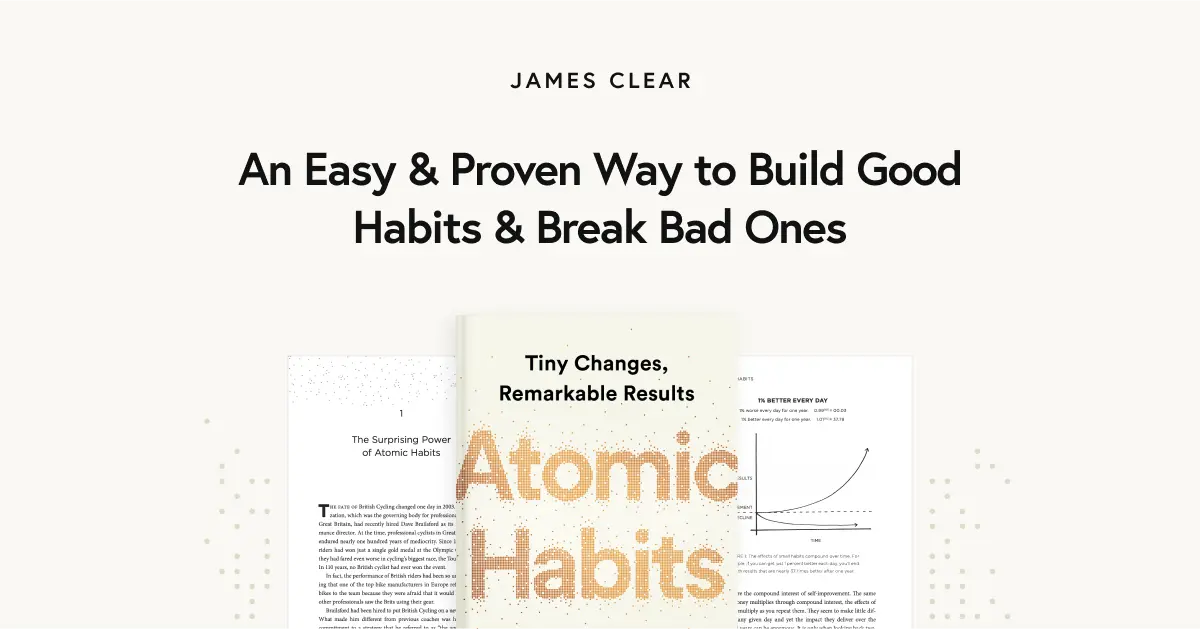
- The 1% Rule: Improving by 1 percent each day results in being roughly 37 times better by the end of a single year. Conversely, a 1 percent decline daily deteriorates performance down to nearly zero.
- The Four Laws of Behavior Change: The strategies utilized by Clear’s readers map directly to the four psychological levers of habit formation:
- Make it obvious (Cue identification, visual reminders like Heather’s aqua water bottle).
- Make it attractive (Identity reframing, pairing habits with rewards).
- Make it easy (Reducing friction, placing laundry baskets by doors, choosing a gym one mile away).
- Make it satisfying (Habit tracking, building calendar chains, financial rewards).
- The Friction Coefficient: Behavioral economics demonstrates that human beings naturally gravitate toward the path of least resistance. By increasing the friction of bad habits (e.g., locking Pringles in a cold car, removing computer graphics cards) and decreasing the friction of good habits (e.g., laying out running clothes the night before), individuals exploit this psychological baseline rather than fighting an uphill battle against it.
Official Statements and Author Insights
James Clear has repeatedly emphasized that the ultimate objective of his work is not to present a rigid academic manual, but to provide a flexible toolkit that readers can adapt to their unique lived realities.
"None of these stories are mine. They were sent to me by readers of Atomic Habits," Clear notes, underscoring the collaborative and empirical nature of the book’s broader ecosystem. "My hope is that these examples will illustrate how real people are putting the book into practice. They will show you what people are actually doing to build good habits and break bad ones. And hopefully, they will spark some ideas for how you can do the same."
Clear’s foundational philosophy centers on the rejection of outcome-obsessed thinking in favor of identity-driven systems. By focusing intensely on the micro-actions that validate a desired self-image, individuals remove the cognitive dissonance associated with lifestyle changes. Whether it is Roland declaring himself a healthy eater or Cindy maintaining a wall calendar of red X’s, the consensus among behavioral practitioners is clear: systems govern outcomes, and identity governs systems.
Future Outlook: The Next Frontier in Habit Optimization
As behavioral science continues to intersect with modern technology, the methodology of habit formation is poised for significant evolution. The lessons extracted from Atomic Habits point toward several key trends in how individuals and societies will approach personal transformation in the coming decades.
- Algorithmic Environment Design: Just as readers manually removed graphic cards or logged out of social media apps to create digital friction, future habit optimization will likely leverage software-driven digital detox tools. Automated environment architecture—such as smart-home locks that restrict access to pantry doors during specified hours or apps that lock distracting software based on biometric stress markers—will formalize the principles of friction control.
- Identity-First Corporate and Educational Frameworks: Organizations are increasingly recognizing that sustainable productivity cannot be achieved through top-down metric enforcement alone. The future of human resource management and pedagogical design leans heavily toward identity-based culture building, where teams and students are encouraged to internalize professional and intellectual identities rather than merely chasing quarterly targets or GPA benchmarks.
- The Rise of Micro-Habit Ecosystems: As the societal pace of life accelerates, the tolerance for lengthy, disruptive routines diminishes. The ongoing shift toward fractional execution—such as Günter’s abbreviated daily workouts and Clear’s "read one page" rule—indicates that the future of self-improvement belongs to hyper-scalable, low-friction micro-commitments that protect momentum against the friction of modern busyness.
Ultimately, the collective wisdom of these real-world case studies delivers a singular, empowering message: transformation does not require an overhaul of one’s entire existence overnight. By respecting the power of environment, honoring the psychological weight of identity, and taking consistent, infinitesimal actions each day, lasting change ceases to be an elusive ideal and becomes an inevitable mechanical reality.