

Executive Overview
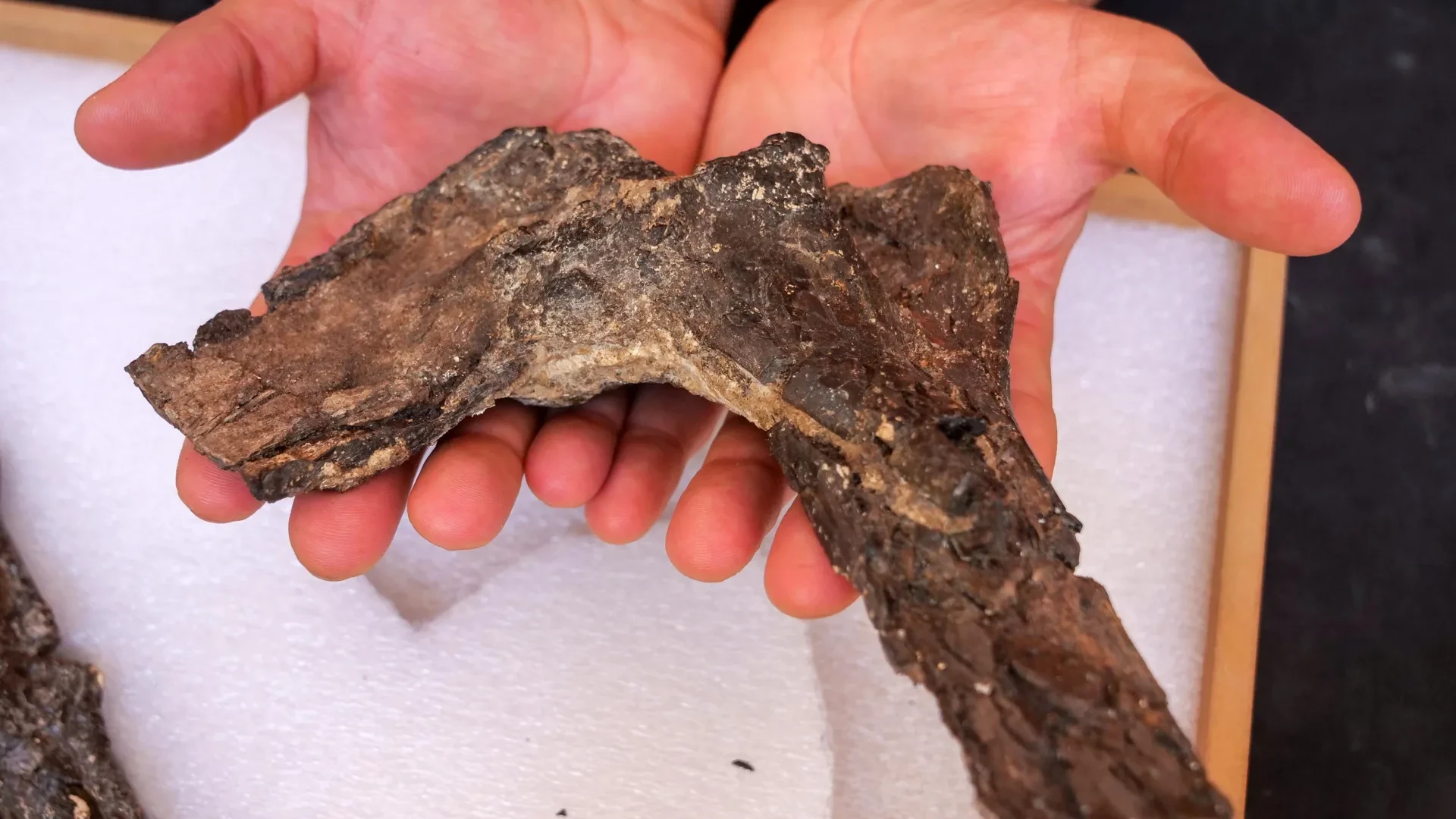
In a landmark breakthrough that fundamentally challenges traditional paradigms in paleontology and molecular biology, an international team of researchers has uncovered remarkably preserved traces of dinosaur blood within 115-million-year-old skeletal remains. The discovery, detailed in the Proceedings of the National Academy of Sciences (PNAS), confirms the presence of fossilized red blood cells and definitive chemical signatures of hemoglobin—the vital protein responsible for oxygen transport—embedded deep within the vascular canals of Aratasaurus museunacionali, a predatory theropod that roamed northeastern Brazil during the Cretaceous period.
For generations, biological orthodoxy dictated that delicate organic molecules, proteins, and cellular structures were inherently ephemeral, destined to degrade completely within thousands or, at most, a few million years. This new evidence shatters those long-held assumptions. By demonstrating that fragile biomolecules can survive under exceptional geological conditions across deep time, the findings open a revolutionary frontier in molecular paleontology. Furthermore, the mechanisms of preservation identified in this study hold profound implications for astrobiology, potentially reshaping how scientists search for biosignatures and ancient life in extreme environments both on Earth and beyond.
Detailed Chronology: Unearthing the Secrets of Aratasaurus museunacionali
The journey toward this monumental discovery began in the sedimentary basins of northeastern Brazil, where the fossilized remains of Aratasaurus museunacionali were initially unearthed. A medium-sized meat-eating theropod, the dinosaur lived during a dynamic chapter of Earth’s history when the supercontinent of Gondwana was actively fragmenting, reshaping global climates and ecosystems.
The Burial and Fossilization Process
Understanding how delicate biological structures survived for 115 million years requires reconstructing the precise environmental conditions surrounding the animal’s death and burial. Paleontologists and geochemists believe the creature was rapidly entombed by fine-grained sediments in an oxygen-depleted (anoxic) aquatic or near-shore environment.
This rapid burial played a critical role. By cutting off exposure to scavengers, atmospheric oxygen, and aerobic microbial activity, the carcass was shielded from immediate decay. Crucially, the local chemical environment was rich in specific mineral precursors, setting the stage for an extraordinary geochemical transformation.
The Microscopic Analysis
Fast forward over a century of geological evolution to the modern analytical laboratories. An international research collaborative—spearheaded by Curtin University and including specialists from the Japan Agency for Marine-Earth Science and Technology (JAMSTEC), the Brazilian National Museum, the Regional University of Cariri, and Johns Hopkins University—began subjecting small fragments of the dinosaur’s limb bones to cutting-edge analytical techniques.
Using advanced microscopy and high-resolution spectroscopy, the team zoomed into the bone’s vascular canals—the microscopic tunnels that, in life, housed the blood vessels nourishing the skeletal tissue. To the researchers’ astonishment, the canals were not merely empty mineral casts. They contained distinct, mineralized structures bearing the unmistakable morphology of red blood cells.
However, visual resemblance alone is not enough in modern science. Previous claims of ancient blood cells have occasionally been met with skepticism, often dismissed as microbially generated spheres (framboids) or mineral artifacts. To resolve this, the Curtin University-led team performed rigorous chemical fingerprinting. The analysis confirmed the presence of intact heme-derived molecules—the iron-containing ring structures intrinsic to hemoglobin—as well as preserved amino acids belonging to collagen, the primary structural protein of vertebrate bones and connective tissues. This combined morphological and chemical data provided the first definitive proof of ancient, hemoglobin-derived molecular remains preserved inside dinosaur red blood cells.
Supporting Context & Metrics: The Science of Deep-Time Preservation
To appreciate the magnitude of this discovery, one must examine the physicochemical barriers that organic molecules must overcome to survive millions of years.
The Fragility of Biomolecules
Under normal conditions, proteins, lipids, and nucleic acids undergo rapid hydrolysis, oxidation, and enzymatic degradation upon death. Within centuries, soft tissues typically vanish, leaving behind only mineralized bones and teeth. Even within fossilized bone, internal organic compounds are subjected to background radiation, fluctuating temperatures, and circulating groundwater, which act as a slow-acting chemical blender destroying molecular bonds.
The Role of Mineral Armor: Hausmannite
How did Aratasaurus defy these thermodynamic rules? The answer lies in an uncommon mineral stabilizer: hausmannite ($Mn^2+Mn^3+_2O_4$), an oxide of manganese.
Geochemical analysis revealed that hausmannite played a starring role in the fossilization process. Acting at the microscopic level, the mineral formed a stabilizing matrix around and within the red blood cells. This mineral sheath effectively locked the organic molecules in place, shielding them from reactive oxygen species and water infiltration.
In effect, nature engineered an intricate, microscopic time capsule. The interplay between the rapid, oxygen-depleted burial and the subsequent mineralization by hausmannite created a localized chemical equilibrium that arrested molecular decay for over a century of millions of years.
Key Research Metrics and Institutional Collaboration
- Fossil Age: Approximately 115 million years old (Cretaceous period).
- Specimen: Aratasaurus museunacionali, a theropod dinosaur.
- Lead Institution: Curtin University (WA-Organic and Isotope Geochemistry Centre).
- Key Minerals Involved: Hausmannite (manganese oxide) and associated structural bone minerals.
- Key Biomolecules Identified: Heme-derived molecules (components of hemoglobin) and collagen-associated amino acids.
- Participating Global Institutions: Curtin University, Japan Agency for Marine-Earth Science and Technology (JAMSTEC), Brazilian National Museum, Regional University of Cariri, and Johns Hopkins University.
Official Statements: Perspectives from the Research Leadership
The implications of this discovery have resonated strongly across the global scientific community. Leaders of the international research team have emphasized both the immediate impact on vertebrate paleontology and the broader philosophical shifts required in analytical science.
Professor Kliti Grice, John Curtin Distinguished Professor, founding director of Curtin University’s WA-Organic and Isotope Geochemistry Centre, and an Australian Research Council Laureate Fellow, served as the principal lead of the study.
"To detect intact heme-derived molecules in 115-million-year-old red blood cells is astonishing: this really is a landmark discovery," Professor Grice stated.
"It not only extends the known fossil record of blood, but also offers a direct molecular window into the physiology of long-extinct animals so we may better understand them and the world they lived in. These findings challenge longstanding assumptions that certain biomolecules such as hemoglobin cannot survive deep time. It opens exciting new avenues for molecular-level paleontology, allowing us to investigate the evolution of blood, metabolism, and even activity levels in ancient animals."
Adding to this, Professor Martin Van Kranendonk, head of Curtin University’s School of Earth and Planetary Sciences, highlighted how the discovery bridges disparate scientific disciplines, particularly touching upon the realm of planetary science.
"This study exemplifies how coordinated efforts across institutions, continents, and scientific disciplines can unlock extraordinary insights into ancient life," Professor Van Kranendonk noted.
"The results are changing how researchers understand the preservation of molecular structures over vast timescales and under harsh conditions. These insights could be valuable to astrobiology, a field that investigates the possibility of life elsewhere in the universe. If biological molecules or their chemical signatures can persist under the right conditions for more than 100 million years, we may need to reconsider where and how we look for evidence of ancient organisms."
Future Outlook: Transforming Paleontology and Astrobiology
The confirmation of preserved hemoglobin and collagen in 115-million-year-old dinosaur bones marks the dawn of a new sub-discipline: molecular-level paleontology. For decades, paleontologists have relied almost exclusively on skeletal morphology, osteological correlates, and biomechanical modeling to infer how dinosaurs breathed, moved, and regulated their internal body temperatures.
A New Era of Physiological Reconstruction
With direct access to molecular remnants, researchers can begin to ask questions previously thought unanswerable. By analyzing the structural variations of ancient hemoglobin and associated metabolic proteins, scientists hope to reconstruct:
- Metabolic Rates: Gaining empirical data on whether large theropods were endothermic (warm-blooded), ectothermic (cold-blooded), or possessed intermediate metabolic strategies (mesothermy).
- Oxygen Efficiency: Evaluating how ancient species adapted to fluctuating atmospheric oxygen concentrations during the Cretaceous period.
- Evolutionary Lineages: Using molecular signatures to refine phylogenetic trees, providing an independent chemical line of evidence that complements morphological taxonomy.
Implications for Astrobiology and the Search for Extraterrestrial Life
Perhaps the most far-reaching consequence of this research lies outside our planet entirely. Astrobiologists tasked with searching for life on Mars, Europa, or Enceladus have long debated the degradation timelines of organic biosignatures. Planetary surfaces exposed to cosmic radiation, extreme thermal shifts, and oxidizing soils were presumed hostile to long-term organic preservation.
However, if delicate proteins like hemoglobin and structural collagen can survive sub-surface conditions on Earth for over 100 million years protected by specific mineral matrices, the calculus changes.
When robotic rovers and future crewed missions drill beneath the Martian regolith, or analyze ancient clay-rich lakebeds and mineral veins on other worlds, they may find that the preservation window for ancient organic matter is vastly wider than previously modeled. Mineral-rich micro-environments across the solar system could similarly act as geologic time capsules, safeguarding the chemical whispers of extinct microbial—or even complex—life.
Conclusion
The recovery of blood molecules from Aratasaurus museunacionali serves as a powerful reminder that nature still holds deep secrets, waiting for the convergence of advanced technology, multidisciplinary collaboration, and rigorous scientific inquiry. As researchers re-examine museum collections worldwide with these new analytical lenses, the fossil record is transforming from a silent gallery of stony statues into a dynamic, molecular archive of Earth’s deep history—and a guiding beacon for the search for life across the cosmos.