

Executive Overview
In the wake of sweeping technological disruptions that paralyzed critical national infrastructure—including a nationwide FAA ground stop that grounded all domestic flights—the Trump administration has instituted a sweeping overhaul of its public communications strategy. Homeland Security Secretary Markwayne Mullin has been summarily sidelined from television appearances, a punitive measure media insiders have dubbed a "primetime timeout." The intervention was orchestrated by newly appointed White House Chief of Staff Stephen Miller, who acted swiftly from overseas while accompanying President Donald Trump on an official diplomatic trip to Asia.
The decision underscores a mounting administration anxiety over public messaging during crises. As anxious citizens grappled with software system crashes, halted air traffic, and erratic banking services—fearing catastrophic cyberattacks—Secretary Mullin’s public explanations were widely criticized as haphazard and gaffe-prone. To restore public confidence, the administration has elevated National Intelligence Director Jay Clayton and Secretary of State Marco Rubio to serve as the unified, credible faces of crisis management.
Concurrently, political friction has emerged on the broader conservative front. Tech billionaire Elon Musk, who poured approximately $500 million into Republican coffers during the recent midterm elections, publicly distanced himself from the "MAGA" movement during an appearance at The New York Times DealBook summit. President Trump has since downplayed the remarks, affirming his friendship with Musk while reinforcing strict boundaries regarding the ideological tenets of the MAGA platform. Meanwhile, the interview itself has sparked intense media criticism, with media watchdogs rebuking New York Times columnist Andrew Ross Sorkin for failing to press Musk on contentious international humanitarian allegations tied to his governmental efficiency initiatives.
Detailed Chronology of Events
1. The National Infrastructure Disruption
The crisis began unfolding in mid-November, when a wave of cascading software and hardware glitches struck critical sectors across the United States. The disruptions culminated in an unprecedented Federal Aviation Administration (FAA) directive that temporarily grounded all commercial air traffic nationwide. Concurrently, citizens reported erratic banking services, sudden telecommunication drops, and widespread system freezes.
For millions of Americans, the immediate fear was a sophisticated, large-scale cyberattack orchestrated by a foreign adversary. The chaotic environment required calm, authoritative, and technically precise communication from federal leadership to prevent widespread panic.
2. Mullin’s Missteps and the "Primetime Timeout"
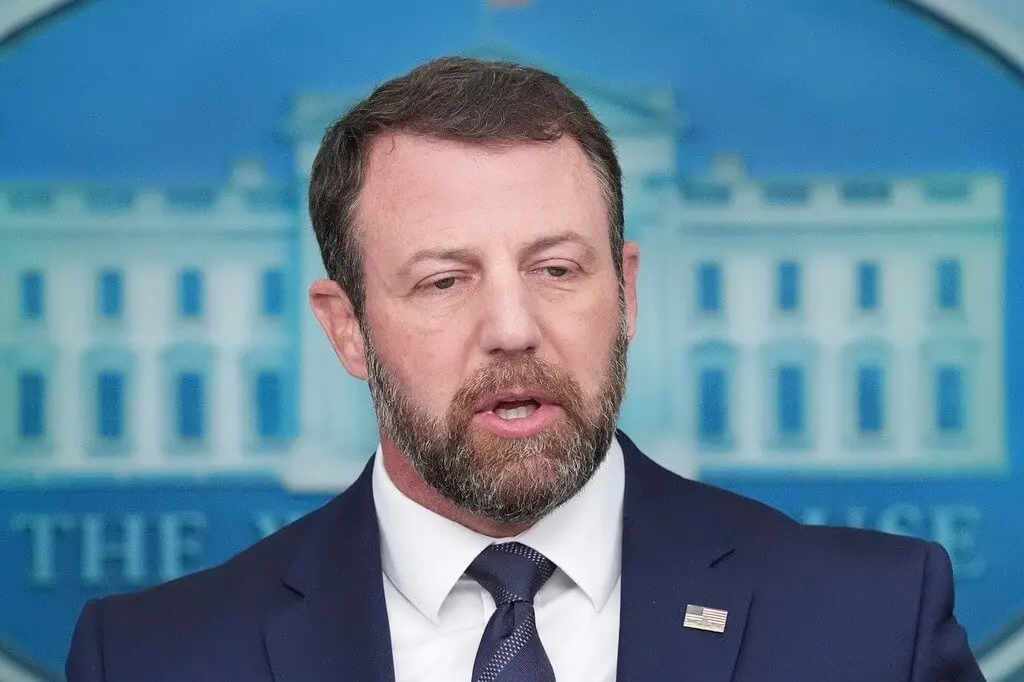
Tasked with calming the public, Homeland Security Secretary Markwayne Mullin stepped in front of the cameras. However, his performance immediately drew sharp rebukes from both journalists and internal administration officials. The Atlantic’s Nick Miroff noted that Mullin struggled to deliver clear and careful explanations, leaving the public with the distinct impression that he was "winging it." A senior Department of Homeland Security (DHS) official privately conceded that Mullin’s frequent gaffes were rivaling historical blunders.
Recognizing the public relations liability, White House Chief of Staff Stephen Miller—currently traveling with President Trump in Asia—intervened. Miller pulled Mullin from all scheduled television appearances, effectively silencing the DHS chief on national broadcasts.
3. Streamlining the Message: The Rise of Clayton and Rubio
To stabilize the administration’s communications, Miller shifted the portfolio of crisis response messaging to National Intelligence Director Jay Clayton and Secretary of State Marco Rubio.
The pivot yielded immediate dividends. When Clayton appeared on Fox News to address the technical outages, former White House Press Secretary Karoline Leavitt took to social media to praise the move, highlighting Clayton as a smart, professional, and credible voice capable of assuaging public anxiety.
4. Musk’s DealBook Summit Comments and Presidential Reaction
While the White House managed its domestic communications crisis, tech mogul Elon Musk made headlines at The New York Times DealBook summit. When asked about his alignment with the populist conservative movement, Musk explicitly stated: "I’m not MAGA. If that means sort of blind adherence to a set of policies by the Republican Party, then I certainly don’t have that."
The remarks raised eyebrows given Musk’s substantial financial contributions—totaling roughly $500 million—to Republican midterm candidates. Responding to the comments during a phone interview with NBC News, President Trump maintained a diplomatic stance: "He’s a friend of mine… MAGA, to me, means something very specific, and when people veer from it, they don’t do very well. But Elon is—Elon’s got very good intentions. I mean, he was with me the whole—he traveled with me."
Supporting Context & Metrics
The convergence of domestic infrastructure vulnerabilities and high-stakes political posturing highlights the delicate balancing act modern administrations must maintain between technological operations and public relations.
- The Scale of the Midterm Investment: Elon Musk’s roughly $500 million injection into Republican midterm campaigns represents one of the largest single-entity political contributions in modern American electoral history, making his ideological distancing at the DealBook summit particularly jarring for party traditionalists.
- Infrastructure Vulnerabilities: The FAA grounding incident marks one of the most severe operational stoppages in modern U.S. aviation history, exposing systemic fragilities in federal and commercial software integration.
- Media Scrutiny of the DealBook Interview: The backlash against interviewer Andrew Ross Sorkin—spearheaded by media critics such as Columbia Journalism Review’s Bill Grueskin—centered on a 47-minute conversation that omitted pressing inquiries regarding Musk’s Department of Government Efficiency (DOGE) initiatives and their alleged downstream humanitarian impacts. Critics argued that failing to question a major political donor and executive on such consequential matters represents a significant lapse in journalistic accountability.
Official Statements
White House Official (on Stephen Miller’s intervention):
"This is a perfect example of why Stephen was put in the role as chief of staff — he knows all the different components, every member of the Cabinet trusts him, and he can quickly get them coordinated to deliver on a unified goal… Despite the mixed messaging from Mullin, the administration was able to take the reins — even overseas — and put together a coordinated response to inform the American people."
Senior DHS Official (speaking anonymously to The Atlantic regarding Markwayne Mullin):
"He gives the perception that he’s winging it… [and] he’s giving Biden a run for his money with the frequency of gaffes."
President Donald Trump (via NBC News, addressing Elon Musk’s comments):
"He’s a friend of mine. What can I tell you? I mean, you have to ask — there are lots of definitions out there. MAGA, to me, means something very specific, and when people veer from it, they don’t do very well. But Elon is — Elon’s got very good intentions. I mean, he was with me the whole — he traveled with me."
Karoline Leavitt, Former White House Press Secretary (via X/Twitter):
"Good move by the White House to have DNI Jay Clayton out on television. He is smart, professional, and a very credible voice to address Americans’ legitimate concerns about recent outages."
Future Outlook
The recent developments signal a tightening of internal discipline within the Trump administration under the leadership of Chief of Staff Stephen Miller. By centralizing crisis communications and marginalizing cabinet officials prone to off-script gaffes, the White House aims to project an image of unyielding competence and control.
Moving forward, the administration is expected to rely heavily on technocratic and foreign-policy heavyweights like Jay Clayton and Marco Rubio to navigate complex national security and domestic resilience issues. Meanwhile, the evolving relationship between President Trump and Elon Musk will remain under intense scrutiny as both figures navigate the boundaries between independent corporate innovation and populist political alignment. For Markwayne Mullin, his political and media future within the administration will depend heavily on his ability to rehabilitate his internal standing and adhere strictly to the newly centralized White House messaging framework.
