

Executive Overview
For decades, the Dallas Cowboys Cheerleaders (DCC) have transcended the traditional boundaries of sports entertainment to become a permanent fixture of global pop culture. Often referred to simply as "America’s Sweethearts," the organization represents an elite standard of precision choreography, synchronized athleticism, and immaculately curated pageantry. As the franchise prepares for the 2026–2027 NFL season, the unveiling of the new roster has once again captured the public’s attention—not only for the elite dancers who earned a spot on the squad, but for a historic shift in their iconic uniform.
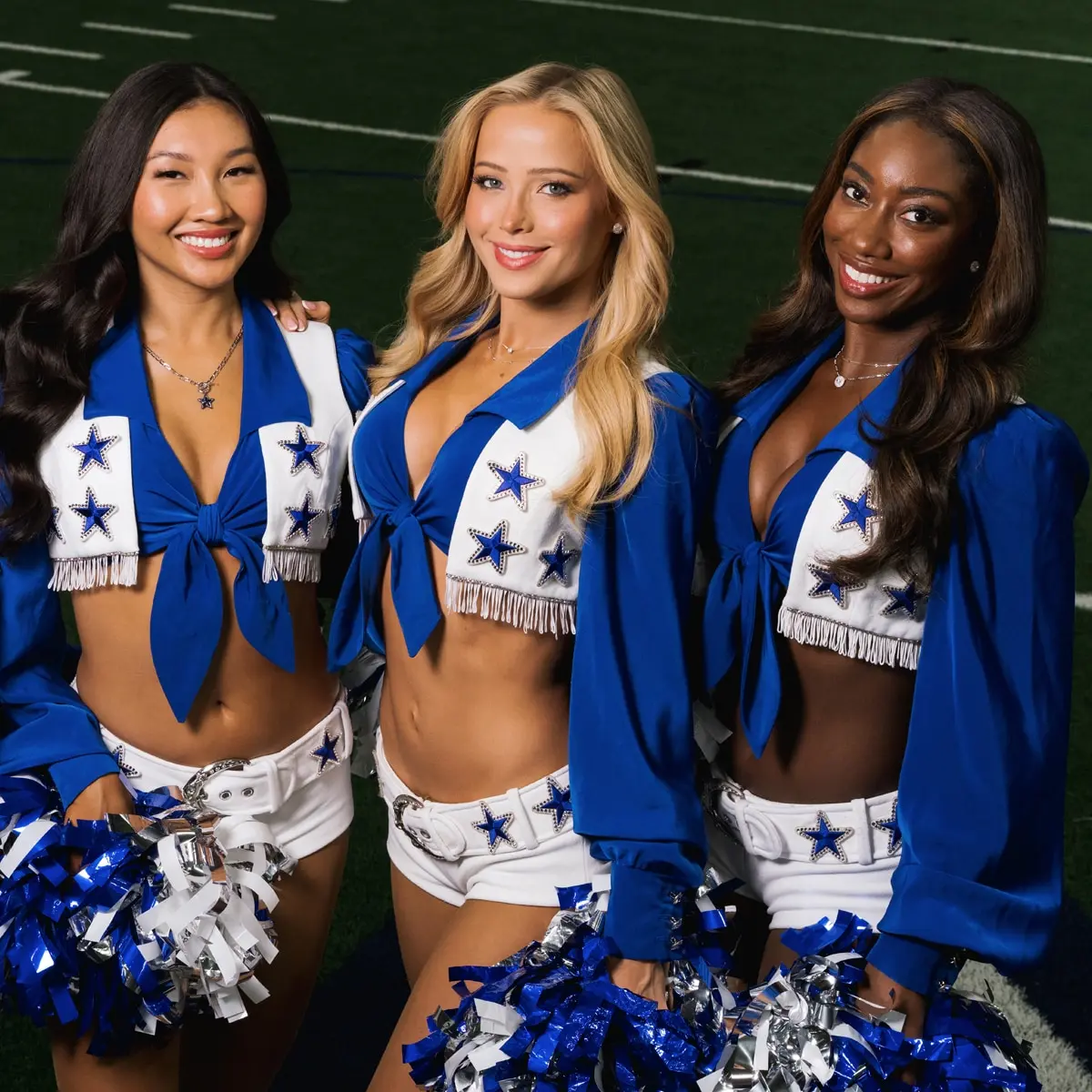
In a move breaking decades of traditional design discipline, the DCC organization has officially incorporated diamond earrings into the game-day uniform for the first time in its storied history. Partnering with renowned designer Kendra Scott, the squad will debut the "Bella Silver" stud earring, signaling a subtle yet profound evolution in how the team blends timeless heritage with modern luxury.
Yet, beneath the glittering lights of AT&T Stadium, the reality of being a Dallas Cowboys Cheerleader is far more complex than game-day glamour suggests. From grueling physical toll and rigorous time-management demands to evolving discussions surrounding body positivity, compensation, and post-career support, the DCC franchise operates as an intense intersection of elite athleticism and corporate branding. This comprehensive report examines the historical evolution of the DCC uniform, the administrative philosophy guiding the squad, the true economic and physical cost of the job, and what the future holds for the world’s most famous cheerleading institution.
Detailed Chronology: The Evolution of an Icon
To understand the magnitude of the 2026–2027 uniform update, one must examine the meticulous, decades-long evolution of the DCC aesthetic. In the world of the Dallas Cowboys Cheerleaders, design is rarely arbitrary. Every stitch, line, and hue is calculated to project power, precision, and national pride.
The 1970s: Establishing the Blueprint
Before the 1970s, sideline entertainment across the National Football League looked vastly different. However, everything changed for the Dallas franchise when the organization launched its iconic uniform featuring long blue sleeves, a stark white vest, and white shorts, accented by the unmistakable blue and white star motifs.
The commitment to preserving this legacy is so absolute that portions of the materials remain historic artifacts. DCC Senior Director Kelli Finglass revealed that the organization purchased blue and white fabric in bulk during the 1970s. Remarkably, the squad is still utilizing original bolts of white fabric to this day, having only needed to source new blue fabric once in over half a century.
The 1980s and 1990s: Experimentation and Discipline
As the decades progressed, subtle shifts in styling mirrored broader cultural trends. During the 1980s, leadership experimented with various hairstyles, temporarily introducing sportier looks like braided pigtails. However, the aesthetic quickly pivoted back toward timeless glamor, cementing the rule that dancers wear their hair down—even during grueling rehearsals.
Structurally, the uniform continued to adapt. The signature belt was temporarily removed in the 1990s, only to make a triumphant return in 2002. By 2006, the buckle received a major structural elevation under the guidance of Finglass and Head Choreographer Judy Trammell, who took the helm in 1991. The team introduced a glamorous, crystal-accented Western buckle that has remained a permanent staple of the uniform ever since.
The Modern Era: Footwear and the 2026 Earring Milestone
Footwear underwent a major functional upgrade in 2011, when the organization partnered with Lucchese to design custom white cowboy boots. Built with a lighter weight, softer sole, and the removal of the traditional steel shank, these boots were engineered to enhance flexibility, enabling higher kicks and sharper point-work without sacrificing joint health.
This brings the chronology to the landmark 2026–2027 season. By incorporating the Kendra Scott Bella Silver stud earring, the organization has updated its uniform for the first time to include facial jewelry. Inspired by Texas stars, stadium illumination, and the raw energy of game day, this addition proves that even the most deeply entrenched traditions are open to refined, intentional modernization.
Supporting Context & Metrics: The Human and Economic Cost of Glory
While the visual presentation on the field is seamless, the lifestyle of a Dallas Cowboys Cheerleader requires extraordinary sacrifice. Recent media coverage—including Netflix’s hit docuseries American Sweethearts: Dallas Cowboys Cheerleaders—has pulled back the curtain on the immense physical, logistical, and financial realities faced by these athletes.
The Physical Toll: Jump Splits and Beyond
The signature DCC jump split is a breathtaking athletic feat, but it exacts a severe toll on the human body. Alum Caroline Sundvold, who starred in the docuseries alongside her rookie sister Anna Kate Sundvold, famously detailed how four seasons of high-impact jump-splitting left her joints in a severely degraded state. Despite medical advice recommending immediate hip surgery—which carries a three- to six-month recovery window—Caroline chose to push through for a fifth season.
Following her eventual hip operation, she faced an even more startling hurdle: foot surgery. Because the human foot contains an immense concentration of nerve endings, the recovery process proved to be a profound physical and mental wake-up call, emphasizing the hidden trauma endured by professional dancers. Other standouts, such as Madeline Salter, have publicly documented rigorous treatments at sports rehab facilities to combat severe tension headaches, overuse injuries, and chronic joint stress.
The Economic Reality: Balancing Multiple Careers
A widespread misconception among sports fans is that performers for premier NFL franchises command six-figure salaries. Historical reporting by ESPN in 2017 revealed that NFL cheerleaders often made between $75 and $150 per game, falling far short of a living wage.
While compensation has improved in recent years—with reports from the Dallas Morning News indicating rates have risen closer to $400 per game, supplemented by hourly pay for rehearsals and public appearances—many cheerleaders still rely on outside employment. As documented on American Sweethearts, veterans and rookies alike maintain demanding full-time professions. Kelcey Wetterberg worked as a pediatric registered nurse, Reece Allman supplemented her income by working at a Dallas florist, and Megan McElaney balanced a full-time career as a marketing and recruiting coordinator alongside makeup artistry and late-night DCC practices ending at 11:00 PM.
Navigating Body Image and Fitness Standards
Historically, professional cheerleading organizations faced intense criticism regarding rigid body-weight requirements. Today, the DCC has modernized its approach under Finglass’s leadership. Rather than enforcing punitive weight benchmarks, the organization provides customized uniforms tailored precisely to each dancer’s unique physical dimensions.
With an adjacent gym facility, professional nutritionists, and mental health consultants on hand, the emphasis has shifted toward education, holistic wellness, and personal fitness autonomy. The official DCC audition guidelines explicitly state that candidates must look well-proportioned in dancewear, confirming that the organization maintains no arbitrary height or weight restrictions.
Official Statements: Philosophy of the Uniform and Community Impact
The decision to incorporate Kendra Scott’s Bella Silver earrings into the 2026–2027 uniform was driven by a deep philosophy of intentional design. According to DCC Senior Director Kelli Finglass, every element of the ensemble communicates a message before a single step is danced.
"Uniforms tell a story before we ever dance," Finglass stated in an official press release shared with USA Today. "In the world of the Dallas Cowboys Cheerleaders, every line, every color, and every stitch has purpose. When you include a piece of jewelry, it isn’t about decoration; it’s about intention."
Elaborating on the collaboration with Kendra Scott—whose brand has achieved massive mainstream acclaim—Finglass emphasized the delicate balance between tradition and refinement:
"The best accessories don’t distract from the uniform, they refine it. The Kendra Scott Bella stud is like a final touch that makes the whole picture feel complete."
Beyond the stadium lights, leadership is equally passionate about correcting public misconceptions regarding the squad’s broader mission. Head Choreographer Judy Trammell has frequently noted that media portrayals often overlook the extensive humanitarian work performed by the women throughout the year.
"The USO tours, the veterans hospital, the children’s hospital visits—we do so much more than has ever been seen," Trammell noted in interviews discussing the transition from reality television formats to modern documentary streaming.
Furthermore, the organization places immense emphasis on personal development, pairing young dancers with etiquette coaches to prepare them for high-stakes diplomatic environments, such as dinners with high-ranking military officials and international dignitaries.
Future Outlook: Legacy, Alumni Support, and the Next Generation
As the Dallas Cowboys Cheerleaders look toward the 2026–2027 season and beyond, the institution finds itself uniquely positioned at the crossroads of athletic prestige and digital-age visibility. While social media algorithms and global streaming platforms have amplified the squad’s reach to unprecedented levels, the foundational core of the organization remains steadfast.
Preserving the Core Values
Finglass summarized this duality in her interview with The New York Times, noting that while the surrounding ecosystem of media, technology, and public engagement has transformed dramatically, the baseline requirements remain unchanged. At their core, the Dallas Cowboys Cheerleaders are world-class performers driven by exceptional discipline and a servant’s heart.
Post-Career Transition and The Spirit of DCC
Recognizing that retiring from elite cheerleading represents a profound lifestyle disruption, the organization has established a robust support system for its alumni. "The Spirit of DCC" is an active engagement network designed to bridge the sudden gap dancers experience when transitioning away from nightly rehearsals and game-day adrenaline.
By fostering lifelong connections—celebrating everything from personal weddings to future generations of families—the DCC leadership ensures that the bond formed on the dance floor endures long after the white boots and star-spangled uniforms are retired. As the 2026–2027 squad takes the field with their newly updated, diamond-accented look, they carry forward a legacy built on grit, glamour, and unyielding excellence.