

Executive Overview
For generations, the Thanksgiving dinner table was strictly human territory. While family pets—most notably dogs—might have hovered near the baseboards hoping for a stray morsel of turkey skin or a dropped pat of butter, they were largely relegated to the culinary periphery. Tossing table scraps to a beloved hound was a casual, often risky tradition steeped in domestic habit rather than gourmet consideration.
Today, however, the landscape of America’s most cherished feast has shifted fundamentally. Thanksgiving is no longer just a celebration for humans; it has evolved into a fully integrated, multi-species holiday where the family dog is treated not merely as a guest, but as a guest of honor.
Recent data underscores this profound cultural evolution. While a 2023 survey of 1,000 dog owners conducted by the pet information site Veterinarians.org revealed that a substantial 68% planned to prepare a dedicated Thanksgiving meal exclusively for their dogs, that figure has skyrocketed. A subsequent study by premium fresh pet-food brand Ollie found that an astounding 96% of dog-owning households now plan to prepare something special for their canine companions during the holiday season.
This dramatic surge has not gone unnoticed by the pet care industry. Sensing a monumental marketing and economic opportunity, pet brands large and small are rolling out Thanksgiving-specific products, limited-edition treats, and immersive retail experiences designed to pull dogs right up to the holiday table—at times, quite literally. From fresh human-grade holiday feasts packaged in luxury materials to experiential cooking classes at major national retailers, the Thanksgiving pet market has transformed into a high-stakes arena of premiumization, emotional branding, and cultural integration.
Behind this shift lies a powerful convergence of demographic, sociological, and economic trends. Younger generations—particularly Millennials and Generation Z—are redefining what it means to be a pet owner, treating animals as children and full-fledged family members. Concurrently, declining birth rates and shifting household dynamics have elevated pets to central pillars of emotional support and identity. When combined with a growing health consciousness regarding the dangers of feeding dogs toxic Thanksgiving table scraps, the stage has been set for a permanent restructuring of how America celebrates the holidays with its four-legged family members.
Detailed Chronology of the Pet Thanksgiving Phenomenon
To understand how the canine Thanksgiving feast evolved from an eccentric niche behavior into a mainstream commercial powerhouse, it is helpful to trace its trajectory over recent years, marked by shifting consumer habits and aggressive retail innovation.
The Baseline: The 2023 Awakening
The modern obsession with canine holiday dining gained empirical backing in late 2023. Veterinarians.org published poll results gathered from 1,000 dog owners across the United States. The findings surprised many industry analysts outside the pet sector: nearly seven in ten respondents (68%) stated they intended to cook or assemble a custom Thanksgiving meal explicitly for their dogs. This revealed an underlying consumer desire to bridge the gap between human holiday rituals and pet care, though options at the time were largely limited to DIY home cooking or modifying standard kibble.
The 2024 Leap: Near-Universal Adoption
By the following holiday season, the trend had broken through any remaining psychological barriers. Fresh pet-food brand Ollie surveyed 1,000 dog owners and discovered that the percentage of households planning a special holiday meal for their pets had climbed to an astonishing 96%. This near-universal adoption signaled to the market that Thanksgiving was no longer just a human holiday with pet-adjacent considerations; it was a dual-market event. Pet brands mobilized rapidly, moving from experimental holiday drops to robust, highly coordinated marketing campaigns and product rollouts.
Retail-Tainment and Experiential Marketing
As consumer demand surged, brands realized that selling packaged food was no longer enough; they needed to create immersive brand experiences that deepened the bond between pets and their owners.
On November 21 and 22, select Petco locations across the country introduced "Petsgiving"—an interactive retail-tainment event designed to teach pet parents how to safely prepare dog-appropriate Thanksgiving meals. These cooking lessons transformed traditional retail spaces into community hubs for pet humanization.
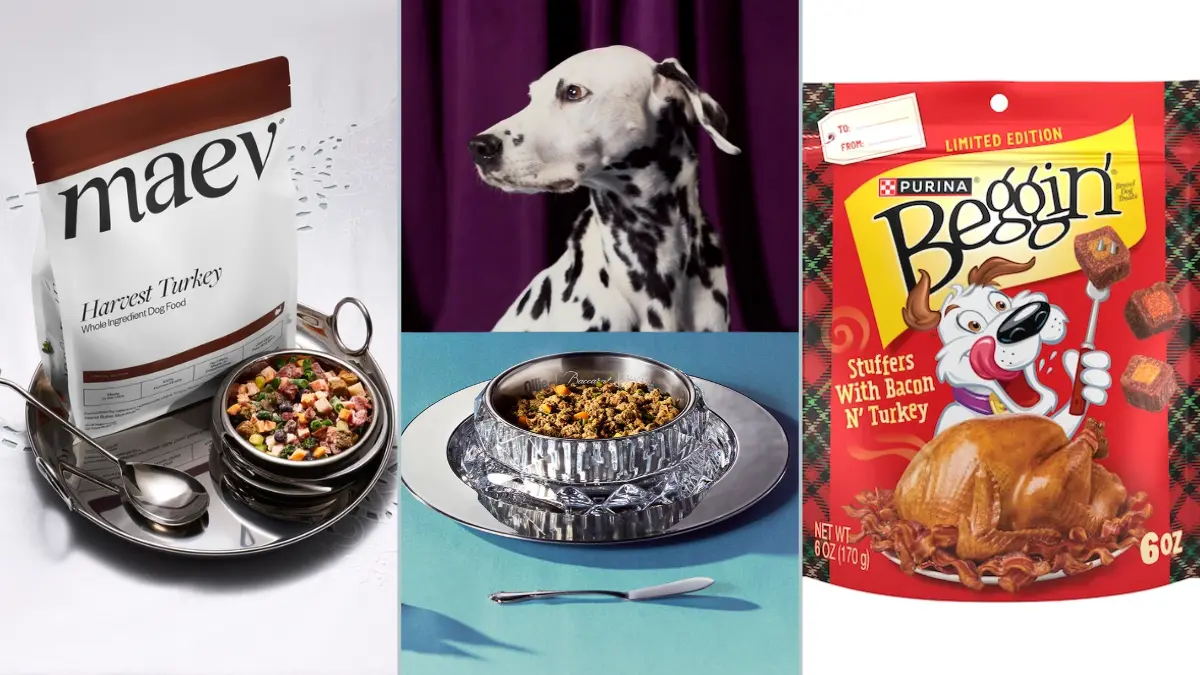
Simultaneously, brands began pushing the boundaries of luxury and exclusivity. In a move that captured national headlines, Ollie introduced a high-stakes promotion for its Holiday Feast meal. Every customer who purchased the meal online before November 3 was automatically entered into an exclusive drawing to win a $1,700 Baccarat crystal bowl—designed, of course, to serve the dog’s holiday dinner in style.
Product Innovation Across the Board
The market response was comprehensive, spanning legacy conglomerates and direct-to-consumer disruptors alike:
- Purina: Capitalizing on its massive market share, the legacy pet food giant announced a limited-edition run of its popular Beggin’ treat line featuring seasonal, human-inspired flavor profiles such as Bacon ’n Turkey and Honey ’n Ham.
- Just Food For Dogs: Taking advantage of the digital direct-to-consumer boom, the brand offered its limited-run Thanksgiving Feast Recipe online for the first time, making vet-formulated holiday meals accessible nationwide.
- Maev: The premium raw and fresh food brand launched its comprehensive "Seat at the Table" campaign to promote its limited-time Harvest Turkey dinners, positioning dogs explicitly as respected guests of honor at the family feast.
Supporting Context, Metrics, and Market Drivers
The transformation of Thanksgiving into a canine celebration is not happening in a vacuum. It is supported by hard economic data, shifting demographic structures, and a deeper understanding of animal nutrition and safety.
Demographic Shifts: The Rise of Millennial and Zoomer Pet Parents
According to data from the American Pet Products Association (APPA), dog ownership in the United States ticked upward, rising from 51% to 53% by 2025. Crucially, the engine driving this growth consists of younger demographics—specifically Millennials and Generation Z.
Data compiled by market research firm Euromonitor highlights the generational divergence in pet perception. Younger consumers are dramatically more likely to view their pets as full-fledged family members, with endorsement rates reaching 68% among Gen Z and 69% among Millennials. These generations approach pet ownership through the lens of intensive parenting, investing heavily in the emotional, physical, and psychological well-being of their animals.
The Children Substitute Phenomenon
This generational shift coincides with broader macroeconomic and social trends, most notably declining birth rates. As younger adults delay or forgo having human children, pets are increasingly filling that emotional space.
Allison Stadd, Chief Marketing Officer at Ollie, captured this dynamic in an interview with ADWEEK:

"There are also fewer people having children, so dogs are increasingly filling that role that people might have filled with human children in the past."
Even within households that do include children, the cultural status of the dog has risen exponentially. John Paul Vella, Senior Brand Manager at Purina, notes that across modern consumer segments, "dogs have been elevated to child status among consumers." This elevation guarantees that holiday budgets previously reserved exclusively for human children are now expanded to include canine family members.
Nutritional Awareness and Safety Concerns
While emotional bonding is a primary driver, practical concerns regarding pet health also play a critical role in the commercial success of specialty Thanksgiving pet foods.
For decades, well-meaning pet owners expressed their holiday affection by tossing table scraps—fatty turkey skin, heavily seasoned stuffing, onions, garlic, and cooked bones—directly to their dogs. Veterinary clinics nationwide routinely experience a surge in emergency visits over the Thanksgiving weekend due to pancreatitis, gastrointestinal blockages, and toxicosis caused by common holiday ingredients like onions and xylitol.
The growing awareness of these hazards has created a massive opening for commercial pet brands. Rather than telling owners not to share the holiday spirit, companies are providing safe, vet-approved alternatives that mimic the flavors and textures of a traditional Thanksgiving meal without the hazardous spices, fats, and structural dangers.
Official Statements and Industry Insights
The rapid commercialization and cultural normalization of canine holiday dining have prompted industry leaders to articulate the deeper philosophy driving their marketing strategies. Far from viewing these products as mere seasonal gimmicks, executives see them as reflections of a permanent psychological and sociological shift in human-animal relationships.
Maddy Tank, Senior Director of Brand at Maev, emphasized the philosophical underpinnings of her company’s holiday campaigns during an interview addressing the brand’s "Seat at the Table" initiative:
"We’re in the midst of a fundamental shift in the role dogs play in our lives, from existing on the periphery of our identity to becoming an extension of it. We’re increasingly bringing them into the rituals, routines and experiences that make us human."
This sentiment is echoed across the retail and manufacturing sectors. Alison Hiatt, Senior Vice President of Brand Creative at Petco, highlighted how experiential retail has evolved to meet these changing consumer expectations through events like Petsgiving:
"These are the latest in our series of retail-tainment events designed to create opportunities for connection and bonding between pets and pet parents."
By transforming the retail experience into an educational and emotional touchpoint, brands are actively facilitating the integration of pets into traditionally human-centric holidays. The message from the boardroom is clear: pets are no longer observers of human life; they are participants in human culture.
Future Outlook: Where the Pet Humanization Trend Is Headed
As the pet care industry continues to outpace traditional consumer packaged goods in growth and innovation, the normalization of canine Thanksgiving feasts points toward broader future trends that will shape the market for years to come.
1. The Expansion of Multi-Species Holiday Integration
If Thanksgiving has successfully transformed into a shared human-canine holiday, it stands to reason that other major cultural celebrations are primed for similar disruption. Industry analysts predict that upcoming holidays—including winter gift-giving seasons, Valentine’s Day, Easter, and the Fourth of July—will increasingly feature dedicated pet product lines. We are moving toward a year-round calendar where every major human celebration includes a synchronized, species-appropriate counterpart for household pets.
2. Continued Premiumization and Luxury Intersecting Pet Care
The willingness of consumers to spend lavishly on specialty pet meals—and enter drawings for luxury items like $1,700 Baccarat crystal dog bowls—demonstrates that the pet market is largely insulated from broader economic anxieties. As premiumization deepens, we can expect to see functional foods infused with adaptogens, joint-support supplements, and stress-relieving botanicals tailored specifically for high-stress holiday environments like Thanksgiving, where homes are filled with visiting relatives and unfamiliar noises.
3. The Blurring Lines Between Pet Food and Human Gastronomy
The rise of human-grade fresh dog food companies like Ollie, Maev, and Just Food For Dogs has permanently altered consumer expectations. Pet owners no longer view pet food as a commodity product stored in dark bags; they view it as real food that happens to be formulated for a canine digestive system. This philosophy will continue to drive culinary innovation, leading to menus featuring regionally sourced proteins, organic vegetables, and artisanal preparation methods that mirror high-end human dining trends.
Conclusion
The evolution of the Thanksgiving dog dinner from a backyard table-scrap tradition into a 96%-adopted commercial phenomenon is a testament to the changing nature of the modern household. Dogs have crossed the threshold from beasts of burden and backyard guards to pampered family members and emotional anchors. As long as younger generations continue to view their pets as children and extensions of their own identities, the family dinner table will remain large enough to accommodate everyone—paws, bowls, crystalware, and all.
