

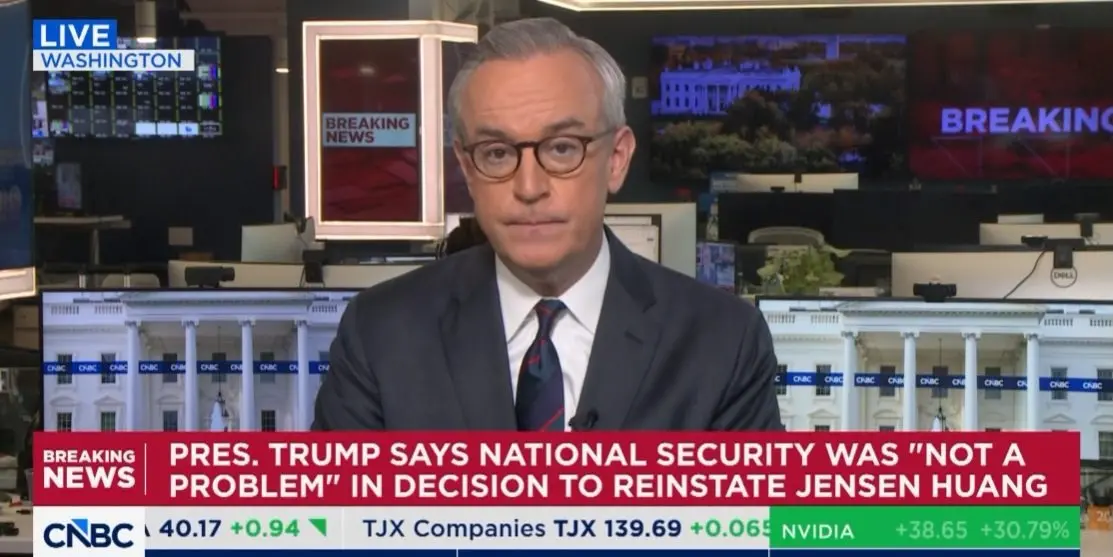
What was projected to be a tranquil, low-volume news cycle heading into the Thanksgiving holiday was abruptly shattered on a Monday morning in late November, when global financial markets and the technology sector were rocked by an unprecedented announcement: Nvidia had officially reinstated Jensen Huang as its Chief Executive Officer.
The reversal comes mere weeks after Huang’s sudden and dramatic departure from the semiconductor giant. That initial exit was triggered by stunning revelations regarding multiple extramarital relationships, including a high-stakes entanglements with a woman subsequently alleged by intelligence circles to be a Chinese operative. The initial scandal sent shockwaves through Silicon Valley, wiping billions off Nvidia’s market capitalization and igniting fierce corporate governance debates over national security, executive accountability, and personal indiscretion.
Yet, in a twist that defies modern corporate governance norms, the board of directors has opted to bring back the visionary leader who transformed Nvidia from a niche graphics card manufacturer into the beating heart of the global artificial intelligence revolution.
As the story broke at 8:56 a.m. ET, mainstream media outlets scrambled to cover the unfolding crisis. CNBC secured a massive journalistic coup, not only being among the first networks to break the reinstatement news but also orchestrating an immediate, live interview with President Donald Trump. Eamon Javers, CNBC’s seasoned senior Washington correspondent, caught the President on the fly while commuting to the network’s Washington, D.C., bureau.
This deep-dive retrospective examines the chaotic sequence of events that morning, the scramble inside television control rooms, the geopolitical and corporate implications of Huang’s return, and the behind-the-scenes mechanics of how a routine morning commute turned into a defining broadcast moment of the journalistic year.
Detailed Chronology: From School Bus Stop to the Oval Office Hotline
To understand the magnitude of Monday morning’s broadcast achievement, one must trace the timeline through the eyes of the journalists operating at the epicenter of the developing story.
7:45 AM ET: The Breaking Flash
The news of Jensen Huang’s reinstatement broke across financial terminals and news wires just before 9:00 a.m. ET. For Eamon Javers, the morning began like any other quiet pre-holiday weekday. Walking his daughter to her local school bus stop, Javers’ phone began to vibrate violently with urgent text messages from his bureau colleagues.
"It’s maybe the most important business story of the year," Javers recounted in a subsequent post-mortem interview with TVNewser. Realizing the magnitude of the corporate earthquake, Javers experienced the immediate, visceral frustration familiar to seasoned journalists: being physically removed from the newsroom when a generational story drops. "I was a little frustrated that I was out of position when it broke. So I began texting sources for comment immediately."
8:30 AM ET: The Unprompted Presidential Ring
As Javers slid behind the wheel of his car and navigated Washington traffic toward the CNBC bureau, he engaged in standard journalistic protocol, pinging political contacts to gauge Washington’s reaction to the chaotic return of a tech titan linked to foreign espionage probes. Among those he attempted to reach was President Donald Trump, given the administration’s intense focus on semiconductor manufacturing, national security, and trade relations with China.
To Javers’ profound astonishment, the phone rang. It was the President of the United States.
"He called me as I was in my car on the way to our CNBC bureau," Javers explained. "I wasn’t expecting it at all. But we have talked on the phone from time to time, and I had tried to reach him earlier in the morning for his comment."
8:52 AM ET: Executing a High-Stakes Audio Patch
Recognizing the golden opportunity unfolding in real time, Javers executed an improvised field maneuver. He immediately pulled his vehicle safely to the side of the road, placed a high-priority call to his desk coordinators, and successfully patched the live presidential telephone call directly into the CNBC television control room.
The technical choreography required extraordinary precision. Producers, audio engineers, and anchors in both Englewood Cliffs and Washington had less than four minutes to transition from a breaking news banner to a live, unscripted phone interview with the Commander-in-Chief regarding one of the most sensitive corporate governance crises in American history.
"The whole process took about 4 minutes," Javers noted, praising the network’s production staff. "And then we went live for nearly an hour. Our producers, control room team, and anchors did an incredible job of rolling with it and reacting very, very quickly so we could make it happen."
Behind the Control Room Glass: The Anatomy of an Unscripted Live Phoner
For viewers at home, a live telephone interview with a sitting president during a historic market-moving event appears seamless. Behind the scenes, however, producing an unscripted, hour-long phoner without an advance green room or pre-interview coordination is a masterclass in broadcast high wire-walking.
The Breakdown of Traditional Earpiece Communication
In standard television broadcasting, anchors and reporters in the field wear an IFB (Interruptible Foldback) earpiece. This allows the control room to whisper real-time production cues, time checks, and commercial break countdowns directly into the correspondent’s ear.
When a correspondent is conducting a direct phone interview from a mobile line, however, the technical architecture changes entirely.
"Your audience will understand the technical aspect of this," Javers explained, "which is that on a phoner, you can’t communicate with the control room during the interview. On TV, they can speak to you in your earpiece to communicate how long you have left, if the anchors want to get in a question, and all of the production stuff you need in real time. Here it was just—do it live."
Navigating the Unknowns in Real Time
Without a safety net or a pre-arranged script, Javers had to steer a conversation with the nation’s chief executive while simultaneously flying blind to the commercial schedule. His primary journalistic objective was piercing the veil of secrecy surrounding the executive suite discussions that led to Huang’s swift rehabilitation.
"It’s always an honor to talk to the president of the United States," Javers said, reflecting on the psychological weight of the moment. "And today it was a unique opportunity because there was so much that was unknown about the role he played behind the scenes. I was focused on all of the aspects that were still unknown, and trying to get the president to explain the who, what, when, and why of how this happened."
Supporting Context & Metrics: The Crisis That Shook Silicon Valley
To fully grasp why Jensen Huang’s reinstatement commands the immediate attention of the White House and global financial markets, one must examine the cascading series of events that led to his initial, shocking ouster.
The Scandal and National Security Alarms
Weeks prior to his triumphant return, Nvidia’s board was forced to accept Huang’s resignation following an internal probe that uncovered multiple extramarital affairs. The crisis escalated rapidly when investigative reports revealed that one of the individuals involved was a woman subsequently flagged by counterintelligence authorities as an alleged Chinese intelligence asset.
The revelation transformed what would have been a standard corporate morality clause violation into a critical national security concern. Given that Nvidia designs the world’s most advanced graphics processing units (GPUs)—the indispensable silicon chips driving artificial intelligence development for both commercial enterprises and the U.S. military—the prospect of executive compromise sent immediate alarm bells ringing through Washington regulatory agencies, the Department of Commerce, and the Pentagon.
Market Volatility and Shareholder Panic
Wall Street reacted with immediate and severe turbulence. Nvidia’s stock price experienced historic intraday swings, wiping hundreds of billions of dollars off its valuation in days. Institutional investors, accustomed to viewing Huang as an irreplaceable visionary whose leadership was synonymous with the company’s staggering growth, found themselves caught between panic over national security liabilities and terror over losing the architect of the AI boom.
Despite the gravity of the allegations, pressure quickly mounted from key institutional stakeholders, major suppliers, and key industry players who argued that no viable internal or external candidate could steady the ship or match Huang’s strategic foresight. The board’s subsequent decision to reinstate him indicates that, ultimately, the imperative for continuous technological dominance outweighed the fallout from his personal indiscretions.
Official Statements & Industry Reactions
The speed of Huang’s reinstatement has ignited a fierce debate among governance experts, lawmakers, and corporate ethicists.
- The White House Stance: During his impromptu interview with CNBC, President Trump addressed the strategic importance of stabilizing America’s primary semiconductor innovators. While administration officials have previously voiced strict concerns regarding foreign espionage and technology leakage, the administration has simultaneously emphasized the paramount importance of American corporate dominance in the global artificial intelligence race.
- Corporate Governance Watchdogs: Governance advocates have expressed profound dismay at the reversal, arguing that reinstating a CEO so quickly after a national security-adjacent scandal sets a dangerous precedent for accountability among public companies. Critics contend that the board’s capitulation sends a signal that performance and market dominance supersede ethical standards and risk management protocols.
- Silicon Valley Insiders: Conversely, tech sector loyalists have largely breathed a sigh of relief. Supporters argue that modern tech monoliths operate at such an accelerated velocity that prolonged leadership vacuums pose an existential threat far greater than personal misconduct scandals.
Future Outlook: Uncharted Territory for Corporate America
As Jensen Huang steps back into the chief executive office at Nvidia’s headquarters in Santa Clara, the long-term ramifications of his departure and sudden return remain entirely unwritten.
When asked about the ultimate outcome of this corporate drama, Eamon Javers offered a sober assessment rooted in decades of covering the intersection of Washington and Wall Street.
"We’ve really never seen anything this extraordinary in corporate America—at least in my lifetime," Javers observed. "I think it’s too early to say how this will play out, and certainly too early to say whether it will be successful or not. One thing is for sure: This story isn’t over yet."
As federal regulators continue to monitor the national security implications, and as investors watch to see how Nvidia manages its internal compliance moving forward, the Thanksgiving holiday week will be remembered not for its seasonal quiet, but as the moment when corporate governance entered an entirely new, uncharted frontier.
