

Executive Overview
The architecture of modern Middle Eastern diplomacy is increasingly defined by transactional ambition colliding with immutable geopolitical realities. Jared Kushner, operating as a special diplomatic envoy for the current administration alongside real estate associate Steve Witkoff, finds his signature brand of shuttle diplomacy stalling out across multiple fronts. Most critically, his latest efforts to rescue a tenuous, high-profile Gaza Peace Plan have met a familiar, stubborn wall of mutual intransigence between the Israeli government and Hamas.
While Kushner has historically styled himself after Cold War-era architects of foreign policy—consciously evoking the legacy of the late Henry Kissinger—his methods remain fundamentally rooted in the calculus of commercial real estate. This worldview treats complex, generational ethno-national conflicts as transactional impasses awaiting a mutually beneficial deal. Yet, as recent diplomatic maneuvers in Cairo, Jerusalem, and regional capitals demonstrate, this framework is buckling under the weight of deep-seated ideological warfare, mutual distrust, and intractable security demands.
With initial euphoria over the Trump administration’s “Board of Peace” initiative evaporating, Kushner’s shuttle diplomacy has deteriorated into a familiar cycle of recrimination, deadlocked negotiations, and ongoing violence on the ground. As regional stakeholders harden their positions and civilian casualties continue to mount, the limitations of applying corporate deal-making strategies to high-stakes international conflict have never been more glaring.
Detailed Chronology: From Euphoria to Diplomatic Impasse
The path to the current diplomatic paralysis began with high-level pronouncements and a fragile, short-lived framework that quickly unraveled under the pressure of execution.
- Early 2026: Buoyed by earlier successes such as the Abraham Accords during the first Trump term, Kushner and fellow envoy Steve Witkoff assume unofficial yet sweeping diplomatic portfolios. Their early mandate includes tackling intractable conflicts, leading to failed attempts at negotiating ceasefires in Ukraine and halting hostilities with Iran.
- Mid-2026: The administration unveils its flagship "Gaza Peace Plan" under the auspices of a newly formed "Board of Peace." The blueprint sparks premature celebrations and claims of a historic breakthrough, promising a phased transition involving the release of prisoners, humanitarian aid flows, a suspension of Israeli military strikes, and the eventual disarmament of Hamas in exchange for an Israeli military withdrawal.
- August 2026: The plan hits an immediate operational brick wall. While prisoner exchanges and limited aid deliveries proceed, the core prerequisites of the agreement—Hamas disarmament versus an IDF withdrawal—degenerate into an unyielding chicken-and-effect stalemate. Neither side is willing to make the first move, fearing tactical vulnerability.
- Mid-August 2026: In an effort to inject momentum, the administration announces that the Board of Peace has secured an apparent commitment from Hamas to disarm, tied to a cessation of Israeli strikes. However, Israeli Prime Minister Benjamin Netanyahu immediately rejects the premature terms, asserting that Israel will not pull back its forces while an armed Hamas remains intact.
- August 17, 2026: Seeking to salvage the collapsing agreement, Kushner travels to the region alongside Board member and former U.K. Prime Minister Tony Blair. The delegation engages with regional actors and intermediaries in Egypt, sparking fierce backlash from U.S. hawks—such as former Ambassador Eliot Abrams—who accuse the envoys of improperly legitimizing a designated terrorist organization.
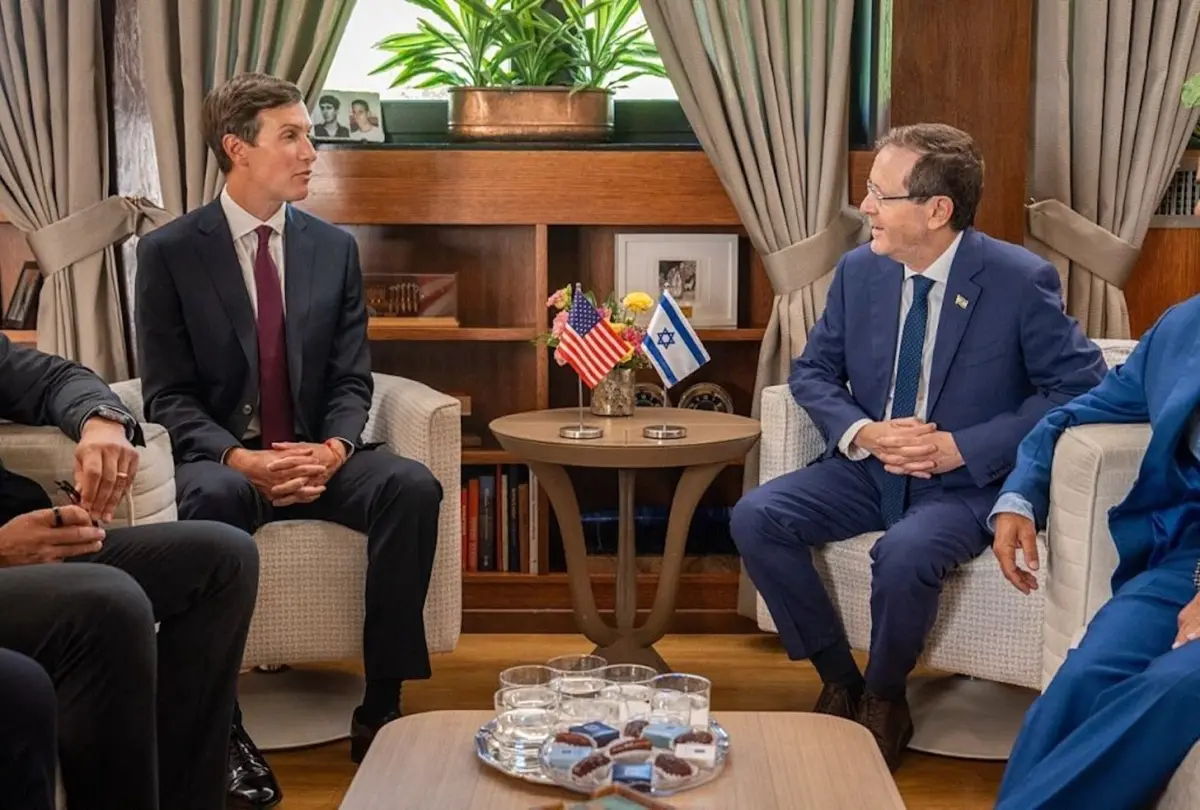
- August 17–18, 2026: Kushner shuttles from Cairo to Jerusalem to meet directly with Netanyahu. The Israeli leader stands firm, rebuffing pressure to soften his stance on withdrawal. To manage the optics of the breakdown, the parties agree to establish working groups to keep communication channels open.
- August 18, 2026: The grim reality of the diplomatic failure manifests immediately on the ground. Just a day after the high-level talks in Jerusalem, an Israeli airstrike hits a crowded seaside cafe in Gaza City, killing seven civilians.
- August 19, 2026: In a revealing interview with Fox News, Kushner openly assigns the entire onus of the breakdown to Hamas, issuing a thinly veiled ultimatum that signals a potential green light for intensified military operations should the group fail to capitulate to the administration’s terms.
Supporting Context & Metrics: The Shadow of Kissinger and the Architecture of the Deal
To understand Kushner’s approach to the Middle East, one must examine the intellectual and strategic lineage he claims, as well as the structural flaws in his methodology.
The Kissinger Parallel
When TIME Magazine named Kushner to its "100 Most Influential People" list in 2017, the publication notably tapped former Secretary of State Henry Kissinger to pen the tribute. Kissinger’s brief, carefully measured words offered little effusive praise, noting merely that Kushner’s background as a Harvard graduate, businessman, and family insider had prepared him to "fly close to the sun."
Historically, Kissinger’s own foreign policy achievements during the 1973 October War involved legendary feats of "shuttle diplomacy"—flying continuously between Cairo, Damascus, and Jerusalem over a two-year period to forge interim disengagement agreements. Yet Kissinger’s realpolitik was anchored in deep academic study and a ruthless, strategic understanding of global power dynamics, albeit one heavily shadowed by moral controversies.
Kushner, by contrast, approaches international diplomacy not as an ideological or geopolitical strategist, but as a real estate developer. Where Kissinger sought to balance superpowers and manage regional equilibrium, Kushner looks for the "win-win" concession table, assuming that every adversary can be brought around if the financial or political incentives are packaged correctly.
Metrics of a Stalled Agenda
The tangible outcomes of this corporate approach reveal a widening chasm between diplomatic press releases and ground-level realities:
- The Abraham Accords Legacy: While celebrated by proponents as a historic breakthrough that normalized ties between Israel, the UAE, Bahrain, and Morocco, critics have long argued that the accords sidelined the core Palestinian issue entirely—setting a precedent for transactional normalization over resolution.
- Ceasefire Failures: Beyond Gaza, Kushner and Witkoff’s parallel interventions in Ukraine and Iran yielded negligible diplomatic traction, underscoring the limits of applying Middle East-centric deal-making frameworks to disparate global conflicts.
- The Gaza Plan Paradox: The current framework demands that Hamas completely disarm before a full Israeli military withdrawal can be verified. Conversely, Hamas demands a guaranteed Israeli withdrawal before surrendering its military capabilities. This classic security dilemma has paralyzed the Board of Peace’s initiatives, leaving humanitarian aid trickling in while high-intensity kinetic operations resume.
Official Statements and Rhetorical Escalations
The war of words surrounding the latest diplomatic push highlights the growing impatience of U.S. intermediaries and the unyielding posture of regional leaders.
The administration’s frustration bubbled over into public view during Kushner’s post-trip media appearances. In his interview with Fox News, the envoy explicitly framed the impasse as a binary choice for Hamas, effectively laying the groundwork for unhindered military escalation:
"If they don’t follow through now on their commitment," Kushner stated, referring to the Board of Peace’s disarming terms, "everyone will see that they’re not genuine about peace, and then Israel will have a lot more support from the U.S. and others to go and finish the job."
The use of the phrase "finish the job"—left undefined by the envoy—drew immediate scrutiny from human rights advocates and foreign policy analysts, who noted its ominous implications given the scale of devastation already inflicted on the Gaza Strip.
On the Israeli side, Prime Minister Netanyahu’s office has maintained a hardline stance, resisting external pressure from Washington’s special envoys to compromise on core defense postures. Despite the creation of working groups intended to project diplomatic harmony, Israeli leadership has made it clear that military objectives supersede external peace timetables.
Meanwhile, critics from across the political spectrum have condemned the administration’s methods. Writing for the National Review, former U.S. Ambassador Eliot Abrams voiced a sentiment shared by many traditional foreign policy hands: that dispatching political emissaries to negotiate directly with Hamas bypasses vital diplomatic norms, risks legitimizing designated terrorist organizations, and ultimately undermines long-term regional stability.
Future Outlook: Where Do We Go From Here?
As the summer of 2026 draws to a close, the prospects for a lasting, negotiated peace brokered through corporate shuttle diplomacy look increasingly dim. Several critical trajectories will define the coming months:
- The Resumption of High-Intensity Conflict: With Kushner’s ultimatum effectively signaling that the U.S. may step back and clear the path for expanded Israeli military operations, the risk of a severe escalation in Gaza is at an all-time high. The token working groups established in Jerusalem appear increasingly like diplomatic window dressing masking an impending return to full-scale hostilities.
- The Erosion of U.S. Credibility as an Intermediary: By pivoting rapidly from triumphant declarations of a "Board of Peace" breakthrough to open threats of military liquidation, the administration’s envoys risk burning through their remaining diplomatic capital. Regional partners in Cairo, Doha, and Riyadh are increasingly wary of U.S.-led initiatives that bypass multilateral frameworks in favor of high-profile, personalized deal-making.
- The Limits of Transactional Diplomacy: The enduring tragedy of the Israeli-Palestinian conflict continues to expose the fundamental bankruptcy of treating existential, national, and religious struggles as mere commercial transactions. Until international mediators develop frameworks that address the root causes of sovereignty, security, and human rights—rather than relying on high-pressure sales tactics and short-term leverage—shuttle diplomacy will remain trapped in an endless loop of false dawns and devastating regressions.