

Executive Overview
For decades, the landscape of major Hollywood filmmaking has felt increasingly narrow, hemmed in by corporate consolidation, risk-averse studio notes, and a relentless corporate obsession with sanitized, mass-market PG-13 ratings. From endless mergers to the flattening of A-list star power on streaming platforms, cinema has often felt like a battleground where art perpetually surrenders to commerce. Yet, in the midst of this turbulent creative landscape, salvation occasionally arrives from the unlikeliest of places: the windswept, rain-slicked terrain inhabited by FBI agents Fox Mulder and Dana Scully.
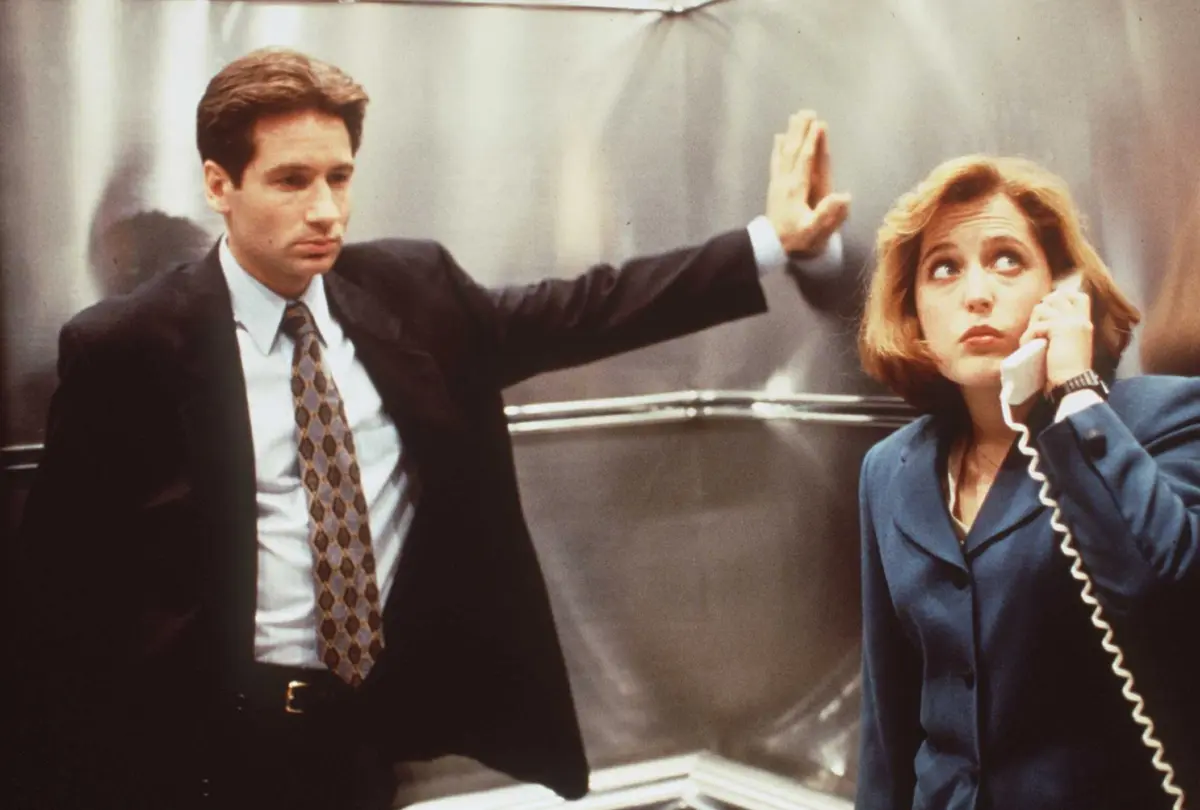
Nearly twenty years after its original theatrical release, The X-Files: I Want to Believe is undergoing a radical resurrection. Series creator Chris Carter has returned to the 2008 feature film to deliver a brand-new director’s cut, subtitled Vrach Frankenshteyn. Arriving quietly on Hulu, this alternate version of a film widely panned by critics and fans alike upon its debut is far more than a nostalgic cash-grab. Infused with heightened gore, atmospheric grit, and uncompromised gothic horror, Carter’s true vision recontextualizes the movie entirely.
More importantly, the release of Vrach Frankenshteyn is not an isolated nostalgic anomaly. It arrives at a fascinating cultural and industrial crossroads, directly mirroring broader tectonic shifts in the entertainment industry. From Ryan Coogler’s fierce protection of his creative rights to a growing industry pushback against studio tampering, artists are beginning to reclaim their work. As Carter finally unveils the film he intended to make in 2008—unshackled from studio censorship—it serves as a powerful symbol of a larger rebellion. In an era where audiences have grown exhausted by homogenized content, the tides may finally be turning in favor of unbridled artistic expression. Even if Agent Scully would likely remain skeptical, film fans just might have a reason to believe again.
Detailed Chronology: From 2008 Compromise to 2026 Redemption
To understand the magnitude of The X-Files: I Want to Believe — Vrach Frankenshteyn, one must cast their mind back to the summer of 2008. The cultural footprint of The X-Files loomed large, but the television landscape had shifted dramatically since the series signed off in 2002. While the 1998 feature film The X-Files: Fight the Future successfully bridged the gap between Seasons 5 and 6 with a healthy budget and sprawling mythology, a second cinematic outing proved much harder to mount.
When Fox finally greenlit a second film, expectations were sky-high, but the production environment was fraught with restrictions. Written by Chris Carter and Frank Spotnitz, the 2008 film steered away from the sprawling alien-conspiracy mythology of the television series, opting instead for a self-contained, monster-of-the-week thriller. Mulder and Scully—now living in an estranged, fragile domestic partnership—are pulled back into the fold by the FBI to help find a missing agent, crossing paths with a disgraced, clairvoyant former priest and a grim Russian organ-harvesting ring operating in the snowy expanse of Virginia.
However, the grim, eerie atmosphere Carter envisioned collided violently with the financial anxieties of 20th Century Fox. Fearing a limited box office return if the film alienated casual moviegoers or teenagers, studio executives applied intense pressure on the production team. Graphic sequences, visceral body horror, and the bleak, uncompromising tonal dread that defined the series’ darkest hours were systematically excised. The objective was clear: secure a PG-13 rating at all costs.
The resulting theatrical cut hit theaters in July 2008 to a lukewarm reception. Critics found the narrative sluggish, bloodless, and lacking the distinct personality of the classic television run, while hardcore "X-Files" purists lamented that the film felt like an elongated, overly sanitized television procedural rather than a cinematic event. It grossed a modest $68 million worldwide against a $30 million budget, effectively killing any immediate plans for further cinematic explorations of the franchise for years to come.
For eighteen years, the original, bloodier cut of I Want to Believe existed only as an industry rumor—a ghost story whispered among passionate fans. That changed in August 2026, when Chris Carter, capitalizing on a renewed interest in director-driven archival restorations and streaming flexibility, finalized and released Vrach Frankenshteyn on Hulu. Stripping away the studio-mandated censorship of the past, Carter’s new cut restored the jarring practical effects, the raw psychological terror, and the deeply unsettling gothic imagery that Fox had deemed too risky nearly two decades prior.
Supporting Context & Metrics: The Economics of Creative Control and Studio Tampering
The journey of The X-Files: I Want to Believe — Vrach Frankenshteyn sheds light on a systemic issue that has plagued Hollywood for decades: the dilution of art for the sake of market accessibility.
In the modern cinematic ecosystem, the pursuit of the elusive PG-13 rating has historically been treated as an absolute commandment for any intellectual property with franchise potential. Studios operate under the assumption that cutting away grit, violence, and moral ambiguity automatically widens the demographic funnel, driving up ticket sales. Yet, metrics and consumer sentiment over the last decade reveal a starkly different reality. Audiences possess an increasingly sophisticated radar for manufactured, studio-tampered products. When a film’s edges are sanded down, viewers can feel the artificiality, often resulting in swift word-of-mouth rejection at the box office.
The financial and creative fallout of studio interference can be tracked across several key vectors:
- The Erasure of Identity: When films are edited to satisfy international censors or risk-averse domestic executives, they lose their distinct authorial voice. The 2008 theatrical cut of I Want to Believe suffered precisely because it attempted to straddle the line between prestige thriller and popcorn accessibility, ultimately satisfying neither.
- The Rise of the Director’s Cut as a Corrective Tool: Historically, director’s cuts—ranging from Ridley Scott’s Blade Runner to Zack Snyder’s various streaming reimaginings—served as vanity projects or extended editions. In the 2020s, however, they have evolved into essential cultural corrections, allowing creators to rectify historical corporate overreach.
- Streaming Platforms as Safe Harbors: Traditional theatrical distribution models rarely accommodate risky, mid-budget genre experiments with R-rated or unrated sensibilities. Services like Hulu, Netflix, and Max have increasingly become financial incubators for directors to unearth lost cuts or finance passion projects that major studios abandoned.
Furthermore, the timing of Carter’s director’s cut release is intrinsically tied to a broader industry rebellion. Just weeks prior, visionary filmmaker Ryan Coogler made major industry waves by negotiating unprecedented ownership rights for his original hit feature Sinners with Warner Bros., while concurrently wrapping production on a brand-new X-Files reboot pilot for Hulu. Coogler’s maneuvering—and Carter’s triumphant reclamation of his 2008 film—point to a shifting paradigm where creators are aggressively fighting back against traditional studio paternalism.
Official Statements and Industry Perspectives
The discourse surrounding creative autonomy, artistic integrity, and studio interference has intensified as high-profile creators openly discuss the battles fought behind closed doors. Speaking with industry outlets following the surprise drop of Vrach Frankenshteyn, Chris Carter reflected candidly on the conditions that compromised his 2008 film.
"When you are dealing with a massive, beloved global property, the institutional fear of alienating a single demographic can paralyze a production," Carter noted in recent interviews. "We were constantly walking a tightrope. The studio wanted the safety net of a PG-13 rating to ensure maximum reach, but in doing so, we had to leave the most visceral, authentic pieces of the story on the cutting room floor. It’s liberating to finally let the audience see the movie we actually shot—the one that lives in the dark, where ‘The X-Files’ always belonged."
Carter’s candid assessment strikes a chord with a new generation of creators who are refusing to let corporate oversight dictate their artistic boundaries. Industry analysts view the concurrent development of Ryan Coogler’s upcoming X-Files television reboot alongside Carter’s archival release as a fascinating bridge between eras.
While Coogler’s involvement represents the future of the franchise—bringing a fresh perspective, modern technological tools, and heavy clout to renegotiate creator terms—Carter’s director’s cut acts as a retroactive vindication of the past. Together, these parallel developments signal an industry slowly waking up to the realization that auteur-driven visions are far more valuable than focus-grouped mediocrity.
Industry union representatives and copyright advocates have also weighed in on the trend, pointing out that ownership retention and final-cut clauses are becoming non-negotiable demands for top-tier talent. As streaming services fight subscriber churn by offering exclusive, prestige-adjacent archival content, the leverage is slowly—if unevenly—shifting back toward the storytellers.
Future Outlook: A New Paradigm for Franchise Filmmaking?
As the dust settles on the release of The X-Files: I Want to Believe — Vrach Frankenshteyn, the broader implications for the entertainment industry are profound. Are we standing on the precipice of a genuine creative renaissance, or is this merely a fleeting nostalgic blip in an otherwise consolidated media landscape?
The answer likely lies somewhere in the middle, but the momentum is undeniable. Audiences are increasingly fatigued by cinematic universes that prioritize brand continuity over narrative integrity, manufactured controversy over genuine stakes, and algorithmic safety over daring originality. The success—both critical and cultural—of director-driven restorations proves that there is a ravenous, underserved market for uncompromising art.
Looking ahead, several key trends are likely to shape the immediate future of Hollywood:
- Increased Demand for Archival Transparency: As digital preservation becomes easier and streaming platforms search for exclusive content hooks, fans will continue to clamor for "lost" versions of compromised films. Studios may increasingly view releasing director’s cuts as a low-cost, high-reward strategy to re-engage dormant fanbases.
- Hard-Fought Creative Autonomy: Following the blueprint laid down by filmmakers like Ryan Coogler and Chris Carter, emerging showrunners and directors are expected to fight harder for final cut provisions in their initial contracts, leveraging IP hunger against studio hesitation.
- Genre Redefinition on Streaming: Mid-budget, genre-bending thrillers and sci-fi narratives that were once deemed too risky for the summer blockbuster circuit will continue to find thriving, appreciative homes on prestige streaming platforms, where tonal grit and gothic atmospheres are welcomed rather than sanded down.
Ultimately, Mulder’s famous office poster declares, "I Want to Believe." For years, that sentiment felt like a cruel joke played on fans and creators alike, trapped in the machinery of corporate Hollywood. But with creators reclaiming their narratives, studios loosening their white-knuckled grip on ratings, and lost visions finally coming to light, the truth is finally emerging from the shadows. The entertainment industry still has a long, difficult road ahead, but for the first time in a long time, there is actual proof worth believing in.