

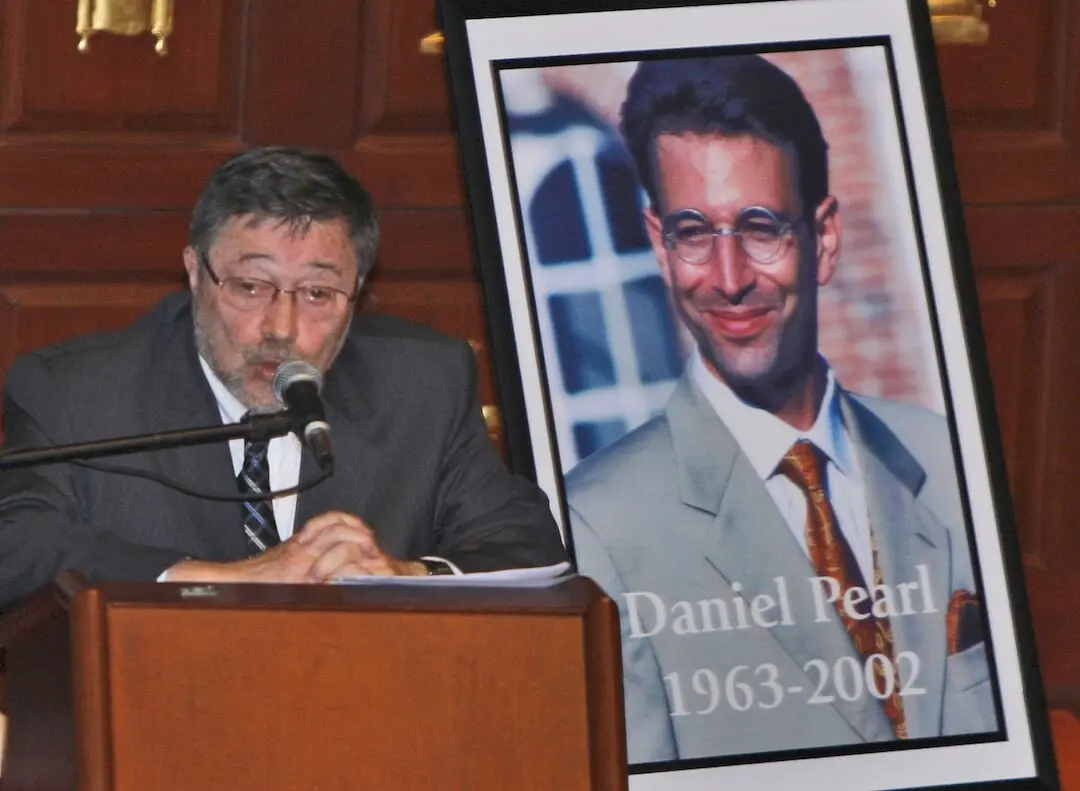
(Editor’s Note: This article is part of The Poynter 50, a retrospective series examining 50 defining moments, individuals, and forces that have shaped modern journalism over the last half-century—and continue to dictate its trajectory into the future.)
Executive Overview
For generations, the international press operated under an unwritten code of safe passage. During the turbulent arenas of modern warfare and civil strife, reporters, humanitarians, and Red Cross workers shared an implied mantle of neutrality. They were recognized not as combatants or active participants in geopolitical struggles, but as vital intermediaries—conduits of truth, chroniclers of human suffering, and witnesses to history.
That protective boundary evaporated on January 23, 2002.
The kidnapping and subsequent execution of Wall Street Journal South Asia bureau chief Daniel Pearl in Karachi, Pakistan, sent an earthquake through the global media landscape. Pearl’s murder was not a tragic accident born of crossfire or shrapnel; it was a deliberate, premeditated assassination designed to weaponize media attention through digital distribution. The publication of his execution video online marked a horrifying milestone in the history of information warfare.
More than two decades later, Pearl’s death remains a dark demarcation point in media history. It fundamentally rewrote the risk calculus for foreign correspondents, dismantled the illusion of journalistic immunity, and forced news organizations to institutionalize protective protocols, hostile environment training, and advanced security architectures. This retrospective explores the life of an exceptional journalist, the geopolitical shockwave triggered by his death, and the enduring scars left on the architecture of global press freedom.
Detailed Chronology: The Trap in Karachi
The Premonition and the Assignment
In the days leading up to his disappearance, Ruth Pearl experienced a profound and chilling premonition. In a recurring interview narrative, she recalled a dream set in an unfamiliar Middle Eastern alleyway where her son, Daniel, appeared uncharacteristically terrified. Known for his unwavering composure and intrinsic self-assurance, seeing him afraid shook her to her core. Driven by maternal instinct, she woke up, sat at her computer, and fired off an urgent email, pleading with him to write back immediately.
"I sensed the danger," she recalled. "I sensed the moment."
At the time, Daniel Pearl was based in Mumbai, India, but his investigative curiosity frequently drew him across the border to Pakistan. He was working on a high-stakes, deeply sensitive investigative assignment focusing on Islamist extremist networks following the post-9/11 U.S. invasion of Afghanistan.
The Ambush
On January 23, 2002, Pearl traveled to a bustling port district in Karachi. He believed he was en route to a routine, albeit clandestine, interview with a potential source—an Islamist operative who promised access to vital intelligence regarding militant groups. Instead, Pearl walked directly into an ambush orchestrated by a radical splinter faction calling itself the National Movement for the Restoration of Pakistani Sovereignty.
Pearl was abducted and plunged into a week-long nightmare of captivity. Held in a safe house, his captors subjected him to intense psychological torment while attempting to use him as a political pawn against the United States government. The demands were impossible; the threats were absolute. Throughout the ordeal, Pearl’s captors forced him to make coerced statements on camera, underscoring his identity as an American journalist.
On or around February 1, 2002, Pearl was brutally beheaded. Weeks later, his remains were recovered from a shallow grave on the outskirts of Karachi. Soon after, a gruesome video documenting his execution was uploaded to the internet, signaling a new, dystopian era where the digital sphere could be weaponized to terrorize global audiences.
The Desperate Rescue Effort
When news of Pearl’s disappearance broke, a frantic, international race against time commenced. Mariane Pearl, Daniel’s pregnant wife and a fellow journalist, immediately contacted John Bussey, a senior editor at The Wall Street Journal.
"I said, ‘Danny’s not back,’" Mariane recalled in a 2003 interview with Oprah Winfrey.
Mariane, a French journalist who had married Daniel in 1999, possessed a fierce inner resilience. Confronted with the agonizing reality that her husband was trapped in a life-or-death scenario, she refused to succumb to the fear her captors sought to instill. Alongside law enforcement agencies, international diplomats, and her husband’s colleagues, she stood on the front lines of a grueling search campaign.
Simultaneously, Asra Nomani, a colleague and close friend at whose Karachi home Daniel and Mariane had been staying, threw herself into the rescue effort. Nomani sprang into action, working the phones around the clock, contacting contacts, sources, and intelligence intermediaries to retrace Pearl’s final steps and identify the individuals behind the trap. Across academic and journalistic circles in the United States, figures like Jeffrey A. Sonnenfeld pulled every available lever, mobilizing networks in government and corporate spheres to pressure authorities for a breakthrough.
Despite an unprecedented multinational mobilization, the rescue efforts fell short. The brutality was absolute, and the psychological impact on the global journalism community was irreversible.
Supporting Context & Metrics: The End of the "Swiss-Like" Neutrality
To understand the magnitude of Daniel Pearl’s murder, one must examine the operational climate of journalism that preceded it. For decades, foreign correspondents could travel into hostile territories relying on an unspoken agreement: reporters documented history, and combatants left them to their work.
Michael H. Posner, who later served as the U.S. assistant secretary of state for democracy, human rights, and labor during the Obama administration, observed that Pearl’s death permanently altered the rules of engagement.
"We grew up in a period when journalists, the Red Cross, and humanitarian workers were afforded some special protection. These groups were regarded not as combatants or participants, but as legitimate intermediaries… And all of a sudden, this was one of those moments where I thought, ‘Oh my God, the world just got less safe. We’re going to have less ability to know what’s going on, and the kind of climate of protection for journalists is now in serious jeopardy.’"
Jeffrey A. Sonnenfeld, a senior associate dean at the Yale School of Management and a close confidant of Pearl, noted that while journalists had historically been victims of collateral damage—such as stray shrapnel or crossfire—they were rarely hunted down and targeted explicitly because of their profession or national identity.
"This was a major turning point," Sonnenfeld explained. "That journalists didn’t have this Swiss-like sense of neutrality about them when they traveled. That they were still identified with either their host country or their institution, or just were attractive bait that somebody could capture to use for negotiation purposes. That hadn’t been the case before."
The Human Behind the Headline
Away from the geopolitical maelstrom, Daniel Pearl was remembered not for grandiosity or a hunger for the spotlight, but for his profound humility, insatiable intellectual curiosity, and deep empathy for humanity.
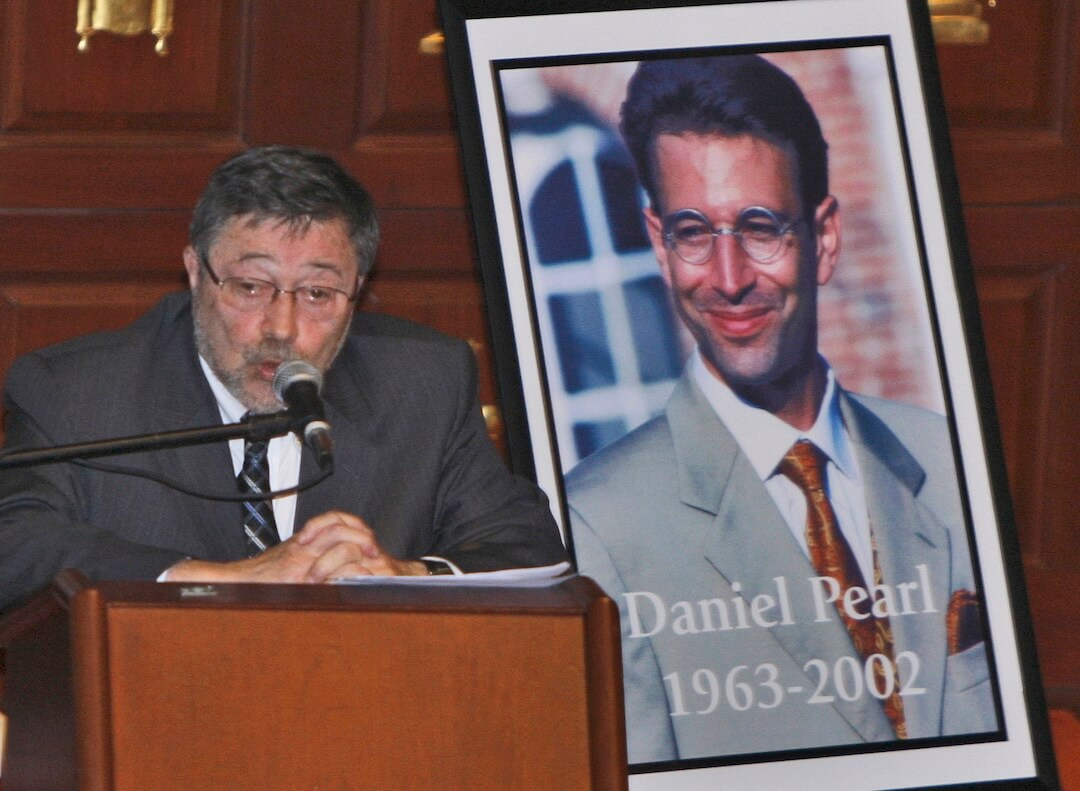
Born in New Jersey to Judea and Ruth Pearl and raised in Los Angeles, Pearl began his career at The Berkshire Eagle in Massachusetts before building a stellar reputation at The Wall Street Journal. Colleagues and friends noted his rare ability to bridge cultural divides. Whether he was walking into economically depressed neighborhoods in Atlanta—carrying a basketball to join impromptu games with local youths—or sitting in Greenwich Village blues bars playing his violin alongside patrons who had never read a corporate financial newspaper, Pearl saw people simply as people.
"He didn’t care about any of the demographic divides that lead people to fear each other," Sonnenfeld recalled. "Merit kept putting him in spotlights, until tragedy put him in the spotlight."
Official Statements and Legislative Action
The global outrage triggered by Pearl’s murder catalyzed legislative reforms in the United States and galvanized international human rights bodies to re-evaluate their protective frameworks.
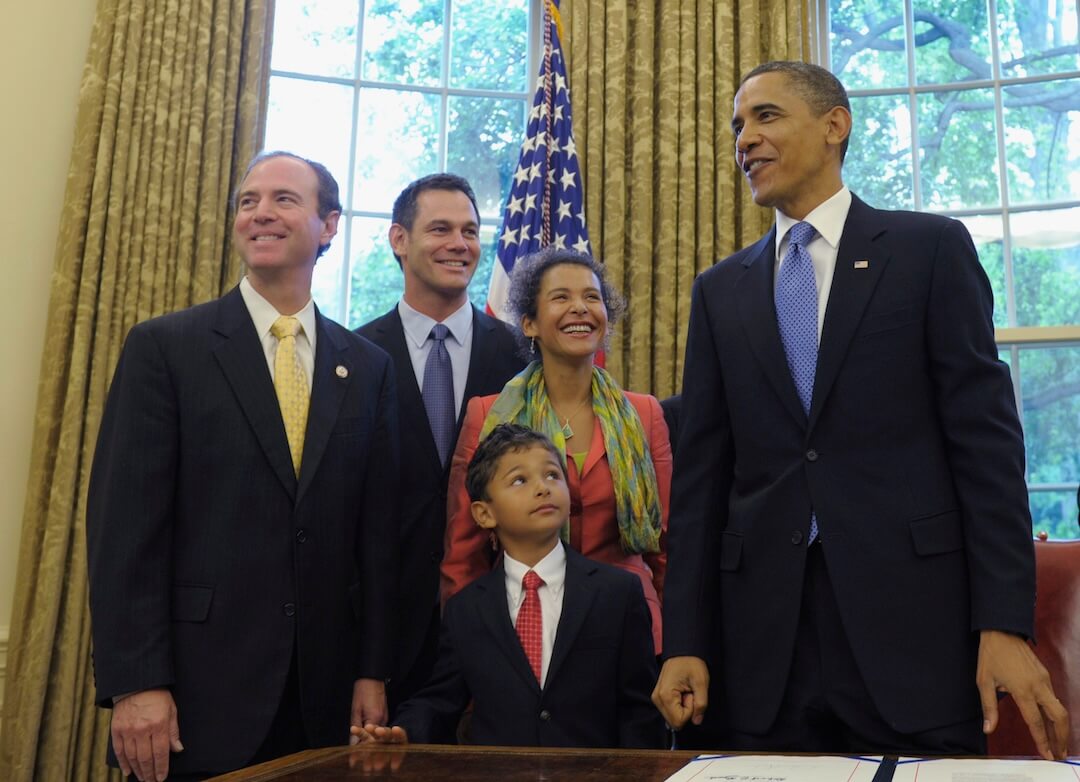
In May 2010, nearly a decade after the tragedy, the United States government enacted the Daniel Pearl Freedom of the Press Act. Passed unanimously by Congress, the landmark legislation mandated that the U.S. State Department expand its annual human rights reports to systematically monitor and document global press freedom abuses, government censorship, and violence against journalists worldwide.
Surrounded by members of the Pearl family—including Mariane Pearl, their son Adam Daniel Pearl, and key congressional leaders—President Barack Obama signed the bill into law in the Oval Office on May 17, 2010. President Obama emphasized that the legislation sent an unmistakable signal about the nation’s core values regarding a free and independent press.
Reflecting on the law’s passage, Michael Posner noted its powerful symbolic and practical importance:
"There was such outrage over his murder that there was an effort by the Congress, by the U.S. government, to say: ‘We’ve got to basically do whatever we can as a government to protect journalists and to make people aware, if they attack journalists, there’s a price to be paid.’ There’s a symbolic quality to that."
Future Outlook: The Ongoing War on the Fourth Estate
Two decades after Daniel Pearl’s execution, the landscape of international journalism remains perilous. The targeting of reporters has transformed from isolated, shocking atrocities into a systemic tool utilized by authoritarian regimes, criminal cartels, and extremist organizations globally.
Modern cases—ranging from the gruesome assassination of Washington Post contributing columnist Jamal Khashoggi inside the Saudi consulate in Istanbul, to the arbitrary detention of Wall Street Journal reporter Evan Gershkovich in Russia—demonstrate that the core vulnerability exposed by Daniel Pearl’s murder persists today. The profession of reporting itself has, in many corners of the world, become an explicit target.
Industry Adaptations
In response to these escalating hazards, the journalism industry has undergone a paradigm shift:
- Hostile Environment Awareness Training (HEAT): Major news outlets now mandate rigorous safety, survival, and tactical training for reporters deploying to conflict zones or high-risk investigative beats.
- Digital Security Protocols: Newsrooms invest heavily in encrypted communications, secure data storage, and digital threat intelligence to protect reporters from state-sponsored cyber espionage and physical tracking.
- Collaborative Safety Networks: Organizations like the Committee to Protect Journalists (CPJ), Reporters Without Borders (RSF), and the Dart Center for Journalism and Trauma coordinate international advocacy, legal defense, and emergency extraction protocols.
Yet, despite these advancements, the fundamental dilemma remains unresolved: How can the press bear witness to the world’s darkest corners when the very act of bearing witness makes reporters prime targets?
As the journalism industry reflects on its past through initiatives like The Poynter 50, the legacy of Daniel Pearl serves as both a sobering reminder of the ultimate cost of truth-telling and an enduring challenge to protect those who risk their lives to inform the public. Daniel Pearl did not seek danger for its own sake; he pursued stories with empathy, integrity, and intellectual rigor. In doing so, he left behind a standard of journalistic excellence and a cautionary blueprint for survival that will guide the fourth estate well into its next half-century.
