

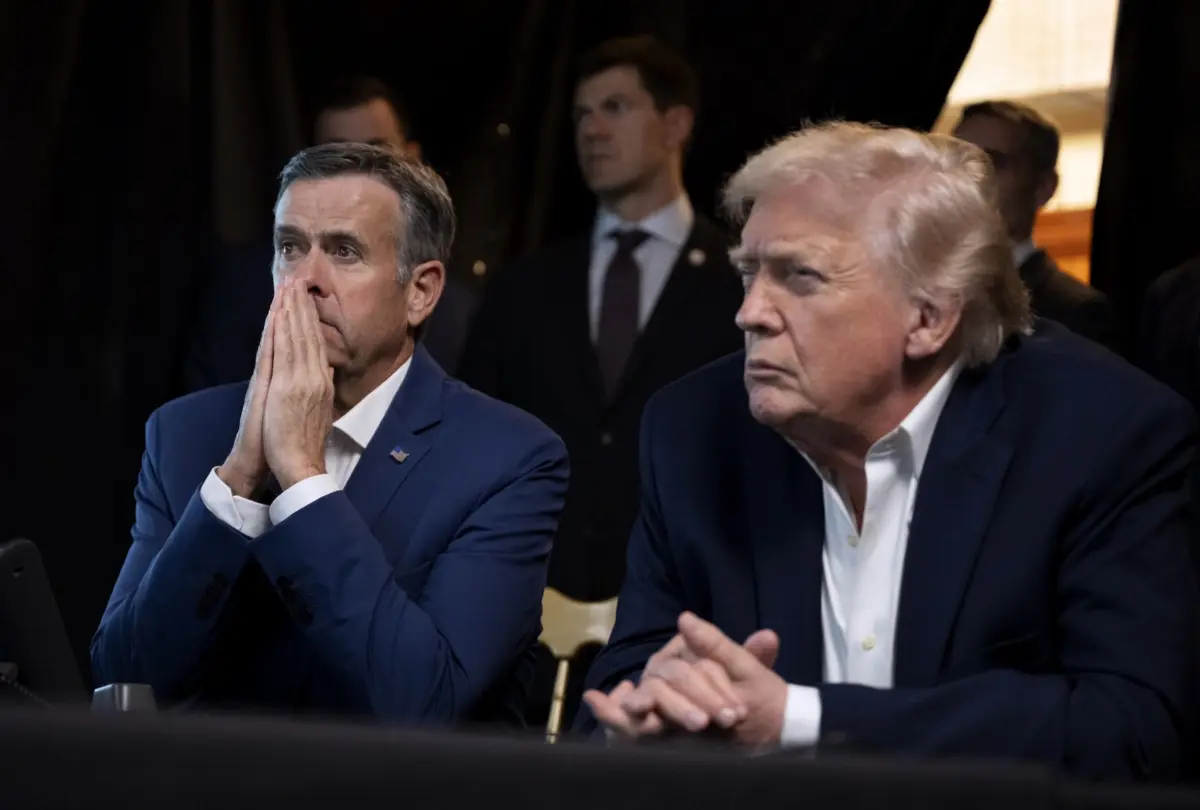
In a diplomatic maneuver that has sent shockwaves through Western intelligence and foreign policy circles, CIA Director John Ratcliffe executed a high-stakes, unannounced visit to Moscow earlier this week. The trip marks the first publicly acknowledged visit to the Russian capital by a sitting CIA director since November 2021, when then-Director William Burns traveled to the Kremlin on a fateful mission to deter Vladimir Putin from launching a full-scale invasion of Ukraine.
Ratcliffe’s clandestine journey has ignited intense speculation, pitting competing narratives against one another. While anonymous intelligence sources and investigative reports suggest the trip was engineered to deliver stern warnings regarding Russian military positioning, NATO alignment, and Moscow’s ongoing material support for Iran, President Donald Trump has publicly downplayed the significance of the event. In a radio interview with conservative commentator Glenn Beck, Trump characterized Ratcliffe’s mission as "semi-routine," while simultaneously hinting that breakthroughs regarding a potential peace framework could be on the horizon.
As military analysts, former intelligence officials, and international observers try to parse the conflicting signals emanating from Washington and Moscow, the visit underscores the volatile intersection of multiple ongoing global conflicts. From the grinding, attrition-heavy quagmire in Eastern Europe to the sprawling geopolitical fallout of the U.S.-Israeli conflict with Iran, Ratcliffe’s voyage to the heart of America’s primary geopolitical adversary highlights an administration walking a high-wire act of clandestine diplomacy.
Detailed Chronology: From the Pre-Invasion Warnings of 2021 to Ratcliffe’s 2026 Moscow Landing
To understand the profound gravity of John Ratcliffe’s recent trip to Moscow, it is essential to contextualize it within the historical timeline of modern U.S.-Russia intelligence channels.
The Precedent: William Burns in November 2021
In late autumn 2021, Western intelligence agencies detected massive, alarming build-ups of Russian military hardware and personnel along the sovereign borders of Ukraine. Recognizing the catastrophic trajectory of the impending crisis, President Joe Biden dispatched CIA Director William Burns to Moscow. Burns met directly with high-ranking Kremlin officials and used secure channels to convey an unequivocal message: the United States was acutely aware of Russian invasion plans, and any military offensive would trigger crippling Western sanctions and profound geopolitical isolation.
Despite those direct warnings, the diplomatic intervention failed to deter the Kremlin. Just a few months later, in February 2022, Russian forces crossed the border, initiating a full-scale war that transformed Eastern Ukraine into a devastating zone of protracted trench warfare, artillery duels, and staggering human loss.
The 2026 Surprise Mission
Fast forward to August 2026, and the geopolitical landscape has grown exponentially more complex. CIA Director John Ratcliffe’s touch down in Moscow represents a stark departure from standard diplomatic norms under the current administration, breaking a nearly five-year drought of high-level, face-to-face intelligence exchanges on Russian soil.
While Kremlin spokesperson Dmitry Peskov confirmed the visit to international media outlets, he explicitly clarified that Ratcliffe did not secure a face-to-face meeting with Russian President Vladimir Putin. Instead, the CIA chief’s engagements were confined to mid-to-high-level security and intelligence counterparts.
The secrecy surrounding the itinerary immediately triggered a flurry of competing leaks. According to exclusive reporting by Politico, which cited unnamed sources intimately familiar with the matter, Ratcliffe’s primary objective was twofold: to issue stern warnings to Moscow against escalating tensions with NATO allies, and to demand an immediate halt to Russian backing of Iranian military networks. Conversely, other intelligence experts posited that the visit was intrinsically tied to back-channel negotiations aimed at securing an elusive ceasefire in Ukraine, or coordinating regional de-escalation frameworks following the eruption of the U.S.-Iran conflict six months prior.
Supporting Context & Metrics: The Human and Geopolitical Toll of Modern Conflicts
The backdrop to Ratcliffe’s Moscow mission is defined by staggering human casualties and cascading geopolitical instabilities that have reshaped the global economy and international security architecture.
The Devastation of the Russo-Ukrainian War
The war that William Burns attempted to prevent in late 2021 has devolved into one of the deadliest military conflicts in Europe since the Second World War. According to recent data compiled by international humanitarian organizations, conflict monitors, and strategic research institutions such as the Center for Strategic and International Studies (CSIS):
- Civilian Casualties: Nearly 17,000 Ukrainian civilians have lost their lives due to indiscriminate shelling, missile strikes, and urban combat.
- Military Losses: Ukrainian armed forces have sustained approximately 150,000 combat fatalities, while Russian military casualties—comprising regular service members, mobilized personnel, and private mercenary contractors—have ballooned to an estimated 450,000 fighters dead or severely wounded.
The astronomical drain on Russian blood and treasure has forced Moscow into deeper economic and military dependencies on rogue states and international pariahs, most notably Iran and North Korea. This expanding axis of authoritarian cooperation has become a primary focal point of Western intelligence surveillance.
The Expanding Middle East Conflict
Compounding the crisis in Eastern Europe is the direct military confrontation between the United States, Israel, and Iran. Launched approximately six months ago by President Donald Trump alongside Israeli military operations, the war with Iran has destabilized global energy markets, redrawn Middle Eastern alliances, and placed unprecedented strain on U.S. intelligence apparatuses.
The convergence of these two distinct theaters—the European quagmire and the Middle Eastern conflict—has created a multi-front geopolitical crisis. Analysts suggest that Russia’s deep entanglements with Iran, ranging from drone and missile technology exchanges to joint sanctions-evasion schemes, have transformed Moscow into a crucial nexus for broader Middle Eastern stability. Consequently, any high-level American intelligence delegation to Moscow must navigate both the European theater and the Iranian crisis simultaneously.
Official Statements and Diverging Narratives
The chasm between how the White House publicly frames Ratcliffe’s trip and what investigative reports assert creates a fascinating study in modern political communication.
The White House Stance: "Semi-Routine" Business
During an interview with conservative media personality Glenn Beck, President Donald Trump was pressed on what he dismissed as "crazy speculation" surrounding the CIA director’s movements. Trump insisted that Ratcliffe’s flight to Moscow was fundamentally "semi-routine" business, though he steadfastly declined to outline the specific agenda items discussed behind closed doors.
Despite playing down the sensationalism, Trump offered a tantalizing glimpse into potential diplomatic breakthroughs. "Now something may come out of it," Trump remarked, pivoting slightly from the administrative framing. He emphasized the administration’s overarching strategic objective: "We’re working very hard to get that war ended, and frankly, they both want to see it ended at this point."
Intelligence Community and Media Revelations
Trump’s "semi-routine" characterization stands in sharp contrast to assessments offered by seasoned intelligence veterans and insider leaks published by outlets including The Wall Street Journal, The Guardian, and Politico.
Beth Sanner, a former U.S. deputy director of national intelligence for mission integration, offered a more assertive interpretation of the mission’s underlying tone. Speaking to The Wall Street Journal, Sanner noted that the trip could easily have served as a blunt deterrent message: "It could be to say, ‘We know what you are thinking about doing, and you better not.’ It could also be about the Iran ceasefire and putting someone else in the discussion."
Furthermore, the Pentagon, the White House, the CIA, and the U.S. Air Force all maintained a strict policy of "no comment," refusing to validate or refute the cascading media reports. This institutional silence, paired with Kremlin confirmation via Dmitry Peskov, highlights the delicate, compartmentalized nature of modern espionage diplomacy, where public optics rarely match private realities.
Future Outlook: What Ratcliffe’s Moscow Visit Signals for U.S. Foreign Policy
As the dust settles on John Ratcliffe’s unprecedented trip to the Russian capital, foreign policy experts are left evaluating the long-term implications for American grand strategy. Several key trajectories are beginning to emerge:
- The Pursuit of a Negotiated Settlement: President Trump’s repeated assertions that both Washington and Moscow are growing weary of the protracted war in Ukraine suggest that back-channel intelligence communications may increasingly substitute for stalled formal diplomacy. If Ratcliffe laid the groundwork for future peace talks, the coming months could see a push toward a negotiated territorial or diplomatic freeze.
- The Iran-Russia Nexus as a Central Front: As long as Moscow relies on Tehran for military hardware and sanctions relief, any American strategy aimed at neutralizing Iranian aggression must inevitably pass through the Kremlin. Ratcliffe’s mission signals an explicit recognition within the intelligence community that Middle Eastern and European security can no longer be stovepiped into separate categories.
- The Risk of Escalation and Miscalculation: Engaging directly with an adversary while proxy wars rage on multiple continents carries inherent dangers. The stark contradiction between the administration’s casual public framing ("semi-routine") and the aggressive deterrent messaging reported by intelligence insiders points to an administration walking a razor-thin line between deterrence and appeasement.
Ultimately, whether Ratcliffe’s clandestine journey to Moscow becomes a footnote in the history of modern diplomacy or the catalyst for a major geopolitical realignment remains to be seen. What is certain, however, is that the intelligence channels between Washington and Moscow have been forcefully reopened, and the reverberations of this high-stakes gamble will shape the global security landscape for years to come.
