

Executive Overview
In the modern landscape of digital product development, a silent and costly fallacy persists: companies believe they understand their users. Organization after organization relies on surface-level metrics, direct survey feedback, and intuitive guesswork to dictate product roadmaps. Yet, a fundamental disconnect lies at the heart of digital design and user experience (UX) research: what people say, what they think, what they feel, and what they actually do are rarely the same thing.
Relying on direct answers to burning design questions is often the least effective way to uncover actionable insights. Human psychology is burdened by cognitive biases, contextual interpretations, edge-case exaggerations, and a notorious preference for short-term gratification over long-term utility. When users claim they "need" a complex data table to compare products, they are frequently misattributing their true underlying goal—which might simply be making a confident, low-risk choice in under a minute.
To bridge this chasm between perception and reality, modern researchers and UX leads are turning away from passive validation and toward rigorous behavioral observation. By mapping customer psychology across Hannah Shamji’s Four Levels of Customer Understanding—ranging from surface-level statements to deeply rooted motivations—and combining this with mixed-method research, product teams can abandon expensive assumptions. This investigative report explores why traditional customer research is broken, how semantic nuances and emotional signals cloud our judgment, and how shifting from "validation" to "diagnosis" can fundamentally transform digital product success.
Detailed Chronology: The Evolution of Customer Research Failures
For decades, the UX industry has iterated on methods designed to capture the voice of the customer. However, an analysis of historical research practices reveals a recurring pattern of missteps driven by a reliance on what users say rather than what they do.
Phase 1: The Era of Direct Questioning and Surveys
In the early days of digital product design, surveys and focus groups were hailed as the gold standard of consumer research. If a company wanted to know whether a feature would succeed, they asked a panel of users.
This approach ignored a foundational psychological truth articulated by designer and researcher Erika Hall: asking a question directly is frequently the worst way to obtain a true and useful answer. Humans are notoriously poor at articulating their own subconscious motivations. When confronted with direct inquiries, respondents invariably apply their own idiosyncratic context, exaggerate edge cases, and tailor their responses to what they believe the interviewer wants to hear.
Phase 2: The Rise of Quantitative Feedback and NPS
As digital products scaled, organizations gravitated toward quantitative shortcuts, most notably the Net Promoter Score (NPS). While NPS provided a tidy, executive-friendly metric, it flattened complex customer sentiments into a single numerical index. Critics, including veteran UX strategist Vitaly Friedman, have long argued against the uncritical adoption of NPS, pointing out that such metrics frequently mask systemic churn drivers while providing zero diagnostic value regarding why a customer is satisfied or frustrated.
Phase 3: The Semantic Trap—"Possible" vs. "Probable"
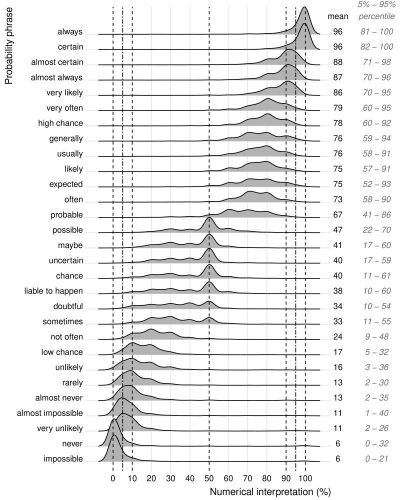
As researchers attempted to refine qualitative interviews, another hidden barrier emerged: the instability of human language. A breakthrough study on verbal probability terms highlighted by Thomas D’hooge and explored in Dutch linguistic research revealed a startling lack of precision in everyday speech.
While extreme terms like "impossible" or "certain" carry general consensus, words frequently utilized in customer interviews—such as possible, maybe, uncertain, or likely—generate wild distributions in numerical interpretation. When a user tells a researcher that a feature is "likely to be useful," one stakeholder interprets that as an 80% probability of adoption, while another interprets it as a 40% chance. Relying on spoken words alone introduces an unacceptable level of subjective noise into the product development cycle.
Phase 4: The Shift to Behavioral Triangulation
Recognizing the flaws in direct questioning and semantic ambiguity, contemporary UX science has shifted toward behavioral triangulation. Today, industry frameworks advocate for cross-referencing multiple data streams. Instead of treating customer interviews as gospel, modern research protocols treat them as merely one layer of a much larger, messier reality—one that demands the simultaneous evaluation of speech, sentiment, action, and foundational motivation.
Supporting Context & Metrics: The Four Levels of Customer Understanding
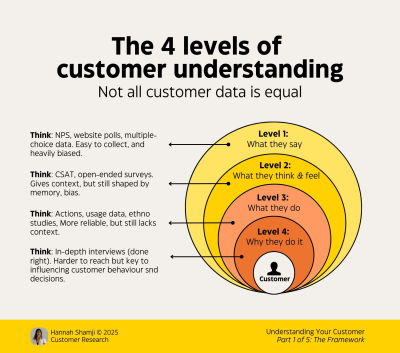
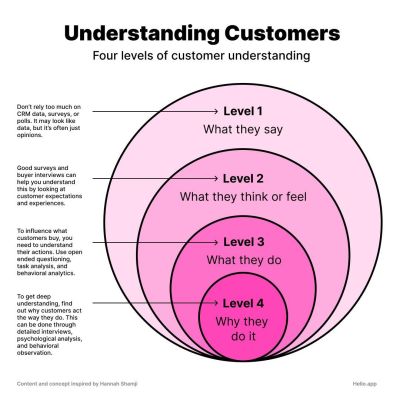
To extract signal from the noise of user research, practitioners utilize Hannah Shamji’s framework, which categorizes customer insights into four nested tiers of understanding:
-
Level 1: What They Say (Explicit Data)
- Description: The literal words, survey responses, and direct feedback provided by users.
- Reliability: Lowest. Highly susceptible to social desirability bias, poor recall, and semantic misinterpretation.
-
Level 2: What They Think or Feel (Attitudinal Data)
- Description: Internalized opinions, emotional responses, and unvoiced hesitations.
- Reliability: Moderate. Difficult to capture accurately without disrupting the user’s natural flow state.
-
Level 3: What They Do (Behavioral Data)
- Description: Objective actions, clicks, scrolls, hover patterns, and navigation pathways observed during product usage.
- Reliability: High. Actions speak louder than intentions; observing actual behavior cuts through cognitive dissonance.
-
Level 4: Why They Do It (Root Cause Motivations)
- Description: The fundamental human needs, jobs-to-be-done, fears, and drivers underlying user actions.
- Reliability: Highest. The ultimate destination of all productive UX research.
+-------------------------------------------------------+
| LEVEL 1: What They Say (Surveys, Interviews)          |
|   +---------------------------------------------------+
|   | LEVEL 2: What They Think or Feel (Sentiment)      |
|   |   +-----------------------------------------------+
|   |   | LEVEL 3: What They Do (Observed Behavior)     |
|   |   |   +-------------------------------------------+
|   |   |   | LEVEL 4: Why They Do It (Root Motivation) |
|   |   |   +-------------------------------------------+
|   |   |-----------------------------------------------+
|   |---------------------------------------------------+
+-------------------------------------------------------+
The Anatomy of Churn: Voluntary vs. Involuntary Realities
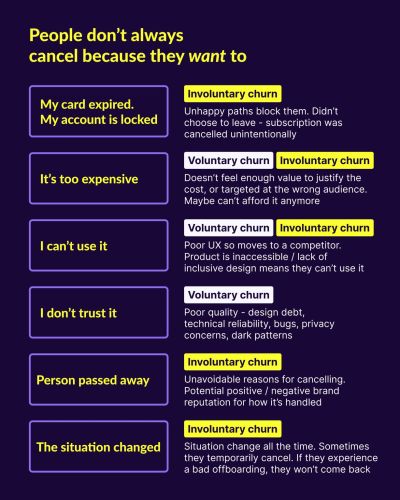
The disparity between stated intent and actual behavior is nowhere more evident than in customer churn. As industry analysts like Emily Anderson have demonstrated, when users cancel subscriptions, their stated reason during exit surveys ("It’s too expensive") frequently masks the true underlying driver—such as involuntary payment failures, lack of onboarding engagement, or a failure to realize core product value within the first fourteen days. Treating exit surveys as absolute truth leads product teams to slash prices when they should be fixing onboarding friction.
Official Perspectives and Expert Insights
The debate over how deeply researchers should immerse themselves in user psychology has sparked critical discussions among leading design practitioners.
The Empathy Debate: Feeling vs. Acting
For years, UX dogma insisted that designers must fully absorb and mirror the emotional pain of their users. However, this perspective has faced rigorous pushback. UX strategist Alin Buda famously argued against the romanticization of empathy in design:
"Our work is about others — their problems, their pain, their mess. Our job is to make sense of it and then do something about it. Not to emote or perform but to act on and solve it. There is a flawed belief that to build great things, you first need to emotionally fully absorb someone else’s experience."
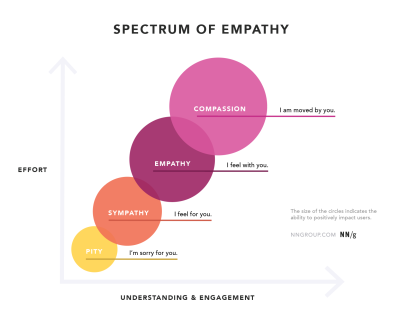
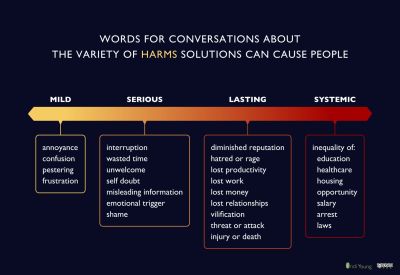
Balancing this perspective, Sarah Gibbons of the Nielsen Norman Group maps the Spectrum of Empathy, illustrating a continuum from pity and sympathy to empathy and compassion. While emotional absorption can lead to burnout, recognizing user sentiment serves as a vital diagnostic signal. As independent researcher Indi Young emphasizes, the solutions we design can introduce severe systemic, lasting, or serious harms if we fail to understand the holistic impact of our products beyond mere emotional resonance.
Moving from "Validation" to "Diagnosis"
A recurring linguistic and philosophical error in corporate environments is the obsession with "validation." When product teams announce they are conducting user testing to "validate" a design, they are frequently seeking confirmation for pre-existing assumptions.
Industry advocates urge a complete linguistic and procedural overhaul. As Nikki Anderson outlines, teams should replace the word validate with terms that imply genuine inquiry: research, understand, investigate, assess, evaluate, examine, and learn.
To execute this effectively, usability testing protocols must evolve. Traditional "think-aloud" protocols—where users narrate their thoughts while completing tasks—can be inherently disruptive. When cognitive load is split between executing a complex digital workflow and verbalizing thoughts aloud, natural emotional cues and hesitation patterns become obscured.
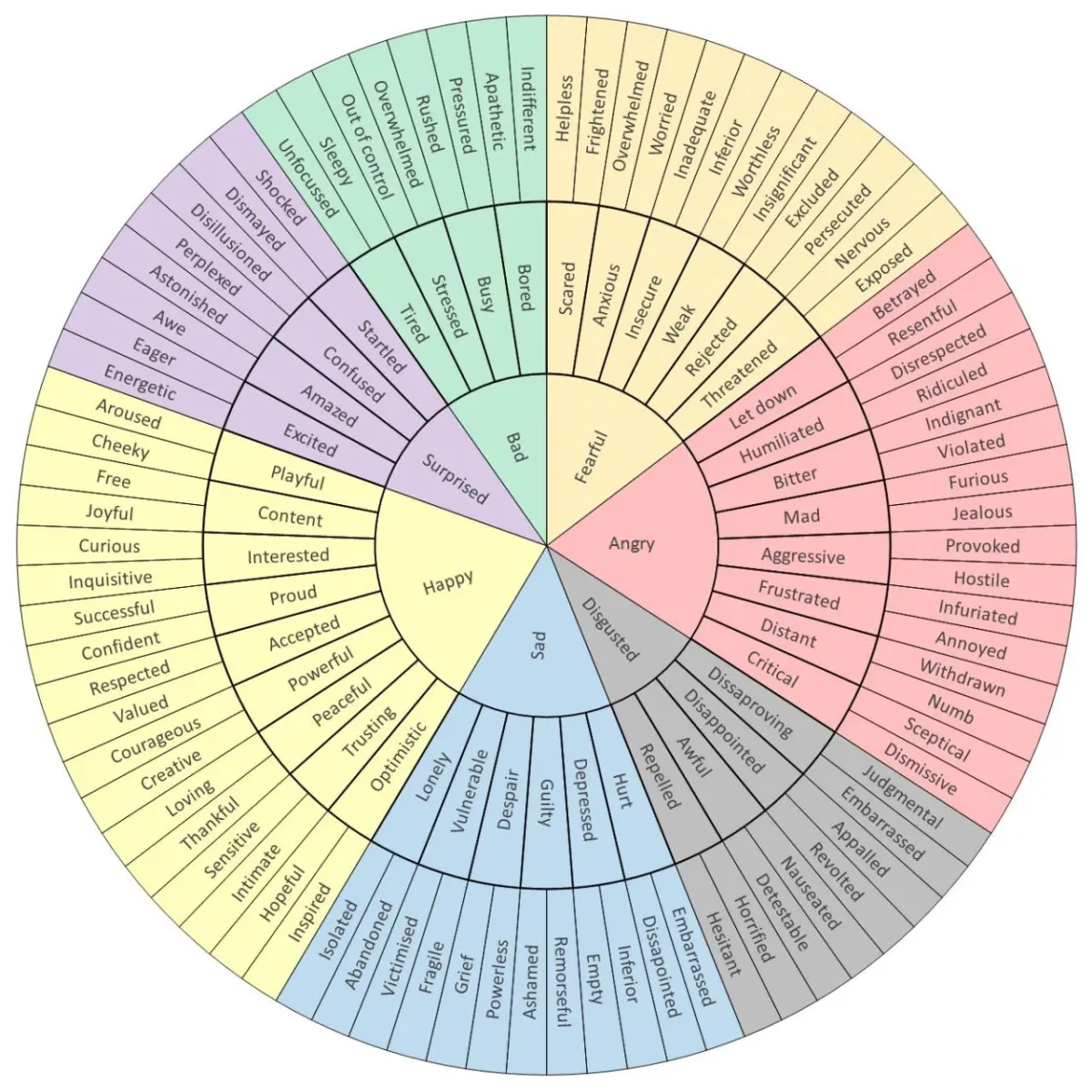
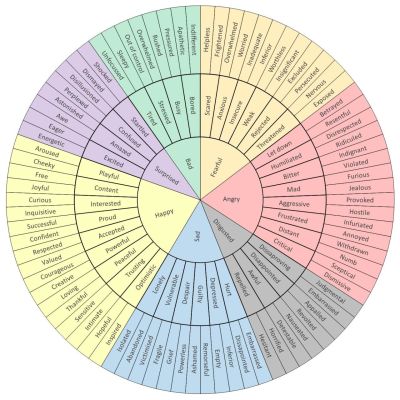
Advanced UX practitioners instead advocate for silent observation during task execution: watching where users hover, where their cursors circle aimlessly, where they lose time, and how they react physically (such as brow-furrowing or hesitation). Only after the user confirms completion or signals frustration should the moderator step in, utilizing precision tools like the Emotion Wheel (developed by Geoffrey Roberts) to help users accurately label their sentiment, moving far beyond simplistic binaries of "good" or "bad."
Future Outlook: Practical Strategies for Enterprise UX
As digital ecosystems grow increasingly complex, organizations must abandon expensive assumptions and restructure how they uncover user needs. Uncovering what users truly require does not demand multi-million-dollar research labs; rather, it requires systemic visibility into user struggles.
- Implement Low-Cost, High-Visibility Insights: Organizations can bridge the gap between engineering, marketing, and executive leadership by distributing short, digestible video clips of unfiltered user sessions or monthly constraint newsletters. Making friction visible ensures that user struggles remain at the forefront of every department’s consciousness.
- Embrace Mixed-Method Triangulation: Because individual research levels (what people say vs. what they do) frequently conflict, teams must reconcile mixed data streams. Quantitative behavioral analytics must be paired with qualitative diagnostic observation to form a coherent picture.
- Redefine Research Objectives: Before initiating any product initiative, leadership must clearly define what unknown questions require answers, discarding the desire for comfortable validation in favor of rigorous, objective evaluation.
By moving beyond the superficial layer of what users say and relentlessly diagnosing what they do and why, organizations can eliminate costly hunches, build authentic customer trust, and create digital products that deliver measurable, lasting business impact.
