

Executive Overview
In the relentless race to capitalize on the artificial intelligence boom, the software industry has fallen into a predictable, albeit exhausting, trap: the cult of the standalone tool. Every week brings a fresh wave of "revolutionary" applications promising to change how we work. They boast flashy interfaces, complex multi-agent workflows, demand that users master novel terminal commands, or require endless back-and-forth chat interactions. Yet, a quiet fatigue has begun to settle among digital workers. The market is waking up to an uncomfortable truth: users do not want more tools in their daily lives.
What they need—and what modern product design is finally beginning to deliver—is the seamless integration of high-utility features into the mental models and applications they already know and use.
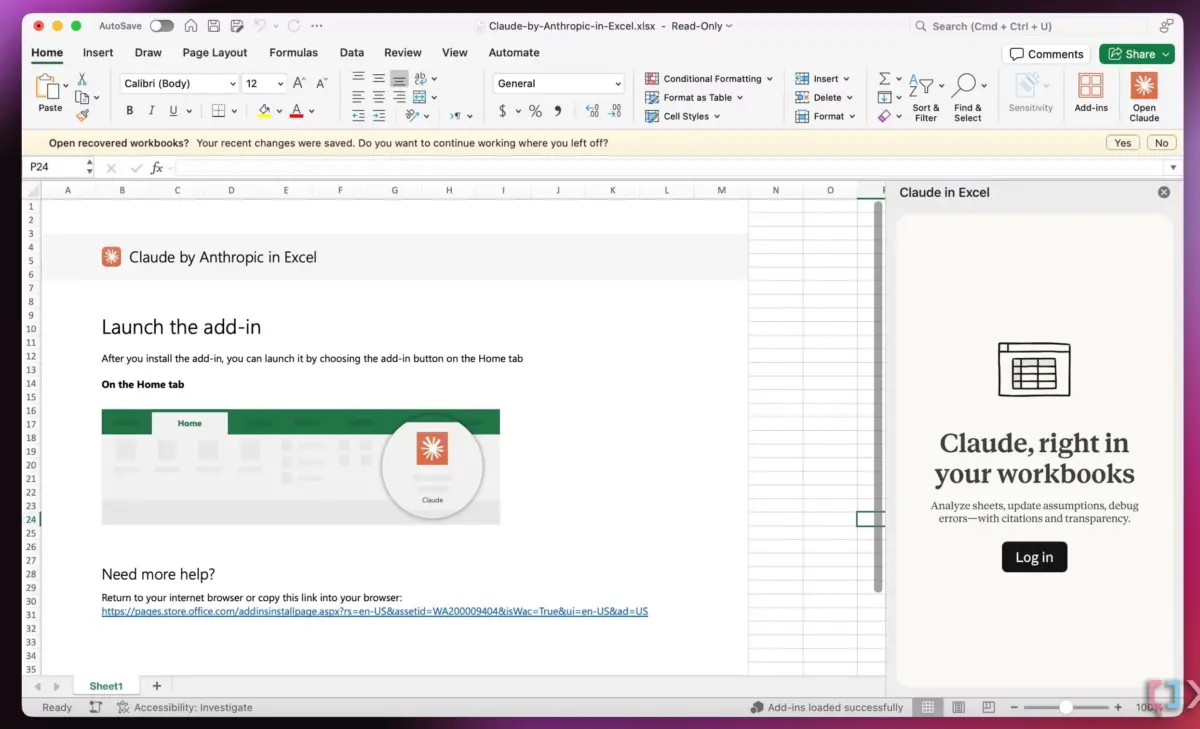
This paradigm shift marks a departure from the intrusive "AI-first" philosophy that treats intelligence as a destination, moving instead toward a model of "Quiet AI." In this emerging landscape, artificial intelligence operates invisibly in the background, minimizing friction, eradicating repetitive cognitive burdens, and anchoring automation directly where work actually happens. Whether it is Claude natively embedded inside Microsoft Excel or system-level folder instructions that automate file organization based on intent, the future of software design is not about building new islands; it is about building better bridges.
Detailed Chronology: The Evolution from Siloed Tools to Contextual Intelligence
To understand how the software industry arrived at the current fatigue surrounding standalone AI applications, one must examine the chronological evolution of digital workflows over the past decade.
Phase 1: The Fragmentation Era (2010–2022)
As cloud computing matured and Application Programming Interfaces (APIs) proliferated, the barrier to entry for building software plummeted. This democratization birthed the "best-of-breed" software movement. Organizations and individuals were encouraged to adopt specialized micro-tools for every conceivable sub-task: one app for note-taking, another for project management, a third for time-tracking, and a fourth for document collaboration.
While initially hailed as a triumph of specialization, this era ultimately triggered severe cognitive overload. Workers spent a significant portion of their days context-switching—jumping between dozens of disparate applications, browser tabs, and communication channels. The mental models required to manage this sprawling digital ecosystem became fractured, leading to lower productivity and higher rates of error.
Phase 2: The "AI-First" Gold Rush (2023–2024)
Following the widespread public release of generative AI models, the software market experienced a violent overcorrection. Startups and legacy tech giants alike rushed to market with "AI-first" products. These applications were built from the ground up to showcase artificial intelligence as the primary interface.
Users were greeted with blank chat windows, mandatory prompt-engineering tutorials, and proprietary workspaces that forced them to abandon their established habits. While these tools demonstrated impressive technological capabilities, they fundamentally misunderstood human behavior. They asked users to abandon decades of deeply ingrained interaction patterns—such as folder structures, spreadsheet grids, and document editors—in favor of clunky, conversational loops. The result was a proliferation of shiny, impressive, but ultimately underutilized novelties.
Phase 3: The Rise of Quiet AI and Seamless Integration (2025 and Beyond)
Recognizing the limits of the chat-box interface, forward-thinking designers and product architects are now pivoting toward "Quiet AI." Rather than demanding that users enter a dedicated AI environment, this new wave embeds intelligence directly into legacy ecosystems.
Innovations like native spreadsheet integrations (such as Claude working directly inside Microsoft Excel and Word) and system-level folder instructions represent a return to human-centric design. AI is no longer the destination; it is the invisible infrastructure that powers familiar workflows, respecting the mental models that users have spent years establishing.
Supporting Context & Metrics: The Cost of Cognitive Friction
The imperative for seamless integration over standalone tools is underscored by mounting research into workplace productivity, cognitive load, and software fatigue.
The True Cost of Context Switching
According to productivity research cited across major human-computer interaction (HCI) studies, knowledge workers lose an average of 20 to 30 percent of their productive time each day simply due to context switching—the act of jumping between different applications, windows, and interfaces.
- The Attention Residue Effect: When a user switches from a primary task (e.g., financial modeling in a spreadsheet) to a secondary tool (e.g., opening a browser tab to prompt an external AI chatbot), their attention does not immediately follow. A cognitive "residue" remains, diminishing focus and increasing the likelihood of calculation or transcription errors.
- Adoption Drop-off Rates: Enterprise software analytics consistently reveal that standalone AI tools suffer from a steep drop in daily active users (DAU) after the initial novelty wears off. If a tool requires a user to copy, paste, export, and import data across silos, the friction eventually outweighs the utility.
The High-Severity, High-Frequency Framework
Successful feature integration relies on targeting problems that exhibit three distinct characteristics:
- High Severity: The friction point causes genuine frustration, financial loss, or critical delays.
- High Frequency: The problem occurs multiple times a day or week, making automation worthwhile.
- Low Disruption: The solution does not require the user to learn a new interface paradigm.
When AI features are embedded natively—such as organizing files based on automated folder instructions or analyzing data rows inside an existing spreadsheet grid—they target these high-friction points without imposing an onboarding tax on the user.
Official Statements and Industry Insights
Design leaders and user experience experts are increasingly vocal about the necessity of moving away from intrusive AI interfaces in favor of quiet, contextual integration.
Vitaly Friedman, renowned UX consultant and author of Design Patterns For AI Interfaces, notes:
"We often hear about shiny new tools that change everything. But in practice, most people don’t need more tools to deal with in their daily lives. What we actually need are better integrations of useful capabilities that neatly align with our existing and established mental models. Users don’t get excited about navigating Terminal commands or jumping between endless back-and-forth chat interactions. They need seamless integrations to address high-severity, high-frequency problems."
Discussing the distinction between aggressive AI-first applications and background assistance, Friedman emphasizes the concept of invisible utility:
"I’ve always been puzzled by the notion of ‘AI-first’ products. They might speed up production, but we need to know really well first what we actually want to build. AI-first often doesn’t account for years of small and big design decisions that have shaped expectations and mental models over the years. I love the notion of ‘Quiet AI’—tools that are mostly invisible, sit in the background, and do small tasks on the user’s behalf without screaming for attention."
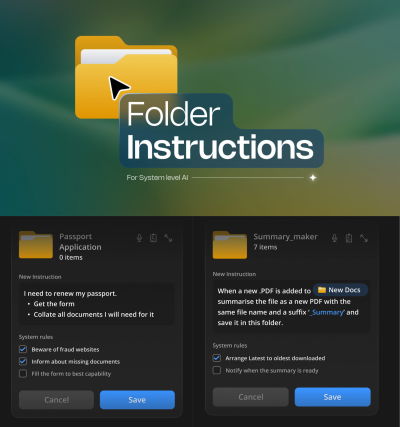
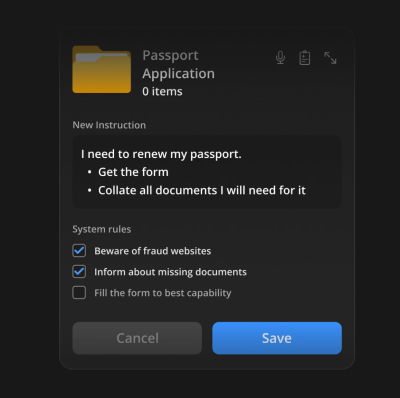
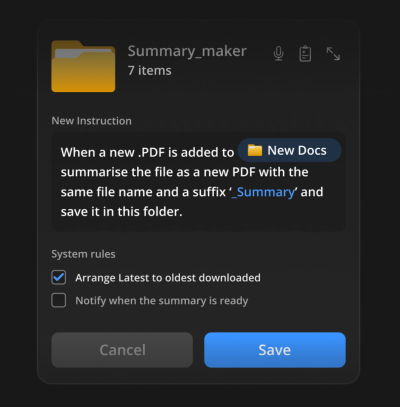
Highlighting innovative structural approaches to system-level AI, platform observers have pointed to emerging concepts like Folder Instructions—pioneered by designers like Karthikeya GS—which bridge the gap between user intent and system automation. By allowing users to define rules, behavioral guidelines, and organization criteria directly within standard file management interfaces, systems can execute complex operations locally without requiring specialized command-line inputs or disruptive chat prompts.
Future Outlook: The Next Decade of Human-Computer Interaction
As artificial intelligence models become more capable, compact, and responsive, the trajectory of software design will continue to bend away from standalone applications and toward ambient integration.
1. The Death of the Dedicated AI App
In the coming years, standalone wrappers and generic chat interfaces will struggle to retain market share. Users will increasingly reject software that requires its own login, subscription, and workspace. Value will accrue not to the companies that build the most impressive standalone chat bots, but to the platforms and operating systems that weave intelligence invisibly into the fabric of everyday software—our word processors, file explorers, design canvases, and spreadsheets.
2. Hyper-Localized Intent and System-Level Rules
The future of file and data management will rely heavily on localized, intent-driven automation. Concepts like folder-level instructions will expand across operating systems, allowing users to define rules for how documents are summarized, categorized, or processed the moment they are saved. This eliminates manual file hygiene, transforming passive storage systems into active, intelligent assistants that operate according to user-defined parameters.
3. The Renaissance of UX Simplicity
Ultimately, the maturation of AI design marks a return to the core tenets of user experience: reducing friction, respecting mental models, and honoring human attention. The most successful products of the next decade will be those you barely notice—the ones that quietly eliminate frustration, prevent errors, and let people get back to the meaningful work they set out to do in the first place.