

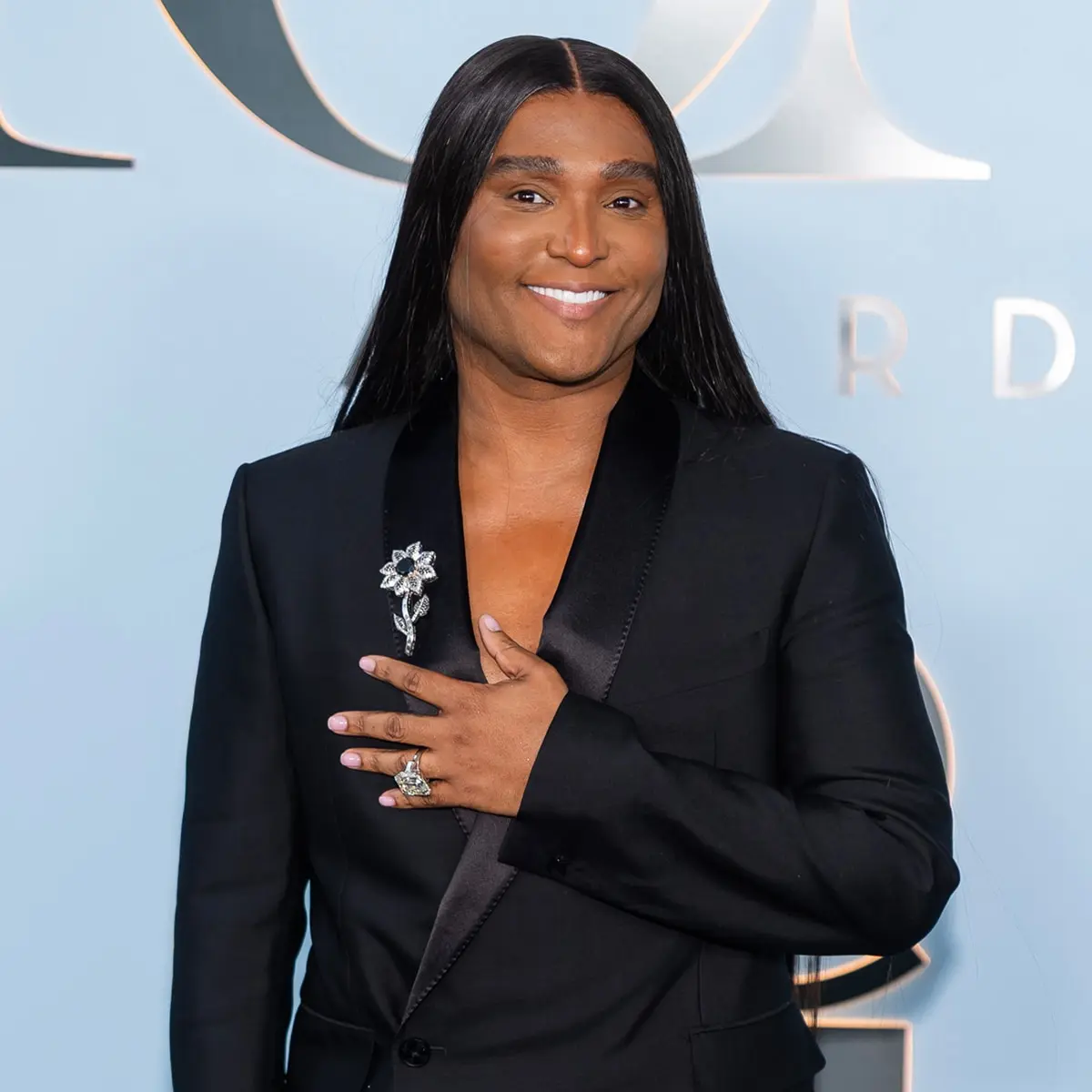
The economics of celebrity have long been a subject of intense public fascination, often obscured by an illusion of continuous, effortless opulence. However, recent revelations from Hollywood’s top image architects, television mainstays, and A-list film stars have pulled back the curtain on the complex, frequently unglamorous financial realities of the entertainment industry. At the center of this dialogue is Law Roach, the self-described "Image Architect" behind some of the most iconic red-carpet moments of the past decade. Roach recently opened up about his humble beginnings, detailing a trajectory that started with a $22,000-a-year job at a mental health facility and scaled to commanding thousands of dollars a day for styling heavyweights like Zendaya, Ariana Grande, and Céline Dion.
Roach’s narrative is far from an isolated anecdote. Across the entertainment landscape, a broader conversation is taking place regarding the true cost of fame, the mechanics of early-career compensation, systemic wage disparities, and the hidden operational overheads that dramatically reduce a celebrity’s net take-home pay. From indie darlings who worked for scale and streaming-era actors earning pennies in residuals, to blockbuster icons navigating aggressive tax brackets and agent commissions, the financial ecosystem of Hollywood is vastly more precarious than its red carpets suggest. This report examines the financial milestones of Law Roach alongside a comprehensive ledger of Hollywood pay disparities, shedding light on the economic truths of the world’s most visible industry.
Detailed Chronology: Law Roach’s Ascent and the Evolution of Celebrity Styling
From the Vintage Shop to Hollywood’s Inner Circle
Before styling pop royalty and high-fashion muses, Law Roach’s professional life was rooted in stability rather than glamour. Following his college graduation, Roach spent time working at a mental health facility in Chicago, earning an annual salary of $22,000—roughly $600 bi-weekly.
"When I quit that job," Roach recalled in a recent interview, "my family were like, ‘Oh my God, you quit that good job with those good benefits.’"
Roach transitioned into fashion around 2010 after successfully building a vintage store in Chicago. Entering the styling industry at a time when digital media and red-carpet branding were beginning to merge, Roach described his initial climb as a "slow crawl." Early on, his economic reality reflected his newcomer status. He began charging roughly $700 per day for his styling services. As his portfolio expanded and his reputation for narrative-driven fashion curation solidified, his daily rates increased incrementally, moving from $700 to $1,500, then to $3,000, and eventually reaching $6,000 per day.
Navigating Elite Pricing Today
Today, Roach commands an elite tier of compensation, though he remains pragmatic about his place in the fashion hierarchy. Managing clients of the caliber of Zendaya, Ariana Grande, and Céline Dion requires a dynamic pricing model.
"It depends on who I’m working for and what I’m doing," Roach noted. However, he was quick to draw a line between his pricing philosophy and that of legendary supermodels, adding: "I’m not Linda Evangelista. I’m never going to say I don’t get out of bed for less than $10,000 a day."
Now established as a judge on Project Runway and RuPaul’s Drag Race, Roach measures success not by ostentatious displays of wealth, but by the psychological comfort of financial stability. "I feel accomplished when I can go into a store and not look at my bank account right after I buy something," he shared. "I don’t think rich is the right word, but I feel comfortable."
That comfort has afforded him unique acquisitions, including buying the house adjacent to his primary residence simply to prevent neighbors from encroaching upon his privacy, effectively building a private compound. Yet, Roach maintains that his most significant financial vice isn’t real estate or designer handbags—it is high-end auctions. Detailing his competitive drive during international auctions, he admitted to waking up in Los Angeles at 2:00 AM to bid on items across Europe, occasionally waking up hours later to find unexpected invoices for substantial sums.
Supporting Context & Metrics: The Hollywood Compensation Ledger
Law Roach’s candid reflections on scaling his business mirror a wider ecosystem of financial realities across television, film, and fashion. A cross-examination of historical and contemporary industry data reveals the vast disparities between initial wages and multi-million-dollar residuals.
Television and Streaming: The Residual Debate
The financial architecture of television has experienced seismic shifts, largely driven by the proliferation of subscription-based streaming services. While classic television syndication generated generational wealth for ensembles like the cast of Friends—who famously continue to pull in an estimated $20 million per year in residuals—modern streaming models have disrupted this pipeline.
- Lauren Graham (Gilmore Girls): Despite the enduring, multi-generational popularity of the WB-turned-Netflix classic, Graham noted during a 2025 television appearance that "there really are no residuals on Netflix." Instead, she joked, she has been "paid in love and appreciation."
- Tommy Dorfman (13 Reasons Why): Highlighting the economic friction that fueled the 2023 SAG-AFTRA strikes, Dorfman revealed that her total earnings for the explosive first season of Netflix’s 13 Reasons Why amounted to $29,953.24 before 20% agency and manager fees and taxes. This occurred despite the show garnering 476 million view hours within its first 28 days of release.
- Pete Davidson (Saturday Night Live): Reflecting on his early days joining the iconic sketch comedy series at age 20 in 2014, Davidson noted that newcomers earned approximately $3,000 per episode. This baseline traces back historically: inaugural cast members in 1975—including John Belushi and Chevy Chase—earned $750 per episode, an amount proportionally comparable to modern entry-level wages when adjusted for inflation.
Film Franchises and Micro-Budgets
The assumption that starring in a major motion picture guarantees immediate financial security is frequently debunked by the actors themselves.
- Christian Bale (American Psycho): Cast as Patrick Bateman in the 2000 psychological thriller, Bale was paid the absolute legal minimum because studio executives were initially reluctant to hire him. He recalled makeup artists laughing at him in the trailer because his salary was lower than theirs.
- Cate Blanchett and Orlando Bloom (The Lord of the Rings): Despite the trilogy grossing a staggering $2.9 billion worldwide, Blanchett revealed that she received virtually no traditional box-office cut, joking that she was compensated primarily with "free sandwiches" and her prosthetic elf ears. Similarly, Bloom confirmed he earned $175,000 for the entire trilogy.
- Jonah Hill (The Wolf of Wall Street): Eager to work with director Martin Scorsese, Hill accepted the SAG minimum of $60,000 before commissions and taxes, while his co-star Leonardo DiCaprio pulled in $10 million. Hill noted he would have sold his house to work on the project, viewing the experience as an artistic investment rather than a financial one.
Official Statements and Industry Perspectives
The discourse surrounding compensation in Hollywood frequently intersects with discussions of gender pay gaps, representation, and the heavy tax and commission burdens borne by talent.
The Gender Pay Gap and Transparency
Jennifer Lawrence famously addressed industry pay discrepancies following the 2014 Sony hack, which revealed she was paid significantly less than her male co-stars in American Hustle. While later commanding $25 million for Don’t Look Up (compared to DiCaprio’s $30 million), Lawrence emphasized that her activism was never about greed.
"I wasn’t upset that I only got this many millions for a movie. That’s ridiculous. I was angry about the unfairness and inequality," Lawrence noted in subsequent interviews.
Similarly, Ellen Pompeo broke industry silences in 2018 when she secured a $575,000-per-episode contract for Grey’s Anatomy, alongside a multi-million-dollar signing bonus and backend equity points. Reflecting on her historical pay deficit relative to co-star Patrick Dempsey, Pompeo remarked:
"I wasn’t salty about him getting what he got. I was salty that they didn’t value me as much as they valued him and they never will."
The Overhead Reality: Taxes, Agents, and Managers
Public perception of celebrity wealth often overlooks the aggressive deductions that reduce gross earnings to net profit. Taraji P. Henson detailed the precise breakdown of her $150,000 salary for The Curious Case of Benjamin Button:
- Team Commissions: 30% deducted immediately for agents, managers, and publicists.
- Federal and State Taxes: Uncle Sam claims up to 50% of the remaining balance.
- Net Result: A gross salary of $150,000 can ultimately yield a net take-home sum of approximately $40,000.
Rebel Wilson echoed this financial reality in her memoir, detailing how high gross figures from films like Pitch Perfect 3 were systematically diminished by a 50% tax rate, 10% agent fees, 5% legal fees, and administrative business overheads.
Future Outlook
As the entertainment and fashion industries continue to evolve, the transparency surrounding compensation is undergoing a structural shift. The rise of independent digital platforms, reality television accountability podcasts, and post-strike labor disclosures has permanently altered how talent discusses money.
For industry figures like Law Roach, the journey from earning $22,000 annually at a mental health facility to commanding thousands of dollars per styling session underscores a broader economic truth: longevity in the creative arts requires strategic pricing, financial literacy, and an acute understanding of operational overhead. As stylists, actors, and behind-the-scenes architects continue to demystify their balance sheets, the romanticized myth of overnight, effortless celebrity wealth is rapidly giving way to a more pragmatic, business-oriented dialogue.
