

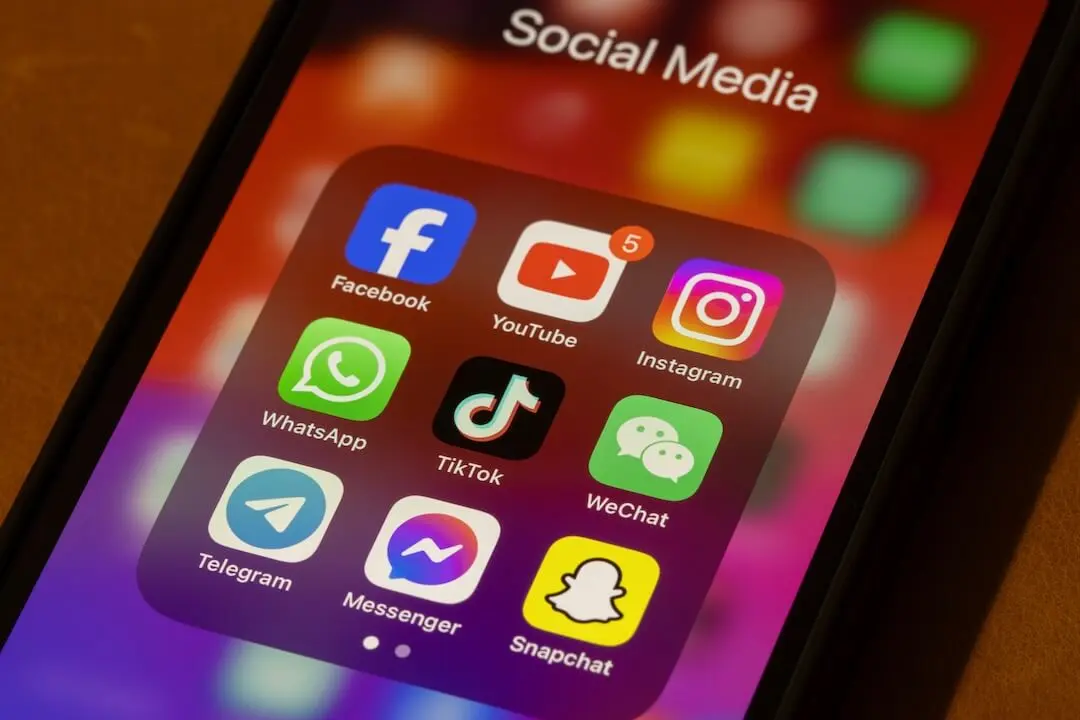
In an era defined by deep partisan gridlock, where red and blue states routinely clash over nearly every pillar of public policy, a rare and profound consensus has emerged: unrestricted digital and social media access poses a critical, systemic threat to the psychological and physical health of the nation’s youth.
This rare bipartisan alignment culminated in a landmark legal and financial reckoning. Meta, the corporate parent of social media giants Facebook and Instagram, agreed to a staggering legal settlement totaling up to $17.1 billion in penalties alongside sweeping structural changes to its platforms for young users. The historic agreement resolves a sprawling multi-state lawsuit spearheaded by 51 state and territorial attorneys general. A subsequent, separate settlement with the state of Texas pushes the total financial impact on the social media conglomerate to an unprecedented $18 billion.
The settlement arrives on the heels of explosive legal proceedings in California, stemming from an original 2023 multi-state lawsuit. In that complaint, state prosecutors laid bare a damning narrative: Meta knowingly designed its algorithms and engagement loops to target underage users, maximizing screen time and platform addiction for corporate profit—all at the direct expense of teenagers’ mental health and cognitive development.
While pediatricians, psychologists, and public health advocates have cautiously applauded the agreement as a significant step forward, critics and whistleblowers warn that the financial penalties, while historic, represent only a fraction of Meta’s staggering annual revenues. Nevertheless, the settlement establishes critical precedents for age verification, default safety guardrails, and parental supervision tools that could fundamentally reshape how minors interact with the digital world.
Detailed Chronology: From Whistleblower Disclosures to a Landmark Settlement
The road to the $18 billion settlement was paved by years of mounting public pressure, academic research, internal corporate whistleblowing, and coordinated state-level litigation.
2021–2023: The Building Storm
The modern reckoning over youth social media safety gained ferocious momentum following the 2021 disclosures by internal Meta whistleblower Frances Haugen, which revealed that the company’s own internal research acknowledged Instagram’s severe negative impacts on body image and mental health among teenage girls. Independent research from organizations like Common Sense Media simultaneously underscored the massive scale of underage adoption, revealing that over a third of children aged 10 to 12 were actively using platforms explicitly bound by federal rules against underage access.
Recognizing an escalating public health crisis, a coalition of 41 attorneys general formally filed a sweeping lawsuit against Meta in late 2023. The legal complaint alleged that the tech giant utilized deceptive practices and purposefully addictive product features to hook children, systematically violating consumer protection laws.
August 2026: Trial and Sudden Resolution
The legal battle crossed a major threshold when opening arguments commenced in a high-stakes federal trial in Oakland, California. As prosecutors prepared to present mounting evidence of corporate negligence and psychological harm, settlement negotiations accelerated behind the scenes.
By late August 2026, the 51 states and territories announced the comprehensive $17.1 billion consent judgment. The resolution was swiftly bolstered by Texas’s separate $1 billion agreement, cementing the total $18 billion package. Crucially, a distinct provision of the settlement dictates that roughly $30% of Meta’s financial payout—amounting to approximately $5 billion—is strictly contingent upon rival tech titans YouTube and TikTok adopting similar screen-time and safety restrictions.
Supporting Context & Metrics: The Adolescent Brain in the Age of the Algorithm
To understand the gravity of the legal settlement, one must examine the biological and psychological vulnerabilities that make adolescents uniquely susceptible to platform manipulation.
The Adolescent Neurological Profile
According to developmental psychologists and neuroscientists, the adolescent brain is characterized by a fundamental developmental mismatch: systems governing reward-seeking and social attention are hypersensitive, while the prefrontal cortex—the region responsible for impulse control, long-term planning, and emotional regulation—does not fully mature until well into a person’s twenties.
Dr. Mitch Prinstein, a psychologist and co-director of the Winston Center on Technology and Brain Development at the University of North Carolina at Chapel Hill, notes that the modern social media architecture exploits this exact developmental window.
"Kids are reporting that they’re having an extremely hard time controlling their own behavior on there," Prinstein observed. "They can’t quit. It’s interfering with their daily rules and routines, their sleep, their homework, their hygiene. When you have a machine and a platform that allows you to press a button 24/7 to get likes and comments and notifications and endless scroll, it’s just a perfect storm for adolescents who will be really trapped."
Documented Harms to Youth Health
The American Psychological Association (APA), the American Academy of Pediatrics (AAP), and the U.S. Surgeon General have issued repeated health advisories detailing the manifold dangers tied to heavy adolescent social media consumption. These documented harms include:
- Body Dissatisfaction & Disordered Eating: Heightened by beauty filters, algorithmic body comparison, and targeted advertising.
- Sleep Deprivation: Late-night platform engagement that disrupts circadian rhythms and academic performance.
- Cyberbullying and Toxic Content Exposure: Direct exposure to hateful rhetoric, self-harm communities, and dangerous viral challenges.
- Compulsive Usage Patterns: Disruption of fundamental daily routines, interpersonal communication, and offline hobby development.
Internal Meta documents unsealed during legal proceedings revealed that the company’s leadership was well aware of these dynamics. Internal estimates indicated that nearly 20% of 11-year-olds and 30% of 12-year-olds were maintaining active Instagram accounts, despite stated corporate policies prohibiting users under 13.
Official Statements & Core Settlement Provisions
The terms of the settlement require Meta to implement sweeping structural product updates within a strict one-year compliance window. These regulations apply primarily to users between the ages of 13 and 17, expanding upon the "Teen Accounts" framework introduced by Meta in 2024.
1. Mandatory Screen-Time Limits and Sleep Curfews
Meta has agreed to institute hard-wired time management features designed to curb runaway platform usage:
- Daily Time Caps: Automated restrictions limiting cumulative daily usage.
- Nighttime Lockouts: Mandatory overnight shutdowns preventing app access during typical sleeping hours (preventing late-night scrolling).
- School-Hour Restrictions: Automated muting or blocking features during standard academic hours to minimize classroom distraction.
Note: Parents retain the administrative ability to override or adjust these features for their specific child’s account.
2. Elimination of Predatory Design Features
In response to criticisms that infinite scrolls and artificial validation metrics exploit teenage psychology, Meta is required to modify or eliminate several signature features:
- Disablement of Infinite Scroll: Introduction of natural breaks or stopping points in user feeds.
- Concealment of Public "Like" Counts: Reducing the visible quantification of social validation that drives compulsive checking behaviors.
- Algorithmic Dampening of Dangerous Trends: Aggressive filtering to prevent the promotion of viral challenges, self-harm content, and extreme material to minor accounts.
3. Enhanced Parental Supervision and Oversight
Parents will gain unprecedented visibility into their teens’ digital environments. While direct access to the text of private messages remains restricted for privacy preservation, parents will receive automated alerts if their teen attempts to modify account settings, alters privacy configurations, or receives direct communications from "potentially suspicious accounts."
4. Advanced Age Assurance Technologies
Dr. Jean Twenge, author of 10 Rules for Raising Kids in a High-Tech World, emphasized that technological guardrails are functionally useless if minors can easily bypass them by entering a false birthdate.
To combat this, Meta has agreed to deploy sophisticated, independently certified age-assurance and artificial intelligence detection systems. These tools are designed to proactively identify underage users attempting to skirt restrictions and flag mismatched adult/minor account parameters. While users are not universally required to submit formal government identification upon initial sign-up, individuals whose accounts are flagged by AI auditing will be required to provide verified proof of age to appeal restrictions.
Future Outlook: The Road Ahead for Digital Child Safety
While the $18 billion settlement marks an unprecedented milestone in holding Big Technology accountable, health experts, policy analysts, and industry watchers remain deeply divided on its long-term efficacy.
Cautious Optimism from Medical Professionals
Pediatricians and mental health clinicians view the settlement as a vital course correction. Dr. Megan Moreno, co-director of the AAP’s initiative on social media and youth mental health, notes that forcing platforms to dial back their most aggressive psychological hooks represents a major victory for common-sense public health policy.
Criticisms of Scope and Structural Enforcement
Conversely, digital rights advocates and industry watchdogs argue that the agreement stops short of systemic reform. Katharina Kopp, policy director at the Center for Digital Democracy, famously characterized the agreement by noting that "the settlement reaches the features of Meta’s platforms but not the engine that drives them." Because Meta’s fundamental business model relies on hyper-targeted behavioral advertising, critics point out that an $18 billion penalty—spread across years and contingent in part on industry-wide compliance—amounts to a manageable cost of doing business for a corporation generating over $200 billion in annual revenue.
Furthermore, whistleblowers like former Meta employee Jason Sattizahn have raised concerns that the settlement lacks mandatory empirical metrics to measure whether the new safeguards actually drive down rates of teen anxiety, depression, and addiction.
The Broader Legislative Horizon
Ultimately, legal scholars like Santa Clara University Law Professor Eric Goldman warn that aggressive age-verification mandates pose secondary concerns regarding user privacy and data collection, as platforms gather increasingly intimate biometric and identity markers to verify user ages.
As state attorneys general celebrate their monumental legal victory, attention now turns to federal lawmakers and rival industry giants. With $5 billion of Meta’s payout riding on whether TikTok, YouTube, and other major networks follow suit, the 2026 Meta settlement may well be remembered not as the conclusion of the battle over youth digital safety, but as the opening salvo in a comprehensive restructuring of the modern internet.
