

Executive Overview
An international team of multidisciplinary researchers has uncovered a breakthrough in paleoanthropology that threatens to dismantle century-old paradigms regarding the initial peopling of Europe. Published in the journal PLOS One, a new study details the identification of unretouched triangular microlithic projectile points recovered from the oldest occupation layers of the Obi-Rakhmat rock shelter in Uzbekistan.
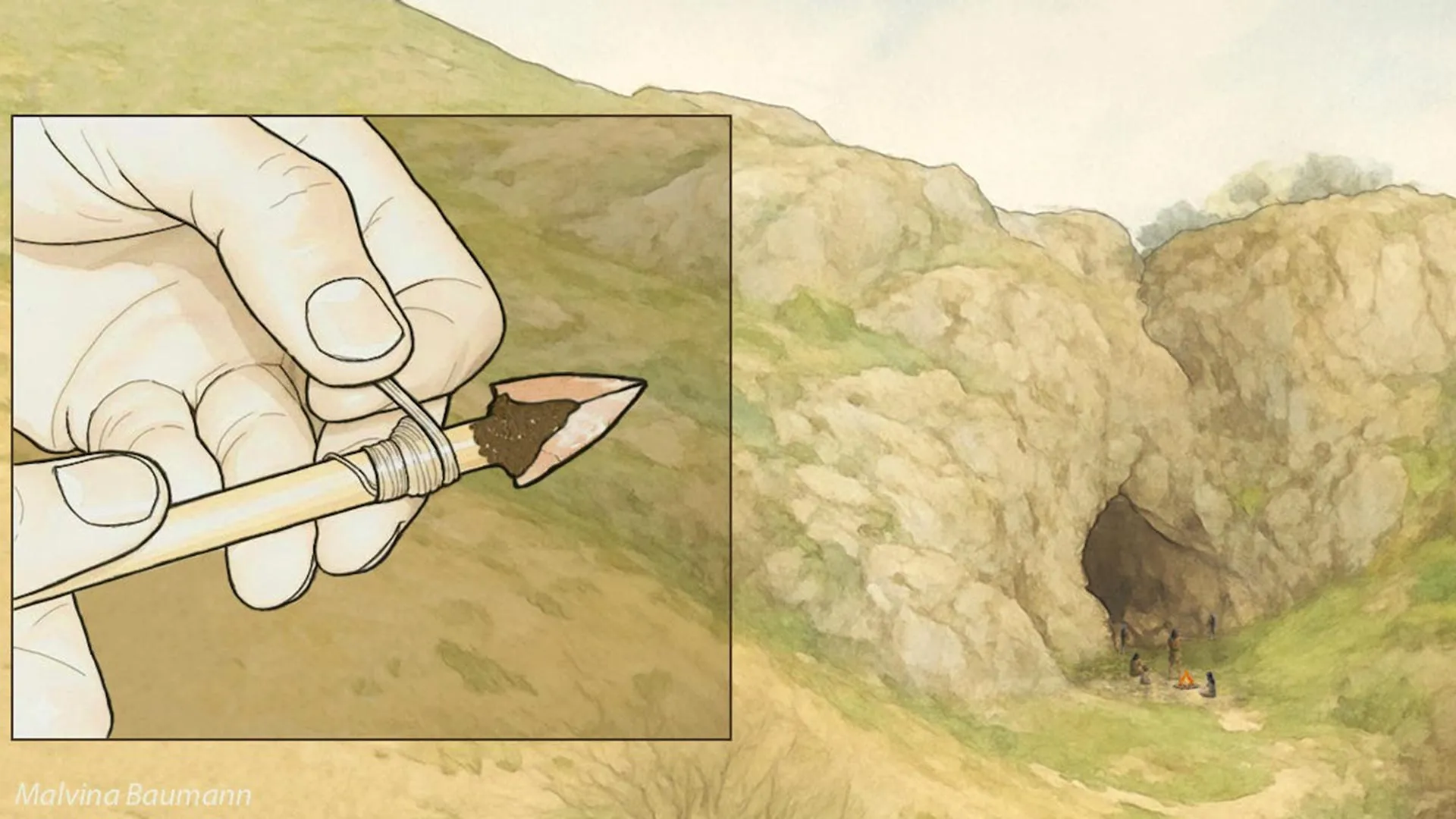
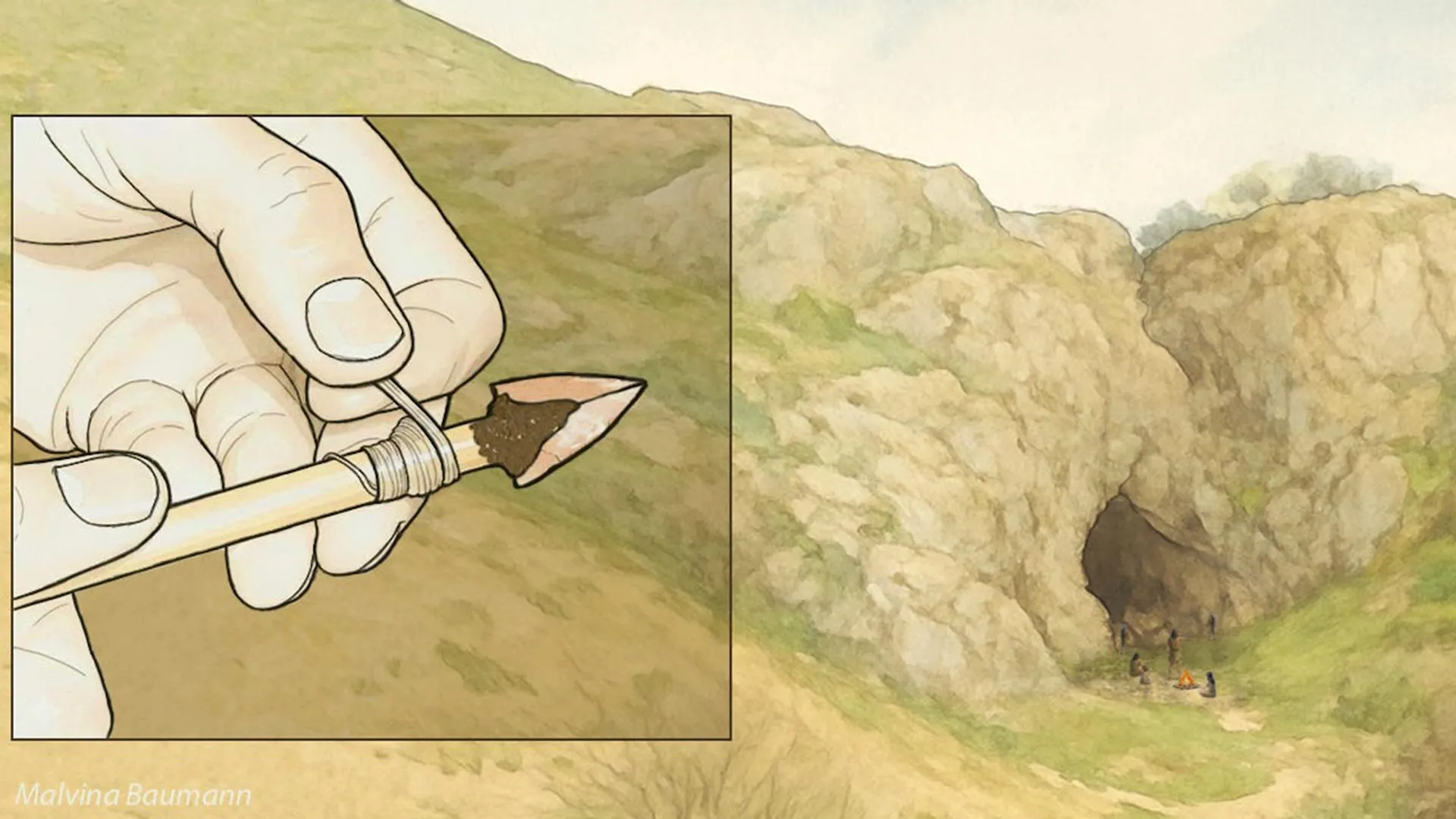
Dating back approximately 80,000 years, these minuscule stone artifacts exhibit distinct macroscopic and microscopic impact traces, identifying them unequivocally as arrowheads. Their morphology, dimensions, and ballistic signatures are virtually indistinguishable from those produced by early Homo sapiens populations who made a fleeting incursion into Neanderthal territory in the middle Rhône Valley of France—at the Grotte Mandrin—some 25,000 years later.
For decades, the prevailing narrative of human prehistory, forged in 19th-century Western Europe, rested on a linear and Eurocentric model. This framework positioned European early modern humans (Cro-Magnons) as direct descendants of Neanderthals, establishing a foundation for Western civilizational exceptionalism. Even as mid-20th-century discoveries established the African origins of Homo sapiens, the pathways, timeline, and mechanisms of our ancestors’ initial colonization of Western Eurasia remained fiercely contested.
The new findings from Obi-Rakhmat provide compelling, material-culture evidence that Homo sapiens did not simply march directly from Africa into Europe via the Levant 45,000 years ago. Instead, our ancestors established deep roots in the continental interior of Eurasia tens of thousands of years earlier. Operating as a nexus of technological innovation and demographic regeneration, Central Asia—specifically the Persian Plateau and its adjacent mountain ranges—served as a crucial springboard for modern human expansion long before the onset of the Upper Paleolithic.
Detailed Chronology: From the Tien Shan Foothills to the Rhône Valley
To understand the magnitude of the Obi-Rakhmat discovery, it is necessary to trace the chronological arc of prehistoric migrations and the evolution of archaeological frameworks.
1. The Eurocentric Legacy and the Out-of-Africa Paradigm
The chronological and cultural frameworks of prehistory were conceived in France and Western Europe during the latter half of the 1800s. Early evolutionary models were inherently linear: local Neanderthal populations supposedly evolved into modern Europeans. It took nearly a century for mainstream science to acknowledge Africa as the true cradle of Homo sapiens, characterized by complex symbolic behaviors, long-distance trade networks, and diversified stone and bone toolkits.
By the late 20th and early 21st centuries, fossil and archaeological evidence began stretching timelines outward. Evidence of early modern humans in Australia dates back approximately 65,000 years—predating equivalent European evidence by over 10 millennia. Meanwhile, the initial colonization of Western Eurasia by Homo sapiens over 45,000 years ago remained an interpretive battleground. Levantine data, though geographically proximate to Africa, often suffered from outdated excavation methodologies or failed to align neatly with a direct lineage into Europe. This prompted archaeologist Ludovic Slimak to propose a radical alternative in 2023: a Central Asian origin for the Initial Upper Paleolithic.
2. The Obi-Rakhmat Rock Shelter (80,000 Years Ago)
Discovered in 1962 and more recently excavated under the direction of Andrei Krivoshapkin, the Obi-Rakhmat rock shelter is situated at an altitude of 1,250 meters at the southwestern terminus of the Talassky Alatau range in Uzbekistan’s Tien Shan mountains.
Central Asia has historically functioned either as a climatic corridor facilitating transcontinental movement or as an isolated refuge zone. Obi-Rakhmat preserves a remarkably consistent stratigraphic sequence spanning over 10 meters, dated from roughly 80,000 to 40,000 years ago. The site’s lithic industry features large blades, bladelets, and diverse points. Intriguingly, a child’s cranial fragment recovered from a layer dating to ~70,000 years ago exhibits a mosaic of Neanderthal and anatomically modern human features, hinting at ancient hybridization events.
Within the site’s oldest stratigraphic layers, researchers identified unretouched, triangular microlithic projectile points. Measuring less than two centimeters in width and weighing only a few grams, these fragile objects were too light for heavy spears. Instead, their cutting-edge dimensions align precisely with the arrow shaft diameters documented ethnographically for low-poundage bows—a constraint dictated by universal physical and ballistic laws.
3. The Mandrin Connection (54,000 Years Ago)
Fast-forward 25 millennia and move over 6,000 kilometers west to the Grotte Mandrin in the Rhône Valley of France. Here, traceology expert Laure Metz identified identical microlithic projectile points embedded within a stratigraphic layer dated to approximately 54,000 years ago—predating the local extinction of Neanderthals by roughly 10,000 years. Crucially, a Homo sapiens milk tooth was recovered from this exact layer.
Despite the vast geographical and temporal separation, the micro-points from Obi-Rakhmat and Mandrin are virtually identical. According to the research team, they could be swapped without any stylistic discrepancy betraying their different origins. This material continuity validates previous interpretations of the Mandrin site: Sapiens groups armed with advanced bow-and-arrow technology executed a brief, targeted incursion deep into Neanderthal territory long before the general Upper Paleolithic colonization of Europe.
Supporting Context & Metrics: Ballistics, Technology, and Genetics
The identification of prehistoric weaponry relies on rigorous biomechanical and ballistic analysis. The researchers combined microscopic use-wear analysis with experimental archaeology to distinguish between hunting gear classes.
The Ballistics of Distance vs. Power Weapons
Thrown piercing weapons operate under starkly different physical constraints:
- Hand-held or Thrown Spears: These weapons require high mass to ensure structural robustness, impact force, and deep penetration. Because kinetic energy is delivered via the direct muscular extension of the human arm, the weapon’s mass is its primary asset for survival and hunting efficiency.
- Long-Distance Projectiles (Arrows and Javelins): Light projectiles shot from a distance derive their kinetic energy primarily from high velocity rather than mass. Because projectile speed drops rapidly over trajectory and upon target impact, these weapons depend entirely on extreme sharpness and specialized propulsion instruments (such as bows or atlatls) that exceed human arm strength.
Consequently, arrowheads and spearheads cannot serve interchangeable functions. The micro-points at Obi-Rakhmat—weighing mere fractions of an ounce and measuring under two centimeters wide—were aerodynamically unsuited for heavy shafts.
Lithic Typology and Human Attribution
Microscopic examination revealed that Obi-Rakhmat’s inhabitants possessed an array of hunting technologies. Alongside the delicate micro-points, researchers found robust, retouched points 15 to 20 times heavier and three to four times thicker—typical dimensions for javelin or spear heads.
The co-occurrence of diverse, specialized projectile types within a single assemblage is a hallmark of Homo sapiens technological behavior. Similar dual-tool strategies appear in South African sites such as the Pre-Still Bay layers (exceeding 77,000 years ago) and Sibudu Cave. Conversely, Neanderthal lithic records rarely feature specialized, impact-damaged projectile points; when present, Neanderthal points tend to be large, generalized, and indistinguishable from tools used for butchery or plant processing.
Paleogenetic Convergence
In an extraordinary demonstration of scientific consilience, recent paleogenetic studies published by Leonardo Vallini and Stéphane Mazières independently defined the Persian Plateau—located on the northeastern periphery of Uzbekistan—as a major population hub. Genetic data indicates that the ancestors of all non-African modern populations stalled or lingered in this region between early out-of-Africa expansions and the wider colonization of Eurasia.
This resource-rich upland corridor functioned as a demographic refuge, helping modern humans recover from genetic bottlenecks while fostering intensive cultural and technological innovation.
Official Insights and Academic Perspectives
The publication of the PLOS One study has reignited debate across the anthropological community, bridging the once-disjointed fields of material culture and paleogenetics.
- Bridging Material Culture and Genetics: "What makes this discovery truly remarkable is the rare convergence and complementarity between data extracted from material culture and the evidence preserved in our genetic memory," noted members of the international research team. "Because these studies were conducted independently and published years apart, they did not influence one another. Together, they sketch out an entirely new scenario for the arrival of Homo sapiens in Europe."
- Re-evaluating the Mandrin Hypothesis: When archaeologist Ludovic Slimak and traceologist Laure Metz published their findings regarding the Grotte Mandrin in 2022 and 2023, their assertion that Homo sapiens mastered bow-and-arrow technology inside Neanderthal Europe 54,000 years ago met with skepticism. Critics argued against such an early, sophisticated presence. The discovery of identical, unretouched micro-points dating back 80,000 years in Central Asia provides the deep technological ancestry required to make the Mandrin hypothesis historically parsimonious.
- Challenging Traditional Migration Models: For generations, textbooks taught a straightforward migration model: modern humans exited Africa via the Sinai Peninsula and swept rapidly into Europe around 45,000 years ago. The Obi-Rakhmat data shatters this linear assumption. It proves that Homo sapiens had already rooted themselves deep within the continental heartland of Eurasia tens of thousands of years before their eventual westward expansion.
Future Outlook and Archaeological Implications
The identification of these unretouched micro-points marks a methodological turning point for Paleolithic archaeology. Because these tiny, fragile lithic fragments lack traditional retouching, they were easily overlooked or misidentified as mere manufacturing waste or débitage in decades past.
With formal recognition criteria now established through microscopic traceology and ballistic testing, researchers anticipate a paradigm shift. Archaeologists are expected to re-examine existing lithic collections housed in museums across Central Asia, the Middle East, and the Western Mediterranean. It is highly probable that similar micro-projectile points will be identified in transitional strata bridging the Middle and Upper Paleolithic.
Furthermore, this study underscores the necessity of multidisciplinary collaboration. By aligning high-resolution stratigraphic excavation, experimental ballistics, traceology, and paleogenomics, modern science is moving past the rigid, Eurocentric models of the 19th century. The foothills of the Tien Shan mountains and the broader Persian Plateau are now firmly established as pivotal crucibles where human ingenuity, specialized weaponry, and demographic resilience first took shape—paving the way for the ultimate peopling of the globe.