

Executive Overview
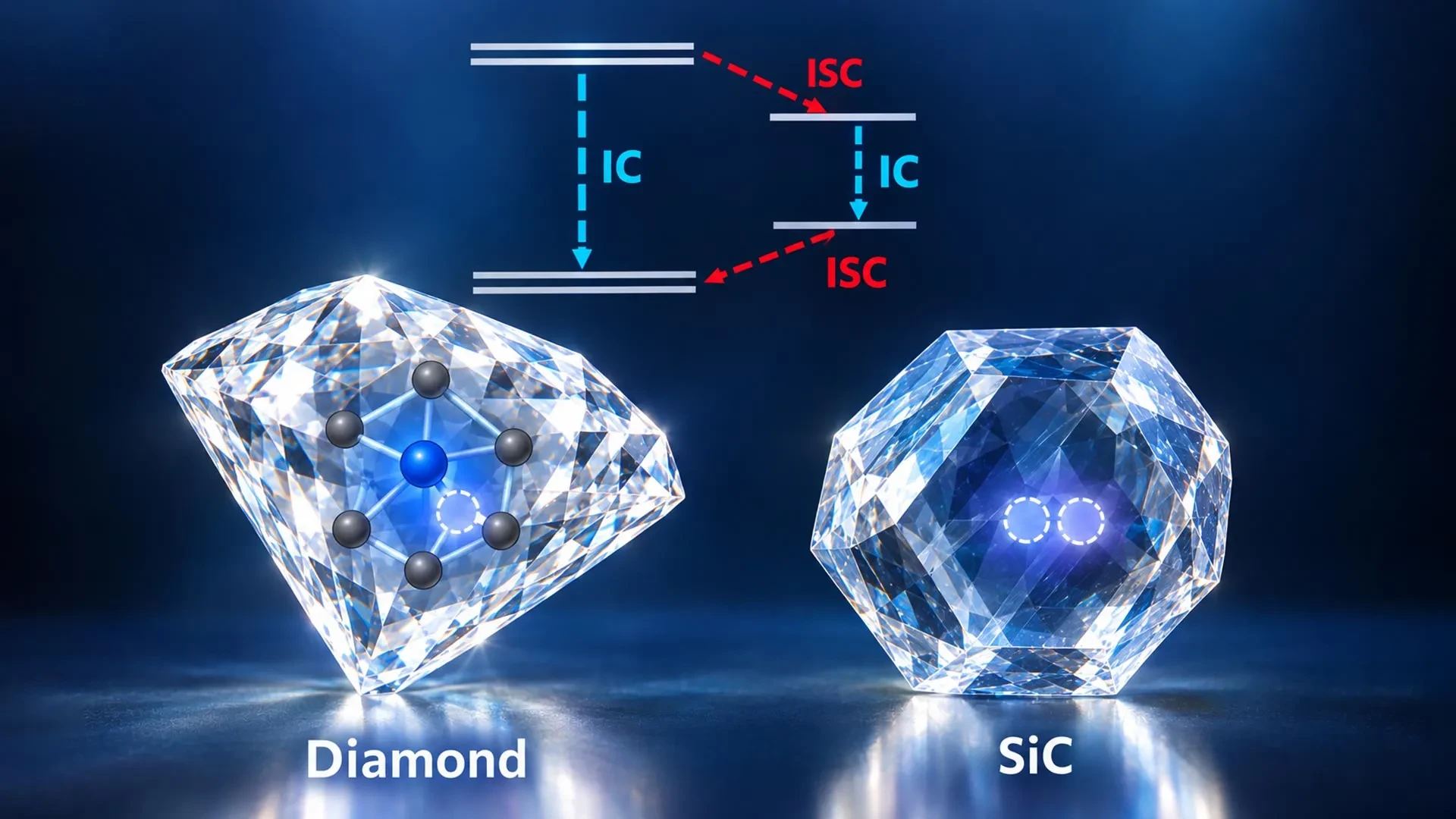
In the rapidly accelerating race toward next-generation quantum technologies, researchers have long grappled with a microscopic bottleneck: understanding how light-absorbing imperfections inside materials behave at a quantum mechanical level. When a single photon strikes a minuscule flaw—such as a specific atomic impurity in diamond or silicon carbide—it transfers energy, pushing electrons into an excited state. These atomic anomalies, known as spin defects, represent the foundational building blocks of future quantum architectures, ranging from hyper-sensitive quantum sensors to stable, scalable qubits for quantum computing.
However, predicting the exact lifecycle of these excited electrons, particularly how they dissipate energy over time, has remained one of the most stubborn theoretical hurdles in modern materials science.
Now, a pioneering team of researchers at the University of Chicago Pritzker School of Molecular Engineering (UChicago PME) has shattered this barrier. By developing an advanced, highly integrated computational method, the UChicago team can finally simulate the complete optical cycle of spin defects, solving a notoriously elusive phenomenon known as internal conversion.
Published in the prestigious journal Physical Review Letters, this breakthrough provides a comprehensive, predictive framework that transcends quantum computing. Because internal conversion is a universal mechanism governing energy transfer, the new methodology holds profound implications for renewable energy conversion and storage materials. Integrated directly into the open-source software package WEST and optimized for modern graphics processing units (GPUs), this computational framework equips the global scientific community with an unprecedented lens through which to engineer the quantum devices and green energy solutions of tomorrow.
Detailed Chronology: Solving a Decades-Long Quantum Modeling Puzzle
To understand the magnitude of the UChicago PME breakthrough, one must trace the historical trajectory of quantum materials modeling. For years, theoretical physicists and physical chemists have understood the fundamental equations governing how spin defects interact with light. When a laser excites a spin defect, the system must eventually return to its baseline, lower-energy ground state. It accomplishes this through three primary pathways:
- Radiative decay: Releasing a photon of light.
- Spin-state intersystem crossing: Transitioning between states with differing spin alignments.
- Non-radiative relaxation (Internal conversion): Transferring the excitation energy directly into the vibrational kinetic energy of surrounding host lattice atoms (phonons).
While the first two pathways can be simulated using standard quantum mechanical approximations, modeling internal conversion has consistently stymied theorists. The primary culprit is computational complexity. To accurately portray internal conversion, a simulation must account for the intricate, dynamic feedback loops between localized electronic excitations and the collective, thermal vibrations of hundreds or thousands of surrounding host atoms in a realistic solid matrix.
[Laser Excitation]
       │
       ▼
 [Excited State] ──(Internal Conversion)──► [Atomic Lattice Vibrations (Phonons)] ──► [Ground State]
The Methodological Breakthrough
Recognizing that existing trial-and-error paradigms were insufficient, UChicago PME’s Giulia Galli, postdoctoral researcher Stefano Villani, and former graduate student Yu Jin (now a postdoctoral scholar at the Flatiron Institute) pooled years of cumulative research. They set out to construct a unified mathematical framework capable of bridging microscopic electronic states with macroscopic lattice dynamics.
Instead of analyzing every single atomic vibration configuration independently—a task that would overwhelm even the world’s most powerful supercomputers—the team utilized advanced mathematical descriptions known as many-body wavefunctions to accurately map the excited states of spin defects. Through rigorous, exact mathematical derivations, they calculated the exact coupling strength between each discrete electronic excited state and the sprawling web of vibrational modes belonging to neighboring atoms.
This derivation bypassed the need for brute-force tracking of individual atomic motions. Instead, the team established a seamless mathematical bridge connecting electronic states to the entire spectrum of vibrational configurations across hundreds of surrounding atoms.
Implementation via WEST
Crucially, the researchers did not stop at theoretical derivations. They translated their complex mathematical framework into executable algorithms, integrating the new capabilities directly into WEST (What Everybody Spectral Solver), an open-source, high-performance simulation program optimized for GPU architecture. Developed over the past decade within Galli’s research group via the Midwest Institute for Computational Materials (MICCoM)—funded by the U.S. Department of Energy’s Office of Basic Energy Sciences—WEST serves as the primary engine bringing this theoretical breakthrough into practical utility.
Supporting Context & Metrics: Surprising Discoveries in Diamond and Silicon Carbide
To validate their newly forged computational tool, the UChicago PME team applied the WEST framework to two of the most heavily scrutinized materials in quantum information science: nitrogen-vacancy (NV) centers in diamond and divacancy defects in silicon carbide (SiC).
Nitrogen-Vacancy Centers in Diamond
For their initial testbed, the researchers examined the iconic nitrogen-vacancy center in diamond, a defect extensively studied for its remarkable quantum coherence properties.
- Triplet States: The simulations revealed that for triplet states, internal conversion plays a relatively minor role in overall energy dissipation.
- Singlet States: Conversely, internal conversion emerged as the dominant, primary mechanism driving energy release in singlet states.
These findings aligned precisely with longstanding experimental hypotheses and spectroscopy measurements, validating the accuracy and reliability of the WEST-based computational pipeline.
The Silicon Carbide Revelation
Buoyed by their success with diamond, the team turned their attention to divacancy defects in silicon carbide—a wide-bandgap semiconductor gaining immense traction in power electronics and quantum networking. Here, the simulations delivered a startling revelation that completely upended prevailing scientific assumptions.
Prior theoretical models had severely underestimated the influence of internal conversion on the lifetime of the defect’s excited triplet state. The UChicago PME team discovered that internal conversion dictates the behavior of these triplet states to a much higher degree than previously calculated. This newly unveiled energy-loss pathway successfully resolved a persistent, frustrating discrepancy between theoretical predictions and empirical laboratory observations that had puzzled researchers for years.
| Material System | Defect Type | Target State | Previous Understanding of Internal Conversion | New Finding via WEST Framework |
|---|---|---|---|---|
| Diamond | Nitrogen-Vacancy (NV) | Triplet States | Minor role suspected | Confirmed minimal contribution to energy loss |
| Diamond | Nitrogen-Vacancy (NV) | Singlet States | Major role suspected | Confirmed as primary energy-release mechanism |
| Silicon Carbide | Divacancy | Triplet States | Underestimated / Ignored | Crucial impact, resolving historical theory-experiment gaps |
By quantifying this overlooked energy-loss pathway, scientists can now construct far more accurate predictive models for silicon carbide defects, directly accelerating their deployment as reliable qubits in quantum communication arrays and quantum processors.
Official Statements and Perspectives
The implications of this research extend far beyond the immediate academic community, touching upon fundamental questions in solid-state physics, chemistry, and energy engineering.
Prof. Giulia Galli, the Liew Family Professor of Electronic Structure and Simulations in UChicago PME and the Department of Chemistry, as well as the senior author of the study, emphasized the broad scientific utility of the work:
"This internal conversion process is not only relevant to spin defects—it’s also related to processes of interest to energy technologies. That’s one of the reasons this work is so exciting. We were expecting to see an effect, but of a smaller magnitude in silicon carbide. What we found is that this internal conversion process turns out to be more important than we thought. We provided the missing piece of the puzzle needed to completely describe the optical cycle of spin defects."
Dr. Stefano Villani, a postdoctoral researcher at UChicago PME and first author of the study, underscored the immense computational hurdles overcome during the research:
"Although the equations are known, it’s hard to describe the process accurately because of computational difficulties. You need to account for complex interactions between the electrons and surrounding atoms, and that’s challenging in realistic solids represented by models with hundreds or thousands of atoms."
Dr. Yu Jin, former UChicago PME graduate student and current postdoctoral scholar at the Flatiron Institute in New York, reflected on the cumulative nature of the breakthrough:
"In the past, a clear mathematical derivation and efficient algorithms were not available. The new derivation came together after years of work on the optical cycle of spin defects. Our work can now be used to make more accurate predictions about many materials of interest for quantum technologies."
Future Outlook: Artificial Intelligence Integration and Green Energy Frontiers
While the release of this advanced framework via WEST represents a watershed moment for quantum materials science, the UChicago PME team is far from finished. High-fidelity quantum simulations of systems comprising hundreds of interacting atoms remain intensely resource-intensive, demanding substantial supercomputing cycles.
To democratize access and streamline workflows, the research group is actively investigating ways to integrate cutting-edge machine learning and artificial intelligence algorithms into their excited-states computational pipeline.
"We are working on ways to integrate machine learning into excited states calculations to further improve the efficiency of our method," noted Villani. By training neural networks on high-accuracy quantum mechanical datasets, the team hopes to slash calculation times from days or hours to mere minutes.
Looking ahead, the researchers are expanding the application scope of their methodology:
- Silicon Spin Defects: Expanding investigations into spin defects within bulk silicon, bridging quantum hardware development with existing, highly scalable semiconductor manufacturing infrastructure.
- Renewable Energy Materials: Applying the insights of internal conversion to advanced materials utilized in solar energy conversion, photocatalysis, and next-generation energy storage. Because internal conversion dictates how molecules and solids shed or retain energy upon absorbing light, understanding this process at an atomistic level is critical for designing hyper-efficient solar cells and artificial photosynthesis systems.
By supplying the foundational mathematics and computational infrastructure required to model the complete optical lifecycle of spin defects, the University of Chicago Pritzker School of Molecular Engineering has eliminated a major roadblock in materials physics. As researchers worldwide begin implementing these tools through WEST, the roadmap toward fault-tolerant quantum computers, ultra-sensitive quantum sensors, and breakthrough renewable energy devices is clearer—and closer—than ever before.