

Executive Overview
As the National Football League kicks off another sprawling regular season, its cultural footprint expands aggressively across the calendar. What was once a localized Sunday ritual with a brief Monday night encore has evolved into a global, multi-day media phenomenon. Games are now broadcast from London, Germany, and São Paulo at breakfast time; Thursday nights feature marquee matchups; and late-season Saturdays groan under the weight of high-stakes implications. For millions of viewers, football has transformed from a weekly appointment into an omnipresent tide that submerges the calendar.
Yet, beneath the staggering ratings, the billion-dollar broadcast rights, and the relentless marketing campaigns lies a deeper cultural tension. Professional football remains one of the last great public squares in a heavily fractured United States—a rare canvas where tens of millions of people gather simultaneously around a shared, unifying spectacle. But it is also a distinctly hypermasculine domain built on traditions that often alienate those who fall outside its traditional demographic molds.
This is the central paradox explored through the lens of queer fans who have spent lifetimes navigating the spaces between sports culture and personal identity. For a queer man and longtime New England Patriots fan rooted deep within Philadelphia Eagles territory, football offers an intoxicating mix of ritual, community, and personal salvation. It is a world that has historically struggled to acknowledge, let alone embrace, LGBTQ+ spectators. And yet, millions of fans from marginalized backgrounds continue to renegotiate their relationship with the sport each autumn, proving that belonging in the modern sports landscape is not something granted by a league—it is something claimed by the fan.
Detailed Chronology: A Lifelong Fandom Forged in Crisis
To understand how a queer kid from Pennsylvania grew into a die-hard fan of a team 300 miles away, one must trace a timeline of cultural shifts, personal milestones, and defining historical moments.
The Crucible of 2001
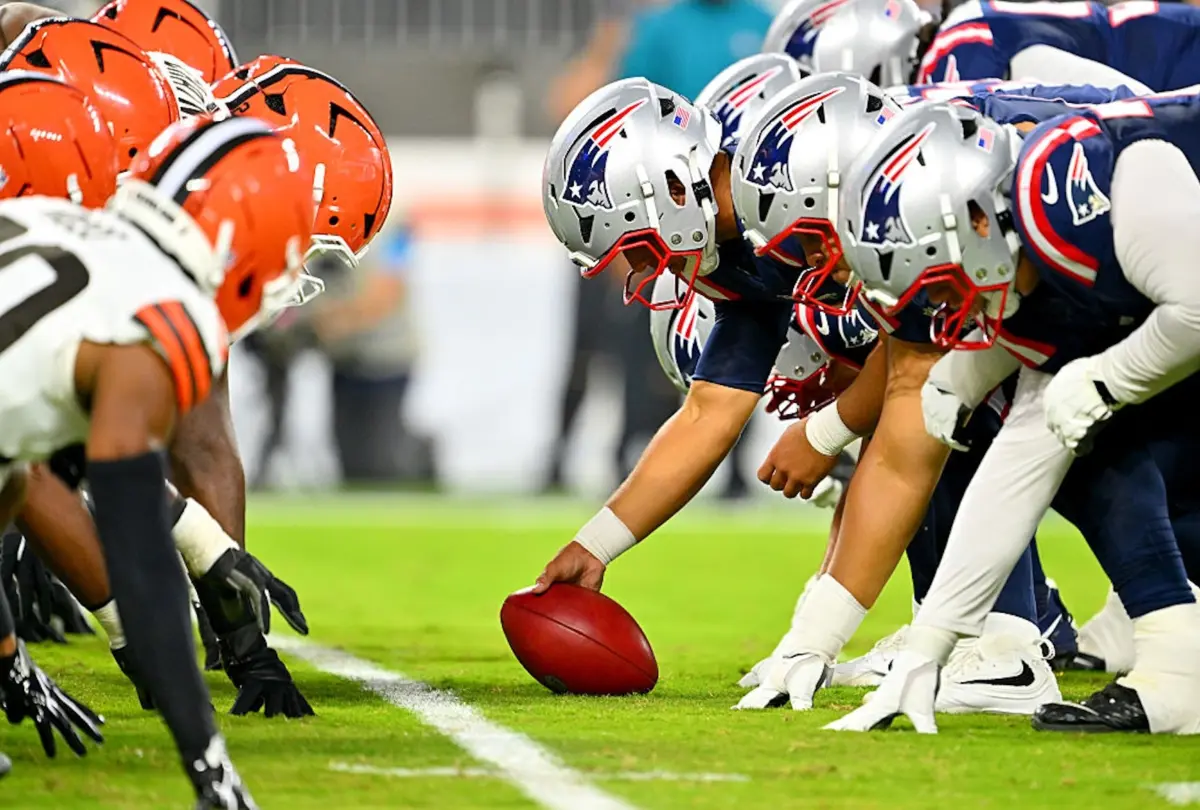
The allegiance to the New England Patriots was not inherited from parents or absorbed through local geography. Growing up in Reading, Pennsylvania, surrounded by the green-and-white fervor of Philadelphia Eagles fandom, the author spent formative years with a soft spot for the Miami Dolphins but no ironclad devotion.
That changed forever in the autumn of 2001. Leaving Reading for college in Boston just as the September 11 attacks upended the nation, the author found himself a closeted 18-year-old alone in a shaken, unfamiliar city. Amidst national trauma and personal isolation, football provided an anchor. It offered a refuge from a relentless, terrifying news cycle and gave a grieving city a collective focal point that refused to break its heart.
The Rise of the Underdog
Simultaneously, a football revolution was taking place on the gridiron. Tom Brady, a sixth-round draft pick and the 199th overall selection whom nearly every franchise had passed over, stepped onto the field to redefine the boundaries of athletic achievement.
For a young gay man navigating the closet while wrestling with deep feelings of being overlooked, underestimated, and "othered," Brady’s narrative was essential. Choosing the Patriots over a safe, local team deepened that sense of outsider status, but it also crystallized a lifelong devotion. It was the birth of an enduring relationship with a franchise that would go on to define an era of professional sports.
Supporting Context & Metrics: The Cultural Architecture of the NFL
The modern NFL operates on a scale unmatched by any other domestic sports league, driven by structural realities that shape both its unifying power and its exclusionary blind spots.
| Metric / Dimension | NFL Context | Cultural Impact |
|---|---|---|
| Media Ubiquity | Broadcasts span Thursdays, Sundays, Mondays, international series, and late-season Saturdays. | Transforms football from a weekly event into an all-encompassing seasonal climate. |
| The Public Square | Tens of millions of concurrent viewers across partisan, geographic, and socioeconomic divides. | Serves as one of the last remaining cultural touchstones where a fractured nation agrees on a shared reality for three hours. |
| Demographic Inclusion | Historically hypermasculine; commercial imagery and marketing heavily target traditional male demographics. | Creates systemic barriers and casual hostility for women and LGBTQ+ participants and fans. |
| Global & Cultural Shifts | Recent partnerships (e.g., Roc Nation, Spanish-language Super Bowl broadcasts featuring Bad Bunny). | Demonstrates a slow, corporate willingness to modernize, though deeper grassroots inclusion lags behind peer leagues like the English Premier League. |
The Atmosphere of the Sports Bar and the Architecture of Armor
For LGBTQ+ individuals stepping into traditional sports environments, the atmosphere can often feel like its own distinct weather system. Casual homophobia is frequently embedded into the social architecture—slurs used as casual punctuation, heteronormative assumptions baked into every interaction, and jokes that land with hostile weight.
For those possessing physical presence, loud voices, or hardened psychological armor, navigating these spaces becomes a matter of tactical insulation. However, many fans recognize the immense privilege embedded in that insulation. Not every queer fan possesses the temperament or protective armor to shrug off casual bigotry. The emotional tax of entering a space that treats one’s existence as invisible—or worse, unwelcome—remains a heavy burden for countless supporters across the country.
Official Statements and Institutional Progress
While the NFL has made notable strides in expanding its cultural appeal, critics and advocates argue that surface-level entertainment initiatives fall short of genuine institutional support.
In recent years, the league’s collaboration with Roc Nation has injected fresh cultural relevance into its entertainment portfolio. The pinnacle of this shift occurred when the league embraced a largely Spanish-language Super Bowl halftime show featuring Bad Bunny—a milestone that would have been unimaginable a decade prior.
Yet, cultural moments do not automatically translate to systemic commitment. Activists and observant fans frequently contrast the NFL’s cautious approach with the proactive measures taken by other major sports organizations:
- Major League Baseball (MLB): Historically and currently active in developing community outreach and inclusive fan initiatives.
- The English Premier League (EPL): Features robust, club-supported initiatives like the "Gay Gooners," the oldest queer supporters’ group in professional soccer, which receives active institutional backing and protection from teams like Arsenal.
Critics argue the NFL could easily champion similar grassroots programs. Recommendations from advocates do not center on token roster moves—which are widely viewed as hollow gestures—but rather on tangible, structural investments:
- Funding scholarships and support networks for LGBTQ+ youth athletes.
- Providing resources and anti-bullying frameworks for high school athletic departments navigating out student-athletes.
- Extending visible, institutional protection to the young athlete in a high school locker room who is quietly calculating whether it is safe to be both an athlete and oneself.
Future Outlook: Re-Signing the Contract of Fandom
As the new NFL season unfolds, fans from all walks of life engage in a quiet, annual renegotiation. This unwritten contract requires supporters to love a league that has never fully figured out how to love them back—a multi-billion-dollar enterprise that often treats queer fans as a newly discovered market demographic rather than a foundational congregation that has been in the pews all along.
Every autumn, marginalized fans decide whether the arrangement remains worth the emotional investment. For some, cultural regression or institutional indifference causes the pen to hesitate over the imaginary dotted line. Yet, when kickoff arrives, the sheer magnetism of the game usually wins out.
Ultimately, the experience of being a non-default fan redefines the very concept of belonging. It teaches that inclusion is not a privilege handed down by a sports league, a stadium crowd, or a broadcast booth; it is a personal decree. Whether sitting alone in a quiet room during a high-stakes fourth-quarter comeback, or standing proudly as a dissenting voice in a sea of opposing colors, the true essence of sports fandom transcends demographic assumptions.
The season is here, the stadiums are roaring, and millions are tuning in. And for the fans who never quite fit the league’s marketing profile—the outsiders, the holdouts, and the queer supporters who love the game with fierce devotion—the verdict remains unchanged: completely, joyfully, and permanently at home.
