

Executive Overview
In the architecture of modern web development, session management is traditionally framed as a delicate balancing act. Developers and security architects weigh the imperatives of robust cybersecurity protocols, resource optimization, and a seamless user experience. However, beneath the surface of technical specifications and backend optimization lies a critical oversight that frequently goes unaddressed: poorly handled session timeouts.
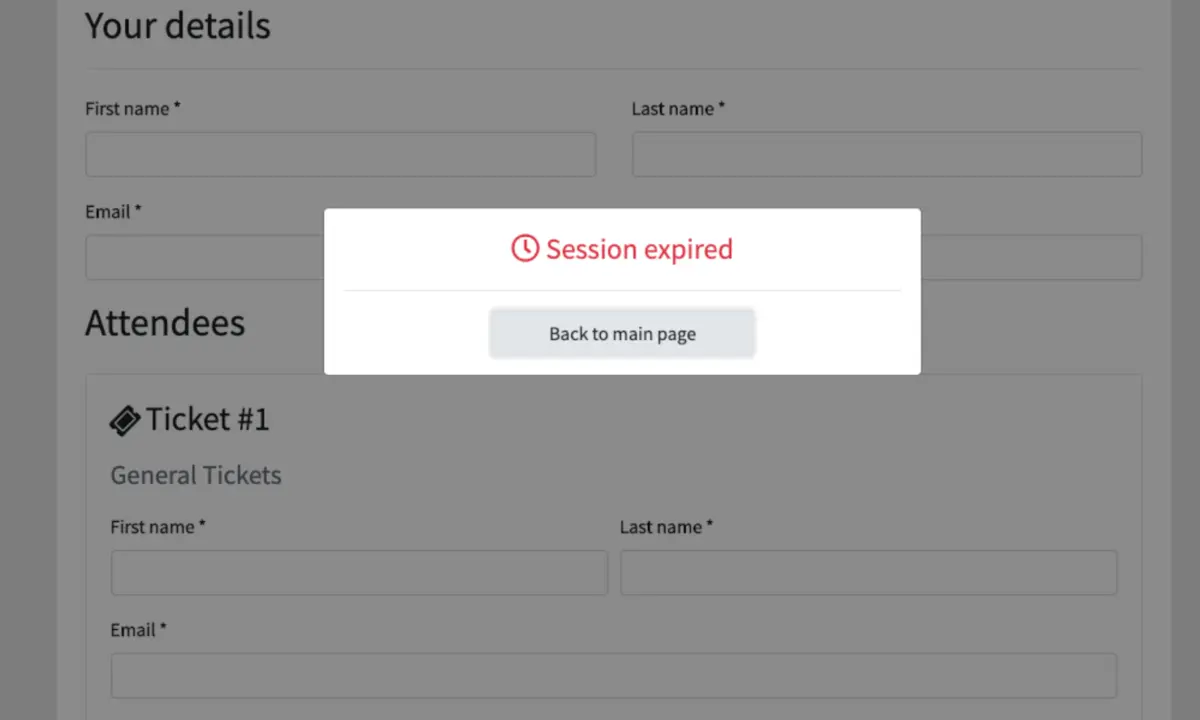
Far from being a mere technical inconvenience or a minor annoyance, abrupt session expirations constitute a formidable accessibility barrier. For millions of users worldwide—particularly those living with motor, cognitive, or visual impairments—inaccessible timeout mechanisms can abruptly sever their interaction with essential digital services. Whether attempting to apply for a government loan, secure digital tickets, or navigate a secure banking portal, users encountering silent or overly aggressive timeouts are frequently ejected back to login screens. This results in the complete loss of unsaved progress, wasted hours of strenuous effort, and, in severe cases, the outright abandonment of vital online tasks.
With over 1.3 billion people globally living with significant disabilities, and an estimated 20% of the population identifying as neurodivergent, session timeout accessibility is not an edge-case concern. It is a fundamental design flaw that disproportionately impacts a massive subset of any website’s audience. This investigative report explores why traditional session timeouts fail vulnerable users, evaluates the intersection of security requirements and web accessibility standards, and outlines concrete engineering patterns—such as proactive advance warnings, auto-save functionality, and adjustable session limits—required to build an inclusive, respectful internet.
Detailed Chronology: The Evolution of Web Authentication and the Timeout Oversight
To understand how session timeouts became an institutionalized barrier to digital inclusion, one must trace the evolution of web security standards. In the early days of the internet, stateless HTTP protocols necessitated the creation of session management mechanisms to maintain user state across multiple page requests. As cyber threats evolved, security frameworks—governed by institutions such as the National Institute of Standards and Technology (NIST)—mandated stricter controls to prevent session hijacking, unauthorized access, and credential theft.
The Security-First Paradigm
Historically, security engineers prioritized absolute risk mitigation. To protect sensitive financial, medical, and governmental data, systems were designed to automatically terminate user sessions after a predetermined period of inactivity. This "security-first" paradigm operated on a dangerous assumption: that all users consume, process, and input data at a uniform, standardized speed.
For decades, digital accessibility (governed primarily by the Web Content Accessibility Guidelines, or WCAG) operated in a silo separate from backend authentication design. While frontend developers meticulously added alt text and keyboard navigation pathways, session timeouts remained hardcoded on the server side, entirely blind to the user’s physical or cognitive realities.
The Rising Friction of Modern Web Apps
As web applications grew more complex—transitioning from static informational pages to dynamic single-page applications (SPAs) handling intricate multi-step forms—the friction caused by strict timeouts multiplied exponentially.
- The Late 2000s to 2010s: Multi-page government and e-commerce forms emerged as major pain points. Users began reporting widespread data loss on platforms like immigration portals and tax-filing systems, yet timeout mechanisms remained rigid.
- The WCAG 2.1 and 2.2 Era: As regulatory frameworks evolved to encompass cognitive load and time limits (most notably under WCAG success criteria addressing "Adequate Time"), accessibility advocates began pushing back against silent logouts and unannounced countdowns.
- The Present Day: Contemporary digital equity frameworks now recognize that a session timeout without an accessible extension mechanism is functionally equivalent to slamming a physical door in the face of a user who moves more slowly.
Supporting Context & Metrics: The Human Impact of Inaccessible Timeouts
The scale of the problem becomes starkly apparent when examining global demographic data alongside the real-world friction experienced by disabled users navigating the digital landscape.
Quantifying the Affected Audience
- Global Disabilities: According to global health metrics, approximately 1.3 billion people—roughly 16% of the global population—experience significant disabilities.
- Neurodiversity: An estimated 20% of the global population is neurodivergent, encompassing conditions such as autism, ADHD, dyslexia, and developmental differences.
- Visual Impairments: More than 43 million people are blind worldwide, while an additional 295 million live with moderate to severe vision impairment.
- Digital Inclusion: Data from the Pew Research Center demonstrates high digital adoption among disabled populations, with 62% of adults with disabilities owning a computer and 72% utilizing high-speed home internet—percentages statistically comparable to non-disabled demographics.
Despite this high level of digital integration, web interfaces routinely penalize users for interacting with technology at their own pace.
Motor Impairments and Slower Input Speeds
Users with motor impairments—such as cerebral palsy, muscular dystrophy, hand tremors, or severe arthritis—frequently require adaptive hardware, such as sip-and-puff systems, head pointers, or specialized switches. According to accessibility evaluations by government bodies like the UK’s Department for Work and Pensions (DWP), it can take multiple attempts for adaptive technology to successfully register a single keystroke or mouse click.
Disability rights advocate and broadcaster Matthew Kayne has openly detailed the exhausting reality of navigating poorly designed user interfaces. For individuals with motor challenges, the physical effort required to fill out a form is immense. When a rigid timeout triggers mid-process, a single digital glitch can instantly erase hours of meticulous navigation, delaying essential life administration and compounding physical fatigue.
Cognitive Differences and Time Blindness
Cognitive impairments encompass a vast spectrum of experiences, including acquired brain injuries, dementia, processing disorders, and neurodivergence. Individuals with these conditions often require extended processing time to comprehend instructions, evaluate form fields, and formulate responses.

Furthermore, many neurodivergent individuals experience time blindness—a neurological difficulty in perceiving the passage of time. Prominent technology leaders and advocates, such as Kate Carruthers, have noted that time blindness renders arbitrary countdown timers and estimated remaining times entirely unhelpful. When websites rely on users accurately estimating how many minutes remain before a session expires, they inadvertently exclude anyone who processes information or experiences time differently.
Vision Impairments and Screen Reader Navigation Overhead
Blind and low-vision users cannot visually scan a web page to locate key form elements or interactive buttons. Instead, they rely on screen readers (such as JAWS, NVDA, or VoiceOver) to read out links, headings, and form controls sequentially. This auditory navigation is inherently more time-consuming than visual scanning.
When a website introduces a live countdown timer or an impending timeout warning, it often does so in a manner hostile to screen reader users. Developer and accessibility advocate Bogdan Cerovac documented the frustrating experience of encountering poorly implemented countdown timers that broadcast status updates to screen readers every single second. Rather than providing helpful notice, the screen reader becomes bogged down by constant status announcements, completely drowning out the user’s ability to navigate the page.
Official Statements and Regulatory Standards
Navigating the intersection of cybersecurity and accessibility requires strict adherence to established international frameworks. Governing bodies have increasingly clarified that security measures cannot be used as an excuse to exclude disabled users.
WCAG Compliance and Guideline 2.9.2
The Web Content Accessibility Guidelines (WCAG), published by the World Wide Web Consortium (W3C), serve as the definitive international standard for digital accessibility. Developers must pay close attention to Guideline 2.9.2 (Adequate Time), which dictates that users must be warned of any session time limit that could result in data loss, and must be provided with a mechanism to easily extend their session or adjust the time limit.
According to WCAG specifications, an accessible session timeout implementation must satisfy several criteria:

- Advance Warning: Users must receive clear, understandable notice well before a session expires—giving them ample time to react regardless of their input speed.
- Timeout Adjustable Mechanism: Users must be presented with a straightforward dialog box allowing them to extend their session with a single interaction (e.g., a button press) or turn off the time limit where security permits.
- Exemptions: The W3C recognizes legitimate security exceptions. For instance, shared public terminals (such as library computers) or high-demand live ticket sales (where items in a cart are held temporarily for inventory management) justify strict, non-extendable limits. However, standard administrative forms, e-commerce browsing, and news reading should never feature arbitrary expirations.
NIST Guidelines on Session Management
The National Institute of Standards and Technology (NIST Special Publication 800-63B) affirms that session management is preferable to forcing users to continually re-authenticate credentials, which often leads to insecure workarounds like writing down passwords or utilizing browser auto-fill vulnerabilities. However, NIST frameworks increasingly emphasize that security controls must harmonize with usability and accessibility mandates to prevent user abandonment.
Future Outlook: Engineering an Inclusive Web
Solving the session timeout accessibility crisis does not require compromising backend security. Rather, it requires web developers, UX designers, and product managers to adopt empathetic, user-centric engineering patterns.
Recommended Design and Development Patterns
- Advance Warning Systems: Implement generous warning windows—at least two to five minutes prior to expiration (modeled after accessible government standards, such as the UK DWP pension credit application system). Ensure warnings are announced gracefully to assistive technologies via ARIA live regions without spamming screen readers every second.
- Activity-Based vs. Absolute Timeouts: Distinguish clearly between absolute timers (which log users out at a fixed time regardless of activity) and activity-based timers. Where possible, reset inactivity timers upon meaningful DOM interactions, keystrokes, or background API pings.
- Robust Auto-Save Functionality: Leverage temporary client-side storage mechanisms—such as
localStorage,sessionStorage, or secure encrypted cookies—to automatically cache form progress at frequent intervals. If an unexpected timeout or network failure does occur, the user’s hard-earned progress should be fully restored upon re-authentication. - Transparent Communication: Clearly state time limits on the landing or entry page of complex multi-step processes so users can prepare accordingly before initiating critical tasks.
Conclusion: An Ethical Imperative
Session timeout accessibility is far more than a technical checklist item or a niche compliance requirement; it is a profound test of digital ethics. A website that utilizes silent, unforgiving session timeouts sends an unambiguous message to its users: Your time and effort are undervalued.
By dismantling these invisible barriers through thoughtful warning systems, adjustable timers, and robust auto-save architectures, web professionals can transform frustrating digital obstacles into seamless experiences. Embracing these standards ensures that the internet remains a welcoming, accessible, and respectful public square for every user, regardless of physical ability or cognitive processing speed.
