

Executive Overview
For many enterprise design teams, the ultimate professional trial is not crafting a sleek, greenfield application from scratch, but rather confronting the daunting reality of a legacy system. These digital monoliths—often sluggish, half-broken, and severely outdated—have frequently operated reliably in the background for a decade or more. They function as corporate “black boxes.” Everyone in the organization relies on them to keep the lights on, yet few truly understand the complex, tangled logic ticking away beneath the hood.
Where does a UX team even begin when faced with a system deeply entrenched in organizational habits, custom-built by external vendors years ago, and devoid of institutional documentation?
The stakes could not be higher. Enterprise legacy platforms are not fringe utilities; they form the beating heart of daily operations. Organizations frequently invest between 40% and 60% of their operational and IT budgets simply managing, maintaining, and fine-tuning these systems. Because they are so heavily customized, attempting a traditional "big-bang" redesign—wiping the slate clean and rebuilding from the ground up—is a notoriously risky, expensive, and time-consuming endeavor.
When a critical workflow within a legacy system breaks down or perplexes the user, the frustration casts a shadow over the entire digital ecosystem. Even if a design team has built an otherwise immaculate suite of modern applications, a single agonizing bottleneck in a legacy module can make the entire company appear incompetent to its users.
Successfully tackling legacy user experience is therefore not merely a design challenge; it is a delicate balancing act of organizational change management, risk mitigation, and deep workflow analysis. This report explores the practical, strategic guidelines required to drive transformative UX impact within organizations shackled by legacy systems and broken processes.
Detailed Chronology: The Lifecycle of a Legacy Crisis
Understanding how legacy systems become insurmountable fortresses requires examining their lifecycle within the enterprise—a chronology marked by speed, neglect, and the quiet accumulation of technical and UX debt.

Phase 1: Rapid Deployment and Early Customization
A decade ago, the organization faced an urgent operational bottleneck. To solve it, management contracted an external vendor to build a custom software solution. The priority was speed-to-market and immediate functional capability, not rigorous usability testing or long-term design scalability. The system launched successfully, hailed as a triumph of operational efficiency.
Phase 2: The Drift and the Brain Drain
Over the subsequent years, the company grew, processes evolved, and market demands shifted. To accommodate these changes, internal teams applied quick fixes, patches, and duct-tape integrations directly onto the original architecture. Simultaneously, organizational turnover took its toll: the original developers and system architects moved on to other companies, taking critical institutional knowledge with them. Documentation became sparse, outdated, or nonexistent. The software quietly transitioned from a managed application into a mysterious "black box."
Phase 3: The Frankenstein Ecosystem
Today, the legacy system must co-exist uneasily alongside modern digital products. Organizations often find themselves managing a "Frankenstein" architecture—a patchwork quilt of cutting-edge user interfaces glued haphazardly to painfully slow, barely usable backend fragments. Error messages are cryptic, data validation is brittle, and the user experience oscillates wildly between modern fluidity and agonizing legacy lag.

Phase 4: The Breaking Point and the UX Reckoning
Eventually, user complaints accumulate, error rates spike, and training new employees to use the system takes weeks instead of days. Leadership realizes that the status quo is untenable. The organization stands at a critical crossroads: continue throwing money at endless maintenance, or confront the legacy beast head-on through a strategic UX overhaul.
Supporting Context & Metrics: The Hidden Realities of Legacy UX
To secure executive buy-in and chart a realistic path forward, design leads must ground their strategy in the hard data and operational realities of legacy maintenance.
The True Cost of Maintenance
Industry data reveals a sobering metric: large enterprises routinely allocate 40% to 60% of their total IT and engineering resources purely to the upkeep of legacy systems. This is capital that cannot be deployed toward innovation, feature expansion, or proactive product design. For stakeholders, every dollar spent on legacy maintenance is a dollar diverted from growth.

The Halo Effect of Failure
In enterprise environments, users do not compartmentalize their software experiences. If a single legacy module within a broader enterprise resource planning (ERP) or electronic medical record (EMR) system features a broken, unresponsive layout, the frustration bleeds over. Research indicates that users judge the entire digital capability of an organization by its weakest interaction. A single confusing validation step in a legacy database entry form can ruin an otherwise flawless multi-platform user journey.
The B2B Emotional Attachment
Unlike consumer-facing apps, where users readily abandon outdated platforms for slick alternatives, enterprise and B2B users are often deeply—and paradoxically—attached to their legacy systems. Why? Because those broken systems represent certainty. They embody years of hard-earned workarounds, institutional muscle memory, and customized workflows that get the job done, however painfully. To a corporate user, replacing a legacy system introduces catastrophic risk: the fear that a shiny new redesign will strip away essential, hard-won functionality.
Strategic Framework: A UX Roadmap for Legacy Transformation
Confronting a legacy system requires abandoning the fantasy of the overnight miracle. Sustainable transformation demands a structured, step-by-step roadmap that respects both the technology and the people who rely on it.

1. Don’t Dismiss Legacy: Build on Existing Knowledge
The knee-jerk reaction of many designers is to trash the old system entirely and start fresh. In reality, a "big-bang redesign" is frequently a recipe for disaster. Legacy systems hold invaluable, albeit hidden, institutional knowledge about complex business rules, compliance requirements, and edge cases.
Before drawing a single wireframe, treat the legacy system as an archive of business logic. Acknowledge that the system works—even if it is ugly—because it captures a decade of operational adaptation.
2. Map Existing Workflows and Dependencies
Legacy systems rarely exist in a vacuum. They are deeply embedded in a web of dependencies. Before attempting any migration, design teams must conduct a thorough technical and behavioral mapping exercise:

- Identify Integration Points: Discover where legacy data flows. Is it feeding external dashboards, third-party vendor portals, or automated business analytics?
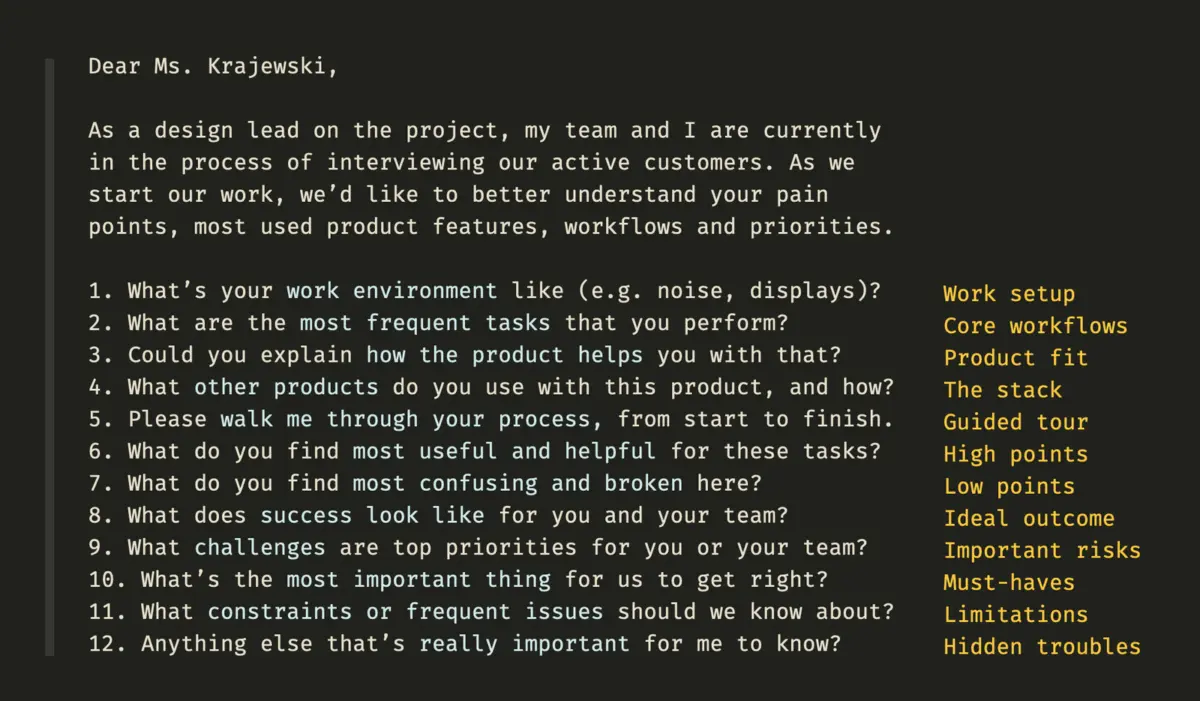
- Analyze User Behavior: Observe how heavy users actually interact with the software. Track frequency of use, task complexity, and the specific workarounds employees have invented to bypass system limitations.
- Visualize the Network: Set up collaborative workshops and documentation boards involving stakeholders, engineers, and frontline users. Shedding light on the "black box" builds collective trust and ensures no critical workflows are accidentally overlooked during redesign.
3. Choose Your UX Migration Strategy
Once the dependencies are mapped, the team must select a pragmatic migration strategy rather than attempting an all-at-once overhaul:
- The Strangler Fig Pattern: Gradually replace specific pieces of the legacy functionality with modern, well-designed modules over time, allowing the old and new systems to peacefully co-exist until the legacy core naturally shrinks out of existence.
- Incremental Enhancement: Focus purely on high-impact, high-friction bottlenecks within the existing interface, smoothing out error handling, form validation, and data processing without rewriting the underlying backend logic immediately.
- The Pilot Project: Isolate a single, self-contained department or user group to test a redesigned module. Proving success on a micro-scale builds the political capital required for wider organizational rollout.
Official Perspectives and Expert Guidance
Industry leaders and design veterans emphasize that migrating a legacy system is ultimately a human challenge rather than a purely technical one.
According to product strategy experts, successful legacy transformations hinge on shared ownership. Because legacy systems sit at the very center of corporate operations, expect intense scrutiny, skepticism, and anxiety from executive stakeholders and end-users alike.

"When you migrate a legacy system, you are never just migrating software components," notes design leadership literature. "You are migrating human habits, entrenched workflows, unwritten business rules, and decades of operational muscle memory. If you don’t bring the users along for the journey, the best UI design in the world will face active rejection."
Experts advise establishing rigorous, continuous feedback loops from day one. By engaging stakeholders early, incorporating them into user-testing sessions, and transparently reporting incremental progress, design teams transform fearful skeptics into vocal champions of the new product experience.
Future Outlook: The Enduring Value of Legacy Impact
Revamping an enterprise legacy system is unquestionably one of the most grueling assignments a UX professional can undertake. The path is littered with contradictory stakeholder demands, complex edge cases, and technical landmines.

Yet, for designers willing to roll up their sleeves, legacy modernization offers an unparalleled professional reward. There are very few projects in modern tech that can deliver such massive, enterprise-wide business impact.
By successfully navigating the legacy labyrinth—bridging the gap between outdated infrastructure and modern human needs—design teams do more than just update a user interface. They safeguard the operational future of the organization, earning enduring respect, recognition, and authority that will resonate across the enterprise for years to come.
