

Executive Overview
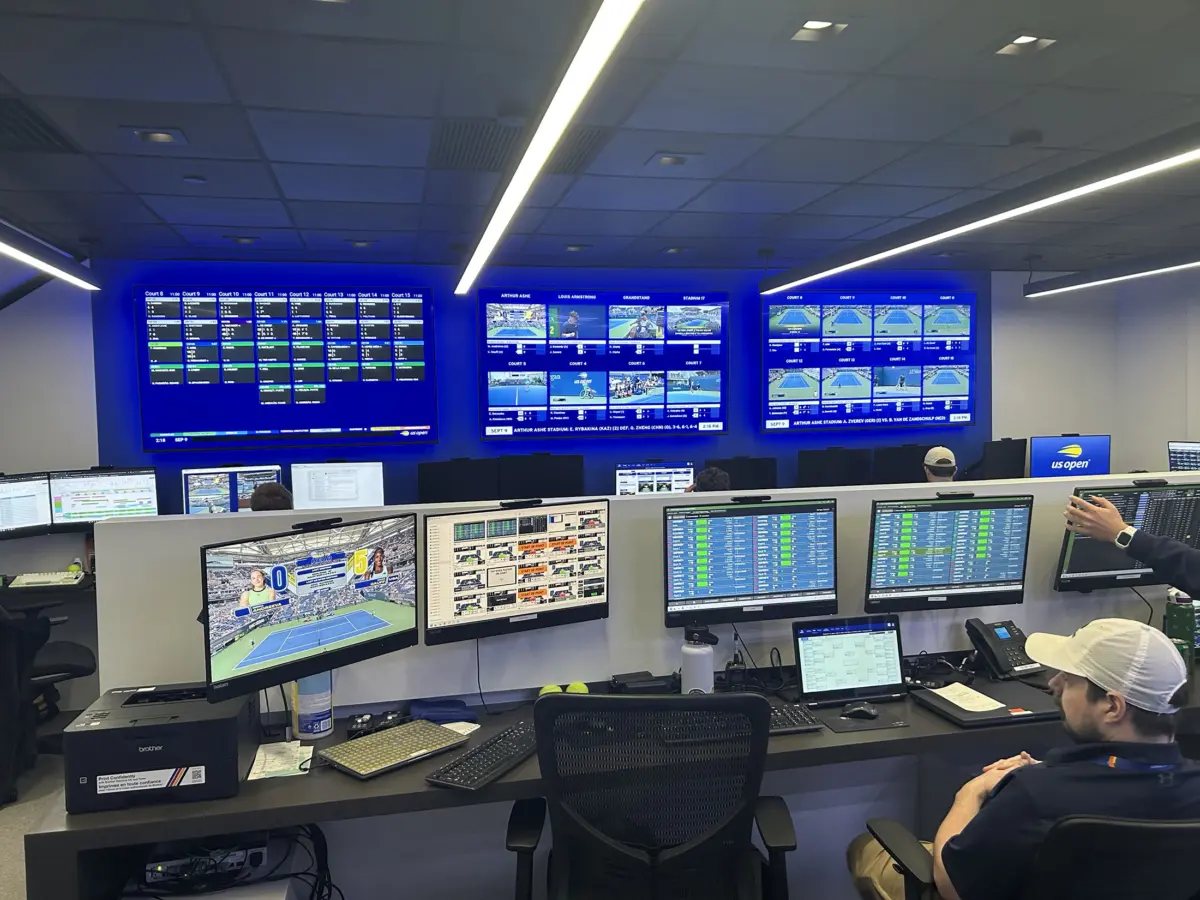
For most corporate sponsors, major sporting events like the U.S. Open are little more than a backdrop for client hospitality, VIP networking, and flashy perimeter signage. But for century-old technology titan IBM, its presence at Flushing Meadows is a high-stakes, real-world laboratory. Behind the sleek interfaces of the official U.S. Open app and the seamless digital broadcasts lies a vast, complex machinery of artificial intelligence and cloud architecture.
IBM is not merely a sponsor; it is the invisible digital architect shaping the modern tennis experience for more than 14 million fans worldwide. By processing billions of data points in real-time, safeguarding digital infrastructure against half a billion security threats, and scaling a lean human workforce by 300% through generative tools, IBM is proving that sports serve as the ultimate proving ground for enterprise AI.
As global demand for live sports outpaces physical stadium capacities, the intersection of big data, cloud infrastructure, and artificial intelligence is no longer a futuristic luxury—it is the baseline requirement for modern fan engagement.
Detailed Chronology: The Evolution of the Digital U.S. Open
To understand how the U.S. Open became a technological powerhouse, one must look at the rapid evolution of its digital infrastructure over the past decade, culminating in the sophisticated AI-driven ecosystem seen today.
Phase 1: The Transition from Static Web to Cloud Infrastructure (2010–2015)
In the early 2010s, the United States Tennis Association (USTA) faced a familiar bottleneck: managing monumental traffic spikes during a compressed, two-week tournament window. Traditional on-premise servers buckled under the weight of millions of simultaneous users checking scores, reading match reports, and viewing photo galleries.
IBM stepped in to migrate the U.S. Open’s digital assets to the cloud, stabilizing the infrastructure and ensuring uninterrupted uptime. This laid the groundwork for scalable data processing, transforming the tournament’s web presence from a static bulletin board into an interactive hub.
Phase 2: The Data Explosion and Real-Time Analytics (2016–2020)
As mobile app usage exploded, simple scoreboards were no longer enough. Fans demanded deep statistical insights, video highlights, and predictive analytics on demand. IBM introduced advanced tracking metrics, transforming raw video feeds and court sensors into structured data.
During this era, machine learning models began assisting human editors in curating highlights and generating automated match notes. This era proved that AI could assist human media teams without sacrificing editorial voice or accuracy.
Phase 3: The Generative AI Era and Immersive Engagement (2021–Present)
The modern era of U.S. Open technology is defined by generative AI, conversational bots, and hyper-personalized user experiences. With the introduction of tools like the "Match Chat" conversational bot and complex biomechanical metrics like "Serve Quality," IBM and the USTA shifted from reactive data reporting to proactive fan engagement.
Today, digital platforms act as the primary touchpoint for tens of millions of global fans who experience the tournament entirely through their screens.
Supporting Context & Metrics: The Servers Behind Each Serve
From a consumer’s perspective, interacting with the U.S. Open digital ecosystem feels effortless: you open the app, check a live score, and perhaps query an AI chatbot about historical tournament records. Beneath that simple interface, however, lies an engineering marathon.
The Scale of the Operation
The U.S. Open is not merely a sporting event; it is a massive, temporary business operation characterized by:
- A compressed three-week deadline for setup, execution, and teardown.
- Millions of active digital customers demanding zero downtime.
- A permanent USTA staff of a few hundred employees who must scale operations exponentially during the tournament window.
To bridge this operational gap, the USTA leverages IBM’s hybrid cloud and AI infrastructure. For instance, the organization’s lean editorial team utilizes bespoke AI tools to draft real-time match summaries. These drafts are subsequently reviewed and refined by human editors, effectively boosting the team’s content production capacity by 300%.

Advanced Metrics: "Serve Quality" and Beyond
Data processing at the U.S. Open has reached microscopic precision. A prime example is the newly introduced Serve Quality metric. This feature analyzes 21 distinct data points across a player’s body position and racquet movement 50 times per second.
Across a single match, this generates roughly 4.6 million data points, culminating in more than 1.2 billion data points across the entire tournament. Processing this mountain of data in real-time requires a delicate balance of automated AI speed and human quality assurance.
Fortress-Level Cybersecurity
An enterprise operation of this magnitude naturally attracts malicious attention. According to IBM representatives, the tech titan’s security infrastructure successfully deters and neutralizes nearly 500 million suspicious requests targeting the USTA’s digital platforms and physical networks during the tournament lifecycle.
Autonomous AI security agents help identify, categorize, and prioritize potential threats in milliseconds, allowing human security analysts to respond rapidly and safeguard critical assets.
Official Statements and Industry Insights
The fusion of sports and artificial intelligence is generating significant market research, validating both corporate investment and fan receptivity.
What the Fans Say: The IBM 2026 Sports Survey
While general public sentiment toward AI can sometimes be marked by skepticism, sports fans have proven to be notably progressive adopters. According to the IBM 2026 Sports Survey:
- 80% of sports fans see tangible value in AI-powered sports experiences, specifically highlighting real-time statistics, hyper-personalized content, and automated language translation.
- Among tennis fans specifically, 64% express trust in AI-generated sports content.
- Digital consumption habits are shifting permanently: while 73% of tennis fans regularly use sports apps during their daily routines, that figure skyrockets to 91% during live events.
Bridging the Physical-Digital Divide
Industry experts note that the explosion in global sports demand—evidenced by record-breaking engagement across the World Cup, NBA Finals, and Grand Slam tennis—cannot be accommodated by physical stadium seats alone.
By offering features like the new Live Updates homepage, where fans can pin their favorite players and curate custom data streams, IBM and the USTA are successfully democratizing access to elite sports. These digital tools ensure that fans sitting thousands of miles away from New York City feel an immediate, immersive connection to the court.
Future Outlook: Beyond Flushing Meadows
IBM’s footprint in sports extends far beyond the perimeter of the U.S. Open. The company serves as the digital engine behind several of the world’s most prestigious athletic properties, including Wimbledon, The Masters, and the UFC. However, the company’s long-term strategy is increasingly focused on nurturing grassroots innovation and identifying the next wave of industry disruptors.
Fostering Innovation: The USTA Connect and Startup Challenges
To cultivate fresh talent, the USTA launched the inaugural USTA Connect Innovation Challenge, inviting tech startups, engineers, and developers to build high-impact digital solutions for tennis. Finalists gain access to exclusive USTA data sets to build their prototypes, pitching their concepts to a panel of venture capitalists, USTA executives, and IBM technologists. The grand-prize winner receives funding and broad exposure across the USTA ecosystem.
Complementing this, IBM recently introduced the IBM Sports Tech Startup Challenge. This initiative provides early-stage founders with platforms to showcase their technologies at premier international events—such as Web Summit iterations in Rio, Vancouver, and Lisbon, alongside major tech gatherings like a16z Tech Week in New York and San Francisco.
The Ultimate Playground for Enterprise AI
As artificial intelligence continues to mature, its integration into high-pressure, consumer-facing environments like professional sports will serve as the litmus test for broader commercial adoption.
By seamlessly blending high-speed data processing, robust cybersecurity, and personalized fan engagement, IBM is demonstrating that sports are no longer just games played on courts or fields. They are high-performance enterprises where the future of technology is being tested, refined, and deployed in real-time. For modern entrepreneurs and enterprise leaders alike, the message is clear: the playbook for the future is being written on the athletic field.
