

Executive Overview
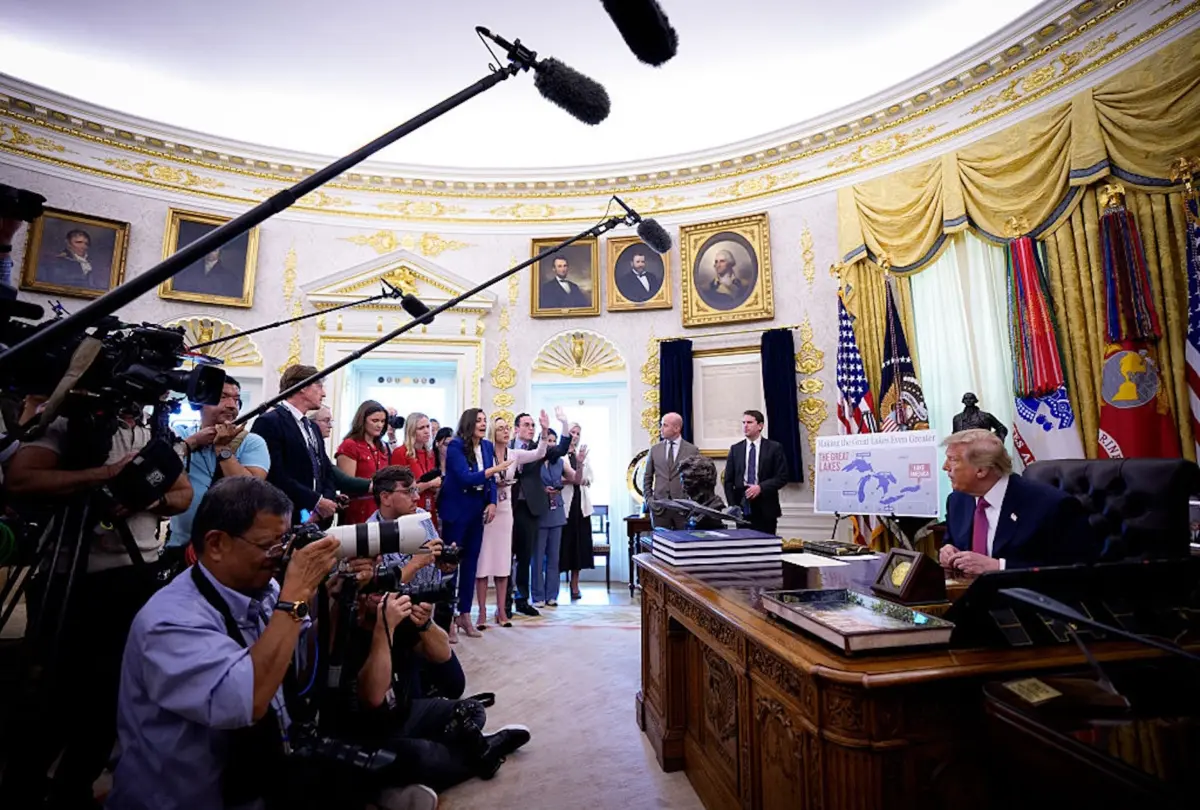
In a dramatic escalation of tensions between the executive branch and the American media, President Donald Trump barred CNN, POLITICO, and MS NOW from the White House grounds. This unprecedented sweep—executed without allegations of security breaches or formal citations of fabricated reporting—marks a chilling milestone in the ongoing erosion of constitutional norms governing government transparency.
Occurring against the backdrop of crashing administration poll numbers, mounting economic anxiety, and the looming shadow of the midterms, the press bans underscore a fundamental vulnerability within the modern fourth estate: a deep-seated fracture in solidarity. While organizations like the Associated Press and individual legal teams have previously pushed back against executive overreach, the broader Washington press corps has largely defaulted to compliance.
History shows that a united front can force an administration to reverse course. Yet, the current media ecosystem—plagued by commercial rivalries, the pervasive pull of access journalism, and an infrastructure built around spectacle—has allowed the administration to successfully divide and conquer. As federal courts prepare to review the constitutionality of the bans, the practical reality remains grim: the targeted newsrooms face exclusion during one of the most critical political cycles in a generation, exposing the limits of judicial remedies when real-time, collective resistance fails.
Detailed Chronology: From Propaganda Blitz to White House Purge
The events leading up to the historic White House ban followed a tense week of cascading political failures for the administration.
Early in the week, right-wing media networks launched a coordinated, synchronized effort to recast the national economy in a favorable light. On Fox News, high-profile personalities attempted to force-feed viewers glowing statistics about an economic climate that the vast majority of Americans experienced as deeply unstable. Will Cain utilized visual aids to argue the vitality of the administration’s economic platform, while other hosts expressed sudden interest in macro-level poverty metrics. Despite the scale of this televised blitz, the messaging flopped entirely with the public.
Rather than accepting the political headwinds or adjusting policy, the administration lashed out. By week’s end, the president implemented an immediate ban targeting CNN, POLITICO, and MS NOW.
The rollout caught even the internal West Wing apparatus off guard. POLITICO reported that the press office was entirely blindsided by the directive, which was executed while White House Chief of Staff Susie Wiles was away from Washington. By Saturday morning, security personnel turned away credentialed reporters from all three outlets at the White House gates.
The retaliation continued late Sunday night when the administration barred CNN from serving in its scheduled rotation for the White House press pool on Monday. Unlike previous disputes that centered on specific conduct or security protocols, this purge relied on a sweeping, subjective rationale: the president simply asserted that these organizations had produced too many unfavorable stories over an extended period.
Supporting Context & Metrics: A History of Retaliation and Reluctant Resistance
The events of September 2026 are not an isolated anomaly, but rather the culmination of a decade-long degradation of press freedoms and institutional norms.
The erosion of collective media resistance can be traced back to 2015, when major broadcast networks prioritized spectacle over rigorous journalism, offering uninterrupted airtime to political rallies in exchange for ratings. This dynamic trained the administration to view press access not as a constitutional right, but as a transactional privilege subject to revocation based on ideological compliance.
This pattern of executive pushback has scaled systematically over successive terms:
- The Jim Acosta Precedent (2018): The administration revoked the press credentials of CNN’s chief White House correspondent following a heated exchange. CNN responded with a federal lawsuit backed by amicus briefs from industry peers, ultimately forcing the administration to restore the press pass.
- The Associated Press Clash (2025): Following the wire service’s refusal to adopt administration-dictated geographic terminology, the White House barred the AP. While a Trump-appointed federal judge ordered the broader White House ban lifted, appeals courts allowed restrictions on specific travel assets like Air Force One to persist while litigation proceeded.
- The Dominion Settlement ($787.5 Million): Illustrating the financial and structural vulnerabilities of the modern news ecosystem, Fox News was forced to settle a massive defamation lawsuit after internal documents revealed the intentional broadcast of knowingly false election claims.
This backdrop highlights a stark historical contrast. In 2009, when the Obama administration briefly attempted to exclude Fox News from an interview with Treasury official Kenneth Feinberg, the reaction from the broader press corps was absolute. Bureau chiefs from ABC, CBS, NBC, and CNN delivered a unified ultimatum: either Fox News was included in the room, or all networks would boycott. Facing immediate, industry-wide solidarity, the administration backed down within hours.
By contrast, the modern press landscape is characterized by institutional fragmentation. When the CNN, POLITICO, and MS NOW bans took effect, Fox News largely minimized the development, while the rest of the White House press corps defaulted to routine statements of concern rather than material, collective action.
Official Statements and Institutional Reactions
The administration’s defenders quickly mobilized to construct a narrative defending the expulsions, utilizing a familiar bait-and-switch strategy to reframe constitutional restrictions as administrative housekeeping.
Senior administration officials and congressional allies engaged in a coordinated public relations defense:
- Congressional Leadership: House Majority Leader Steve Scalise (R-La.) parroted debunked claims that the previous administration had revoked the credentials of hundreds of reporters—a distortion quickly fact-checked by veteran journalists who noted that only a single individual had been denied credentials due to non-renewal.
- Cabinet and Diplomatic Officials: United Nations Ambassador Mike Waltz publicly endorsed the ban against CNN during a contentious on-air exchange with anchor Dana Bash, asserting that the president was justified in his actions. Other administration figures, including Arkansas Governor Sarah Huckabee Sanders and CMS Administrator Dr. Mehmet Oz, maintained that the current executive office remains historically accessible to the press.
- Internal Media Divisions: Responses from within the media apparatus highlighted profound internal fractures. While White House Correspondents’ Association President Jacqui Heinrich (also serving as Fox News’ White House correspondent) condemned the ban as a clear First Amendment violation, other network contributors publicly expressed indifference, with one noting on air that he would "not shed a tear" for the excluded journalists.
This internal ideological friction prevents the fourth estate from presenting a unified front, allowing executive power to bypass constitutional checks through the exploitation of professional rivalries.
Future Outlook: The Limits of Judicial Relief
While legal experts and media advocates widely agree that the blanket exclusion of credentialed news organizations violates the First Amendment, the timeline of justice presents a severe practical crisis.
Federal lawsuits take months—if not years—to navigate the judicial system. A favorable ruling delivered after the conclusion of a critical midterm election cycle offers little remedy for newsrooms locked out of the daily briefings, off-the-record briefings, and institutional access points that define modern political reporting.
Executive overreach cannot be effectively checked by the courts alone; it requires immediate, real-time pushback from the journalists who occupy the briefing room. By betting that empty chairs will be quietly filled by commercial competitors eager for an incremental advantage, the administration has exposed a fatal vulnerability in the contemporary press corps. Unless institutional solidarity supersedes corporate rivalry, the gatekeeping of American democracy will remain dangerously vulnerable to political whim.