

Executive Overview
As global momentum steadily builds in solidarity with Palestine, a new cinematic milestone is poised to pierce the wall of state-sanctioned denial surrounding the ongoing conflict in the Gaza Strip. The documentary film NAZA, co-directed by filmmakers Rachel Szor and Yuval Abraham—who previously garnered international acclaim for their Oscar-winning 2024 feature No Other Land—arrives at a critical juncture in geopolitical and cultural discourse. Premiering at the New York Film Festival, the 77-minute documentary presents harrowing, meticulously detailed testimony from 24 former and current members of Israeli military intelligence.
Named after the Israeli military acronym used to quantify acceptable civilian casualties in a single targeted strike, NAZA exposes the chilling operational reality of automated, algorithm-driven warfare. The film details how advanced artificial intelligence and invasive cellular surveillance systems are leveraged to calculate, expedite, and normalize the mass death of Palestinian civilians.
The documentary’s release coincides with a broader cultural reckoning. Public figures, artists, and musicians globally are increasingly leveraging their platforms to protest the human toll of the conflict, drawing fierce political pushback. Notably, Israeli leadership has reportedly threatened Szor and Abraham with the revocation of their citizenship—and worse—should they return to the country. This aggressive state posture underscores the perceived accuracy and damning nature of the film’s revelations. With an accelerated theatrical rollout planned across major U.S. markets, NAZA challenges audiences to confront a terrifying reality: the systematic, mechanized destruction of Gaza is no longer hidden behind the fog of war, but executed via digital blueprints.
Detailed Chronology: The Making and Retaliation Behind NAZA
The trajectory of NAZA from conception to its high-stakes festival premiere is mapped against a backdrop of escalating censorship, international tension, and artistic resistance.
Production in the Shadows
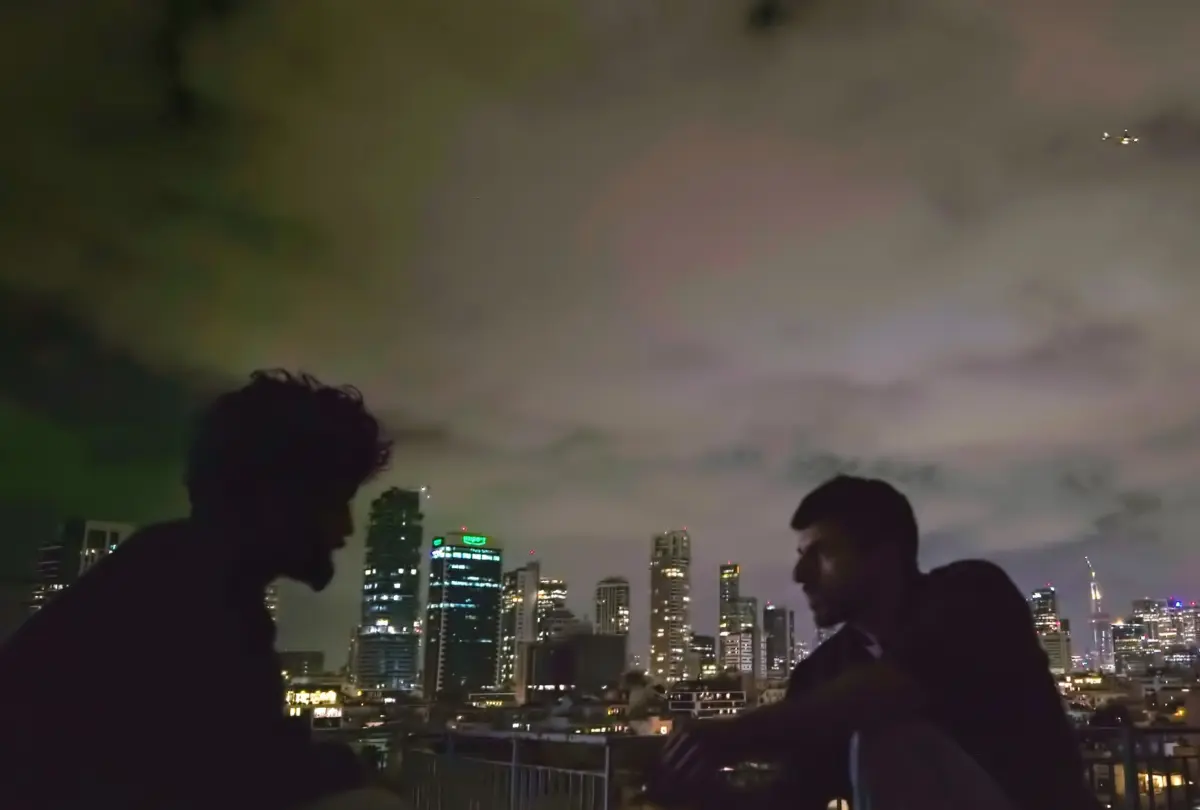
Recognizing the grave risks of state retaliation against dissenting voices in Israel, co-directors Rachel Szor and Yuval Abraham undertook the project under extreme security protocols. Over months of clandestine operations, Abraham conducted deep interviews with 24 members of Israeli military intelligence. To protect the identities of the whistleblowers, conversations were filmed under the cover of night on dimly lit rooftops across Tel Aviv, utilizing digital voice alteration and strict anonymity agreements. These insiders laid bare the internal machinations of military command structures that ordinary citizens rarely, if ever, get to scrutinize.
The Festival Circuit and State Threats
As NAZA secured its screening slots for the prestigious New York Film Festival, word of its contents leaked into broader diplomatic and political circles. The response from Israeli officialdom was swift and severe. Prime Minister Benjamin Netanyahu’s administration and associated legal bodies escalated threats against Szor and Abraham, floating proposals to strip the co-directors of their citizenship if they repatriated. Media watchdog groups, including the Committee to Protect Journalists (CPJ), immediately flagged these measures as an alarming escalation of authoritarian suppression targeting independent filmmakers and chroniclers of human rights abuses.
The Cultural Ripple Effect
The film’s emergence intersects with a volatile cultural landscape where the entertainment industry has increasingly clashed over speech regarding Palestine. High-profile incidents involving artists like Macklemore, Robert Kraft, and Ed Sheeran—whose tour dates were plunged into limbo after opening acts dropped out following public controversies—have catalyzed a broader movement. Public figures and artists are finding financial and social incentives to break their silence. This cultural convergence has transformed NAZA from a standard independent documentary into a cultural touchstone, prompting immediate distribution adjustments to bring the film to North American audiences as fast as possible.
Supporting Context & Metrics: The Algorithm of Death
To fully grasp the magnitude of NAZA, one must examine the cold mechanics of the military processes it exposes. The documentary delves deeply into how advanced technology has replaced human discretion with algorithmic triage in the theater of war.

Defining "NAZA"
The film’s title originates from a military acronym utilized to estimate and pre-approve civilian casualties prior to an airstrike. Officers interviewed in the documentary describe casually tossing around figures—such as 10, 15, 20, or 25 "NAZA"—with the indifference of someone reciting elementary school multiplication tables. These quotas, researchers and insiders reveal, expanded exponentially following the post-October 7 military escalation, rendering tens of thousands of Palestinian non-combatants mathematically disposable.
AI Warfare and Surveillance Infrastructure
According to military personnel speaking on camera, the generation of these casualty metrics relies on a terrifying convergence of big data and artificial intelligence:
- Building Codes and Structural Data: Comprehensive architectural registries of Gaza provide algorithms with granular data regarding the exact occupancy of residential blocks and apartment towers.
- Cellular Signal Triangulation: Subcontracted AI programs continuously parse the mobile phone signals of known Hamas operatives, cross-referencing them against hundreds of thousands of civilian communication patterns across the Strip.
- Proximity Guilt: If an innocent civilian lives near an alleged operative, or happens to cross paths with their digital footprint frequently enough, the AI system flags them as potential collateral or associated combatants. The statistical margin of error is ignored in favor of operational velocity.
The "Daddy’s Home" Protocol
One of the film’s most distressing segments, titled "Daddy’s Home," details how military units hack into the mobile devices of young girls in Gaza. Officers describe listening in real-time, waiting for children to joyfully exclaim that their father—deemed by intelligence to have ties to Hamas—has returned home from a long day. That precise moment of innocent reunion is selected for the deployment of an airstrike. Operators report listening afterward to the agonizing screams of surviving family members, with one official comparing the operational experience to playing a video game.
Official Statements and Industry Reactions
The explosive revelations contained within NAZA have drawn sharp lines between human rights advocates, cinematic institutions, and state authorities.
- The Filmmakers’ Perspective: Rachel Szor and Yuval Abraham have framed their work not merely as an act of journalism, but as an urgent moral intervention. By contrasting the serene, insulated daily lives of Tel Aviv residents—exercising on treadmills, laughing in cafes, and gathering with families—against the distant, thunderous devastation of Gaza, the directors challenge audiences to unlearn decades of official propaganda. When Abraham asks an intelligence officer during an interview whether these systematic policies constitute a genocide, the chilling reply is an unequivocal, "Yes, absolutely."
- International Press and Watchdog Condemnation: Press freedom organizations have vigorously condemned the Israeli government’s proposed citizenship revocation laws targeting Szor and Abraham. Media analysts note that while much of the underlying data—such as reports regarding AI targeting systems (Lavender and The Gospel)—was previously published in investigative outlets like The Guardian, Local Call, and +972 Magazine, the global community largely greeted those revelations with deafening apathy. NAZA bridges the gap between text and visceral human reality.
- Theatrical Rollout Response: In response to the high demand and political sensitivity surrounding the project, distributors have fast-tracked a targeted theatrical release. NAZA is scheduled to screen at the New York Film Festival, followed by a limited theatrical run in New York on September 30, a Los Angeles debut on October 9, and a subsequent nationwide rollout.
Future Outlook: Breaking the Cycle of Desensitization
As NAZA prepares for its North American theatrical release, the central question facing the international community is whether the film can successfully pierce the collective desensitization that has settled over the globe after nearly three years of continuous bloodshed in Gaza.
The documentary’s ultimate challenge to its viewers extends far beyond the runtime of 77 minutes. It demands that audiences retain the emotional weight of the testimonies long after leaving the theater. In a political climate where mainstream news cycles rapidly pivot away from protracted humanitarian crises, artists and activists are urging the public to resist institutional amnesia.
To turn away from the systemic realities documented in NAZA is no longer a matter of convenience; as the film’s advocates argue, it is an act of active complicity. With public resistance growing, cultural institutions taking bold stands, and the cinematic medium serving as an undeniable mirror to state power, NAZA stands as a historical document that future generations—and accountability courts—will find impossible to ignore.