

Executive Overview
For over a century, the global hygiene market has bowed to a quiet, monolithic giant: dry toilet paper. Built on a foundation of deforestation, water-intensive manufacturing, and fundamentally inadequate cleaning mechanics, "Big Toilet Paper" has maintained an unchallenged monopoly over the daily rituals of billions. Yet, a quiet revolution has been brewing in the aisles of personal care, spearheaded by a brand that has never been shy about its ultimate ambition: total market dethronement.
Goodwipes, founded by collegiate "baby wipes evangelists" Sam Nebel and Charlie Siciak during their days at Florida State University, has transitioned from an underground campus curiosity into a full-scale cultural disruptor. Armed with a potent mix of irreverent humor, high-impact shock value, and sophisticated strategic partnerships, the brand is attacking the foundational taboos of human waste management.
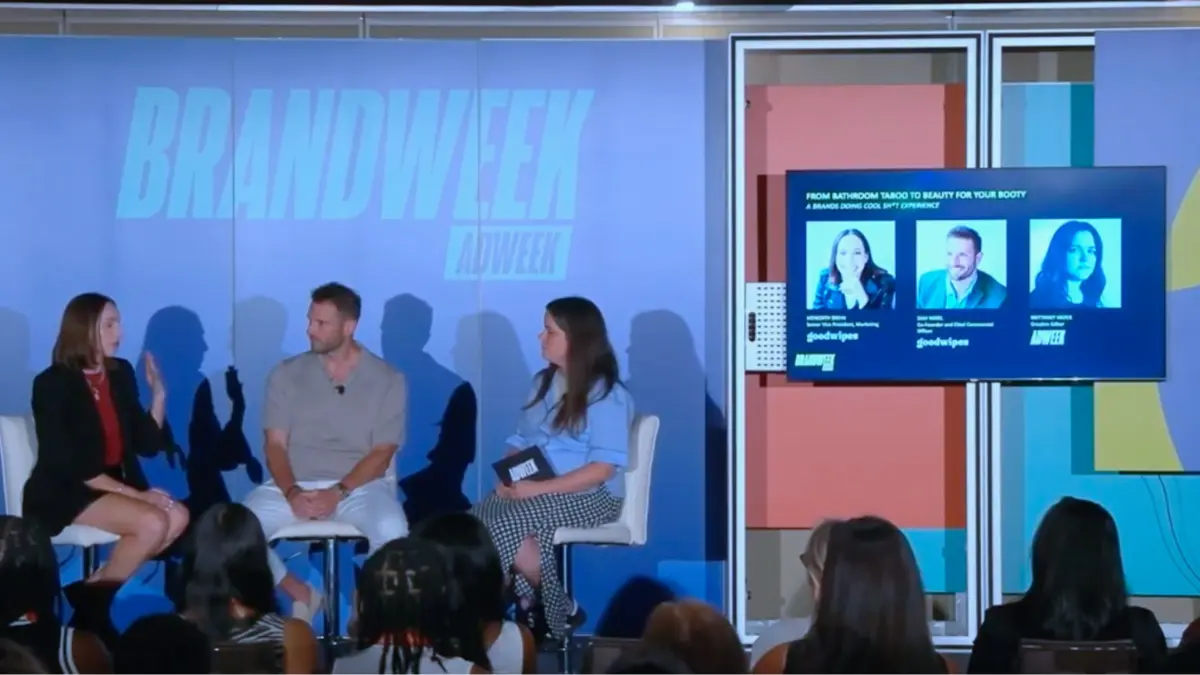
At a recent Brandweek Brand Doing Cool Sh*t Experience session, Nebel and Goodwipes SVP of Marketing Meredith Diehn peeled back the curtain on the brand’s playbook. By leveraging jaw-dropping collaborations—such as a sCREAM Soda-scented wipe created with rebel beverage darling Liquid Death and a viral "Buttler Sweepstakes" offering a live-in personal wipe attendant—Goodwipes is proving that cultural relevance is the ultimate equalizer against legacy conglomerates.
This deep-dive investigative report examines the mechanics of Goodwipes’ ascension. We analyze how the company navigates the treacherous waters of consumer squeamishness, weaponizes unexpected brand crossovers under the banner of "Death to Dry," and balances crass bathroom humor with clinical hygiene science. Furthermore, we explore the broader socioeconomic shifts driving modern hygiene habits, the inner workings of an agile in-house creative engine, and what the future holds as Goodwipes prepares its next major offensive against the status quo.
Detailed Chronology: From Florida State Dorms to National Disruptor
The Campus Genesis (The Early Years)
Long before venture capitalists and marketing panels took notice, the seeds of Goodwipes were sown in the unassuming environment of a Florida State University dorm room. Founders Sam Nebel and Charlie Siciak recognized a glaring contradiction in modern personal hygiene: while humans used water and soap to clean virtually every other part of their bodies, they relied exclusively on dry, abrasive paper to cleanse their most sensitive areas.
Initially operating as self-described "baby wipes evangelists," Nebel and Siciak faced a wall of cultural resistance. In the early stages of their enterprise, discussing the mechanics of post-defecation cleanliness was considered taboo in polite society. Consumers viewed personal wipes as niche products strictly reserved for infants, skincare removal, or emergency travel situations—certainly not as a viable, daily replacement for traditional toilet paper.
Rather than accepting this marginalization, the founders leaned into grassroots education. They distributed samples, engaged directly with skeptical consumers, and slowly built a core demographic of converts who experienced the undeniable superiority of a wet clean. This foundational period forged the company’s core ethos: challenging deeply ingrained habits requires patience, resilience, and a total willingness to make people uncomfortable.
Scaling Up and Hitting the Mainstream
As consumer habits slowly shifted toward holistic wellness and personal care in the late 2010s and early 2020s, Goodwipes caught the tailwind of a broader cultural awakening. The brand refined its product formulations—focusing on flushable, biodegradable, and skin-safe ingredients—while scaling its retail footprint across major national brick-and-mortar and e-commerce platforms.
However, scaling a challenger brand against legacy giants with multi-billion-dollar advertising budgets requires more than just a superior product; it requires asymmetric warfare. Goodwipes realized that standard, clinical marketing would easily get lost in the noise of traditional CPG (Consumer Packaged Goods) advertising. To cut through the clutter, the company began assembling an agile marketing apparatus, combining a lean team of three in-house creatives with specialized external agencies for massive, tentpole campaigns.
The Era of Radical Partnerships
By 2023 and 2024, Goodwipes entered its most aggressive phase of cultural infiltration. Moving away from safe, sterile beauty marketing, the brand leaned hard into surrealism, high-contrast shock value, and cross-industry collaborations that initially baffled industry observers.
This chronological pivot—from quiet campus evangelism to loud, unapologetic market disruption—has redefined how personal care brands engage with taboo subjects, setting the stage for some of the most talked-about marketing stunts in recent memory.
Supporting Context & Metrics: The Mechanics of Disruption
The "Death to Dry" Philosophy and Strategic Objectives
To understand Goodwipes’ marketing output, one must first understand its core mission statement: "Death to Dry." This uncompromising manifesto targets the fundamental inadequacy of dry toilet paper, which experts note merely smears residue rather than cleaning it away.
According to Meredith Diehn, every campaign executed by the brand is evaluated against two primary strategic pillars: fame and disruption. In a crowded retail landscape where consumers operate on autopilot, legacy brands rely on high-frequency, low-impact advertising designed not to offend. Goodwipes deliberately flips this script.
"Sometimes it doesn’t necessarily make sense at first glance, and that’s the whole point," Diehn explained during her Brandweek presentation. "We want that little bit of shock value, and then when you peel back the layers you say, ‘oh wait, this actually does make a lot of sense.’"
Case Study 1: The Liquid Death Partnership
One of the most emblematic examples of this strategy was Goodwipes’ unexpected collaboration with Liquid Death, the canned water brand known for its heavy-metal aesthetic and anti-plastic crusade. The partnership yielded a limited-edition run of sCREAM Soda-scented wipes.
At first glance, a water brand known for recycling-focused aluminum cans partnering with a flushable wipe company seems like an eccentric fever dream. Yet, upon closer inspection, the ideological through-line is ironclad. Both brands exist to challenge entrenched, environmentally taxing industries (plastic bottled water and dry wood-pulp toilet paper) while championing a radical ethos of hydration and cleanliness. The shock value generated massive earned media impressions, pushing Goodwipes into subcultures that would typically ignore personal care products.
Case Study 2: The Olipop Peaches & Cream Crossover
In another masterclass of lateral thinking, Goodwipes teamed up with prebiotic soda brand Olipop for an April Fool’s Day stunt that quickly transcended a simple joke. The collaboration introduced a limited-edition wipe scented after Olipop’s popular Peaches & Cream flavor, anchored by the brilliant tagline: "Treat your butt as good as your gut."
While the concept initially elicited giggles, the strategic rationale was remarkably sound. Olipop heavily emphasizes the role of dietary fiber in maintaining optimal gut health and regular digestion. Because fiber intake directly dictates bathroom frequency and quality, the association between prebiotic soda and posterior hygiene formed a natural, highly synergistic loop.
Riding the Wave of Existing Cultural Conversations
Rather than spending exorbitant resources attempting to invent entirely new cultural narratives from scratch, Goodwipes’ marketing team actively monitors and inserts itself into organic online communities. Diehn refers to these as "mini-moments."
Whether tapping into the viral internet consensus that "hot girls have IBS" or acknowledging the increasingly mainstream discourse surrounding distance runners experiencing sudden gastrointestinal distress during races, Goodwipes positions itself as an empathetic, authentic participant.
"We’ve found these little cohorts where we can speak authentically and have the conversations that are already being had, without trying to create a new one," Diehn noted. By normalizing these universally experienced biological realities, the brand converts internet memetic culture into brand loyalty.
Official Statements & Insights
The operational philosophy of Goodwipes is rooted in a delicate communicative tightrope walk. During her comprehensive Brandweek session, Meredith Diehn elaborated on the nuances of modern brand voice:
"It’s almost like the brand needs to rip [off] the Band-Aid and give the permission to have the conversation, and not just in private."
This quote encapsulates the primary psychological barrier Goodwipes must clear daily. Changing an everyday consumer habit—such as transitioning from toilet paper to wet wipes—is notoriously difficult because the underlying behavior is shrouded in personal shame and social conditioning. By injecting humor and unapologetic transparency into the discourse, Goodwipes effectively lowers the consumer’s emotional guard.
Furthermore, Diehn addressed the perpetual balancing act required in the brand’s messaging:
"Getting people to change an everyday behavior is a challenge in itself, and talking about what happens in the bathroom adds another layer of taboo. You have to balance crass bathroom humor with clinical explanations of butt health."
This synthesis of low-brow comedy and high-brow dermatological/proctological science ensures that while consumers are initially drawn in by a joke or a shocking stunt, they stay for the genuine functional benefits of the product—such as pH balancing, hypoallergenic materials, and superior sanitation.
Sam Nebel, co-founder, has frequently echoed these sentiments in past company missives, emphasizing that the battle against traditional paper is fundamentally an environmental and health imperative. As consumer awareness grows regarding the skin irritation and ecological inefficiency associated with dry paper manufacturing, Goodwipes aims to be positioned not merely as an alternative, but as the inevitable evolution of human hygiene.
Future Outlook: Breaking New Ground
As Goodwipes looks toward the horizon, the brand shows no signs of dialing back its disruptive cadence. Having successfully established its footprint among Gen Z and millennial consumers through viral digital stunts, the company is now setting its sights on broader, seasonal saturation points.
The Upcoming Holiday Campaign
The brand’s next major marketing initiative is slated for the upcoming holiday season. The strategic objective is both humorous and profoundly practical: reminding consumers to stock up on premium bathroom essentials before welcoming holiday houseguests. By targeting the universal anxiety of hosting family and friends with sub-par guest bathroom setups, Goodwipes aims to drive significant Q4 retail velocity, framing their products as an act of hospitality.
Long-Term Industry Implications
Looking further ahead, Goodwipes’ trajectory poses existential questions for legacy tissue conglomerates. As consumers increasingly demand products that align with modern ecological standards (such as verified flushability and biodegradable fibers) and holistic health practices, traditional dry paper manufacturers are facing an unprecedented identity crisis.
While Big Toilet Paper still commands the lion’s share of supermarket shelf space, challenger brands like Goodwipes are successfully shifting the cultural Overton window. By proving that bathroom hygiene can be discussed openly, creatively, and with a heavy dose of humor, Goodwipes has permanently altered consumer expectations.
The "Death to Dry" movement is no longer just a clever marketing slogan whispered in college dorms; it is a rapidly expanding consumer crusade. And if Meredith Diehn and the Goodwipes team have their way, the traditional roll of toilet paper may soon find itself where it belongs: relegated to the history books.