

Executive Overview
Artificial intelligence has officially crossed the chasm from experimental novelty to foundational enterprise infrastructure within the marketing and creative sectors. Yet, as the industry hurtles deeper into the digital age, a glaring operational contradiction has emerged: while adoption rates are soaring to historic highs, true, seamless workflow integration remains an elusive target for many organizations.
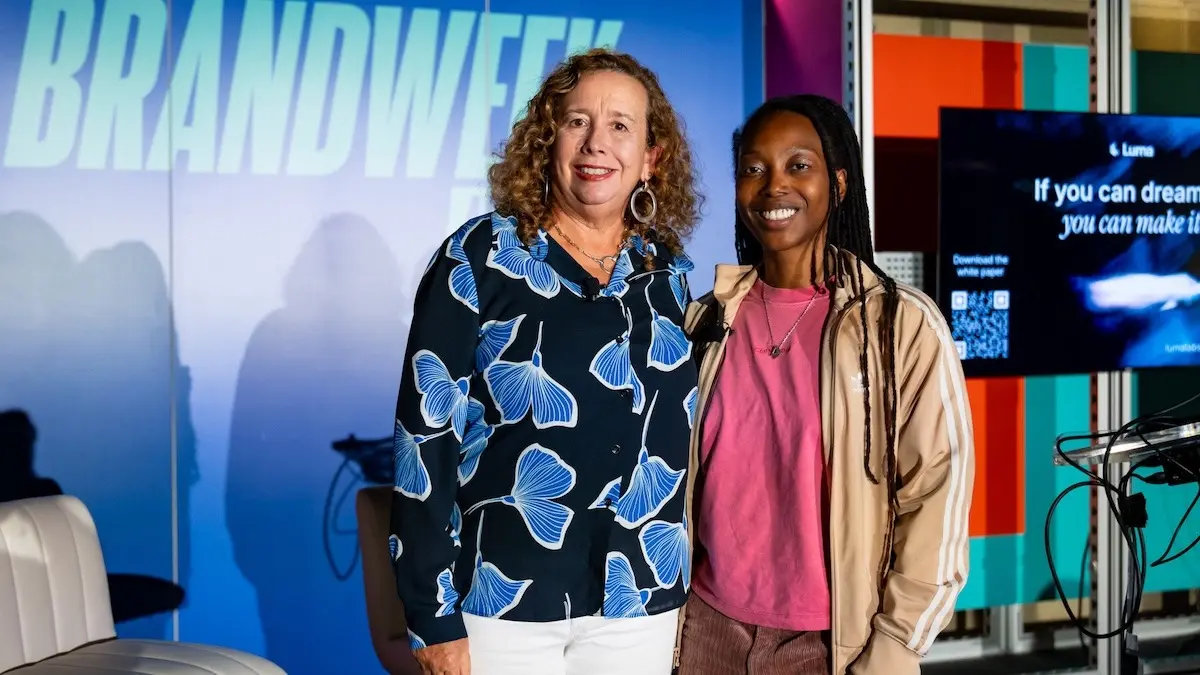
This paradox took center stage at Brandweek 2026, where industry leaders, researchers, and technologists gathered to dissect the shifting realities of modern advertising. In a packed, highly anticipated workshop co-hosted by Luma, marketing research consultant Michele Madansky (founder of Michele Madansky Consulting) and Alexia Adana, Forward Deployed Creative Lead at Luma, laid bare the current state of artificial intelligence in creative workflows.
Drawing from Luma’s landmark inaugural industry report, "State of Creative Professionals and AI: 2026," the session offered a sobering yet optimistic look at the ecosystem. The headline data points to massive market penetration: an overwhelming 81% of creative professionals are actively deploying AI to generate and launch content. However, beneath this high-level adoption metric lies a volatile landscape characterized by steep learning curves, intense platform experimentation, and a staggering rate of software churn. On average, organizations are cycling through more than half a dozen tools just to find a handful that stick.
Beyond diagnosing the industry’s growing pains, the workshop provided a functional glimpse into the future. Adana took the audience through a live, real-time demonstration of Luma’s advanced AI agents and creative platforms, utilizing case studies from iconic eyewear brand Oakley (under parent company Luxottica). By bridging the gap between raw generative models and intuitive human direction, the platform showcased how hybrid production models are fundamentally redefining timelines, scaling asset generation, and keeping human judgment firmly at the helm of the creative process.
Detailed Chronology: The Brandweek Workshop Unfolded
The Luma-co-hosted workshop at Brandweek 2026 was structured to take attendees on a comprehensive journey—starting from macro-level industry data and drilling down into micro-level operational execution.
Part 1: Setting the Baseline with Data
The session kicked off with Michele Madansky taking the stage to unpack the empirical realities of AI in the workplace. Rather than relying on anecdotal successes, Madansky presented the rigorous findings of Luma’s comprehensive survey of 760 creative professionals.
Madansky contextualized the rapid pace at which agencies and brands are scrambling to onboard artificial intelligence. She emphasized that while the technology has become mainstream, the day-to-day reality for creative teams is marked by perpetual testing, evaluation, and discarding of software.
Part 2: The Live Demonstration
Following the presentation of the report, Alexia Adana stepped up to transition the discussion from theoretical metrics to tangible application. Eschewing dry slide decks, Adana opted for a live, unscripted walkthrough of Luma’s ecosystem, using real-world creative assets from Oakley to anchor the demonstration.
Interacting seamlessly with a Luma AI agent via a clean conversational chat interface, Adana demystified the technical barriers that have traditionally plagued generative AI adoption. She showed how complex multi-step prompting can be abstracted away by pretrained agents capable of understanding brand context.
Part 3: From Brainstorming to Final Asset
Moving step-by-step through a simulated campaign workflow, Adana demonstrated how the platform ingests proprietary brand guidelines—dubbed "Brand DNA"—to ensure visual and tonal consistency. She then revealed the platform’s capacity to deploy "digital twins" of real-world models alongside verified product shots. Within minutes, the AI agent synthesized mood boards, drafted conceptual directions, and altered test assets in real-time. The session culminated in a Q&A and discussion highlighting that despite the blinding speed of AI execution, human authorship and editorial oversight remain the irreplaceable bedrock of world-class advertising.
Supporting Context & Metrics: Decoding the 2026 Luma Report
To truly understand the implications of the Brandweek workshop, one must examine the granular data driving Luma’s "State of Creative Professionals and AI: 2026" report. The survey of 760 industry professionals captures an ecosystem experiencing profound growing pains.
The 81% Adoption Milestone and the "Churn" Reality
The headline figure—that 81% of creative professionals are actively using AI to produce and release content—signals that the era of hesitation is over. Marketers are no longer debating whether to use AI; they are actively putting it into production.
However, Madansky’s "favorite finding" from the study complicates this narrative of unbridled success, exposing the high operational friction of the current market:
- Evaluated Tools: Creative organizations have evaluated an average of 6.1 different AI tools.
- Adopted Tools: Out of those evaluated, they have integrated an average of 4.3 tools into their regular workflows.
- Discarded Tools: Concurrently, organizations have outright stopped using 3 tools.
This high turnover rate highlights a phenomenon known in tech sectors as software churn. Teams are engaged in aggressive trial-and-error cycles. They test multiple point solutions—ranging from specialized copywriting assistants to heavy video generation suites—only to discover that many lack lasting utility, fail to integrate cleanly with legacy systems, or introduce too much friction into daily routines.
Agency Agility vs. Freelance Lag
The Luma report also uncovered stark demographic and structural divides in how AI is being absorbed across the broader marketing economy:
- Agencies Leading the Charge: Traditional and digital agencies are spearheading AI adoption. Fueled by client pressure to scale output, reduce costs, and accelerate campaign delivery, agencies have dedicated resources to trial, adopt, and master these platforms.
- Freelancers Lagging Behind: Conversely, independent contractors and freelancers are adopting AI at a slower pace. Often operating as isolated economic units, freelancers face steep subscription costs, fragmented toolsets, and a lack of institutional training capital, leaving them more vulnerable to the widening technological gap.
The Content Divide: Copy and Images Lead Video
When breaking down what types of content are actually being generated, the study revealed clear bottlenecks based on technological maturity:
- Text and Imagery Dominate: Written copy and static image generation sit comfortably at the forefront of AI adoption. These tools have achieved a level of reliability and speed that makes them easy plug-and-play additions for content creators.
- Video Lags Behind: Video production remains a formidable challenge. As Madansky explained during the panel, "Video is harder to produce." The immense computational requirements, temporal consistency issues, and narrative complexity inherent in moving images mean that true AI video integration is still maturing.
Official Statements and Expert Insights
The dialogue between Michele Madansky and Alexia Adana offered profound insights into the philosophy, mechanics, and future trajectory of marketing technology. Here is a closer look at the perspectives shared during the Brandweek workshop:
On the Reality of Software Churn
"On average, creative organizations evaluated 6.1 tools, adopted 4.3, and stopped using three. This is churn."
— Michele Madansky, Marketing Research Consultant, MMC
Madansky’s analysis of the data underscores a vital truth about the current tech cycle: innovation is messy. The high rate of tool abandonment is not necessarily a sign of failure, but rather a natural byproduct of an immature market searching for standardization. Marketers are testing boundaries, discarding what does not work, and retaining only the solutions that offer genuine operational leverage.
On Demystifying the Prompting Barrier
"Think of the agent as this very powerful, pretrained tool that speaks to the generative AI models on your behalf. So, you do not need to be a technical prompter anymore to create these high-fidelity assets. You just need to be somebody with a great idea and really solid direction to give that agent to go execute."
— Alexia Adana, Forward Deployed Creative Lead, Luma
Adana’s perspective addresses one of the most significant friction points in enterprise AI adoption: the barrier of specialized technical knowledge. By interposing an intelligent agent between the human creator and the raw, underlying generative models, tools like Luma democratize high-end production. Creatives no longer need to spend hours engineering complex prompts; instead, they can rely on their core competencies—strategic thinking, emotional intelligence, and artistic direction.
On the Primacy of Human Authorship
"This is all rooted in human authorship, [the assets are] rooted in real photography, and going through a hybrid workflow."
— Alexia Adana
Throughout the demonstration, Adana repeatedly pushed back against the dystopian narrative that AI will completely replace human creatives. By emphasizing that Luma’s platform begins with real-world photography and brand DNA—and relies entirely on human strategic direction—she positioned AI not as a replacement for human talent, but as a hyper-efficient force multiplier.
Future Outlook: Navigating the Hybrid Creative Era
As the marketing industry digests the findings of the 2026 Luma report and looks past the immediate noise of software churn, several clear trends are illuminating the path forward for brands, agencies, and creators alike.
1. The Consolidation of Creative Toolsets
The current phase of high software churn is unsustainable for long-term operational efficiency. Over the next 18 to 36 months, the market is expected to experience significant consolidation. Point solutions that fail to offer robust, interoperable ecosystems will likely be phased out in favor of comprehensive platforms—such as Luma’s—that unify brand DNA, digital asset management, multi-modal generation (text, image, and eventually advanced video), and AI agent orchestration under a single roof.
2. The Maturation of AI Agents in Workflows
The shift from manual prompting to agent-led orchestration represents a fundamental paradigm shift in enterprise software. As AI agents become more context-aware and deeply integrated into corporate data repositories, they will transition from reactive assistants to proactive collaborators. These agents will monitor campaign performance, suggest iterative creative tweaks based on real-time audience engagement data, and autonomously execute localized variations without requiring constant manual oversight.
3. Redefining the Role of the Creative Professional
Fears of mass displacement are giving way to a more pragmatic understanding of human-AI collaboration. As administrative friction, tedious asset resizing, and baseline mood-board generation are automated, creative professionals are being elevated into higher-order strategic and directorial roles. The most successful creatives of the late 2020s will not be those who can write the best code or prompt, but those who can marshal AI systems to execute visionary, culturally resonant brand narratives with unprecedented speed.
4. Overcoming the Video Bottleneck
As foundational generative video models continue to advance in temporal stability, resolution, and narrative control, the video production bottleneck identified in Luma’s report will begin to dissolve. When platforms successfully bridge the gap between static brand DNA and dynamic, high-fidelity moving images, the velocity of television, digital, and social video advertising will accelerate dramatically, mirroring the rapid adoption curves currently seen in text and static imagery.
Conclusion
The Brandweek 2026 workshop co-hosted by Luma served as both a mirror and a compass for the advertising industry. By confronting the messy reality of software churn and high adoption rates head-on, while simultaneously demonstrating the elegant efficiency of agent-driven hybrid workflows, leaders like Michele Madansky and Alexia Adana mapped out the contours of a new era. In this emerging paradigm, AI is no longer a futuristic experiment, but a dynamic, human-guided engine powering the future of global commerce and media.