

EXECUTIVE SUMMARY
In an era dominated by hyper-fragmented media channels, algorithmic unpredictability, and an endless parade of technological "silver bullets," modern marketing teams have developed a costly addiction: overcomplication. In the relentless pursuit of the next viral breakout, the next micro-trend, and the ultimate omnichannel attribution model, many brands have lost sight of the foundational fundamentals that drive actual, sustainable growth.
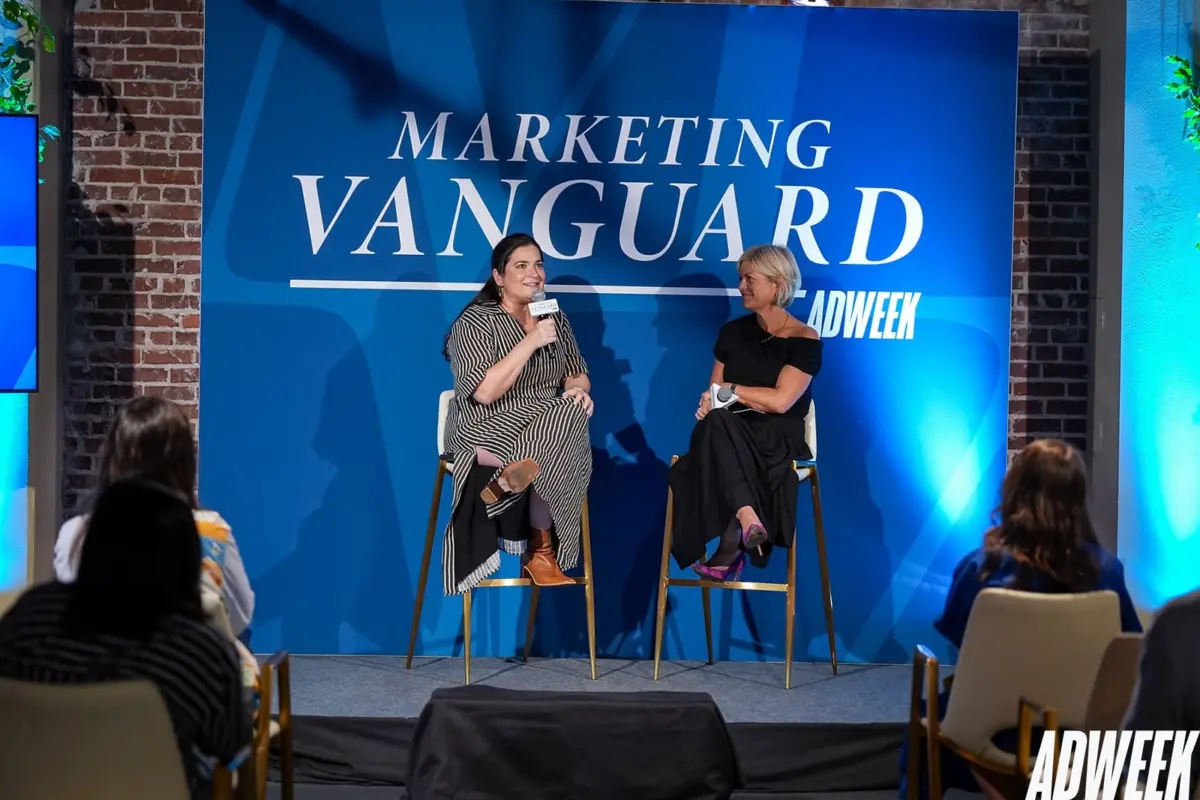
This tension took center stage at Brandweek’s prestigious Marketing Vanguard Stage, where Little Spoon Chief Marketing Officer Caryn Wasser sat down with Adweek Chief Brand and Community Officer Jenny Rooney. Their fireside chat served as a much-needed industry wake-up call, dissecting the psychological traps that cause marketing leaders to over-engineer their strategies. Wasser, drawing from her extensive experience scaling disruptive consumer brands, offered a compelling counter-narrative to the prevailing industry anxiety. Rather than chasing ephemeral digital novelties, she argued, modern Chief Marketing Officers must master the art of disciplined focus, anchoring their brands in unshakeable community roots, deep consumer empathy, and message clarity that transcends any single platform or tool.
This report investigates the core themes of Wasser and Rooney’s discussion, exploring the structural pressures forcing CMOs to overcomplicate, the tactical dangers of strategic bloat, and the actionable playbook grassroots brands must deploy to thrive amid perpetual industry disruption.
1. Executive Overview: The Anatomy of Modern Marketing Overcomplication
The modern marketing ecosystem is characterized by an unprecedented paradox: never before have brands had access to such vast quantities of data, precision targeting tools, and generative capabilities, yet never before has it been so difficult to forge a lasting connection with the consumer.
During their Brandweek session, Jenny Rooney framed this paradox through the lens of contemporary leadership anxiety. CMOs today are besieged by boardrooms demanding immediate ROI against a backdrop of macroeconomic uncertainty, rapidly shifting privacy regulations, and platform saturation. The natural reflex to these pressures is accumulation—adding more channels, deploying more complex customer journeys, and allocating budgets to experimental technologies before mastering the basics.
Caryn Wasser diagnosed this phenomenon not merely as an execution failure, but as a crisis of confidence. When growth slows, the knee-jerk corporate reaction is to assume the strategy is broken because it lacks complexity. "We are conditioned to believe that if a campaign isn’t labyrinthine, if it doesn’t utilize twenty different retargeting tiers and three emerging social platforms, it isn’t sophisticated enough to work," Wasser noted.
However, this complexity often acts as a smokescreen, obscuring the fundamental disconnect between what a brand is communicating and what its target audience actually needs. By overcomplicating strategies, marketing teams dilute their brand equity, burn through capital on inefficient testing loops, and alienate the very consumers they aim to serve. The executive mandate moving forward is clear: complexity is easy; ruthless simplicity requires discipline, courage, and a laser-like adherence to core value propositions.
2. Detailed Chronology: From Boardroom Panic to Tactical Clarity on the Vanguard Stage
Setting the Stage: The Disconnect Between Tools and Strategy
The conversation opened with a critical examination of how marketing departments evaluate new tools versus enduring strategies. Rooney opened the dialogue by asking how the proliferation of marketing technology has altered the day-to-day decision-making process for modern CMOs.
Wasser pointed out that the modern MarTech landscape—boasting over 10,000 distinct solutions—acts as a psychological trap. Marketers are seduced by the promise of automation and hyper-personalization, often putting the cart before the horse. They invest in the infrastructure of delivery before solidifying the integrity of the message.
"We fall in love with the machinery," Wasser explained. "We spend weeks debating whether to use Platform A or Platform B, optimizing our delivery mechanisms down to the millisecond, while spending barely any time asking whether our core value proposition actually solves a real human pain point."
The Search for the "Silver Bullet"
As the discussion deepened, Wasser and Rooney unpacked the industry-wide obsession with finding the next breakthrough. In a competitive market, brands are terrified of missing out on the next cultural wave, whether it is generative AI content generation, immersive metaverse activations, or viral TikTok formats.
This fear of missing out (FOMO) triggers strategic whiplash. Marketing teams abandon campaigns prematurely because they haven’t gone viral overnight, pivoting rapidly to unproven tactics in a desperate bid for short-term validation. Wasser cautioned against this cyclical panic, asserting that breakthrough growth is rarely the result of a sudden, miraculous tactical pivot. Instead, it is the cumulative effect of consistency, trust-building, and iterative refinement.
"The search for a silver bullet usually ends up shooting the brand in the foot," Wasser stated. "Breakthroughs don’t come from discovering a hidden marketing hack that nobody else knows about. They come from doing the unglamorous, foundational work better and more consistently than your competitors."
Deconstructing the Noise: What Grassroots Brands Get Right
Transitioning from critique to solution, the conversation turned toward the operational realities of grassroots brands. Unlike legacy conglomerates with bottomless budgets to burn on experimental campaigns, grassroots brands like Little Spoon operate under strict resource constraints. These limitations, Wasser argued, are actually a strategic advantage.
Grassroots marketing forces an intimacy that massive corporate structures often suffocate. Without the luxury of national broadcast spends, these brands must win consumers over one by one, embedding themselves directly into the fabric of their daily lives. This requires radical authenticity, active listening, and an absolute refusal to hide behind corporate jargon or over-designed campaigns.
Wasser detailed how Little Spoon approaches its community not as a faceless demographic, but as a collective of real parents navigating the overwhelming complexities of raising children. By stripping away corporate messaging and speaking directly to the emotional realities of parenthood, the brand built a resilient foundation that insulated it against macroeconomic turbulence and shifting digital algorithms.
3. Supporting Context & Metrics: The Cost of Complexity in the Digital Age
To fully appreciate the urgency of Wasser’s message, one must examine the broader economic and behavioral trends shaping the marketing industry. The pursuit of overcomplicated strategies carries a heavy toll, measurable in both wasted financial capital and declining consumer trust.
The Fragmentation Trap and Diminishing Returns
According to recent industry benchmarks, consumer attention spans have contracted significantly, while media fragmentation has accelerated. Brands are now expected to maintain an active presence across traditional television, streaming services, social video apps, audio networks, retail media networks, and experiential touchpoints.
However, data from leading marketing attribution firms indicates that simply multiplying touchpoints does not linearly increase conversion rates. In fact, over-fragmentation frequently leads to message fatigue and brand dissonance. When a brand’s narrative is fractured across dozens of disparate channels without a unifying, simple anchor, consumers experience cognitive overload.
- Budget Inefficiency: Studies show that up to 30% of digital ad spend is lost to inefficient programmatic placements and complex attribution models that fail to capture true consumer intent.
- Consumer Skepticism: Overly engineered, algorithmic marketing campaigns have heightened consumer skepticism. Modern audiences—particularly Millennials and Generation Z—possess a highly sensitive radar for inauthentic, overly polished corporate communication.
- Team Burnout: Marketing teams bogged down by complex, multi-layered workflows report higher rates of burnout and lower creative output. When every campaign requires navigating a labyrinth of approvals and data dashboards, organic creativity suffocates.
The Power of Foundational Retention Over Acquisition Chaos
A key pillar of Wasser’s philosophy is the redirection of focus from expensive, top-of-funnel acquisition gimmicks to deep, foundational retention loops. In an era where Customer Acquisition Costs (CAC) have risen dramatically across major social and search platforms due to privacy shifts (such as iOS tracking limitations and cookie deprecation), relying on complex acquisition funnels is a failing strategy.
Grassroots brands succeed because they prioritize Lifetime Value (LTV) driven by community trust. When a brand simplifies its promise and delivers consistently on that promise, it transforms customers into advocates. Word-of-mouth marketing—the oldest and simplest form of advocacy—remains the most cost-effective growth engine available.
4. Official Statements: Insights from the Vanguard Stage
The fireside chat between Caryn Wasser and Jenny Rooney yielded several quotable insights that capture the philosophical shift required in modern marketing leadership:
-
On Strategic Focus:
"We complicate marketing because simplicity feels too easy, almost as if we aren’t doing enough work. But the hardest thing in the world is to take a complex business reality and boil it down to a single, resonant human truth." — Caryn Wasser, CMO, Little Spoon
-
On The Illusion of Algorithmic Salvation:
"No algorithm, no matter how advanced, can rescue a brand that doesn’t fundamentally understand who it is talking to and why they care. Tools amplify your message; they cannot invent your soul." — Caryn Wasser
-
On Leadership and Industry Pressure:
"CMOs today are caught in the crosshairs of rapid technological change and relentless quarterly demands. The challenge is holding the line against the noise and remembering that brand building is a marathon run in sprints, not a series of disconnected tactical sprints." — Jenny Rooney, Chief Brand and Community Officer, Adweek
5. Future Outlook: The Blueprint for CMOs in an Era of Disruption
As the marketing industry looks toward the horizon—marked by the maturation of artificial intelligence, shifting privacy frameworks, and the continuous evolution of social commerce—the imperative for simplicity will only intensify.
What should forward-thinking Chief Marketing Officers take away from the Little Spoon playbook as presented at Brandweek? The future does not belong to the brands that adopt the most complex technology stack, but to those that master the timeless art of human connection through radical clarity.
1. Ruthless Message Auditing
CMOs must conduct regular, rigorous audits of their brand messaging. If a strategy cannot be explained simply to a consumer in a single elevator ride, it is too complicated. Simplifying messaging does not mean dumbing it down; it means distilling it to its absolute emotional and functional core.
2. Prioritizing Community Over Channels
Technology platforms will inevitably rise and fall. Algorithms will change overnight, and today’s premier ad network will eventually be replaced by tomorrow’s innovation. However, a deeply engaged, loyal community provides permanent defensibility. Brands must invest in community architecture—fostering genuine dialogue, listening to customer feedback loops, and building brand equity that exists independently of any single media channel.
3. Balancing Innovation with Discipline
Innovation is critical for survival, but it must be pursued with disciplined intentionality. Before committing budget to an emerging channel or trend, marketing leaders must ask a foundational question: Does this serve our core consumer, or are we simply chasing a headline? By filtering shiny objects through the lens of foundational strategy, teams can protect their resources and maintain operational focus.
Conclusion
The fireside chat between Caryn Wasser and Jenny Rooney at Brandweek’s Marketing Vanguard Stage delivered a timely, authoritative antidote to industry over-engineering. In a corporate landscape obsessed with complex optimization and elusive silver bullets, the true path to sustainable growth lies in stripping away the noise. By returning to the foundational pillars of grassroots brand-building—radical empathy, message clarity, and unwavering community focus—CMOs can navigate future disruption not with anxiety, but with unshakeable confidence and enduring impact.