

Executive Overview
The digital landscape of the 21st century is littered with the ghosts of disruptive software platforms that defined early internet culture only to succumb to legal pressures, shifting technologies, and evolving consumer habits. Among the most iconic relics of the peer-to-peer (P2P) era is LimeWire—a name that, for millions of internet users in the 2000s, was synonymous with music discovery, digital piracy, and the wild-west ethos of early file-sharing. However, rather than remaining a nostalgic footnote in digital history, LimeWire has executed one of the most improbable and ambitious pivots in tech industry annals.
Today, LimeWire has re-emerged not as a decentralized file-swapping utility, but as a sophisticated, Web3-integrated AI content publishing platform and generative studio. By fusing state-of-the-art artificial intelligence models with decentralized blockchain infrastructure, the platform has repositioned itself at the vanguard of the modern creator economy. LimeWire Studio empowers digital artists, musicians, and everyday users to conceptualize, generate, mint, and monetize multimedia content through an all-in-one ecosystem.
This transformation is more than a mere rebranding exercise; it represents a strategic alignment with the convergence of generative AI and blockchain tokenomics. By leveraging industry-standard models like Stable Diffusion and DALL-E, alongside proprietary technologies and automated NFT minting on the Polygon and Algorand blockchains, LimeWire is actively constructing a new paradigm for digital ownership. Creators on the platform are no longer just passive contributors feeding centralized algorithms; they are sovereign micro-entrepreneurs who retain absolute ownership of their digital assets, earn automated royalties, and participate directly in ad-revenue-sharing models powered by the platform’s native cryptocurrency, LMWR tokens.
This investigative report examines the structural anatomy of the modern LimeWire, detailing its advanced AI generation suites, its unique monetization architectures, its tiered subscription models, and the broader implications of its evolution for the future of digital art and intellectual property.
Detailed Chronology: The Evolution of LimeWire
To understand the current architecture of LimeWire AI Studio, it is essential to trace the trajectory of its corporate lineage and the structural shifts that enabled its modern incarnation.
The P2P Era and the Fall of an Icon (2000–2010)
Founded in 2000 by Mark Gorton, LimeWire originally operated as a Java-based P2P file-sharing client operating on the Gnutella network. At its peak, it was installed on millions of computers globally, rivaling and eventually surpassing competitors like Napster (in its post-settlement phase) and Kazaa. Users utilized the software to share music, movies, software, and documents directly from peer to peer.
However, the platform’s decentralized nature and widespread use for sharing copyrighted material placed it squarely in the crosshairs of the Recording Industry Association of America (RIAA). A protracted legal battle culminated in a landmark 2010 federal court ruling (Arista Records LLC v. Lime Group LLC), in which U.S. District Judge Kimba Wood ordered LimeWire to disable its searching, downloading, uploading, and file-sharing functionalities. The ruling levied staggering damages, forcing the platform offline and seemingly consigning the brand to digital oblivion.
The Dormant Years and Strategic Acquisition (2010–2022)
For over a decade, the LimeWire brand remained dormant, remembered primarily as a cultural touchstone of early broadband internet culture laden with adware and malware risks. However, the intellectual property retained significant brand recognition and nostalgic equity.
In 2022, Austrian entrepreneurs Julian and Paul Zehetmayr acquired the rights to the LimeWire brand with a bold vision: to resurrect the name for a completely new technological epoch. Recognizing the explosive growth of generative artificial intelligence and the burgeoning interest in digital asset ownership via NFTs, the new leadership team steered LimeWire away from its file-sharing roots entirely. Instead, they envisioned a centralized platform built on decentralized principles—a place where users could create content using advanced AI and seamlessly distribute it with built-in copyright and monetization mechanisms.
The Rebirth as an AI Studio and Web3 Platform (2022–Present)
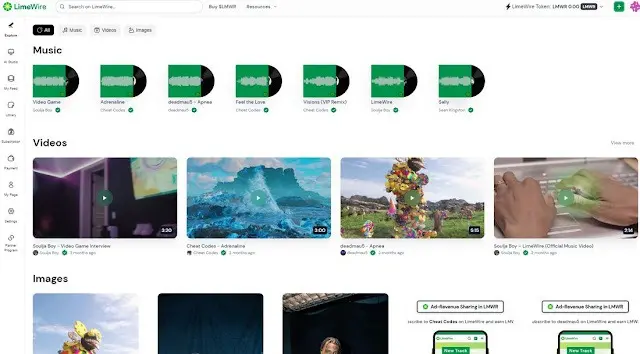
LimeWire officially relaunched as an AI-powered content publishing and NFT marketplace platform. The initial rollout focused heavily on AI image generation, attracting early adopters, digital designers, and high-profile mainstream artists such as Deadmau5, Soulja Boy, and Sean Kingston.
The platform rapidly expanded its capabilities, introducing multi-model support, automated blockchain minting on Polygon and Algorand, programmatic ad-revenue sharing, and its native utility token, LMWR. Today, LimeWire functions as a comprehensive creative ecosystem, continually expanding its technological footprint to encompass upcoming video and audio generation suites.
Supporting Context & Metrics: The Technical and Economic Architecture
LimeWire’s current operational model relies on a sophisticated integration of generative AI inference engines, distributed ledger technology, and a multi-tiered SaaS (Software as a Service) monetization framework.
The AI Image Generation Suite
At the core of LimeWire Studio is a versatile image generation and editing suite designed to accommodate users ranging from novices to professional digital artists. The platform abstracts the technical complexity of underlying AI models, offering a user-friendly interface powered by industry-leading open-source and proprietary architectures:
- Stable Diffusion (2.1 & XL): Provides robust capabilities for generating highly detailed, photorealistic, and stylized images from textual prompts, supporting advanced negative prompting, upscale features, and custom samplers.
- DALL-E 2: Integrated to offer alternative artistic interpretations and conceptual accuracy based on natural language processing.
- Proprietary Models: LimeWire is actively developing its own in-house AI generation models, signaling a strategic shift toward proprietary intellectual property that will further differentiate its output quality and stylistic diversity.
Users can seamlessly toggle between various aesthetic presets—including cinematic, digital art, pixel art, anime, and analog film—allowing for granular artistic control.
Automated NFT Minting and Blockchain Integration
One of LimeWire’s most distinctive technical features is its frictionless approach to Web3 integration. Traditional NFT creation often involves complex gas fees, wallet configurations, and technical hurdles that alienate mainstream creators. LimeWire removes these friction points by automating the minting process.
Once a user generates and publishes an image, video, or audio file on LimeWire Studio, the platform automatically mints the creation as a Non-Fungible Token on either the Polygon or Algorand blockchain. This automated process assigns a unique digital signature to the asset, cryptographically securing its authenticity and provenance.
Furthermore, creators retain granular control over distribution:
- Public Access: Content can be made publicly discoverable, allowing community members to view, collect, and trade the NFTs on secondary markets.
- Subscriber-Only Exclusivity: Creators can gate their content behind a paywall, offering exclusive access strictly to paying subscribers, thereby fostering intimate fan-to-creator communities.
- Royalty Mechanics: Whenever a creator’s minted asset is traded on the secondary market within the LimeWire ecosystem, the original creator automatically receives a 2.5% royalty, establishing a continuous passive revenue stream.
The LMWR Token and Revenue-Sharing Model
Financial sustainability for creators is a central pillar of LimeWire’s architecture. The platform introduces a revenue-sharing model where creators earn up to 70% of all ad revenue generated when other users view their published images, music, and videos on the platform.
Payouts are distributed monthly in LMWR tokens, LimeWire’s native utility cryptocurrency. This tokenized economy offers multiple utility layers:
- Liquidity and Exchange: LMWR tokens can be withdrawn and traded on major global cryptocurrency exchanges, including Kraken, Bybit, and Uniswap.
- Platform Utility: Users can utilize LMWR tokens directly within the platform to purchase additional prompt credits and pay for advanced AI generation tools.
Subscription Tiers and Pricing Models
LimeWire operates on a freemium model backed by tiered monthly subscription plans designed to scale with the user’s creative output:
| Plan Level | Monthly Price | Credit Allocation | Estimated Image Generations | Ad Revenue Share | Key Perks |
|---|---|---|---|---|---|
| Free | $0 | 10 Credits | Up to 20 images/day | 50% | Basic tool access |
| Basic | $9.99 | 1,000 Credits | Up to 2,000 / month | 50% | Early access to new AI models |
| Plus | $29.00 | 3,750 Credits | Up to 7,500 / month | 60% | Pro profile badge, faster generation, ad-free |
| Pro | $49.00 | 5,000 Credits | Up to 10,000 / month | 70% | Pro profile badge, full creation history, ad-free |
| Advanced Pro | $99.00 | 11,250 Credits | Up to 22,500 / month | 70% | Maximum speed, priority support, full history |
All paid tiers include a Pro profile badge, access to complete creation histories, accelerated rendering speeds, and an ad-free user experience.
Official Statements and Strategic Vision
Leadership at LimeWire has been vocal about the philosophical and practical motivations driving the platform’s renaissance. In corporate briefings and launch statements, executives have emphasized that the modern creator economy is fundamentally broken for the average independent artist, who often surrenders a vast majority of earnings to centralized intermediaries and platform gatekeepers.
"We are not looking to recreate the past; we are leveraging a historic brand name to build the publishing platform of the future," stated platform representatives during recent product rollouts. "The integration of generative AI tools with Web3 monetization is not a trend for us—it is the foundational infrastructure required to ensure that digital creators own their work, control their distribution, and capture the true economic value of their creativity."
Industry analysts have noted that by bridging the gap between complex generative AI technologies and consumer-friendly publishing tools, LimeWire has successfully dismantled the technical barriers that traditionally restricted advanced digital art production to specialized professionals. The early adoption of the platform by high-profile cultural figures such as Deadmau5 and Soulja Boy underscores a deliberate strategy to anchor LimeWire Studio within mainstream entertainment culture, validating its Web3 publishing mechanisms for broader audiences.
Future Outlook: The Road Ahead for LimeWire Studio
As the generative AI market matures, competition among creative platforms is intensifying. Giants like Adobe, Midjourney, and OpenAI dominate specialized niches, forcing secondary platforms to innovate rapidly or risk obsolescence. LimeWire has charted a clear roadmap to maintain its competitive edge and expand its total addressable market.
Expansion into AI Music and Video Generation
While LimeWire’s current generative suite focuses primarily on static imagery, the platform’s strategic roadmap includes the imminent rollout of dedicated AI music and video generation tools. Given the brand’s historical roots in music distribution, the introduction of AI-powered audio composition and video production suites represents a poetic and highly lucrative homecoming.
These upcoming tools will enable musicians, filmmakers, and digital storytellers to generate complex audiovisual compositions using natural language prompts, instantly minting their multimedia creations as dynamic NFTs and publishing them directly to their LimeWire subscriber bases.
Decentralization and Governance
Looking further ahead, LimeWire aims to deepen its integration of blockchain governance, allowing LMWR token holders to participate in decentralized autonomous organization (DAO) voting structures. This governance model will empower the community to vote on upcoming feature releases, platform policy changes, and ecosystem fund allocations, ensuring that the platform evolves in direct alignment with its user base’s desires.
Regulatory and Market Challenges
Despite its ambitious trajectory, LimeWire faces notable challenges. The regulatory landscape surrounding cryptocurrency, utility tokens, and blockchain-based digital assets remains volatile across various global jurisdictions. Furthermore, copyright debates surrounding generative AI models—specifically regarding training data and intellectual property ownership—pose ongoing legal questions for the entire generative art industry. LimeWire’s proactive stance on creator ownership and transparent blockchain provenance provides a strong defensive posture, but navigating these shifting legal currents will require constant vigilance from its executive and legal teams.
Conclusion
LimeWire’s evolution from a controversial P2P file-sharing client into a sophisticated AI content publishing and Web3 monetization platform is one of the most fascinating corporate metamorphoses of the digital age. By democratizing access to advanced generative AI tools, automating blockchain-based asset minting, and establishing a robust creator-first revenue-sharing economy powered by LMWR tokens, LimeWire has carved out a unique and influential niche in the modern tech ecosystem.
As the platform prepares to launch its highly anticipated AI music and video generation suites, it stands poised at the intersection of creativity, commerce, and decentralization. For independent artists, digital designers, and tech enthusiasts alike, LimeWire Studio offers a glimpse into a future where creating, sharing, and monetizing digital art is frictionless, equitable, and globally accessible.