

Executive Overview
In the intricate theater of vertebrate biology, cellular survival and tissue homeostasis depend on an unyielding balance between generation and degeneration. For decades, the E-cadherin complex has been celebrated by cell biologists primarily as a structural anchor—a biological mortar that ensures epithelial sheets, which line everything from the epidermis to the gut and pulmonary airways, remain tightly sealed and mechanically robust. However, groundbreaking research published in the journal Nature Communications reveals that this foundational "cellular glue" possesses an unexpected, dual-purpose identity.
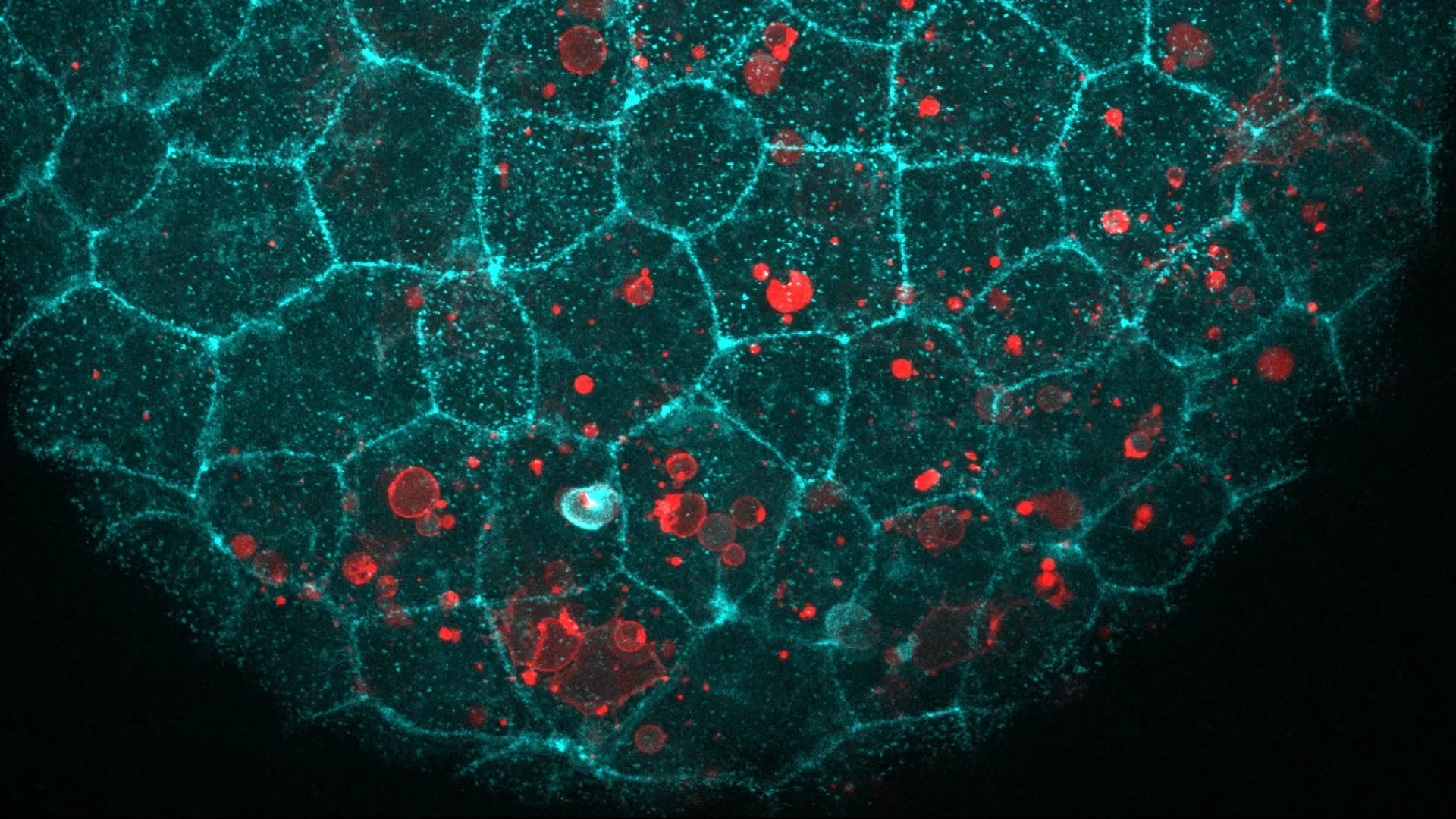
Led by senior author Verena Ruprecht, an ICREA Research Professor, an international team of researchers discovered that the molecular machinery of the E-cadherin complex also drives a crucial clearance mechanism: the active engulfment of nearby dead and dying cells by living epithelial sheets. This process, observed in living zebrafish and mouse embryos, sheds light on how multicellular organisms clear apoptotic debris without compromising the physical integrity of their protective barriers.
The implications of this discovery stretch far beyond basic developmental biology. Uncleared cellular debris is a well-established catalyst for chronic inflammation, driving a cascade of pathology implicated in numerous human diseases. By uncovering how tissues manage cellular waste through the physical repurposing of structural adhesion complexes, this study opens new avenues for understanding immunological maintenance, tissue repair, and the foundational mechanics of innate immunity.
Detailed Chronology & Scientific Breakthrough
The path to this discovery required a shift in perspective regarding how epithelial sheets interact with their surrounding microenvironments. The research project, executed primarily through live-cell imaging of transparent zebrafish and mouse embryos, was propelled by joint first authors Hanna-Maria Häkkinen, Marta Batet Palau, and Laura F. Bianchi.
Phase I: Uncovering the Dual Role of Adhesion Machinery
The investigation began when researchers noticed that the molecular machinery of the E-cadherin complex—comprising E-cadherin along with three essential partner proteins—accumulated precisely at the contact points where dying cells met healthy epithelial tissue. Traditionally viewed as a static bridge linking adjacent live cells, this complex appeared to be concentrating dynamically around apoptotic targets.
To determine whether E-cadherin was directly binding to specific surface proteins on the dying cells, the team designed two probing experiments:
- Protein-Stripped Dead Cells: The researchers introduced dying cells that had been intentionally stripped of surface E-cadherin. To their surprise, the epithelial tissue cleared these modified cells just as efficiently as normal apoptotic counterparts.
- Synthetic Lipid Droplets: The team then introduced artificial fat droplets devoid of any proteins whatsoever, but functionalized with an "eat-me" signal normally displayed on the surface of dying cells. The epithelial cells successfully engulfed these protein-free droplets as well.
These experiments proved that the E-cadherin complex is not acting as a traditional biochemical receptor reading specific ligands on the prey cell. Instead, the molecular machinery acts as a general structural driver, recognizing broad physical or chemical cues and reorganizing itself to swallow the debris.
Phase II: Maintaining the Barrier During Phagocytosis
Engulfing an object roughly the size of another cell poses an immense mechanical paradox. Epithelial cells form tight, continuous sheets designed to keep external pathogens out and internal fluids in. How can a cell "eat" an object the size of itself without breaching the barrier?
Utilizing advanced live-cell imaging, the researchers mapped the morphological changes occurring across different planes of the engulfing cell. They discovered that the upper and lower surfaces of a single epithelial cell behave with absolute independence:
- The Lower Surface: Extensively stretches, deforms, and bends around the dead cell, orchestrating the physical swallowing motion.
- The Upper Surface: Remains remarkably stable, maintaining its structural integrity and preserving the continuity of the tissue barrier whether facing the outside environment or an internal lumen.
Dr. Ruprecht memorably illustrated this phenomenon using an analogy: imagine a row of dancers standing with their arms linked. While their upper bodies remain entirely steady to preserve the formation, their feet perform increasingly complex, dynamic choreography whenever a dying cell appears. It is, fundamentally, the same cellular machinery executing a radically different mechanical program.
Phase III: The Molecular Rope and Brake
Delving deeper into the physical mechanics, the research team dissected the intracellular components that govern this engulfment process:
- The Molecular Rope: One specific protein within the E-cadherin complex acts as a biological tether. It directly connects the outer adhesion machinery to the cell’s internal cytoskeletal framework, transmitting the forces required to pull and wrap the membrane around the dead material. When this tethering protein—or its specific binding site—was experimentally removed, the cells completely lost their ability to engulf dead cells.
- The Molecular Brake: Another component of the complex functions analogously to a brake on the cell’s contractile machinery. Intriguingly, removing this brake did not accelerate or improve the cleanup process. Instead, the absence of the brake rendered the cell abnormally rigid, destroying its structural compliance and halting debris clearance altogether.
Phase IV: Conservation Across Vertebrates
To verify whether this mechanism was an evolutionary anomaly exclusive to zebrafish, the team extended their study to mammalian models. In early mouse embryos, experimentally blocking E-cadherin directly resulted in dying cells remaining uncleared. This cross-species validation confirms that the mechanism is deeply conserved across vertebrates, pointing to its foundational importance in embryonic development and early innate immune defense.
Supporting Context, Methodology, and Metrics
The study’s success relied heavily on cutting-edge experimental design and state-of-the-art infrastructure. Working with vertebrate embryos—specifically zebrafish and mice—provided distinct optical and biological advantages. Because early embryos are transparent, they allow researchers to observe dynamic, living tissue behavior at a spatial and temporal resolution that remains impossible within adult human tissues.
| Research Parameter | Methodology / Model System | Key Finding |
|---|---|---|
| Model Organisms | Live zebrafish and mouse embryos | Confirmed conservation of E-cadherin-dependent clearance across vertebrates. |
| Imaging Techniques | Advanced Light Microscopy (CRG Core Facilities) | Visualized the independent mechanics of upper vs. lower cell surfaces during engulfment. |
| Experimental Probes | Protein-stripped cells & synthetic lipid droplets | Proved the machinery responds to generalized signals rather than specific receptor-ligand pairing. |
| Genetic/Molecular Interventions | Disruption of tethers and regulatory brakes | Identified critical force-transmission elements and structural flexibility requirements. |
The research was supported by a coalition of prestigious European and Spanish scientific bodies, including the Spanish Ministry of Science and Innovation, the Human Frontier Science Program, the European Union’s Horizon Europe program, and the "la Caixa" Foundation, with additional backing from the European Social Fund. Specialized technical execution was carried out using the CRG Core Facilities for Advanced Light Microscopy, Tissue Engineering, and Protein Technologies.
Official Statements & Expert Perspectives
The conceptual leap from structural adhesion to active cellular scavenging has drawn significant interest from the broader scientific community.
"We were intrigued to find out that epithelial cells repurpose their molecular adhesion machinery—the ‘glue’ that normally holds them together—to engulf dying cells," noted ICREA Research Professor Verena Ruprecht, senior author of the study.
Reflecting on the broader implications for human pathology, Dr. Ruprecht emphasized the critical intersection between tissue mechanics and immunology:
"Studying the mechanisms of how dying cells can be removed efficiently from tissues is of very high relevance to human health. Debris from dying cells is a major contributor to inflammatory responses, so understanding how tissues remove that material may reveal new clues about what happens when the cleanup process fails."
The findings highlight that successful tissue homeostasis relies on far more than chemical signaling pathways. Apoptotic clearance is fundamentally a mechanical challenge requiring cells to dynamically alter their shape, generate precise contractile forces, and encircle foreign material without disrupting the protective barrier function of the surrounding tissue architecture.
Future Outlook & Medical Implications
While the study provides profound insights into embryonic development, it also opens critical questions regarding adult biology and clinical medicine. A primary objective for future research is determining whether this E-cadherin-dependent cleanup mechanism operates within adult tissues—such as the human retina, colon, airways, and mammary glands—where epithelial cells are already known to actively clear dying cells.
Given that E-cadherin is abundantly expressed across human epithelial tissues and has remained structurally conserved throughout vertebrate evolution, scientists view it as a prime candidate for a universal clearance mechanism.
Potential Clinical Horizons:
- Combating Chronic Inflammation: Many chronic inflammatory and autoimmune diseases—ranging from inflammatory bowel disease (IBD) to chronic obstructive pulmonary disease (COPD)—are exacerbated by the accumulation of secondary necrotic debris that overwhelms local phagocytes. Understanding how epithelial barriers manage their own waste could lead to novel therapeutic strategies.
- Tissue Engineering & Regenerative Medicine: Synthetic biomaterials and engineered tissues often fail due to localized inflammatory responses triggered by cell death. Insights from this study could inform the design of bio-mimetic scaffolds that harness endogenous epithelial mechanics to promote clean healing.
- Cancer Metastasis and Tumor Microenvironments: E-cadherin dysregulation is a hallmark of epithelial-to-mesenchymal transition (EMT) in cancer. Investigating how altered adhesion complexes impact cellular clearance and tissue immunity could reveal new vulnerabilities in tumor biology.
As researchers continue to bridge the gap between embryonic observation and adult tissue physiology, the humble cellular "glue" is proving to be a versatile and sophisticated guardian of human health.