

Executive Overview
The contemporary media ecosystem is navigating a period of unprecedented turbulence, caught at the volatile intersection of aggressive federal politics, shifting corporate broadcast strategies, high-profile personal accountability metrics, and the accelerating collapse of local print infrastructure. From the federal courtrooms of Washington, D.C., where the constitutional boundaries of presidential executive power are being aggressively tested against First Amendment protections, to the sprawling corporate reshufflings at CBS News and ESPN, the Fourth Estate faces an existential crucible.
At the center of this storm is an ongoing legal confrontation between the Trump administration and prominent media organizations—specifically CNN, MS NOW, and Politico—whose White House press credentials were summarily revoked. While federal judges weigh due process violations and the limits of executive privilege, other seismic shifts are reshaping the industry. Veteran opinion writers are crossing traditional boundaries to enter prestige television, high-profile sports commentators are publicly reckoning with the boundaries of empathy and entertainment on live air, and historic regional newspapers are being hollowed out to bare-bones operations.
This report delivers an exhaustive, multi-faceted analysis of the current state of journalism, synthesizing ongoing First Amendment litigation, network-level executive realignments, sports media ethics, and the quiet death of local community reporting.
Detailed Chronology: The White House Press Ban and First Amendment Litigation
The Prelude and the Retaliation
The confrontation between the executive branch and the institutional press escalated dramatically when the administration enacted a sweeping prohibition, barring journalists and production crews from CNN, MS NOW, and Politico from entering White House grounds. The administration framed the move around concerns over coverage quality and national security, though critics and affected newsrooms immediately identified it as an unconstitutional retaliation against unfavorable reporting.
Refusing to cede ground, the media outlets immediately initiated legal action, turning to the federal court system to safeguard their constitutional access. Their legal teams argued that singling out specific editorial entities for exclusion based on viewpoint constitutes a direct violation of the First Amendment, chilling free expression and undermining the fundamental transparency required of a democratic government.
The Injunction and Judicial Scrutiny
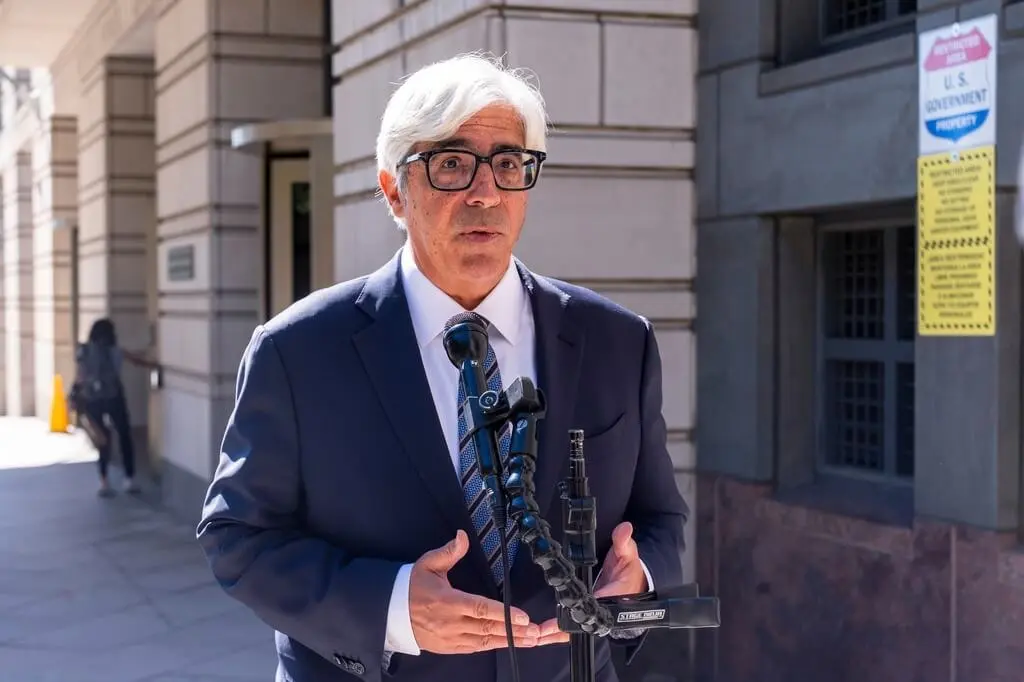
In the initial emergency phase of the litigation, a federal judge granted the media outlets a vital 14-day temporary restraining order. This intervention forced the administration to restore their White House press credentials while the broader legal arguments were prepared. As that initial two-week window hurtled toward its expiration deadline, lawyers for both sides reconvened in the U.S. District Court for the District of Columbia before Judge Timothy J. Kelly.
During the crucial Thursday hearing, Judge Kelly extended the restraining order through the following Tuesday, keeping the temporary credentials active while signaling a willingness to weigh a more durable, long-term injunction. Legal observers noted that the litigation could stretch across several months, keeping the status of White House access in a precarious legal holding pattern.
Significantly, Judge Kelly’s line of questioning during the proceedings shifted focus toward the nuances of constitutional law. While the media plaintiffs heavily emphasized their First Amendment protections, Judge Kelly pointedly pressed the government on potential violations of the Fifth Amendment’s due process clause.
"That’s probably the biggest hurdle you all have," Judge Kelly remarked to government attorneys, signaling deep skepticism regarding the administration’s procedural fairness in executing the ban.
Furthermore, the judge expressed reservations about the administration’s claims that the targeted outlets’ reporting posed a tangible threat to national security. Legal counsel for the media plaintiffs capitalized on recent public statements made by President Donald Trump during an interview with Time magazine. When directly asked why he chose to ban the specific organizations, the president offered a blunt assessment: "Well, it’s just bad story after bad story."
During Thursday’s court session, Theodore J. Boutrous Jr., the lead attorney representing the banned outlets, presented the transcript as a smoking gun. "That interview really is the coup de grace," Boutrous argued, asserting that the executive had openly admitted to viewpoint-based discrimination.
Despite the growing momentum toward a preliminary injunction favoring the media organizations, the battle lines remain drawn. Notably, the court’s intervention has distinct boundaries: the administration’s concurrent ban preventing reporters from CNN, MS NOW, and Politico from boarding Air Force One remains legally intact, highlighting the complex, fragmented nature of executive travel privileges versus fixed government property access.
Supporting Context & Metrics: The Shifting Architecture of Legacy Media
While the constitutional struggle over White House access dominates legal headlines, the institutional architecture of American journalism is undergoing an equally dramatic internal transformation. This structural shift is vividly illustrated by high-profile talent migrations and the blurring lines between institutional print columns and long-form broadcast television.
Douthat’s Dual Horizon: From The New York Times to 60 Minutes and The Free Press
The turbulent summer at CBS News—marked by the sudden ouster of its executive producer and several veteran, highly respected correspondents—triggered a radical strategic pivot under newly appointed Editor-in-Chief Bari Weiss. In an unexpected maneuver, Weiss recruited The New York Times conservative opinion columnist Ross Douthat to join the storied investigative program 60 Minutes as a correspondent, despite his lack of traditional television news production experience.
The synergy deepened when Weiss announced that Douthat would simultaneously join her independent digital publication, The Free Press, as a regular columnist. Douthat and Weiss previously collaborated within the opinion ecosystem of The New York Times, a shared history that culminated in what Weiss celebrated on social media as "A dream come true."
In his inaugural column for The Free Press, titled simply "I’m Writing a Column for The Free Press," Douthat detailed the ideological and market gap the publication aims to fill. He recounted a pivotal 2020 conversation with Weiss shortly after her departure from the Times, during which he advocated for a new kind of publication:
"I told her that I thought there was a potential market for a new general-interest publication that was politically independent, competitive with The Atlantic and The New Yorker, free from the ideological strictures of wokeness and the loyalty tests of MAGA."
Douthat has been careful to delineate his print commentary from his broadcast journalism responsibilities. In his column, he clarified:
"This is not my day job. I am a newly minted correspondent for 60 Minutes, where the goal is to ask probing questions, not sling political hot takes. If all goes well, this column will complement that work, staying a little bit above the partisan fray while giving readers useful frameworks… through which to understand our strange-and-getting-stranger century."
Douthat’s early television footprint on 60 Minutes includes two distinct reporting pieces across the program’s initial seasonal episodes: a high-stakes interview with Patrick Clancy, the ex-husband of a woman facing criminal charges for the deaths of their three children, and an in-depth profile of North Carolina Republican Senator Thom Tillis.
Official Statements and Ethical Reckonings: The Stephen A. Smith Controversy
As corporate media entities experiment with new talent configurations, sports commentary and entertainment networks continue to grapple with the profound ethical responsibilities of live broadcasting. A stark reminder of this vulnerability unfolded on ESPN’s flagship debate program, First Take.
The Incident and Initial Misstep
Philadelphia Eagles offensive lineman Lane Johnson sent shockwaves through the National Football League by announcing his sudden retirement, explicitly citing severe mental health struggles as the primary catalyst for his departure. During a subsequent broadcast of First Take, sports commentator Stephen A. Smith addressed Johnson’s retirement. Rather than engaging with the gravity of the player’s mental health disclosure, Smith appeared to minimize the admission, suggesting instead that the underlying motivation stemmed from the Eagles’ on-field struggles.
Studio guest and journalist Kimberly A. Martin immediately challenged Smith in real time, pushing back against the tone of the segment: "I feel like you’re making light of the situation."
Seeking to defuse the growing backlash, Smith addressed the remarks later that day on his SiriusXM radio program. However, his defense faltered when he claimed his comments had been "misconstrued." While insisting he would never intentionally mock mental health—and briefly referencing his own historical struggles with mental wellness—his initial response failed to appease critics or media watchdogs.
Writing in The Athletic, media analyst Andrew Marchand published a scathing column arguing that Smith had severely embarrassed himself and needed to offer a straightforward, unreserved apology.
The Comprehensive Apology
Heeding the widespread criticism, Smith opened the following morning’s broadcast of First Take with an extended, unprompted personal statement taking full accountability for his error:
"Here’s the reality of the situation. I was wrong. I messed up."
Smith offered explicit apologies to Lane Johnson, the Philadelphia Eagles organization, and anyone navigating mental health challenges. Addressing the broader societal impact of his remarks, he added:
"The biggest regret that I have for all of this is the fact that it may have given people that wanted to open the door to seek help a reason to pause and hesitate and not do so. And I can’t emphasize enough how sorry I am about that because it is a real issue."
Emphasizing that it took immense "courage" for professional athletes like Johnson to speak publicly about psychological distress, Smith delivered what many observers recognized as a genuine, uncoerced apology—noting that network executives at ESPN did not mandate the statement.
The Broader Commentary Crisis
The incident ignited a broader industry debate regarding the structural incentives of modern sports and political talk television. Commentators are locked in a relentless weekly cycle requiring hours of provocative, entertaining content, often blurring the line between informed analysis and superficial hot takes.
As Marchand observed in his critique:
"Talk show hosts mostly don’t know anything, but have to pretend they know everything. Smith and others are on your screen to entertain, not inform. If it is debating LeBron versus MJ or the Dallas Cowboys defense or who should be ranked No. 1, it really is no harm, no foul. But when you are talking about a serious topic, like mental health issues, don’t mock someone… Life is not a show."
Future Outlook: The Quiet Evacuation of Local Newsrooms
While national media organizations wage high-stakes legal battles in Washington and cable networks navigate cultural controversies, the foundational bedrock of American journalism—local reporting—continues to experience a silent, systematic contraction.
A striking case study in this systemic erosion unfolded in Amarillo, Texas. Home to a population of 205,000 residents, the city’s historic paper of record, the Amarillo Globe-News, was reduced to a solitary high-stakes reporter covering high school sports after corporate ownership intervened.
According to investigative reporting by the Amarillo Tribune, parent company USA Today Co. laid off the entirety of the newspaper’s remaining editorial staff "without warning." The sweeping local cuts arrived hot on the heels of similar terminal layoffs targeting sports desks across the media conglomerate’s national chain of publications. These reductions mirror broader structural reorganizations executed by corporate leadership, including audience team downsizing. Despite mounting public concern over the viability of civic information ecosystems in mid-sized American cities, corporate representatives for USA Today Co. declined to issue public comments regarding the Amarillo newsroom purge.
Conclusion
As the industry looks toward the coming weeks, the trajectory of American journalism remains defined by deep contrasts. In the federal courts, the judiciary will soon determine whether the executive branch can legally penalize news organizations for unfavorable coverage, establishing a vital precedent for First Amendment jurisprudence. Simultaneously, the corporate consolidation of local newsrooms threatens the grassroots accountability essential for democratic governance, even as prestige outlets experiment with cross-platform talent and grapple with the profound social responsibilities of live public discourse.