

By Investigative Staff
Executive Overview
For millions of social media users scrolling through their feeds, the culture war surrounding transgender athletes in women’s professional sports feels inescapable, pervasive, and deeply polarized. Nowhere has this been more acute than in the digital discourse surrounding the Women’s National Basketball Association (WNBA). Despite the fact that there are currently zero open transgender players competing in the league, the debate has generated an unrelenting wave of headlines, protests, political maneuvers, and digital hostility.
However, exclusive new data analytics from the research startup GUDEA upends the prevailing wisdom regarding how this narrative operates online. A comprehensive study of nearly 190,000 social media posts reveals a stark reality: the roaring firestorm dominating online feeds is not an organic groundswell of grassroots public opinion. Instead, it is a meticulously sustained amplification loop driven by a tiny fraction of "non-typical" users—influencers, pundits, and monetization-driven aggregation accounts—who weaponize visceral controversy for profit, clicks, and political polarization.
While real-world tensions surrounding gender eligibility policies in athletics are genuine and deeply felt across society, the digital ecosystem has transformed these complex debates into automated engagement bait. By tracing the data from the initial spark of the controversy through its peak digital saturation, this investigation explores how algorithms, financial incentives, and a handful of high-reach accounts manufacture an illusion of endless outrage.
Detailed Chronology: From Locker Room Concerns to Digital Firestorm
To understand how the WNBA became a central flashpoint in the national debate over transgender athletes, it is necessary to examine the cascading events of 2025 and 2026 that transformed a sports policy discussion into a full-scale cultural battle.
The Political and Institutional Catalyst
The framework for the current debate was significantly altered at the federal level. In 2025, an executive order signed by President Donald Trump prohibited transgender women from competing on women’s sports teams, triggering a domino effect across major athletic institutions. Governing bodies such as the National Collegiate Athletic Association (NCAA) and the International Olympic Committee faced immediate pressure to overhaul and tighten their eligibility guidelines.
While these policy shifts primarily impacted amateur and international sports, they set a combative national stage for professional leagues. Although the WNBA had no active transgender players on its rosters, the league was inevitably pulled into the broader cultural crosshairs.
The Spark: Sophie Cunningham’s Comments
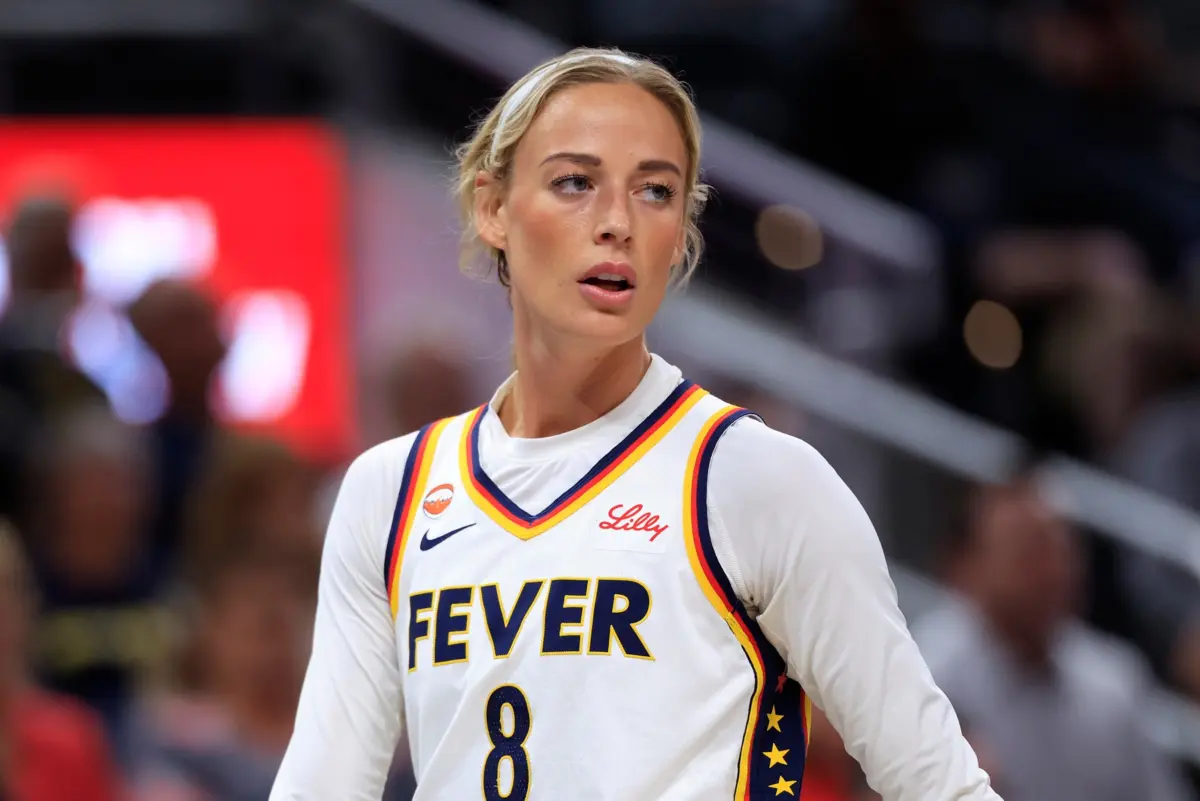
The tension breached the WNBA’s inner sanctum in July, when Indiana Fever guard Sophie Cunningham addressed the issue directly in an interview with ESPN. Cunningham argued that transgender women should not be permitted to play in the league, framing her position as a matter of athlete safety and fairness.
"I got a lot of negative feedback about me hating trans," Cunningham stated during the interview. "And I’m like, ‘I never once said that.’ I want to protect young girls in a locker room, or young girls in sport who shouldn’t have to go against biological men."
The remarks served as an immediate accelerant. Within hours, Cunningham’s statements were picked up by mainstream sports outlets, cable news networks, and partisan commentators, polarizing fans and players alike.
Escalation: Protests, Public Stunts, and Institutional Deadlocks
As the summer progressed, the controversy spilled out of the press room and onto the concrete outside WNBA arenas. Multiple rallies and protests materialized outside games, with demonstrators holding competing pro-transgender and anti-transgender placards. The polarization even reached the sidelines: in August, Minnesota Lynx head coach Cheryl Reeve made headlines by prominently wearing a "Trans Kids Belong" t-shirt during a game.

The saga took an even more theatrical turn when former NBA player Enes Kanter Freedom launched a public campaign demanding that the WNBA explicitly redefine its eligibility criteria to accept only "biological women." As part of his crusade, Kanter Freedom publicly entered his name for consideration in the 2027 WNBA draft—a stunt that earned public praise from President Donald Trump.
The relentless media cycle forced league leadership to act. In August, the WNBA formed an ad-hoc task force consisting of general managers and team presidents to address gender eligibility rules. Yet, following extensive deliberations, the task force ultimately opted to maintain the status quo, refusing to update or alter its existing policies. This non-decision only fueled further frustration from critics, ensuring the controversy remained a dominant fixture of sports journalism.
Supporting Context & Metrics: What the GUDEA Data Reveals
While the physical protests and press conferences commanded traditional media attention, the digital landscape was where the narrative truly multiplied. To measure the exact mechanics of this online phenomenon, data analytics startup GUDEA conducted a deep dive into the social media ecosystem.
Methodology and Scope
GUDEA analyzed 188,631 posts concerning the WNBA transgender debate over a 24-day window from July 20 to August 12. According to the white paper derived from this analysis, an overwhelming 99 percent of all sampled posts occurred on X (formerly Twitter), making the platform the undisputed engine of the controversy.
The research team categorized users based on their posting frequency, follower count, and overall digital reach. Users who exceeded normal engagement patterns and possessed outsized influence—such as political pundits, verified influencers, and automated aggregation accounts—were classified as "non-typical" users.
The Pareto Principle of Online Outrage
The data yielded a striking revelation: while non-typical users accounted for 3.57 percent of the total users sampled, they were responsible for a staggering 16.75 percent of all identified tweets. This represents an engagement concentration significantly higher than the baseline average for typical debates on the platform.
Keith Presley, the founder of GUDEA, explained to Rolling Stone that the massive scale of the online debate was an illusion propped up by a minuscule number of nodal posts.
"If you take out the eight top posts, this [narrative] didn’t happen. Nobody would be talking about this," Presley noted. "When you look at what content was getting the highest inauthentic engagement, it’s more visceral, trying to get an emotional response. [This debate] was pushed for clicks."
The Mechanics of "Inauthentic Behavior"
Georgia Paul, GUDEA’s head of customer success, highlighted a crucial structural difference between organic social movements and manufactured controversies: the rate of original content creation versus mere repetition.
When an issue generates authentic, grassroots concern, everyday social media users typically generate diverse, original content, expressing unique viewpoints and expanding the conversation across varied networks. In contrast, the WNBA debate was characterized by millions of users engaging in "low-lift" actions—primarily retweeting, quoting, or slightly rewording a small handful of anchor posts with increasingly inflammatory rhetoric.
According to GUDEA’s analysis, this dynamic created fertile ground for "inauthentic behavior." Because the initial anchor posts (reporting on Cunningham’s statements or political interventions) were grounded in real-world events, bad-faith actors and monetization-driven accounts were able to hijack the original reporting. They steadily degraded the discourse by injecting toxic memes, derogatory language, and violent threats to maximize algorithmic visibility.

Economic Incentives and Algorithmic Amplification
To fully comprehend why the WNBA trans debate saturated feeds to such a degree, one must examine the fundamental economic and algorithmic changes that have transformed social media platforms—particularly X—over recent years.
The Monetization of Outrage
Since Elon Musk’s acquisition of the platform in late 2022, X has rolled out aggressive creator-monetization programs. Users who pay for premium subscriptions are now eligible to receive a direct payout based on the ad revenue generated by views and engagement in their comment sections. Furthermore, platform updates have deliberately prioritized paid subscribers in algorithmic feed placement, pushing their replies and quote-tweets to the top of major threads.
This economic model has fundamentally warped user incentives. As Georgia Paul observed:
"The primary motive for posting on the internet is no longer to have an opinion, a unique point of view, or add substance to the conversation. It is to make money. You’re going to make money in these divisive ways because you’re tugging at real-world conversations. Anger has turned into dollars for other people. The point is to sow division."
Engagement Bait vs. Genuine Public Discourse
Because extreme, visceral, and polarizing content reliably drives comments, arguments, and algorithmic reach, influencers and hyper-active posters are financially incentivized to keep the outrage cycle spinning. When a nuanced debate involving athletic fairness, gender identity, and human rights is funneled through a profit-driven engagement machine, nuance is stripped away.
The GUDEA report emphasizes that this dynamic does not mean people do not care about the underlying issues in the real world. Both Presley and Paul emphasize that manufactured online narratives only work because they tap into genuine, deeply held societal values and divisions. However, the scale, velocity, and hostility of the digital debate are artificially inflated. The algorithms do not reflect public sentiment; they refract and magnify the most profitable extremes of human emotion.
Official Statements and Institutional Responses
The fallout from the digital storm forced athletic organizations, players, and commentators to navigate an increasingly hostile public relations landscape.
- The WNBA Front Office: Facing intense scrutiny from both political figures and activists, the league’s leadership has attempted to maintain a steady course. The formation of the GM and team president task force in August was an explicit acknowledgment of the tension, though the decision to leave eligibility rules unchanged signaled a reluctance to codify bans in the absence of an immediate roster issue.
- The Players’ Union and Coaching Staff: Prominent figures within the league have found themselves forced to take public stances, often at professional risk. While some players have echoed concerns regarding competitive categories, coaches like Cheryl Reeve have utilized their platforms to advocate for inclusivity, demonstrating that the ideological split exists within the locker rooms and coaching staffs themselves.
- External Advocates: Organizations on both sides of the debate have utilized the WNBA as a proxy war for broader legislative battles. Pro-transgender advocates argue that targeting women’s basketball—a league with no active trans players—reveals that the campaign is rooted in ideological animus rather than competitive reality. Conversely, anti-transgender activists maintain that establishing strict preemptive guardrails is essential to preserving the future integrity of women’s sports.
Future Outlook: Navigating the Intersection of Sports and Culture Wars
As the WNBA progresses through its playoffs and looks toward future seasons, the intersection of professional athletics and cultural politics shows no sign of disappearing. The structural conditions that allowed the summer 2026 debate to explode online—algorithm-driven monetization, political polarization, and hyper-active influencer networks—remain fully operational.
Yet, data-driven investigations like the one produced by GUDEA offer an essential roadmap for media literacy in the digital age. By decoupling real-world societal debates from the distorted mirror of social media algorithms, analysts and observers can better diagnose manufactured outrage.
The conversation surrounding transgender athletes in women’s sports involves complex questions of human rights, biology, fairness, and inclusion—questions that demand thoughtful, good-faith deliberation. However, as long as anger translates directly into ad revenue and algorithmic prominence, digital platforms will continue to reward those who seek to tear the discourse apart for profit.
Ultimately, the WNBA trans debate online was never as massive as your feed suggested. Recognizing that disparity is the first step toward reclaiming a more honest, grounded public square.