

As blockbuster GLP-1 receptor agonists like Ozempic, Wegovy, Mounjaro, and Zepbound continue to transform the global landscape of metabolic health, obesity management, and type 2 diabetes care, a surprising new side effect has emerged from the shadows of clinical observation. While these revolutionary therapeutics are widely celebrated for regulating blood sugar, curbing appetite, and driving substantial weight loss, a groundbreaking multinational study suggests they may also exact a visible toll on patients’ outer features—specifically their nails, hair, and scalps.
Presented at the prestigious European Academy of Dermatology and Venereology (EADV) Congress, the new research delivers the first controlled data exploring the nexus between GLP-1 therapy and dermatological changes. The findings reveal that patients taking these medications experience a significantly higher prevalence of nail disorders—including nail detachment and discoloration—alongside heightened rates of hair shedding, reduced hair volume, and inflammatory scalp conditions.
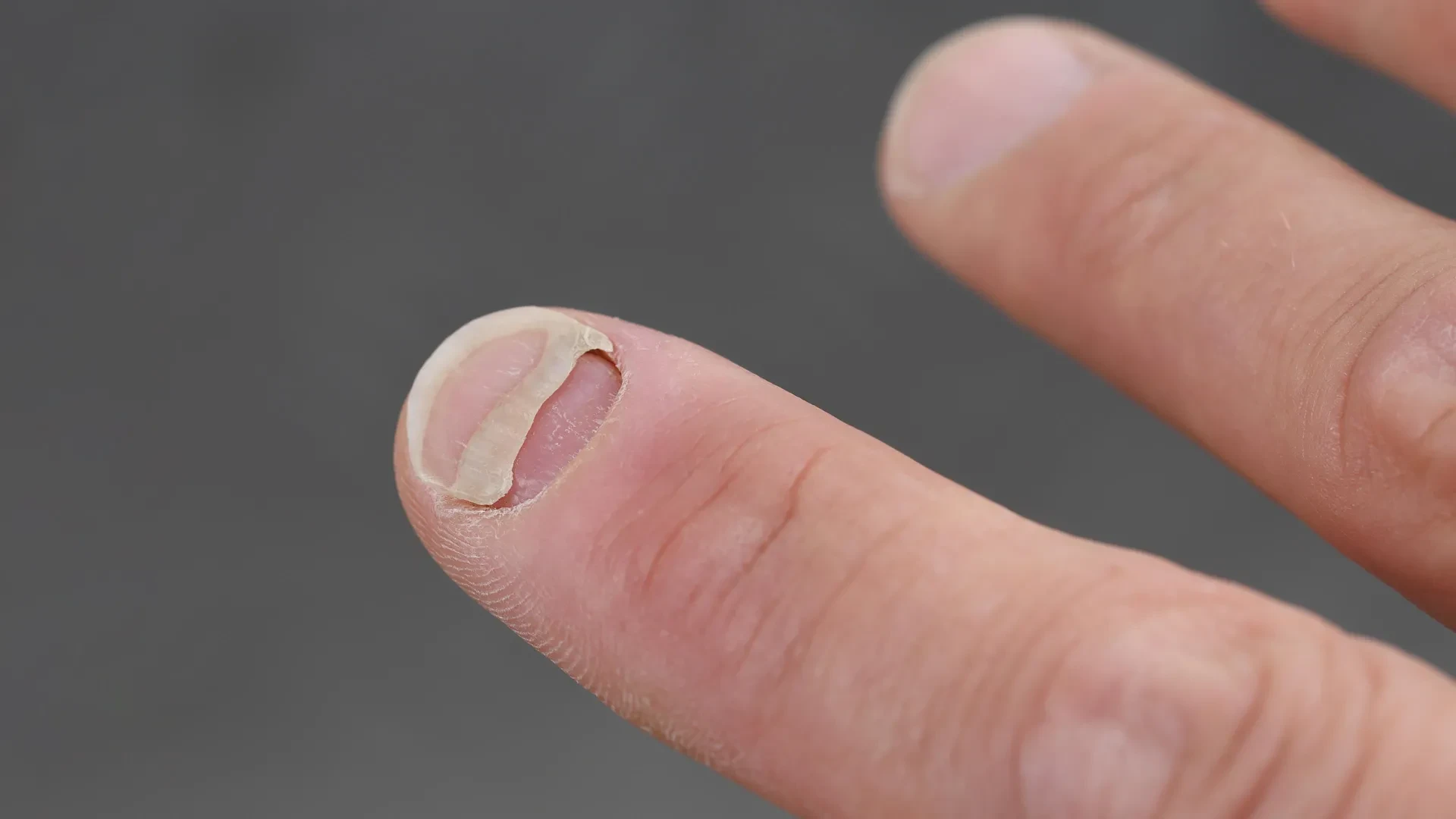
Most notably, the data indicates that users of GLP-1 medications are more than four times as likely to report nail detachment, a disconcerting phenomenon wherein the nail plate separates from the nail bed. Furthermore, two-thirds of study participants utilizing these medications reported at least one concurrent nail abnormality. Companion research focusing on the same cohort unveiled similarly striking metrics regarding hair and scalp health: fully half of all GLP-1 users reported unusual hair loss, accompanied by widespread indicators of localized scalp inflammation such as itching, redness, and flaking.
While these revelations might initially cause alarm among the millions of patients relying on these medications for life-changing health transformations, the study’s authors emphasize a critical caveat. The observed changes are largely benign, frequently overlapping with preexisting conditions or nutritional shifts, and do not constitute a clinical justification for patients to unilaterally discontinue their treatment. Instead, researchers urge heightened clinical awareness, establishing a vital framework for patients and physicians to monitor, discuss, and potentially treat these overlooked dermatological symptoms without compromising metabolic health.
Detailed Chronology: Uncovering the GLP-1 Dermatological Connection
To understand how these unexpected findings came to light, one must trace the timeline of dermatological reporting surrounding GLP-1 receptor agonists. For years, as prescriptions for semaglutide, tirzepatide, and liraglutide surged globally, patient-reported side effects were predominantly gastrointestinal—nausea, fatigue, and digestive upset. However, as millions of individuals began prolonged courses of treatment, anecdotal accounts began surfacing on digital health forums and in clinical settings regarding localized somatic changes.
Patients began reporting brittle nails, inexplicable nail discoloration, and, in more severe cases, onycholysis—the medical term for nail detachment. Concurrently, reports of accelerated hair shedding mirrored the classic presentation of telogen effluvium, a form of temporary hair loss typically triggered by major physiological stressors, systemic illness, or rapid weight reduction.
Until recently, however, these reports remained isolated and purely anecdotal. Medical literature lacked rigorous, controlled comparative data to determine whether these complaints were a direct pharmacological consequence of GLP-1 receptor agonism, an indirect result of rapid caloric restriction and metabolic shock, or merely coincidental findings in populations already burdened by chronic illness like obesity and type 2 diabetes.
The turning point arrived with the initiation of a comprehensive, multinational observational study designed to move beyond speculation. Researchers cast a wide geographical net, recruiting participants from four distinct countries: France, the United States, Brazil, and Mexico. By assembling a diverse cohort, the scientific team sought to eliminate regional, dietary, and genetic biases that might otherwise skew dermatological reporting.
The research architecture divided participants into two distinct cohorts: a treatment group comprising 575 individuals actively using GLP-1 receptor agonists, and a robust control group consisting of 1,329 individuals diagnosed with type 2 diabetes and/or obesity who had never utilized GLP-1 medications. By comparing individuals with matching baseline metabolic profiles, the researchers engineered a controlled environment capable of isolating the specific variables associated with the drugs themselves.
When the preliminary data was finalized and slated for presentation at the EADV Congress, it confirmed what clinicians had only suspected: the statistical delta between GLP-1 users and non-users regarding nail and hair abnormalities was too pronounced to ignore. The investigation effectively bridged the gap between patient-reported anomalies and formal epidemiological science, setting a new benchmark for how dermatologists monitor patients undergoing advanced metabolic therapies.
Supporting Context & Metrics: Breaking Down the Data
A granular examination of the data underscores the magnitude of the dermatological shifts observed in the study. The numbers extend far beyond minor cosmetic complaints, highlighting systemic physiological impacts that manifest visibly across the integumentary system—the body’s outer covering of skin, hair, and nails.
The Nail Disruption Phenomenon
When evaluated collectively, 66% of all GLP-1 users reported experiencing at least one distinct nail disorder during their treatment lifecycle, compared to 53% of the control group. While the baseline prevalence of nail abnormalities in populations with metabolic disease is already notable, the specific manifestations among drug users proved striking:
- Nail Detachment (Onycholysis): Users of GLP-1 medications were more than four times as likely to report nail detachment—where the nail plate lifts away from the underlying nail bed—than individuals in the control group.
- Nail Discoloration: Pigmentation anomalies proved exceptionally common, affecting 46% of GLP-1 users compared to just 17% of non-users, representing nearly a threefold increase in visual discoloration events.
Hair Loss and Scalp Inflammation
The companion study examining the exact same cohort of 575 users and 1,329 controls brought hair and scalp health into sharp focus, revealing patterns that challenge conventional assumptions about weight-loss-induced shedding:
- Unusual Hair Loss: Exactly 50% of GLP-1 users reported unusual hair loss, contrasted against 34% of the control demographic.
- Reduced Hair Volume/Density: Thinning hair was reported by 42% of users versus 19% of non-users, signaling a dramatic impact on overall hair fullness.
- Post-Treatment Hair Shedding: Hair loss explicitly beginning after the initiation of GLP-1 therapy was documented in 26% of users, compared to 12% of controls—making targeted shedding more than twice as common in the treatment group.
- Scalp Hyperemia (Redness): Physical examination and reporting indicated that scalp redness was approximately three times more frequent among medication users.
The Weight Loss Confounding Variable
A central challenge in analyzing these metrics is isolating whether the observed changes stem directly from the pharmacology of GLP-1 receptor agonists or indirectly from the physiological stress of rapid weight loss. Rapid caloric deficits are well-known triggers for nutritional deficiencies and systemic stress, which in turn can disrupt the hair growth cycle and impair nail matrix production.
To test this hypothesis, researchers isolated a subset of participants who had undergone significant weight loss across both cohorts. Surprisingly, even when controlling for weight reduction, GLP-1 users continued to exhibit a significantly higher incidence of nail and hair disorders than participants who had lost weight through other means or without these medications.
However, the researchers maintained scientific rigor by noting that approximately half of the medication users reported experiencing nail issues prior to commencing GLP-1 therapy. Furthermore, when statistical adjustments were made to account for preexisting skin conditions and underlying nutritional deficiencies, the statistical gap between the groups narrowed. Even after these rigorous adjustments, however, nail detachment and discoloration remained roughly two to three times more common among GLP-1 users, confirming that weight loss alone cannot entirely account for the phenomenon.
Official Statements & Expert Perspectives
The release of these findings has prompted thoughtful commentary from the study’s principal investigators and dermatological authorities worldwide, balancing scientific curiosity with patient reassurance.
Dr. Charles Taïeb, a lead author on the nail health study, emphasized the necessity of contextualizing the data. "Until now, nail changes associated with GLP-1 therapies had essentially been anecdotal," Dr. Taïeb stated. "Our findings show a clear association, but they also underline an important point: not everything that happens during GLP-1 treatment is necessarily caused by the treatment itself."
Dr. Taïeb’s perspective serves as a vital reminder against reactionary assumptions. While the correlation is robust, the presence of pre-existing nail vulnerabilities in a substantial portion of the cohort highlights the multi-factorial nature of nail pathology in chronic metabolic disease.
Meanwhile, Dr. Bruno Halioua, co-author of the companion hair and scalp study, shed light on the inflammatory signatures discovered during scalp evaluations. A pivotal finding of their research was that hair shedding rarely occurred in isolation; it was almost universally accompanied by localized scalp symptoms such as pruritus (itching), erythema (redness), and desquamation (flaking skin).
"This suggests that what is happening on the scalp may go beyond the classical shedding seen after rapid weight loss and involve an inflammatory component," Dr. Halioua explained. "Scalp inflammation was the rule rather than the exception, which clinicians do not currently look for and which may be treatable. Taken together, our findings suggest that factors beyond weight loss alone may contribute to the hair, scalp and nail changes observed among GLP-1 users."
Both researchers converged on a unified message for the medical community and the public: these dermatological symptoms, while frequent, are generally benign and manageable. They issued a strong advisory warning patients against taking matters into their own hands.
"These changes are frequent, usually benign, and are not a reason to stop an effective treatment on one’s own initiative," Dr. Taïeb emphasized. "Anyone who notices hair shedding, an itchy or red scalp or nail changes should mention it to their doctor rather than discontinue therapy."
Future Outlook & Methodological Limitations
While the multinational study represents a monumental step forward in mapping the secondary effects of GLP-1 receptor agonists, the authors are transparent regarding the inherent limitations of their current methodology.
Because the investigations were cross-sectional in design, they captured a snapshot of participants’ experiences at a single point in time without tracking them longitudinally from the onset of therapy. Additionally, the data relied primarily on patient-reported symptoms rather than standardized, blinded clinical examinations conducted by trained dermatologists. Consequently, while the studies successfully establish strong statistical patterns and associations, they cannot definitively prove direct causation—that is, whether the molecular action of GLP-1 receptor agonists directly triggers cellular changes in the nail bed and hair follicles.
To definitively answer these lingering scientific questions, the research team has outlined an ambitious roadmap for future investigation. The next phase of research will transition into prospective, longitudinal studies designed to follow patients from day one of their GLP-1 prescription. These upcoming trials will incorporate rigorous, standardized dermatological examinations of the skin, hair, and nails, paired with comprehensive biological monitoring and nutritional profiling.
The core objectives of these future studies include:
- Establishing the precise temporal timeline of when nail and hair changes first manifest following treatment initiation.
- Uncovering the exact biological and molecular mechanisms driving the observed nail detachment and scalp inflammation.
- Determining whether these dermatological symptoms are self-limiting, meaning they improve or spontaneously resolve over time as the body habituates to the medication.
- Evaluating targeted, adjunctive treatments—such as specific dermatological topicals or nutritional supplementation—to mitigate scalp inflammation and nail fragility while patients continue their life-saving metabolic regimens.
Significantly, the ongoing research initiative has received vital institutional support from DUCRAY Laboratories, a division of the Pierre Fabre Group renowned for its specialization in dermatological care, hair health solutions, and quality-of-life therapeutics. This partnership ensures that the future phases of research will benefit from industry-leading expertise in skin and scalp science.
Conclusion for Practitioners and Patients
As the medical community digests these new insights, the overarching takeaway is one of enhanced clinical vigilance rather than therapeutic deterrence. GLP-1 receptor agonists remain nothing short of revolutionary in their capacity to combat obesity, mitigate cardiovascular risks, and reverse the complications of type 2 diabetes.
For the millions of individuals currently self-administering these weekly injections, the emergence of nail detachment, discoloration, or hair shedding should not serve as an emergency exit from an effective health regimen. Instead, these visible symptoms should be viewed as communication channels between patient and physician. By acknowledging that the integumentary system may reflect the systemic shifts occurring within the body during GLP-1 therapy, healthcare providers can proactively diagnose, monitor, and treat these localized inflammatory and structural changes—ensuring that patients achieve optimal metabolic health without compromising their physical well-being.