

Executive Overview
Artificial Intelligence has officially graduated from a fringe tech-industry experiment to a core corporate mandate. Boardrooms across the globe are setting aggressive transformation targets, deploying enterprise-wide software licenses, and urging their workforces to embrace generative intelligence. Yet, beneath the veneer of progress, a familiar and alarming pattern is emerging. To digital strategist and author Paul Boag, the current wave of enterprise AI rollouts feels less like a calculated corporate strategy and more like a high-stakes farce—one that, if adapted for the silver screen, would be dismissed as entirely too unbelievable.
The root of the frustration is simple: we have been here before.
A decade ago, organizations charged headfirst into the "digital transformation" era. They implemented Content Management Systems (CMS), customer relationship management tools, and sprawling intranets, all while failing to address the fundamental human and cultural changes required to make those tools effective. Today, organizations are repeating those exact missteps with AI. Rather than treating AI adoption as an intricate, organization-wide cultural shift, leadership teams are approaching it as an IT procurement checkbox. They are acquiring generic toolkits, pushing top-down adoption mandates, and wondering why their investments are met with anxiety, resistance, and underground workaround schemes.
This in-depth investigative report examines the recurring pitfalls of enterprise technology adoption. By drawing parallels between the digital adaptation failures of 2014 and the AI landscape of today, we explore why human-centric design, psychological safety, and realistic governance are the absolute prerequisites for navigating the artificial intelligence era successfully.
Detailed Chronology: A Decade of Déjà Vu
To understand why modern AI rollouts are stumbling, one must look backward to the mid-2010s, a period when digital transformation was the undisputed buzzword of the corporate world.
The 2014 Digital Adaptation Era
Back in 2014, when Paul Boag published Digital Adaptation through Smashing Magazine, organizations were grappling with a sudden, overwhelming shift toward web-first, mobile-first operations. The playbook of the time typically involved the following sequence:
- The Top-Down Tech Drop: IT departments purchased expensive, enterprise-grade systems—such as massive CMS platforms or rigid intranets—without consulting the actual end-users.
- The Feature Focus: Executive teams focused exclusively on the capabilities of the software rather than the procedural workflows of their staff.
- The Productivity Trap: Systems were deployed to maximize efficiency and cut costs, placing heavier burdens on employees without offering meaningful changes to their daily lived experience.
- The Bureaucratic Gridlock: Strict IT governance and centralized approval boards created massive friction, inadvertently driving employees toward "shadow IT"—unauthorized consumer cloud storage and productivity apps that compromised corporate security.
The 2026 AI Parallel
Fast-forward to the present day, and the institutional memory of the corporate world appears to have completely evaporated. The current AI adoption lifecycle mirrors the 2014 digital playbook with unsettling precision:
- The Enterprise Software Blanket: Senior management catches AI fever, purchases company-wide licenses for tools like Copilot Studio, delivers a generic introductory training video, and considers the digital transformation complete.
- The Productivity Mandate: Staff are told to do more with less in the same 40-hour workweek, amplifying existing burnout while offering zero tangible incentives or time savings to the individual employee.
- The Rise of Shadow AI: When official internal tools prove inadequate for specialized tasks—such as building a UX research repository or generating contextual product personas—employees bypass IT entirely. They open personal accounts on ChatGPT or Claude via mobile devices or home laptops, inadvertently exposing sensitive corporate data to unmonitored external models.
The chronology reveals a cyclical corporate amnesia. Every time a paradigm-shifting technology emerges, organizations instinctively default to treating it as a technical procurement challenge rather than a complex sociological evolution.

Supporting Context & Metrics: The Human Element of Technological Change
The fundamental flaw in modern AI strategies is an acute underestimation of the human cost. Adopting artificial intelligence is not merely a matter of mastering a new software interface; it requires the systematic dismantling and rebuilding of procedural knowledge that workers have spent years, sometimes decades, refining.
The Motivation Deficit
Why should an overworked employee embrace AI? From the perspective of the average worker, the proposition is remarkably unappealing.
In most corporate environments, the primary selling point of AI for management is hyper-productivity: the ability to squeeze more output out of the same headcount. However, increased efficiency rarely translates into shorter workweeks, additional time off, or increased compensation for the frontline worker. Instead, it frequently translates into higher expectations and tighter deadlines.
To overcome this motivation deficit, progressive organizations are learning to reframe AI adoption not as a threat to job security or an engine for relentless speed, but as an opportunity to eliminate administrative drudgery. By encouraging staff to identify the specific tasks they loath—such as data entry, formatting reports, or scheduling—and demonstrating how AI can banish those pain points, organizations can align technological adoption with genuine improvements in worker well-being.
The Myth of the Quick Training Course
Deploying a new tool requires deep, contextual consideration and continuous experimentation. Sending an employee to a one-hour webinar on prompt engineering will not magically integrate AI into their specific daily workflow. Staff need:
- Role-Specific Training: Tailored educational programs that speak directly to the nuances of their department (whether that is UX design, legal, finance, or customer support).
- Dedicated Experimentation Time: Uninterrupted hours carved out of packed schedules to test, fail, and discover optimal use cases without the looming shadow of daily key performance indicators (KPIs).
- Peer-Led Communities: Research consistently demonstrates that top-down memos carry far less weight than peer validation. Identifying early enthusiasts—those employees already experimenting with AI on their own time—and giving them a platform to share successes creates organic, highly effective social proof.
Official Insights & Expert Perspectives
Navigating the cultural shifts of technological disruption requires a fundamental reassessment of institutional policy. Industry experts and governance frameworks provide crucial guideposts for organizations struggling to balance innovation with security.
Cultivating Psychological Safety
One of the most insidious barriers to AI adoption is the corporate climate of fear. In many organizations, mistakes are treated as indicators of professional incompetence rather than natural byproducts of the learning curve.
During the digital transformation era, executives demanded radical modernization while aggressively penalizing any missed KPIs or operational errors that occurred during the transition. Today, that paradox has intensified. Stories abound of employees being reprimanded for consuming too many API tokens just weeks after being commanded to integrate AI into their daily routines, or being overwhelmed by compliance warnings to the point of complete paralysis.

"If management wants staff to adopt AI, then they need to make staff feel safe to experiment. They need to adjust KPIs, change how staff are reviewed, and relax some of the governance while staff are learning."
— Paul Boag, Digital Strategist & Author
Streamlining Governance Through Trust
Corporate governance is notoriously mishandled during technological revolutions. Organizations typically swing wildly between two extremes: complete absence of oversight or suffocating bureaucracy.
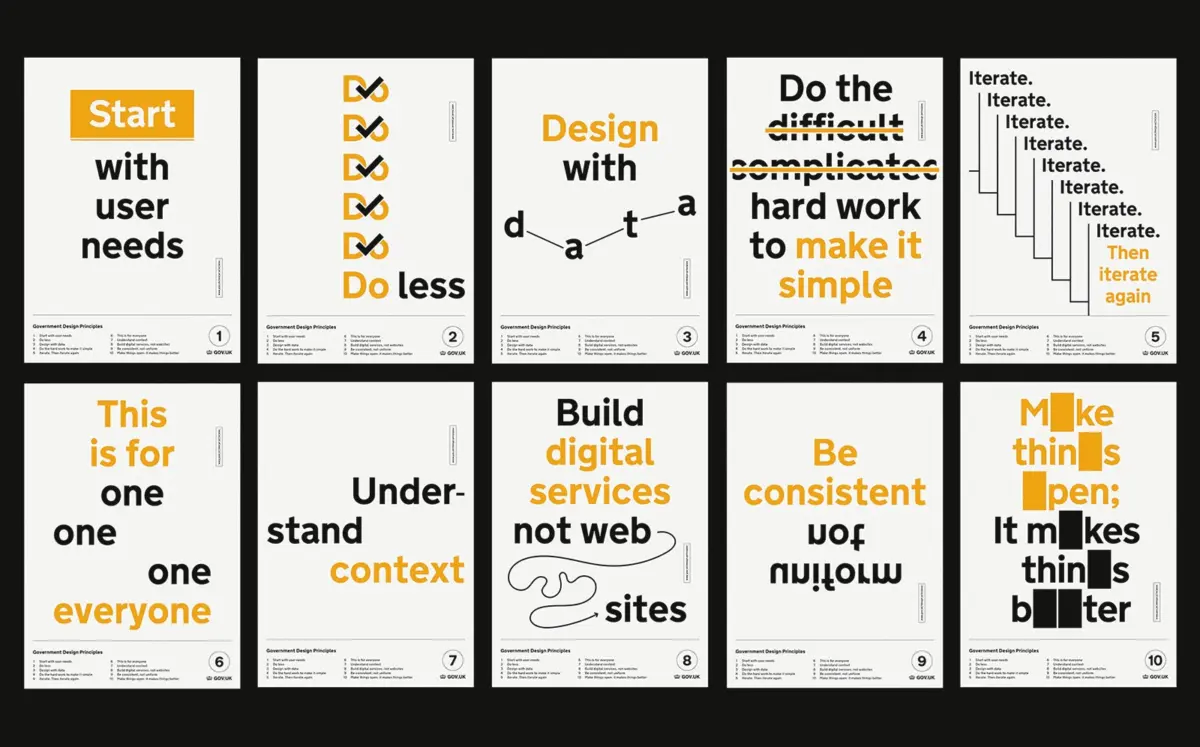
When governance consists of lengthy, dense policy documents detailing every conceivable infraction, employees naturally default to inaction to protect themselves. A more effective model mirrors the pioneering approach of digital government frameworks, such as the UK Government’s Digital Service design principles.
Rather than issuing encyclopedias of prohibitions, forward-thinking enterprises are developing concise, highly visible sets of core principles that can fit on a poster. Beyond those clear guardrails, organizations must demonstrate a degree of institutional trust in the common sense and professional judgment of their workforces.
Future Outlook: Navigating the Danger Zone
As organizations look toward the horizon, the stakes could not be higher. The prevailing temptation for risk-averse leadership teams is to centralize control entirely, locking down infrastructure and demanding uniform compliance.
However, history suggests that the greatest danger facing modern enterprise is not moving too fast with AI; it is moving too slowly while failing to address the human dimension.
Key Imperatives for the AI Era
To survive and thrive in the years ahead, executive leadership must pivot away from outdated command-and-control paradigms and embrace an adaptive framework:
- Acknowledge Cultural Reality: Recognize that AI adoption is 90% culture and change management, and only 10% software implementation.
- Embrace Shadow AI as Diagnostic Data: Instead of deploying punitive measures against unauthorized tool usage, treat shadow AI as a symptom pointing directly to gaps in official enterprise offerings. Listen to what employees are trying to achieve.
- Design for Safe Failure: Redefine performance metrics and appraisal systems to accommodate the steep learning curve of generative technologies.
- Prioritize Human Motivation: Connect AI adoption directly to the reduction of workplace friction and tedious tasks, ensuring that the benefits of technological progress are shared equitably across the entire organization.
Ultimately, artificial intelligence holds immense potential to reshape the modern workplace for the better. But unless organizations heed the hard-earned lessons of the digital transformation era, they are doomed to repeat a very expensive, entirely avoidable history.