As organizations globally scramble to integrate generative artificial intelligence into their daily workflows, the executive suite often congratulates itself on being at the cutting edge of modern enterprise. Yet, beneath the veneer of progress lies a systemic failure of strategy. If the current wave of enterprise AI rollouts were adapted into a feature film, movie critics would dismiss it as implausible, arguing that no corporate leadership team could genuinely be that oblivious to human behavior.
Yet, here we are. The frustration is compounded by a stark, sobering reality: we have been here before.
A decade ago, the corporate world was gripped by a similarly frantic obsession with "digital transformation." Companies rushed to deploy content management systems (CMS), customer relationship management platforms (CRMs), mobile applications, and sprawling intranets, treating the transition as an exercise in hardware and software procurement. The results were historic, expensive failures.
Today, digital strategist and author Paul Boag—drawing on insights from his seminal 2014 Smashing Magazine book, Digital Adaptation—argues that organizations are making the exact same catastrophic mistakes with artificial intelligence. By treating AI as purely a technological upgrade rather than a profound cultural and human shift, businesses are alienating their workforces, stifling true innovation, and inadvertently driving employees toward dangerous, unmonitored workarounds. To survive the AI revolution, leadership must pivot away from top-down mandates and embrace an adaptive, human-centric framework that prioritizes psychological safety, intrinsic motivation, and organic experimentation.
Detailed Chronology: A Decade of Repeating History
To understand the dysfunction plaguing current AI adoption strategies, one must trace the historical parallels between the digital transformation boom of the mid-2010s and the generative AI gold rush of the 2020s.
2014: The Era of Digital Transformation Missteps
In the middle of the digital adaptation era, IT departments were tasked with modernizing legacy infrastructures. They rolled out massive enterprise software packages because senior stakeholders demanded a "digital presence."
However, these deployments suffered from a fatal flaw: a total lack of empathy for the end-user. Internal systems were notoriously difficult to navigate, while customer-facing portals were designed around corporate silos rather than user needs. Employees were handed new tools with little to no context, training, or support, forced to hit the exact same Key Performance Indicators (KPIs) while simultaneously mastering unfamiliar software. The result was widespread resistance, deeply entrenched "shadow IT" (such as employees secretly using Dropbox and personal email for work tasks), and millions of dollars wasted on shelf-ware.
2024 and Beyond: The AI Playbook Repeated
Fast forward to the present day, and the script has barely changed. Leadership teams have bought heavily into the generative AI hype cycle. In typical corporate fashion, IT departments are purchasing enterprise licenses for tools like Copilot Studio, distributing them company-wide, and declaring victory. A generic, one-size-fits-all training video is circulated, and staff are expected to seamlessly integrate advanced large language models into their daily routines.
Just as they did a decade ago, employees are left bewildered, anxious, and deeply suspicious of management’s true intentions. Rather than a transformative leap forward, the current enterprise AI rollout is mirroring the exact administrative bottlenecks, bureaucratic paralysis, and cultural disconnects that doomed the digital transformation wave.
Supporting Context & Metrics: The Human Cost of Automated Productivity
The fundamental error underlying both eras is the persistent illusion that major technological shifts are fundamentally about technology. In reality, they are about people, culture, and change management.
Why Staff Are Rejecting AI
From an employee’s perspective, the push for AI adoption presents a deeply unappealing value proposition.
Senior leadership champions AI for one primary reason: productivity gains. Executives see an opportunity for staff to produce more output in less time. Yet, in most organizational structures, these productivity gains do not translate to tangible benefits for the worker. Employees are still expected to grind through a standard 40-hour workweek; the only difference is that their output quotas have drastically increased. They do not receive additional compensation, nor do they enjoy shorter working hours or reclaimed free time.
Furthermore, unlike the digital transformation era—where workers worried about learning new software—today’s employees face an existential dread: the very real fear of job displacement. Having read endless headlines about AI replacing human labor, workers view mandatory AI adoption not as an empowerment tool, but as a training exercise for their own redundancy. No amount of hollow corporate reassurance from senior management can alleviate this foundational anxiety.
Procedural Knowledge and Cognitive Overload
Adopting AI is not a trivial procedural update; it requires tearing down and rebuilding workflows, habits, and mental models that employees have cultivated over years—or even decades. This disruption of procedural knowledge demands immense cognitive energy.
Most modern corporate environments, however, are characterized by chronic overwork. Employees are already drowning in overflowing inboxes and relentless to-do lists. Asking an overworked professional to pause, learn a complex new ecosystem, and safely experiment within their workflow without dropping their performance metrics is an impossible demand.
Official Statements and Expert Perspectives
Industry leaders and organizational psychologists increasingly emphasize that successful transformation requires structural empathy and a relaxation of rigid governance during transitional phases.
Paul Boag underscores that organizations must fundamentally redesign how they incentivize change:
"Organizations need to recognize that AI is a cultural shift as much as a technology, and that shift has enormous implications for their staff… Before asking staff to embrace AI, organizations need to ask themselves how they intend to motivate them to do so."
Rather than relying on top-down edicts, successful change management depends heavily on social proof and peer-to-peer learning. Organizations should identify internal enthusiasts—the rogue innovators who are already experimenting with AI unprompted—and provide them with the time, platform, and space to share their successes.
"Rather than trying to win over the most resistant staff first, organizations should find the people already experimenting with AI, give them time to share what they have learned, and let social proof do the heavy lifting," notes Boag.
The Necessity of Psychological Safety
Compounding the adoption crisis is a pervasive corporate culture of fear. When learning new tools, making mistakes is inevitable. Yet, many organizations maintain punitive cultures where errors are treated as signs of incompetence.
During the digital transformation era, companies demanded modernization while rigidly enforcing legacy KPIs and penalizing staff for trial-and-error missteps. Today, the stakes feel even higher: employees report being reprimanded for minor infractions—such as exceeding token usage limits—shortly after being urged to experiment freely.
If management wants genuine adoption, they must establish an environment where it is safe to fail. This requires temporarily adjusting performance metrics, rewriting evaluation criteria, and relaxing rigid governance so that employees feel liberated to explore the boundaries of what AI can achieve.
Navigating the Dangers of Shadow AI
When institutional tools are too restrictive or fail to meet practical demands, employees inevitably bypass official channels. During the digital transformation era, this manifested as "shadow IT"—the proliferation of unapproved cloud storage and collaboration apps. Today, it has mutated into Shadow AI.
When internal enterprise tools prove inadequate for specialized tasks—such as a UX research team attempting to build an AI-powered insights repository—frustrated employees bypass corporate firewalls entirely. They open personal accounts on ChatGPT, Claude, or specialized platforms using their personal smartphones and home laptops.
This behavior creates catastrophic security vulnerabilities. Proprietary company data, intellectual property, and sensitive client information flow unchecked into external systems beyond organizational oversight.
"Instead of trying to stamp out shadow AI, organizations should learn from it," Boag advises. "Talk to staff about what they are using personal accounts for and what they feel they cannot do with the AI they have been given, then use that to shape what gets rolled out next."
Future Outlook: Navigating the Road Ahead
As enterprises look toward the remainder of the decade, the path forward requires a dramatic recalibration of strategic priorities. The danger of moving too slowly in a competitive market is undeniable, but the danger of enforcing heavy-handed, technologically myopic centralization is far more destructive.
To successfully navigate the AI era, organizations must embrace an adaptive roadmap:
Prioritize Culture Over Code: Treat AI implementations primarily as human change management initiatives, recognizing the emotional and psychological realities of the modern workforce.
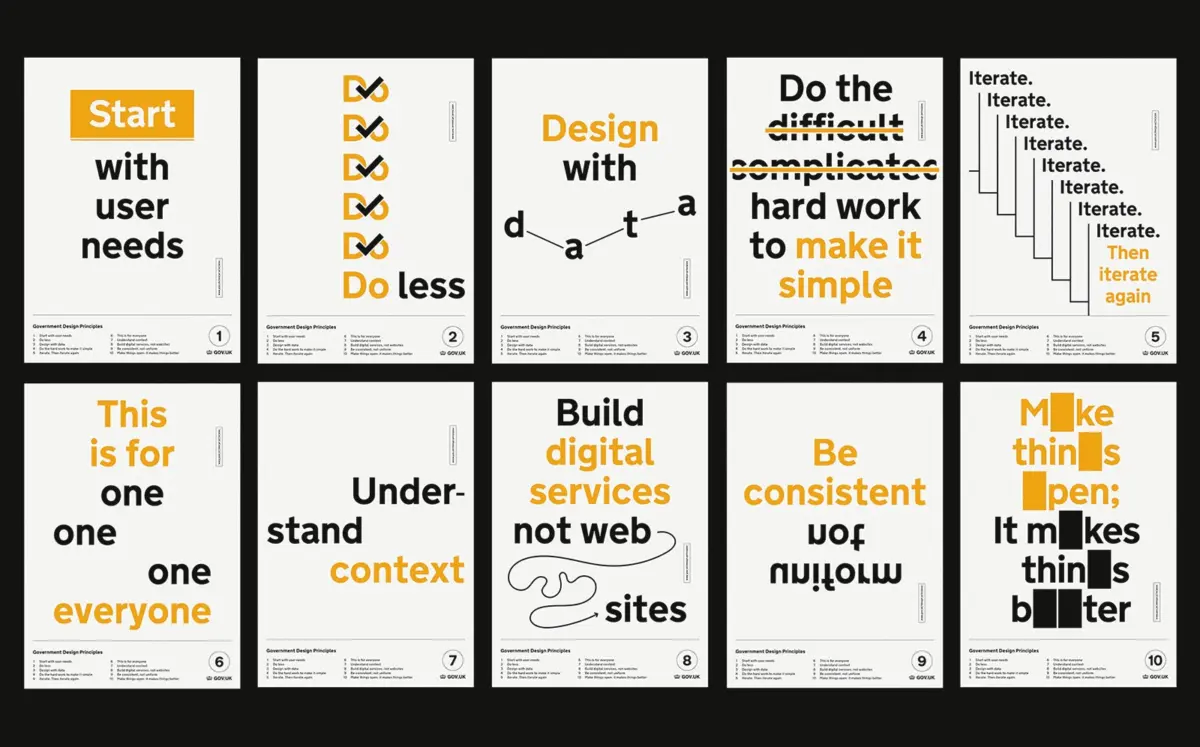
Design Lightweight, Principles-Based Governance: Abandon multi-page restriction manuals that induce paralysis and fear. Instead, adopt concise, values-driven guidelines—akin to the UK government’s design principles—that empower employees to apply professional common sense.
Cultivate Safe Experimentation: Temporarily alter KPIs and create low-risk sandboxes where mistakes are reframed as necessary milestones in the continuous learning curve.
Listen to Shadow AI: Treat unauthorized tool usage not as a disciplinary infraction, but as valuable market research indicating where official enterprise infrastructure is failing.
Incentivize Genuine Value: Reframe productivity gains so that employees experience tangible improvements in their work-life balance, career progression, or daily task satisfaction.
Ultimately, artificial intelligence is reshaping the foundational architecture of the modern enterprise. But unless business leaders learn the hard-won lessons of the digital transformation era, history will repeat itself—leaving behind a trail of abandoned software licenses, deeply alienated workforces, and missed strategic opportunities. The future belongs not to the companies with the most sophisticated algorithms, but to those who best understand and support the people wielding them.