As organizations globally scramble to integrate artificial intelligence into their daily operations, a familiar and alarming pattern is emerging. Executive leadership teams, intoxicated by the breathless hype of vendor promises, are treating AI implementation as a routine IT upgrade. They buy enterprise licenses en masse, issue generic corporate mandates, and step back, expecting a seamless digital revolution.
Instead, they are met with employee resistance, deep-seated anxiety, bureaucratic gridlock, and the quiet, dangerous rise of unauthorized "Shadow AI."
According to digital strategist and author Paul Boag, who famously chronicled the missteps of the digital transformation era in his 2014 book Digital Adaptation, organizations are making the exact same fundamental mistakes today that they made a decade ago. The primary error lies in misdiagnosing a profound cultural and behavioral shift as a mere technological puzzle.
When businesses approach AI adoption through the narrow lens of software deployment—ignoring human motivation, psychological safety, and flexible governance—they court failure. To survive the current technological wave, leadership must pivot away from heavy-handed central control and instead champion a people-first strategy that empowers experimentation, mitigates fear, and adapts to the actual needs of the workforce.
Detailed Chronology: From CMS to Copilot
To understand how contemporary businesses are stumbling through the AI era, one must look backward. The systemic dysfunctions plaguing modern artificial intelligence rollouts are direct descendants of the digital transformation initiatives that swept through corporate landscapes in the early 2010s.
The Digital Transformation Era (2010–2018)
During the peak of the digital transformation boom, IT departments across industries were tasked with modernizing legacy infrastructure. Organizations invested heavily in enterprise content management systems (CMS), customer relationship management platforms (CRM), and sprawling corporate intranets. Concurrently, customer-facing divisions rushed to launch mobile applications and personalized web portals.
However, these rollouts were fatally flawed. Executive boards focused almost entirely on the procurement of technology rather than its practical application. Internal systems were designed with little regard for user experience, forcing employees to grapple with convoluted software that actively hindered their productivity. On the customer side, businesses built digital products based on what executives wanted to sell, rather than what users actually needed or valued.
The result was widespread user friction, wasted capital, and a remarkably high failure rate for digital transformation projects. Change was driven by top-down edicts and reinforced by rigid key performance indicators (KPIs) that left no room for error or operational learning. When official tools failed to meet basic employee needs, the phenomenon of "Shadow IT" was born—staff began utilizing unapproved consumer software like Dropbox and Google Docs to get their jobs done, quietly bypassing corporate firewalls and compliance protocols.
The AI Era (2023–Present)
Fast-forward to the present day, and the parallels are striking. Enterprises are repeating the exact same playbook, albeit with generative AI tools instead of CMS platforms.
Senior management, driven by the fear of missing out (FOMO), are purchasing organization-wide licenses for tools like Microsoft Copilot Studio and calling the job finished. Employees receive a generic, one-size-fits-all training video or a brief seminar, followed by an immediate demand to boost productivity.
Just as they did a decade ago, staff are left isolated, confused, and deeply anxious. Rather than seeing AI as a collaborative partner, employees view it through a lens of existential dread—fearing that the ultimate goal of the technology is to render their positions obsolete. When corporate bureaucracy prevents departments from using specialized AI tools tailored to their unique workflows, employees naturally resort to "Shadow AI," spinning up personal ChatGPT or Claude accounts on unauthorized devices.
History is not merely rhyming; it is repeating note for note.
Supporting Context & Metrics: The Human Element of Technological Shifts
The foundational thesis of Paul Boag’s historical analysis is deceptively simple: digital adaptation is about people, not technology. While software implementations require technical engineering, technology is merely the tip of a very large, culturally complex iceberg.
The Motivation Deficit
A major blind spot in current AI deployment strategies is the total failure to answer a fundamental employee question: What’s in it for me?
Executives are naturally drawn to artificial intelligence because it promises exponential productivity gains. Work can theoretically be completed in a fraction of the time. However, in the traditional corporate structure, these efficiency gains do not benefit the worker. Employees are still tethered to rigid nine-to-five schedules. Instead of being rewarded with time back or financial compensation for their efficiency, they are simply expected to produce a higher volume of work within the exact same constraints.
Without targeted motivational strategies, employees have zero incentive to embrace a technology that feels designed to exploit them or eliminate their livelihoods. Organizations must instead position AI as a tool to eradicate the most tedious, hated aspects of daily workflows. When presented as a legitimate opportunity to improve working lives rather than a relentless tool for speed optimization, staff are infinitely more receptive to change.
The Burden of Procedural Knowledge
Adopting artificial intelligence is not a superficial task. It requires employees to challenge and dismantle operational practices they have built, refined, and relied upon for decades. This deep reservoir of procedural knowledge cannot be overwritten overnight.
Most modern knowledge workers are already operating at or above maximum capacity, drowning in overflowing to-do lists and relentless communication channels. They simply do not have the cognitive bandwidth to sit down, learn a complex new paradigm, and figure out how to weave it organically into their daily routines.
Formal, generic training courses are wholly inadequate for this challenge. True adaptation requires structured, role-specific training programs, continuous institutional support, and—crucially—dedicated time to experiment without the looming shadow of punitive performance reviews.
Official Statements and Industry Insights
Industry analysts, organizational psychologists, and UX specialists increasingly echo the warnings of change management veterans. The consensus among forward-thinking practitioners is that traditional, command-and-control governance models are fundamentally broken when applied to generative technologies.
"Organizations need to recognize that AI is a cultural shift as much as a technology, and that shift has enormous implications for their staff. Rather than trying to win over the most resistant staff first, organizations should find the people already experimenting with AI, give them time to share what they have learned, and let social proof do the heavy lifting."
— Paul Boag, Digital Strategist and Author of Digital Adaptation
The Power of Social Proof Over Top-Down Memos
When organizations attempt to drive AI adoption via executive memos, the initiative almost invariably stalls. Employees naturally distrust pronouncements from the C-suite regarding technological utility.
Instead, the most effective drivers of adoption are internal enthusiasts—the rogue innovators who are already experimenting with artificial intelligence out of personal curiosity. By identifying these internal champions, creating communities of practice, and giving them the space to demonstrate real-world wins to their peers, organizations can leverage powerful social proof. People are exponentially more likely to adopt a new working method when they witness a trusted colleague in an identical role successfully utilizing it to solve a shared problem.
The Necessity of Psychological Safety
Experimentation is inherently messy, and the learning curve associated with artificial intelligence guarantees that mistakes will be made. Yet, many corporations maintain rigid, fear-based cultures where errors are treated as terminal indicators of professional incompetence.
During the digital transformation era, executive teams demanded modernization while simultaneously holding employees to legacy Key Performance Indicators (KPIs) and punishing any operational missteps in annual reviews. Today, this contradiction has intensified. Horror stories abound of staff being reprimanded by IT security for consuming excessive processing tokens just weeks after being commanded to embrace AI experimentation.
If leadership genuinely wants a workforce that utilizes generative tools creatively, they must make it safe to fail. This requires actively adjusting KPIs, revising review frameworks, and intentionally relaxing governance during the initial exploratory phases.
Looking ahead, organizations face a critical fork in the road. The temptation to centrally lock down artificial intelligence tools—restricting access, burying innovation under bureaucratic steering committees, and threatening disciplinary action for policy violations—remains remarkably high among risk-averse executive boards.
However, history warns us that overzealous restriction is a self-defeating strategy. When official enterprise tools are too rigid or limited to support specialized departmental needs (such as a UX team attempting to build an AI-powered research repository), employees will inevitably turn to Shadow AI. They will feed proprietary corporate data into consumer-grade applications on personal networks, entirely outside the visibility and control of IT security.
Toward a Flexible, Principles-Based Future
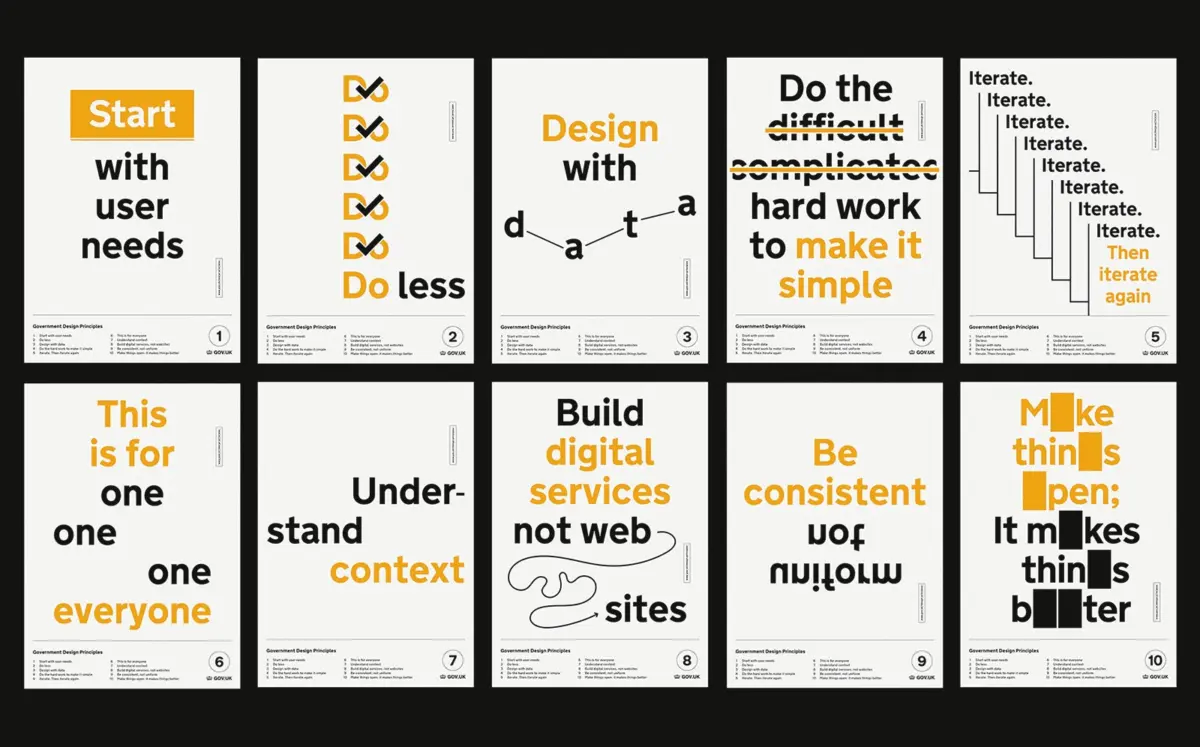
To successfully navigate the AI era, organizations must embrace an adaptive technological rollout. This means moving away from suffocating, multi-page policy manuals and adopting concise, principles-based governance models—similar to the famous design principles utilized by digital government services, which prioritize human judgment and common sense over bureaucratic compliance.
Furthermore, leadership must learn to listen to the symptoms of Shadow AI rather than blindly attempting to stamp them out. Unauthorized usage maps directly onto the gaps where official infrastructure falls short. By analyzing these workarounds, organizations can iteratively shape their enterprise toolstacks to genuinely support human workflows.
Ultimately, the defining challenge of the artificial intelligence revolution is not technical—it is fundamentally human. The organizations that thrive in the coming decade will be those that treat AI adoption as a delicate exercise in culture, empathy, and change management. Those that cling to rigid, top-down control will find themselves left behind in a landscape of their own making.