

Executive Overview
In the realm of modern gastronomy, few seasonal phenomena command the fervent subculture of heirloom pomology quite like the annual autumn harvest. As orchards across the temperate zones shed their heavy, branch-bending yields, a dedicated faction of culinary researchers—affectionately styling themselves the "Apple Snack Gang"—descends upon local markets to evaluate the sensory merits of rare, historic, and eccentric fruit varieties.
Following an initial wave of preliminary assessments, the ongoing 2026 apple review campaign has entered its second critical phase. This investigative report documents the sensory profiles, structural integrity, and historical context of seven distinct apple cultivars evaluated during this period: Kickapoo Spice, St Edmunds Pippin, Sops of Wine, Fenceline Surprise, Americus Crab, Campfield (False?), and Graham.

Through rigorous organoleptic testing—measuring variables ranging from skin texture and flesh density to volatile aromatic compounds reminiscent of commercial chewing gum and botanical spices—this evaluation provides a definitive baseline for the performance of these select pomes. The findings reveal a stark dichotomy within the agricultural market: while certain heritage cultivars deliver transcendent, complex flavor profiles, others succumb to structural decay, excessive tannin loads, or structural impenetrability that challenges the limits of human dental anatomy.
Detailed Chronology of the 2026 Harvest Trials
The testing protocol for the second installment of the 2026 harvest began under overcast autumn skies, capturing a diverse cross-section of regional orchards and farmstands. Each specimen underwent standardized sensory evaluation, noting immediate structural resistance upon initial incision, chemical composition of the internal juices, and post-consumption aftertastes.

1. Kickapoo Spice
- Score: 6.9 / 10
- Organoleptic Profile: High spice dominance featuring heavy notes of nutmeg, supplemented by secondary undertones of cinnamon and clove. Lacking in interior juiciness, the cultivar exhibited a distinct, lingering aftertaste evocative of freshly cut grass.
- Structural Analysis: Characterized by a dense, compact structural matrix. Pomological experts noted that the fruit may have suffered from improper storage length, fluctuating on the precarious boundary between maturation and post-harvest decline.
2. St Edmunds Pippin
- Score: 8.3 / 10
- Organoleptic Profile: The standout performer of the early season. Offers a vibrant, herbal aromatic profile bearing strong resemblance to fennel pollen, balanced expertly against a natural, refreshing sweetness.
- Structural Analysis: Featuring a notoriously rustic, abrasive exterior skin likened colloquially to tactile contact with a shark’s epidermis, the fruit compensated with a sharp, explosive "pop-and-crunch" mechanism upon the initial bite. Exceptional juiciness and a brilliant tart-sweet equilibrium secured its high standing.
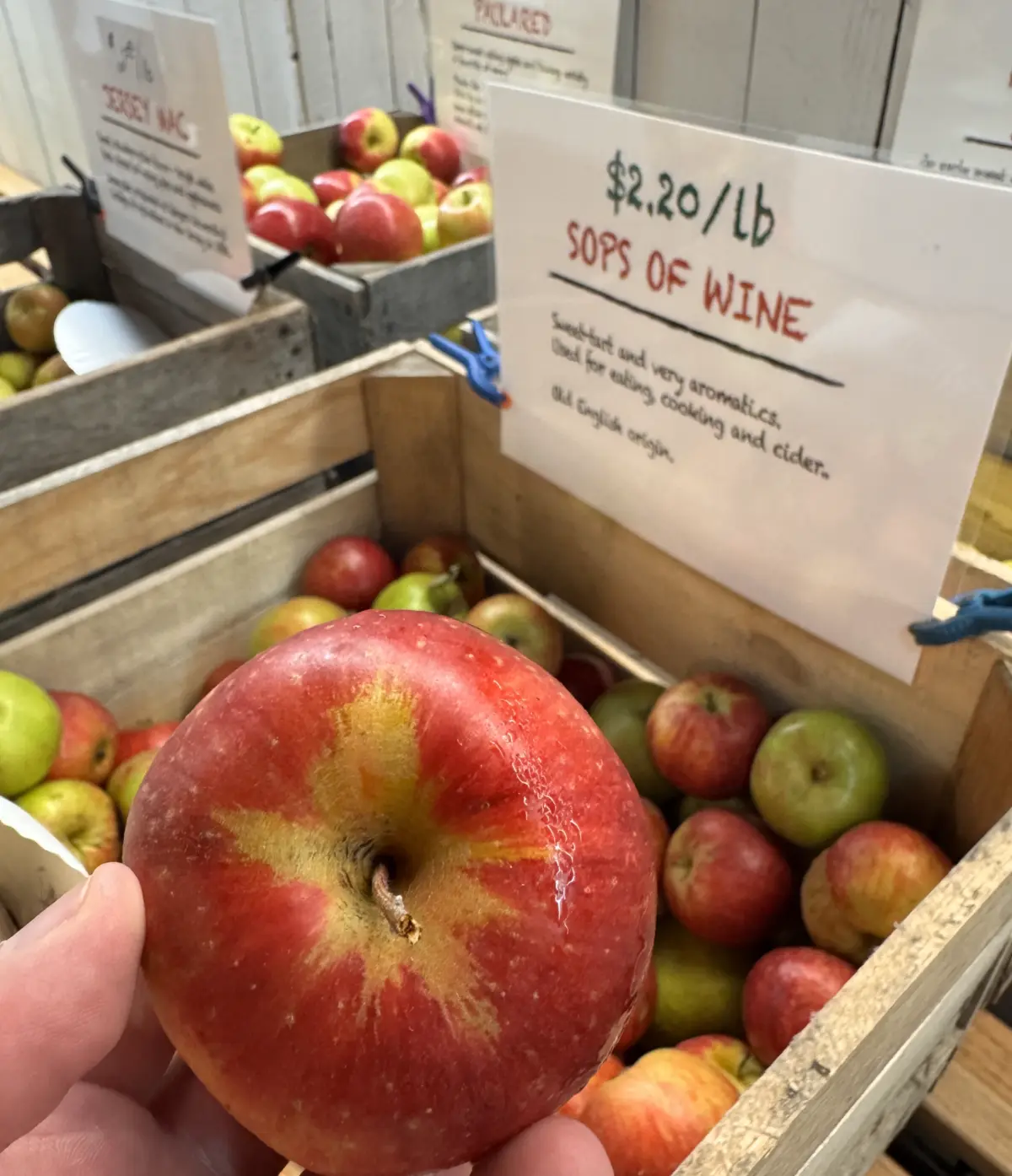
3. Sops of Wine
- Score: 3.5 / 10
- Organoleptic Profile: Exhibited classic "subacid" qualities—leaning moderately sweet with subtle, pleasant notes of vanilla and assorted spices. However, expected red-fleshed variations or internal marbling were entirely absent in the tested sample.
- Structural Analysis: Plagued by significant textural degradation. Due either to excessive shelf life post-harvest or inherent physiological traits, the flesh presented a deeply unappealing mealy and gritty mouthfeel, resulting in an overall sensory failure despite tolerable baseline flavors.
4. Fenceline Surprise
- Score: 1.0 / 10
- Organoleptic Profile: A dismal offering carrying minimal aromatic complexity, save for a fleeting, ghost-like mist of pear-like ester notes that evaporated almost immediately upon mastication.
- Structural Analysis: Despite retail signage designating the fruit as a "firm apple," the specimen yielded an unpleasantly soft, sandy, and mushy internal texture. Evaluators concluded the fruit had undergone cellular breakdown well before reaching the consumer market, reducing it functionally to subterranean detritus.
5. Americus Crab
- Score: 2.5 / 10
- Organoleptic Profile: True to its classification as a crabapple, this specimen delivered an aggressively complex profile: intensely savory, sharply tart, heavily tannic, and structurally unyielding.
- Structural Analysis: Fundamentally unsuited for casual, out-of-hand consumption. Its high tannin concentration and fibrous cellular walls relegate it strictly to culinary processing or wild experimentation rather than immediate snacking.
6. Campfield (False?)
- Score: 4.1 / 10
- Organoleptic Profile: Heavily laden with astringent tannins that created an intense, reciprocal drying sensation on the tongue.
- Structural Analysis: Exhibited a chewy, callused tactile consistency. Pomological analysts note that as an authentic cider apple rather than a fresh-eating table fruit, its biological design prioritizes chemical composition—specifically fermentation potential—over human palatability.
7. Graham
- Score: 8.0 / 10
- Organoleptic Profile: Yielded an astonishing, unreserved flavor profile directly mirroring commercial Juicy Fruit gum, offering an unexpectedly delightful sensory reward following initial structural resistance.
- Structural Analysis: Exceptionally dense and hard-packed, requiring extreme mastication force that pushed the boundaries of human jaw endurance. Upon structural failure, the interior fractured like a calving glacier, releasing a torrent of sweet, aromatic juice.
Supporting Context & Metrics: The Pomological Spectrum
To contextualize the scoring metrics deployed during the 2026 harvest trials, agricultural data reveals that heirloom and historic apple varieties occupy a vastly different consumer niche than commercial monoculture staples (such as the ubiquitous Red Delicious or Gala).
| Variety Name | Primary Flavor Notes | Texture Rating | Tannin / Spice Load | Final Score (/10) |
|---|---|---|---|---|
| Kickapoo Spice | Nutmeg, Clove, Cut Grass | Dense / Dry | High Spice | 6.9 |
| St Edmunds Pippin | Fennel Pollen, Bright Herbal | Crisp / Juicy | Balanced | 8.3 |
| Sops of Wine | Vanilla, Subacid Sweet | Mealy / Gritty | Low | 3.5 |
| Fenceline Surprise | Faint Pear Mist | Mushy / Sandy | Negligible | 1.0 |
| Americus Crab | Savory, Wild Tart | Tough / Fibrous | Extreme Tannin | 2.5 |
| Campfield (False?) | Astringent, Bitter | Chewy / Callused | High Tannin | 4.1 |
| Graham | Juicy Fruit Gum | Glacier-Hard | Moderate | 8.0 |
The metric distribution highlights a clear industry trend: modern consumers increasingly reward aromatic complexity and structural crunch (as observed in St Edmunds Pippin and Graham), while severely penalizing mealy oxidation, excessive astringency, and structural breakdown (Fenceline Surprise and Sops of Wine).

Official Statements and Historical Interludes
The investigation also uncovered rich historical anomalies embedded within regional pomological records. Most notably, the Campfield cultivar brings with it a deeply rooted colonial lineage. Archival research links the fruit directly to Matthew Canfield (alternatively spelled Campfield), an anti-royalist Puritan migrant from Harleston, England, who arrived during the Great Puritan Migration of 1637.
Historical town records from New Haven and Newark outline Canfield’s civic duties—ranging from the assessment of swine-related property damage to the mandatory cultivation of four-acre orchard plots by voting freeholders. The integration of such historical legacies into modern fruit labeling underscores the intersection of agriculture, genealogy, and regional identity in the American Northeast.

Furthermore, psychological phenomena noted during sensory trials—such as intrusive cultural auditory hallucinations involving classic cinematic adaptations of literary works (specifically The Lord of the Rings character Denethor consuming tomatoes amidst shouts of "SOPS OF WINE")—demonstrate the profound psychological impact that archaic nomenclature exerts upon modern culinary researchers.
Future Outlook
As the autumn harvest season progresses, the focus of the pomological community shifts northward and eastward. Upcoming field expeditions are scheduled across New York State, New England, and Canadian agricultural belts.

Industry analysts project an influx of novel regional cultivars entering local markets over the coming weeks. Researchers within the evaluation collective have issued an open call to orchardists and agrarian enthusiasts across these territories to submit localized heritage varieties for rigorous organoleptic inspection.
As climatic shifts continue to influence regional fruit yields, ongoing surveillance of structural density, tannin retention, and flavor volatility remains paramount. The quest to catalog, critique, and consume the Earth’s most eccentric pomes continues unabated.