

Executive Overview
The natural world continually reminds human engineers of the profound complexities inherent in biological design. When observing an animal that travels thousands of miles across continents and oceans, the human mind naturally envisions a streamlined, highly specialized machine—an apex of aerodynamic efficiency optimized strictly for endurance. Yet, recent scientific breakthroughs are overturning long-held assumptions regarding avian biomechanics.
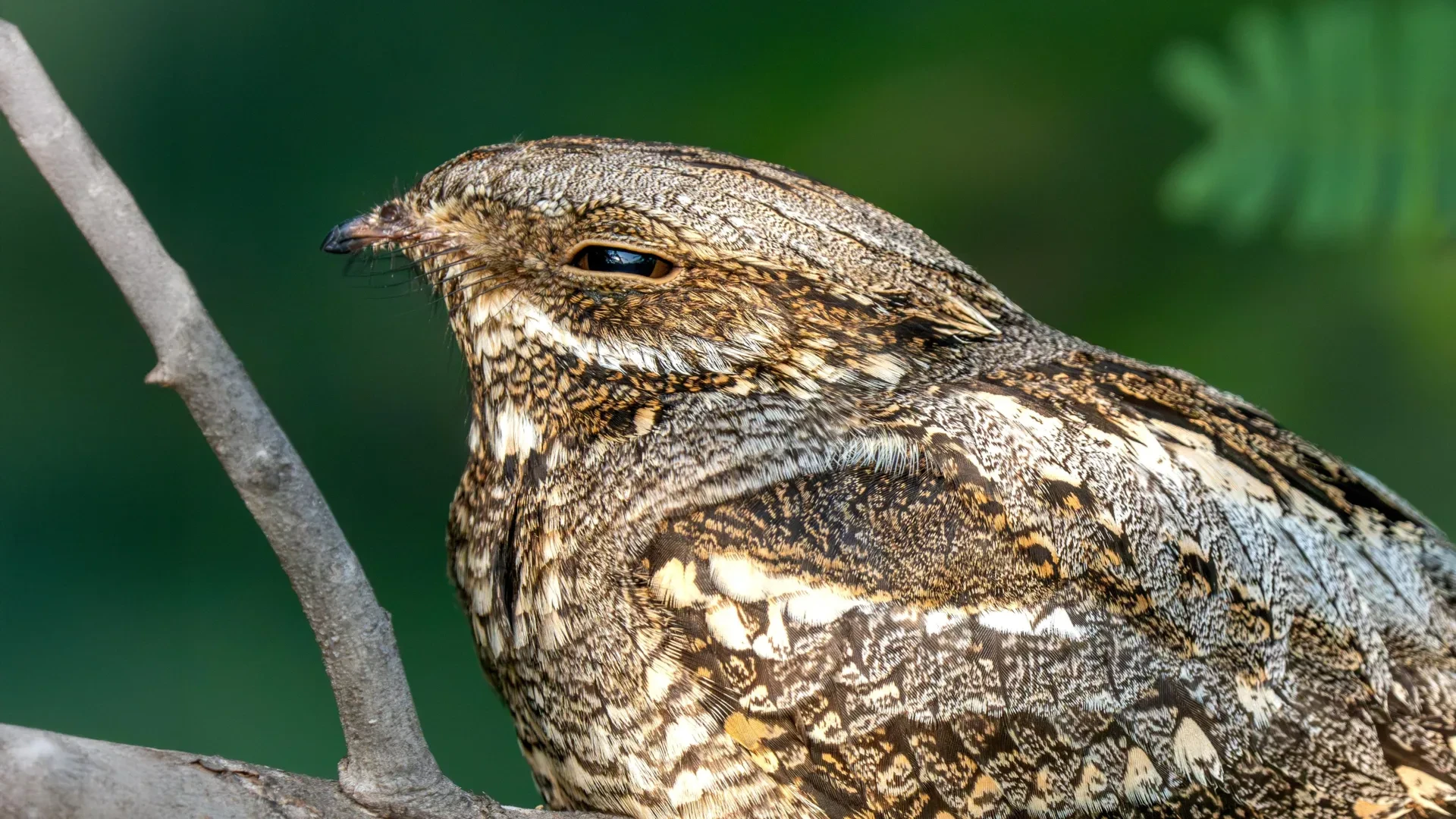
New research spearheaded by a team of biophysicists at Lund University in Sweden has revealed that the European nightjar (Caprimulgus europaeus)—a master of epic transcontinental migration—deliberately sacrifices high-speed flight efficiency for superior aerial agility. Operating as a nocturnal insectivore, the nightjar requires a dual-purpose wing structure capable of sustaining marathon flights between Europe and southern Africa, while simultaneously providing the high-maneuverability toolkit necessary to intercept evasive prey in the dead of night.
Wind-tunnel experiments and advanced airflow diagnostics have uncovered a fascinating evolutionary compromise. Far from being a uniform, perfectly tuned glider, the nightjar’s broad wing tips impose an aerodynamic penalty at higher velocities, reducing lift efficiency. More astonishingly, researchers captured a unique kinematic secret: during the upward phase of its wingbeat cycle, the nightjar actively generates forward thrust—a mechanical trait previously thought to be exclusive to bats and insects.
This discovery bridges a historical divide in evolutionary biomechanics, demonstrating that disparate animal lineages can converge on identical aerodynamic solutions when faced with mechanical constraints. Beyond evolutionary biology, these insights hold transformative potential for aeronautical engineering, offering a blueprint for next-generation flapping-wing drones and unmanned aerial vehicles (UAVs) navigating complex urban or subterranean environments.
Detailed Chronology: Unraveling the Nightjar’s Flight Mechanics
To understand how the nightjar pulled off this evolutionary balancing act, we must retrace the step-by-step investigative process undertaken by the Lund University research team. The study transitioned from field observations to rigorous laboratory analysis, ultimately upending decades of orthodox assumptions regarding avian kinematics.
Step 1: Defining the Ecological Paradox
The investigation began with a fundamental biological contradiction. The European nightjar spends its summers breeding across Eurasia before embarking on an arduous, perilous migration path to southern Africa. Endurance flight over such vast geographical distances typically demands high aspect-ratio wings—long, narrow structures that minimize aerodynamic drag and maximize lift, much like the wings of an albatross or a commercial airliner.
However, the nightjar’s lifestyle during its breeding and wintering grounds demands a radically different aerodynamic profile. As a crepuscular and nocturnal hunter, it relies on aerial hawking: chasing, capturing, and consuming flying insects on the wing. This requires executing hairpin turns, sudden stalls, slow-speed hovering, and erratic looping maneuvers in low-light conditions. Long, rigid, high-speed wings would make such agile predation nearly impossible.
Recognizing this dichotomy, researchers sought to quantify how the nightjar resolves the competing biomechanical demands of cross-continental migration and slow-speed aerial acrobatics.
Step 2: Wind Tunnel Diagnostics and Wake Visualization
To measure the invisible forces at play, the research team brought European nightjars into a controlled laboratory setting: a specialized wind tunnel designed to simulate various flight speeds. High-speed cameras recorded the birds’ wing movements from multiple angles, capturing minute adjustments in feather placement, wing curvature, and stroke amplitude.
Simultaneously, the scientists analyzed the wake behind the flying birds. By mapping the swirling patterns of air currents, vortices, and turbulence left in the wake of the wings, the team could precisely calculate the lift and thrust being generated in real-time.
Step 3: Mapping the Efficiency Trade-Off
The wind-tunnel data revealed the first major surprise. As the wind speed increased to simulate fast cruising flight, the nightjar’s broad wing tips—which serve it so well during slow, twisting hunting runs—became a liability.
At higher velocities, these wide tips generate excessive induced drag and fail to produce lift as efficiently as the tapered wings of specialized migratory birds. The findings shattered the classical paradigm that long-distance migrants must possess uniform, high-speed aerodynamic optimization. The nightjar proved that nature frequently favors functional compromise over specialized perfection.
Step 4: Discovering the Upstroke Thrust Phenomenon
The most startling breakthrough, however, occurred when analyzing the kinematics of the wingbeat cycle itself. Traditionally, avian flight mechanics dictate that lift and forward propulsion (thrust) are primarily generated during the downstroke—the downward and forward sweep of the wings that pushes air backward and downward. The upstroke, conversely, was widely viewed as a passive recovery phase, where the wings are folded or feathered to minimize drag while being repositioned for the next power stroke.
When the researchers examined the detailed airflow models of the nightjar, they discovered something extraordinary: even as the bird raised its wings during the upward portion of the wingbeat, the wake signature indicated active thrust generation. The upstroke was not merely a passive reset; it was an active propulsive engine.
Supporting Context & Metrics: Biomimicry and Comparative Biomechanics
To fully grasp the magnitude of the Lund University discovery, it is helpful to place the nightjar’s flight mechanics within the broader context of comparative zoology and modern aerodynamic metrics.
The Insect and Bat Connection
For decades, aerodynamicists classified animal flight into distinct taxonomic categories based on wing structure and muscle architecture. Insects—such as dragonflies, bees, and moths—rely heavily on complex unsteady aerodynamics, utilizing leading-edge vortices, flexible wing deformation, and active upstrokes to hover, accelerate, and maneuver within tight spaces. Bats, possessing mammalian skeletal structures wrapped in flexible skin membranes, also utilize pronounced upstroke maneuvers to generate both lift and thrust, compensating for the high weight-to-power ratio of their membranous wings.
Birds, by contrast, were generally viewed as steady-state flyers. While certain small birds like hummingbirds utilize complex figure-eight hovering mechanics, most passerines and medium-sized migrants rely on the classic downstroke-dominant model.
By demonstrating that the European nightjar utilizes an active upstroke to generate thrust, researchers have bridged a behavioral and mechanical chasm between birds, insects, and bats. It proves that when animals face similar physical constraints—such as limitations on how far wings can be folded or rotated during a stroke cycle—evolution converges on identical aerodynamic solutions, regardless of whether the animal possesses feathers, fur-covered membranes, or chitinous exoskeletons.
Aerodynamic Metrics and Trade-Offs
| Flight Parameter | Specialized Migrant (e.g., Albatross) | Nocturnal Insectivore (e.g., Nightjar) | Biological Consequence |
|---|---|---|---|
| Wing Aspect Ratio | High (Long and Narrow) | Low to Medium (Broad and Rounded) | Nightjar sacrifices high-speed cruise efficiency for low-speed turning agility. |
| Lift Generation Mechanism | Steady-state downstroke dominance | Variable-speed, mixed stroke cycle | Nightjar accepts higher induced drag at high speeds to maintain hunting maneuverability. |
| Upstroke Function | Passive recovery / minimal drag | Active thrust and force generation | Nightjar utilizes insect-like kinematics to maintain forward momentum without excessive wing folding. |
| Evolutionary Strategy | Monolithic specialization | Multi-functional compromise | Adaptability to diverse ecological niches over strict velocity optimization. |
Official Statements and Expert Insights
The implications of this study extend far beyond ornithology, offering fresh perspectives on evolutionary biology and mechanical engineering. Dr. Christoffer Johansson, associate professor at Lund University and lead author of the research initiative, provided detailed commentary on the conceptual weight of these findings.
"This runs counter to the intuitive image of a long-distance migrant as a perfectly optimized flying machine," states Christoffer Johansson, associate professor at Lund University. "Instead, the nightjar’s wings appear to be a compromise between several different demands. The bird can fly slowly and maneuver while hunting, but the trade-off is reduced efficiency in lift generation at higher speeds."
The discovery forces a philosophical shift in how biologists view evolutionary design. Evolution is rarely an engineer striving for absolute perfection in a single isolated metric; rather, it is a perpetual balancing act shaped by competing survival pressures. For the European nightjar, the evolutionary ledger requires a delicate accounting: trade top-tier cruising efficiency for the tactical mobility needed to secure sustenance across two continents.
Furthermore, Johansson emphasized the surprising convergence of aerodynamic strategies across entirely different animal classes:
"What’s interesting is that the same type of aerodynamic solution seems to appear in quite different animals. This suggests that the upstroke does not have to be merely a passive or lift-generating part of the wingbeat. It can be actively used to generate thrust when the wings cannot be folded very much."
This insight opens new frontiers for biomimetic engineering, where human designers look to nature to solve complex mechanical hurdles in robotics and aviation.
Future Outlook: Implications for Evolution, Biomechanics, and Aviation Technology
As the scientific community digests the results of the Lund University study, researchers are already looking toward the horizon, mapping out the next phases of investigation and technological application.
Expanding the Scope of Avian Biomechanics
The immediate scientific priority is determining just how widespread this active upstroke mechanism is across the avian tree of life. Is the nightjar an evolutionary outlier—a specialized nocturnal predator that independently evolved insect-like flight mechanics—or is this an under-recognized aerodynamic strategy shared by other nocturnal hunters, aerial insectivores, or canopy-dwelling birds?
By studying related species within the order Caprimulgiformes (such as frogmouths and nighthawks) as well as unrelated aerial foragers like swifts and swallows, researchers hope to map out the phylogenetic distribution of upstroke thrust generation. This comparative data will clarify which aerodynamic principles are unique adaptations to the nightjar’s specific ecological niche and which represent broader, overlooked laws of avian flight.
Revolutionizing Micro-Air Vehicles (MAVs) and Drone Technology
Beyond academic biology, the practical applications of this research are drawing intense interest from the aerospace and robotics industries. Modern engineers developing flapping-wing micro-air vehicles (MAVs)—commonly referred to as ornithopters or bio-inspired drones—frequently encounter rigid mechanical limitations.
Unlike biological wings, which contain thousands of articulating bones, muscles, and feathers capable of exquisite localized morphing, mechanical drone wings face severe constraints regarding how much they can fold, twist, or flex during each stroke cycle. These mechanical restrictions often result in inefficient flight profiles, limited payload capacities, and sluggish maneuverability in turbulent urban or indoor environments.
By studying how the nightjar successfully generates forward thrust during the upward recovery stroke—despite similar mechanical limitations in wing-folding—engineers can glean valuable design blueprints. Incorporating active upstroke thrust mechanics into robotic aircraft could yield transformative benefits:
- Enhanced Agility: Drones capable of utilizing active upstroke thrust can execute sharper turns, faster acceleration, and more stable hovering maneuvers without requiring massive changes in wing geometry.
- Energy Efficiency: Reclaiming the upstroke as a propulsive force rather than treating it as a wasted recovery phase significantly improves the overall aerodynamic efficiency of battery-powered flapping drones, extending operational flight times.
- Miniaturization: Understanding how simple kinematic adjustments can substitute for complex mechanical folding mechanisms allows engineers to simplify internal actuator designs, paving the way for smaller, lighter, and more durable surveillance and exploration robots.
Conclusion
The European nightjar—a modest, cryptically colored nocturnal bird—has proven to be an unexpected ambassador for the interconnectedness of biomechanics and evolution. By revealing that it trades high-speed cruising efficiency for hunting agility, and by demonstrating an insect-like upstroke thrust technique, the nightjar challenges our assumptions about what an endurance migrant should look like.
As researchers at Lund University and beyond continue to decode the secrets of the night’s skies, the lessons learned from this remarkable bird will reverberate through evolutionary theory and inspire the next generation of human flight technology. Nature, it turns out, remains our most innovative and sophisticated aerodynamic engineer.