

Executive Overview
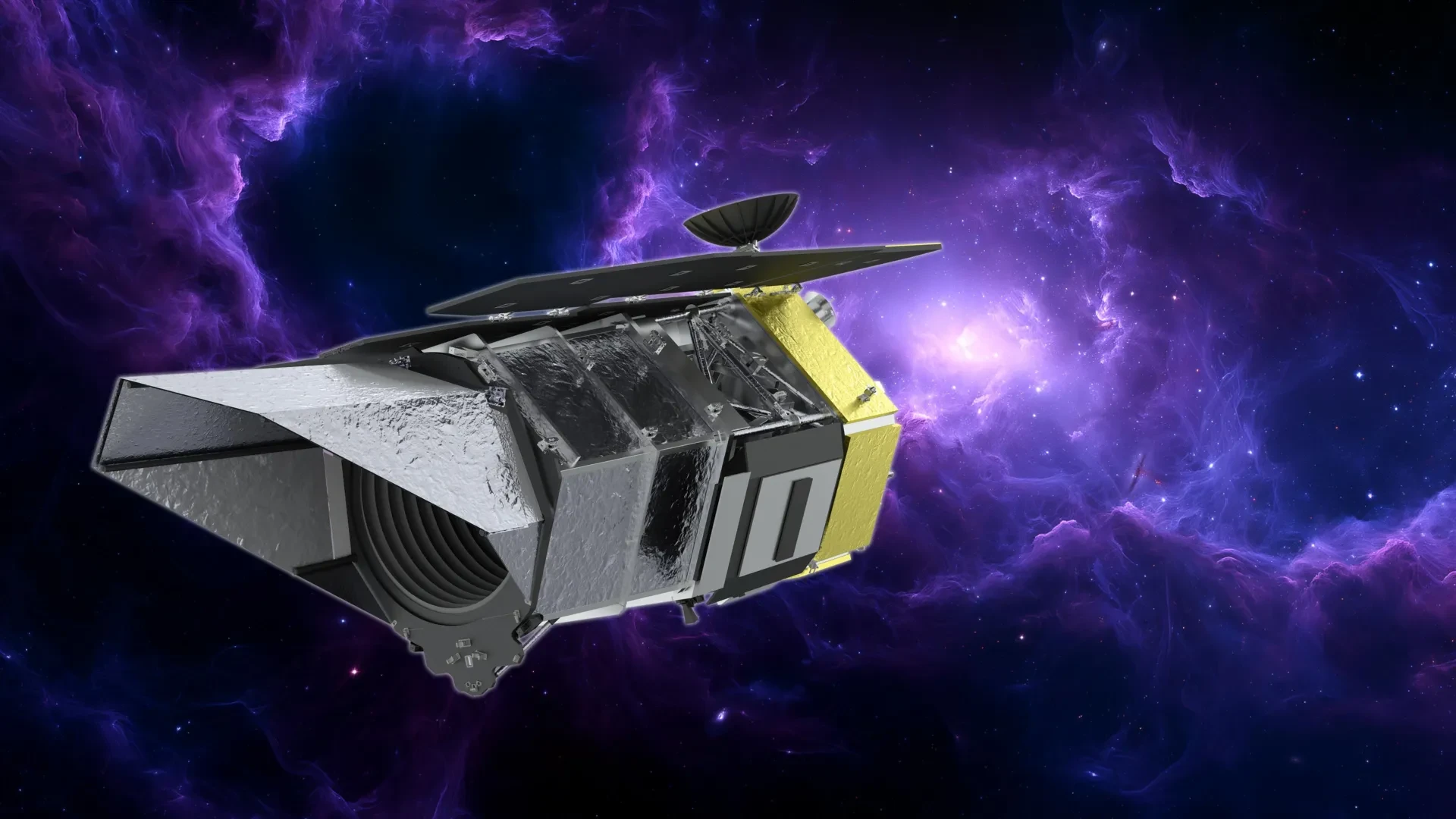
In a monumental achievement for modern astrophysics, NASA’s Nancy Grace Roman Space Telescope has emerged from its rigorous post-launch commissioning phase operating at a level of optical precision that significantly outstrips even the most optimistic pre-launch models. Following an extensive series of calibration exercises, structural tests, and microscopic mirror adjustments, the observatory’s primary camera system—the Wide Field Instrument—is now delivering image quality nearly 30 percent sharper than originally predicted.
Launched on August 30, the observatory was designed to tackle some of the most profound and elusive mysteries in contemporary physics, including the exact nature of dark matter, the accelerated expansion driven by dark energy, and the comprehensive cataloging of exoplanets via gravitational microlensing. To achieve these lofty scientific objectives, the telescope requires unprecedented optical fidelity. The recent operational milestones confirm that the Roman Space Telescope is not only meeting these demanding criteria but is actively setting a new benchmark for space-based astronomy.
By narrowing optical error margins to an astonishing 63 nanometers Root Mean Square (RMS)—far outperforming the pre-launch baseline requirement of 90 nanometers—engineers and scientists have unlocked a higher tier of observational clarity. This unexpected windfall in performance is the culmination of decades of meticulous ground-based computer modeling, advanced precision metrology, and flawless hardware execution by NASA’s Goddard Space Flight Center and its industrial partners, including L3Harris Technologies and BAE Space and Mission Systems. As the telescope transitions steadily toward its routine operational phase, the astronomical community stands poised on the precipice of a new era of cosmic discovery, armed with an instrument far sharper and more capable than previously imagined.
Detailed Chronology: From Launch to Near-Perfect Alignment
The path to achieving this unprecedented level of optical clarity was meticulously mapped out well before the observatory ever cleared Earth’s atmosphere. However, the true test began immediately following orbital insertion and the subsequent activation phases.
Phase 1: Activating and Testing the Wide Field Instrument
The commissioning timeline reached a critical juncture in September with the formal activation of the Wide Field Instrument (WFI). Engineers immediately initiated a comprehensive, multi-step testing campaign designed to isolate and evaluate every subcomponent of the massive camera system.
- Detector and Electronics Verification: The team’s primary focus centered on the instrument’s 18 individual detectors—each roughly the dimensions of a standard sticky note—alongside the complex cryogenic electronics required to read out their signals without introducing electronic noise.
- The Element Wheel Mechanics: Engineers then turned their attention to the element wheel, a sophisticated rotating mechanism loaded with specialized scientific filters and optical elements. This mechanism permits specific wavelengths of light to pass through to the detectors while simultaneously dividing incoming light into discrete color bands for spectroscopic analysis.
- Internal Calibration Systems: To establish a reliable baseline of sensitivity, the team activated the instrument’s internal light-emitting diodes (LEDs). Functioning as programmable, adjustable artificial light sources, these LEDs emit precise levels of color and intensity under remote command from Earth. By measuring how each of the 18 detectors responded to these uniform light fields, scientists mapped out microscopic variations in sensitivity, enabling software corrections that ensure absolute radiometric accuracy.
- Alignment and Thermal Checks: Finally, engineers verified the alignment mechanisms—moving the optics from their deliberately de-focused launch configuration to their sharp imaging positions—and ran diagnostics on the thermal control system. This active thermal management ensures that the delicate components remain at the cryogenic temperatures required to minimize thermal noise during long exposures.
Phase 2: Perfecting the Overall Optical Train
While one specialized team worked tirelessly on the WFI, a parallel engineering group focused on the holistic alignment of the telescope’s primary and secondary mirrors. From the very first diagnostic evaluations, the telemetry was remarkably encouraging. Because of extraordinary ground-based preparatory work, the mirrors and optical assemblies had survived the violent vibrations of launch with near-zero structural deformation.
Nonetheless, space represents a radically different environment than Earth. The complete absence of microgravity, combined with subtle thermodynamic shifts, means that even a well-aligned system requires minor tuning once deployed in orbit. To achieve absolute perfection, the engineering team executed an adjustment so minuscule it defies ordinary human comprehension: they shifted the secondary mirror by a mere one-sixteenth of the diameter of a human hair.
Supporting Context & Metrics: Decoding the Nanometer Scale
To truly grasp the magnitude of the engineering triumph achieved by the Roman team, one must examine the metrics governing space-borne optics. The performance of a space telescope is heavily dictated by wavefront error—the degree to which light waves deviate from an ideal, perfectly focused wavefront as they pass through the optical system.
The Physics of Wavefront Error
Before launch, mission planners established a stringent design requirement: the Wide Field Instrument was mandated to achieve an image quality baseline of approximately 90 nanometers RMS (Root Mean Square). To put this scale into perspective, 90 nanometers is roughly 1,000 times thinner than the average human hair. At these infinitesimal dimensions, even single-molecule particulate contamination or minuscule thermal gradients can warp light and degrade scientific data.
Following the iterative mirror adjustments and localized instrument calibrations, engineers measured the actual optical error of the system. The final post-adjustment reading was an astonishing 63 nanometers RMS.
+-------------------------------------------------------------+
|               ROMAN SPACE TELESCOPE OPTICAL METRICS         |
+-------------------------------------------------------------+
| Pre-Launch Requirement:    ~90 nanometers RMS               |
| Post-Calibration Result:   63 nanometers RMS                |
| Performance Improvement:   Nearly 30% Better Than Predicted |
| Secondary Mirror Shift:    1/16th of a human hair width     |
+-------------------------------------------------------------+
Contextualizing the Mirror Adjustment
The physical movement executed by the engineering team to reach this 63-nanometer threshold is one of the most precise mechanical adjustments ever performed in spaceflight history.
Senior optical engineer Alden Jurling provided a vivid analogy to illustrate the scale of the adjustment. "We moved the secondary mirror by about one-sixteenth of the diameter of a human hair," Jurling noted. "This adjustment nudged the height of the secondary mirror above the primary. If we scale that height up to the height of the Empire State Building, the change in height is a little bit less than you would get by stacking a single U.S. penny on top of the tip of the tower."
This sub-micron precision ensures that light gathered from galaxies billions of light-years away is brought into exceptionally sharp focus across the entire wide field of view, maximizing the scientific return of every exposure taken by the observatory.
Official Statements and Expert Perspectives
The success of the Roman Space Telescope’s commissioning phase has generated immense enthusiasm across the aerospace and astronomical communities. NASA engineers and systems leads have spoken candidly about the relief and excitement accompanying these milestone achievements.
Dave Hickey on the Importance of the Wide Field Instrument
"All of Roman’s sweeping surveys will rely on the Wide Field Instrument," emphasized Dave Hickey, a Wide Field Instrument systems engineer at NASA’s Goddard Space Flight Center in Greenbelt, Maryland. "Many of the mission’s primary goals, like studying dark matter and dark energy, wouldn’t be possible without it, so it’s both exciting and a huge relief to see that it’s working well!"
Maxime Rizzo on the Art of Calibration
Drawing parallels between classical music and high-stakes astrophysics, Maxime Rizzo, another WFI systems engineer at NASA Goddard, described the intricate calibration process: "Calibrating an instrument is like tuning a piano or guitar before a concert. You adjust everything until it’s just how you want it and then leave the settings alone so it performs consistently while you use it."
Matthew Bolcar on Ground-to-Orbit Validation
Matthew Bolcar, Roman’s optical systems lead at NASA Goddard, pointed out that the exceptional results validate years of innovative ground-testing methodologies. "The telescope’s performance was excellent even before we began adjusting the alignment of all the mirrors and other optics, thanks to exceptional preparatory work done on the ground prior to launch," Bolcar stated.
He further noted the inherent difficulties of simulating space environments down on Earth: "Our ground testing couldn’t exactly reproduce the environment Roman would experience in space, such as the absence of gravity. And there are also slight differences in temperature variations and moisture content. Despite those challenges, the recent assessments showed that our ground testing was excellent, with both instruments either matching or exceeding the performance we had predicted."
Future Outlook: A New Window on the Dark Universe
With both the Wide Field Instrument and the specialized Coronagraph Instrument meeting or decisively surpassing their pre-flight performance benchmarks, the Nancy Grace Roman Space Telescope has cleared one of its most formidable hurdles.
Refining the Coronagraph
While the WFI has completed its initial rounds of high-precision focusing, engineering teams are simultaneously finalizing the calibration of the Coronagraph Instrument. Initially producing images that were slightly out of focus—a minor aberration compared to worst-case simulations—the coronagraph now operates well within demanding performance expectations. In the coming weeks, engineers will continue to optimize its deformable mirrors (which can actively alter their physical shape to cancel out stray starlight) and test its capacity to block out intense glare from host stars, clearing the path for direct imaging of faint exoplanets.
Expanding the Horizons of Astrophysics
The 30 percent boost in image quality translates directly to enhanced survey speeds, deeper cosmic reach, and higher-resolution data sets. Because Roman possesses a field of view 100 times greater than that of the Hubble Space Telescope’s infrared instrument, the combination of wide coverage and sharp focus will enable astronomers to map expansive regions of the universe with unprecedented speed.
Over its primary mission lifetime, the telescope is expected to uncover millions of new stars, discover thousands of distant exoplanets, and cast light onto the invisible scaffolding of the cosmos. By untangling the gravitational effects of dark matter and mapping the repulsive pressure of dark energy across cosmic time, Roman will answer questions that have vexed physicists for generations.
The flawless execution of this optical tuning phase ensures that when the Roman Space Telescope officially opens its scientific eye to the cosmos, humanity will receive a view of the universe defined by absolute clarity, breathtaking depth, and uncompromising precision.