

Executive Overview
The 2026 midterm election cycle in Michigan has produced one of the most unexpected and high-stakes political phenomena in modern American history. Dr. Abdul El-Sayed, a progressive firebrand, former public health director, and the Democratic nominee for the U.S. Senate, is currently polling ahead of his Republican opponent, former U.S. Representative Mike Rogers. Should El-Sayed secure victory, he would shatter a 32-year drought by becoming the first Muslim elected to the United States Senate from a state that has not sent a Republican to the upper chamber in over three decades.
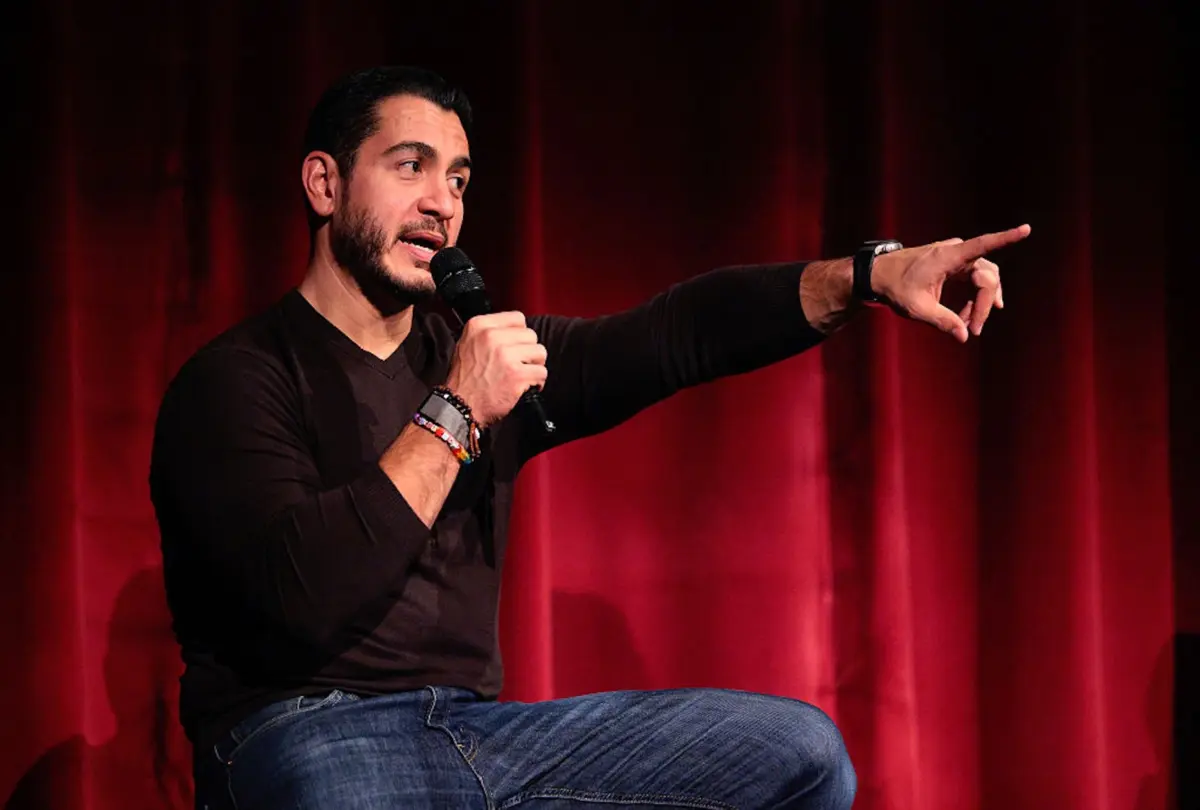
More striking than the numbers, however, is the profound tactical and psychological paralysis El-Sayed has inflicted upon the Republican Party and its conservative media ecosystem. Possessing a unique blend of sharp policy expertise, unapologetic "bro-style" bravado, and a rapid-fire communication method that dismantles right-wing talking points in real time, El-Sayed has successfully bypassed the traditional media filter. He is not merely competing on conservative turf; he is dominating it.
From Fox News hosts like Jesse Watters uncomfortably admitting their admiration for his swagger, to Vice President JD Vance resorting to personal insults, and Donald Trump allegedly placing frantic calls to network executives to complain about favorable coverage, the GOP has found itself entirely unequipped to manage a progressive who refuses to cower, apologize, or play by conventional political rules.
Detailed Chronology: The Rise of a Progressive Brawler
Summer 2026: Defeating the Machine and Capturing Attention
The foundation of El-Sayed’s national prominence was laid during the brutal Democratic primary in Michigan, where he successfully "beat the machine" by defeating the party establishment’s favored candidate, Representative Haley Stevens. Unlike many conventional Democrats who tread carefully to avoid stepping on institutional toes, El-Sayed ran an aggressive, unapologetically populist campaign centered on material conditions, worker empowerment, and universal healthcare.
By August, his campaign had evolved from a regional story into a national case study. During a high-profile interview on Fox News, host Jesse Watters attempted to corner El-Sayed on contentious social issues, such as gender-affirming care for minors. Instead of stammering or pivoting to safe talking points, El-Sayed met Watters with humor, quick-witted comebacks, and blunt rhetoric—including referring to his establishment-backed primary opponents and eventual general election rival, Mike Rogers, as "betas." Watters was left openly bewildered, remarking to his audience the following day: "I like him. I don’t want to like him. I like him for some stupid reason."
October 2026: Direct Confrontations and White House Panic
As the general election entered its home stretch in October 2026, El-Sayed’s strategy of blanketing conservative media with his message while maintaining his left-wing purity began to panic the upper echelons of the Republican Party.
The tension peaked during a disastrous appearance for the network on Martha MacCallum’s program. MacCallum attempted to bait El-Sayed into taking a radical stance that could be easily weaponized in campaign ads. Instead, the trap backfired entirely. MacCallum found herself awkwardly defending billionaires hoarding generational wealth, to which El-Sayed smoothly countered that he would rather fund public education than obsess over "allowing a billionaire to make another billion."
According to reports from Axios, the White House was so incensed by the segment that they directly contacted Fox News executives to complain about the favorable airtime and the network’s inability to neutralize the Michigan Democrat. In response, producers attempted a proxy maneuver: bringing on progressive activist Corbin Trent to spar with MacCallum in hopes of linking him to El-Sayed. The maneuver fell flat, as Trent—who had worked with Bernie Sanders but had no tangible connection to El-Sayed—was transparently deployed as a straw man, exposing the network’s lack of effective material against the actual candidate.
Mid-October 2026: Vance’s Escalation and the "Wolverine" Retort
The friction reached a fever pitch during a Donald Trump campaign rally in Monroe, Michigan, held in support of Mike Rogers. Vice President JD Vance took the stage and launched a bitter, personal attack against El-Sayed, calling him "a little weasel who should shut his mouth and show a little gratitude."
Political analysts immediately recognized Vance’s comments as part of a recurring xenophobic trope that frames non-white progressives as ungrateful interlopers undeserving of agency or success. The personal contrast between the two men only underscored the hollowness of Vance’s attack: El-Sayed left a prestigious post as an assistant professor at Columbia University to return to Michigan, where he won public health awards for protecting children from environmental toxins; Vance spent a comparable period working as a venture capitalist closely tied to tech oligarch Peter Thiel.
Rather than issuing a defensive, policy-wonk press release, El-Sayed weaponized humor to deflect the insult. Addressing supporters and media the next day, he quipped:
"JD Vance called me a little weasel today. I’m like, ‘No, no, no. What you’re talking about is a Wolverine.’"
The deft reference to the University of Michigan mascot instantly neutralized the attack, transforming a crude insult into a rallying cry that reinforced his local authenticity against out-of-state MAGA surrogates.
Supporting Context & Metrics: Shifting Demographics and Voter Psychology
The Republican panic over Abdul El-Sayed is not based on paranoia; it is grounded in hard polling data and shifting demographic realities within the critical Rust Belt swing state.
The Youth and Male Demographic Shift
For years, the Republican coalition has relied on growing margins among young male voters. In the 2024 presidential election, Donald Trump narrowly won male voters under the age of 30. However, the political landscape in 2026 looks vastly different. Recent polling data compiled by Politico and other election analysts indicates that young men are rapidly splitting from the MAGA banner, shifting heavily toward Democrats who project strength, economic populism, and cultural authenticity.
El-Sayed’s aggressive "bro-style" communication—characterized by unscripted wit, refusal to back down from confrontations, and direct language—resonates powerfully with a demographic that often perceives mainstream politicians of both parties as inauthentic or weak.
Focus Groups Reveal Dire News for the GOP
The tangible impact of this appeal was underscored by a recent focus group conducted by MS NOW in Michigan, which gathered regretful Trump voters. The results were startling for the GOP: five out of six participants stated they were casting their ballots for El-Sayed, while Mike Rogers received virtually no enthusiastic support.
Dismantling the Myth of the "Weak Democrat"
Comprehensive polling data analyzed by election expert G. Elliott Morris (drawing from Strength In Numbers/Verasight metrics) reveals a profound truth about the contemporary Democratic base: voters do not view their party negatively because it is "too progressive." Instead, the most common complaint among the Democratic electorate is that the party is too weak, too cautious, and not fighting hard enough against right-wing authoritarianism.
El-Sayed has solved this riddle. He pairs uncompromising progressive policies—such as Medicare for All and universal healthcare—with the aggressive posture of a political brawler. When he explains complex economic realities to Trump voters—such as how removing executive salaries and profit incentives from the healthcare industry lowers costs—he does so without dumbing down the policy, translating left-wing ideals into plainspoken, common-sense language that cuts through partisan noise.
Official Statements and Public Reactions
The anxiety rippling through the conservative apparatus has manifested openly across social media platforms and mainstream media broadcasts:
- Donald Trump (via Truth Social and Rally Appearances): The former president has repeatedly expressed bewilderment and frustration over El-Sayed’s charm offensive on conservative networks, complaining openly that the Michigan Democrat is running circles around Fox News anchors.
- Vice President JD Vance (Speaking in Monroe, Michigan): "You’ve got this guy… a little weasel who should shut his mouth and show a little gratitude."
- Dr. Abdul El-Sayed (Responding to Vance’s Insults): "They are carnival barkers. They are small and want to make us small like them… JD Vance called me a little weasel today. I’m like, ‘No, no, no. What you’re talking about is a Wolverine.’"
- Fox News Host Jesse Watters: "I like him. I don’t want to like him. I like him for some stupid reason."
Future Outlook: A Blueprint for the Future of the Democratic Party
As the final weeks of the 2026 midterms wind down, the race between Abdul El-Sayed and Mike Rogers remains statistically tight, hovering well within the margin of error. Yet, regardless of the final vote tally on election night, El-Sayed has already fundamentally altered the strategic playbook for progressive politics in the United States.
For decades, political consultants have advised Democrats to run defensive campaigns, tiptoe around conservative media, and avoid confrontation to prevent alienating moderate voters. El-Sayed has proven that this conventional wisdom is obsolete. By walking directly into hostile media environments, disarming hostile hosts with sharp wit, refusing to take a step backward when hit with xenophobic or personal attacks, and championing bold economic populism, he has mapped out an entirely new archetype for modern democratic messaging.
If El-Sayed pulls off the historic victory of becoming Michigan’s next U.S. Senator, he will enter Washington not merely as a historic first, but as a living blueprint for how the left can successfully neutralize the right’s cultural dominance—proving that authenticity, courage, and a willingness to fight are the ultimate political currencies.